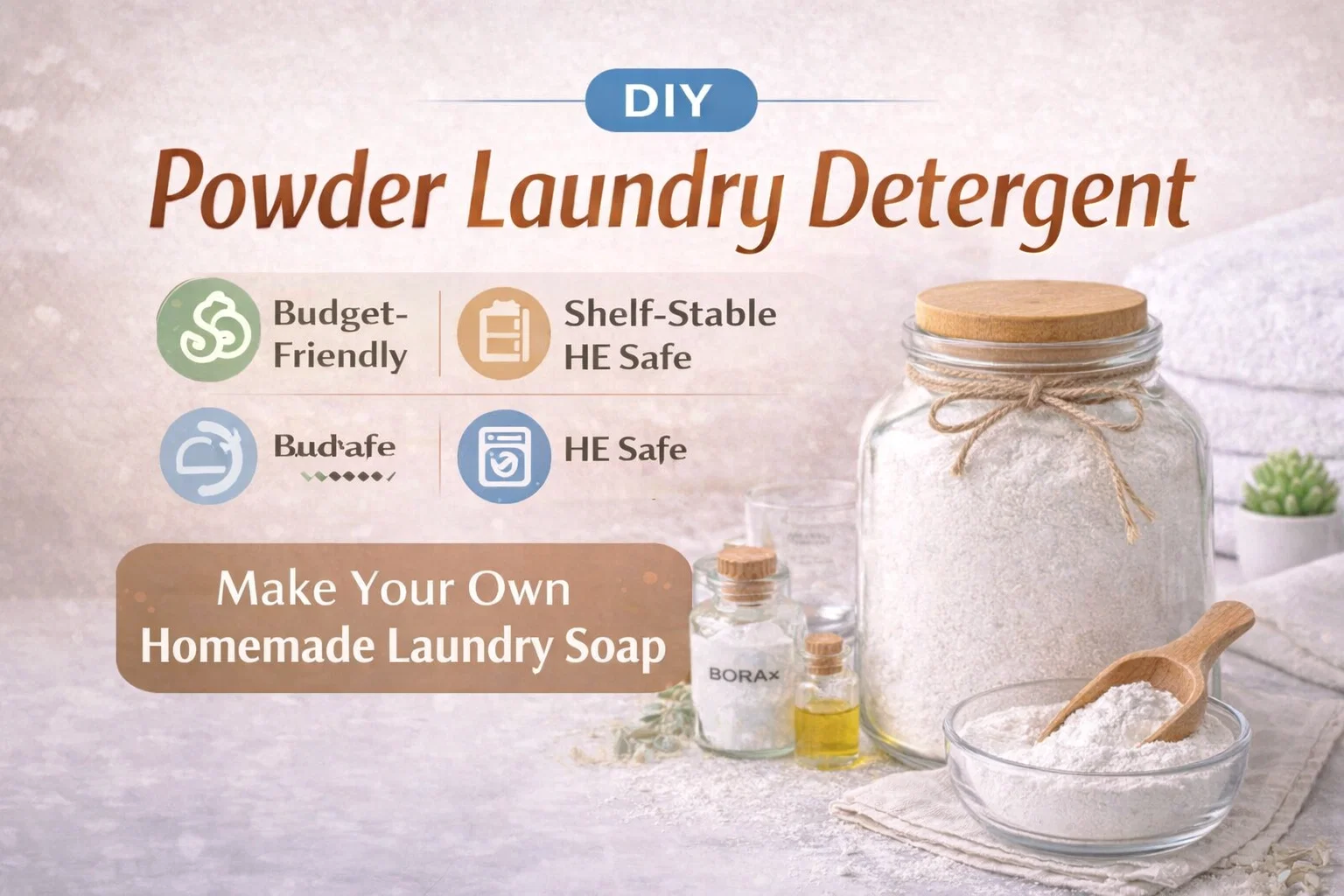
DIY Powder Laundry Detergent Recipe Budget-Friendly
Have you ever walked down the cleaning aisle at your local grocery store and felt completely overwhelmed by the sheer number of laundry detergents available? Between the bright plastic jugs, the heavily fragranced pods, and the skyrocketing prices, it is easy to feel like doing laundry has become an expensive and complicated chore. More and more households are looking for ways to simplify their routines, reduce their environmental footprint, and save money. If you are nodding along, you are in exactly the right place. Today, we are diving deep into the world of homemade cleaning solutions with a fantastic, budget-friendly powder laundry detergent recipe that will completely transform laundry day.
Making your own laundry powder is not just a fun weekend project. It is a practical, sustainable lifestyle change that empowers you to take control of what comes into contact with your family’s skin. Commercial detergents are often packed with synthetic fragrances, optical brighteners, and harsh surfactants that can cause skin irritation and environmental harm. By switching to a DIY powder laundry detergent, you strip away the unnecessary chemicals and rely on powerful, time-tested ingredients that actually clean your clothes. Let us explore why this shelf-stable solution is about to become a permanent staple in your home.
Why Make Your Own Powder Laundry Detergent?
The benefits of mixing your own laundry soap extend far beyond the satisfaction of a do-it-yourself project. When you transition to a homemade powder, you unlock a multitude of advantages for your wallet, your health, and your household appliances.
Unbeatable Cost-Effectiveness
Let us talk about the bottom line. Store-bought laundry detergents, especially those marketed as natural or eco-friendly, come with a hefty premium. You are often paying for mostly water, bulky plastic packaging, and massive marketing budgets. When you purchase the raw ingredients for this DIY powder, you are investing in pure cleaning power. Because this recipe is highly concentrated, you only need a fraction of the amount you would typically use with commercial brands. A single batch yields roughly one kilogram of detergent. When you are only using one to two tablespoons per load, that single jar will last for months. The cost per load drops down to mere pennies, freeing up your household budget for things that truly matter.
Complete Control Over Ingredients
If you or your family members struggle with sensitive skin, eczema, or contact dermatitis, you know how frustrating it can be to find a detergent that does not cause a flare-up. Commercial brands often use proprietary fragrance blends that legally hide hundreds of undisclosed chemicals. By making your own powder laundry detergent, you become the chemist. You know exactly what is going into the jar. There are no surprise additives, no artificial dyes, and no synthetic perfumes. You have complete transparency and the power to customize the scent to your exact preference using natural essential oils.
Eco-Friendly and Shelf-Stable
Liquid detergents contain preservatives to prevent mold and bacterial growth because they are primarily made of water. Powder formulas completely bypass this issue. This DIY detergent is inherently shelf-stable, meaning it will not go bad, separate, or lose its efficacy over time as long as it is stored properly. Furthermore, making your own powder drastically reduces your plastic waste. You can buy the base ingredients in cardboard boxes and store your finished product in a beautiful, reusable glass jar. This significantly cuts down on the single-use plastic jugs that frequently end up in landfills.
The Science Behind the Ingredients
You might be wondering how a simple mixture of white powders can possibly clean dirt, sweat, and grime as effectively as a bright blue liquid from the store. The secret lies in the chemistry of the ingredients. Let us break down the components of our one-kilogram batch and understand exactly what makes them so effective.
Washing Soda (Sodium Carbonate)
Making up half of our recipe at 500 grams, washing soda is the heavy lifter of this detergent. Also known as sodium carbonate, washing soda is a highly alkaline chemical compound. It is a cousin to regular baking soda but is processed differently to be much more caustic and basic. This high alkalinity is crucial for cleaning. It cuts through tough grease, lifts heavy soil, and softens the water. Hard water contains minerals like calcium and magnesium, which bind to soap and prevent it from cleaning your clothes. Washing soda binds to these minerals instead, allowing the other ingredients to do their job effectively. It also helps to extract stains deeply embedded in fabric fibers.
Borax (Sodium Tetraborate)
The recipe calls for 250 grams of Borax. Borax is a naturally occurring mineral that has been used for over a century as a laundry booster and household cleaner. Like washing soda, it helps to soften water, but it also has a few unique properties. Borax acts as a buffering agent, which means it helps maintain a stable pH level in your washing machine water. This stable pH creates the perfect environment for the detergent to lift dirt. Additionally, borax converts some water molecules into hydrogen peroxide, which provides a gentle whitening and brightening effect on your clothes without the harshness of chlorine bleach. It also helps to neutralize tough odors, making it perfect for gym clothes and pet blankets.
Oxygen Booster (Sodium Percarbonate)
To give this detergent an extra kick of stain-fighting power, we add 250 grams (about half a cup) of an oxygen booster. This is often sold under generic names or as oxygen bleach. When this white powder comes into contact with water, it breaks down into sodium carbonate (more washing soda) and hydrogen peroxide. The hydrogen peroxide releases oxygen bubbles that vigorously attack and break down organic stains like food, blood, and grass. It is color-safe, meaning it will brighten your whites while keeping your colors vibrant. Unlike traditional liquid chlorine bleach, which can weaken fabric fibers and leave yellowing over time, oxygen boosters are incredibly gentle on your garments.
Essential Oils (The Natural Fragrance)
The final, optional ingredient is 20 drops of your favorite essential oil. While the core dry ingredients will leave your clothes smelling naturally clean and neutral, essential oils add a beautiful, spa-like touch to your laundry routine. Lavender is a classic choice for bed sheets to promote restful sleep. Lemon or sweet orange oils offer a bright, uplifting scent and possess natural degreasing properties. Tea tree oil or eucalyptus are fantastic for heavily soiled loads or cloth diapers due to their natural purifying characteristics. The choice is entirely yours, making this a truly customized laundry experience.
The Ultimate Budget-Friendly Recipe and Method
Now that we understand the power behind the ingredients, let us put them together. The beauty of this recipe is its absolute simplicity. You do not need any special equipment or heating elements. Just a large mixing bowl, a spoon, and a few minutes of your time.
The Ingredients List
- 500 g Washing Soda (This provides the core cleaning power and water softening)
- 250 g Borax (This boosts stain removal, neutralizes odors, and stabilizes pH)
- 250 g Oxygen Booster (This safely brightens colors and lifts tough organic stains)
- 20 drops Essential Oil (Optional, for natural fragrance and extra purification)
Step-by-Step Mixing Guide
Before you begin, it is important to note that mixing fine powders can create dust. It is a good practice to mix these ingredients in a well-ventilated area and avoid directly inhaling the dust as it settles. You may even want to tie a bandana over your nose and mouth just while stirring.
Start by pouring the 500 grams of washing soda into a large, dry mixing bowl. Next, add the 250 grams of borax and the 250 grams of oxygen booster. Use a large wooden spoon or a whisk to thoroughly combine the dry ingredients. You want to make sure the powders are evenly distributed so that every scoop of your finished detergent contains a balanced ratio of cleaning agents. If you notice any hard clumps in the washing soda or borax, use the back of your spoon to crush them into a fine powder.
If you are choosing to add fragrance, now is the time. Carefully drip 20 drops of your chosen essential oil directly into the powder mixture. Take your spoon and stir vigorously. The oil might create tiny clumps where it hits the powder, so use your hands (preferably gloved) or your spoon to work the oil evenly throughout the entire batch. Once everything is perfectly blended, transfer your new DIY powder laundry detergent into an airtight container. A large glass mason jar with a secure lid is an excellent, aesthetically pleasing choice that looks beautiful sitting on a laundry room shelf.
How to Use Your Homemade Detergent
Transitioning from a commercial liquid detergent to a concentrated homemade powder requires a slight adjustment in how you do your laundry. Because there are no fillers or foaming agents in this recipe, you need far less product than you might expect.
Dosage Guidelines for Maximum Efficiency
The golden rule for this DIY powder laundry detergent is less is more. For a normal, everyday load of lightly soiled clothes, you only need one to two tablespoons of the powder. Yes, you read that correctly. Just a tablespoon or two is enough to clean an entire load. If you are dealing with heavily soiled items, such as muddy play clothes, sweaty workout gear, or heavily stained towels, you can increase the dosage to three tablespoons. It is highly recommended to keep a dedicated wooden or metal measuring scoop inside your detergent jar to ensure you are using the correct amount every single time. Using too much powder will not make your clothes cleaner; it will simply waste your product and potentially leave a powdery residue on your fabrics.
HE Washer Compatibility
One of the most common questions about DIY laundry detergent is whether it is safe for High-Efficiency (HE) washing machines. The answer for this specific recipe is a resounding yes. HE machines require low-sudsing detergents because they use significantly less water than traditional agitator machines. Commercial detergents achieve this by adding chemical defoamers. Our homemade recipe, however, is naturally low-sudsing. Washing soda, borax, and oxygen boosters do not create thick foams or bubbles. Therefore, this powder is perfectly safe and highly effective in both front-loading and top-loading HE machines. Simply place the required one to two tablespoons directly into the washing machine drum before adding your clothes, or place it in the designated powder dispenser drawer if your machine specifies to do so.
Troubleshooting Common DIY Laundry Issues
While this powder laundry detergent is incredibly effective, everyone’s laundry situation is a little different. Factors like water temperature and water hardness can affect how your detergent performs. Here are a few quick tips to ensure you get perfect results every time.
If you prefer to wash your clothes in cold water, you might occasionally find that the powder does not dissolve completely, leaving white streaks on dark clothing. To solve this, simply dissolve your one to two tablespoons of powder in a cup of warm water before pouring it into the washing machine drum. This guarantees that the cleaning agents are fully activated and evenly distributed in the cold water cycle.
If you live in an area with extremely hard water, you might feel that your clothes are coming out slightly stiff. While the washing soda and borax do a great job of softening water, extreme hardness might require a little extra help. Consider adding a quarter cup of standard white vinegar to the fabric softener dispenser of your washing machine. The vinegar will act as a natural fabric softener, helping to rinse away any lingering mineral deposits and leaving your clothes feeling soft and fresh. Never mix the vinegar directly with the powder detergent in the drum, as the acid will neutralize the alkaline cleaning properties.
Conclusion
Taking the leap into making your own DIY powder laundry detergent is a rewarding decision that benefits every aspect of your household management. By combining the natural cleaning power of washing soda, the brightening and deodorizing properties of borax, and the stain-lifting magic of oxygen boosters, you create a shelf-stable, budget-friendly solution that truly works. You regain control over the ingredients touching your family’s skin, eliminate unnecessary plastic waste from your routine, and save a significant amount of money in the process. Mix up a batch this weekend, customize it with your favorite essential oils, and experience the simple joy of naturally clean, fresh laundry.