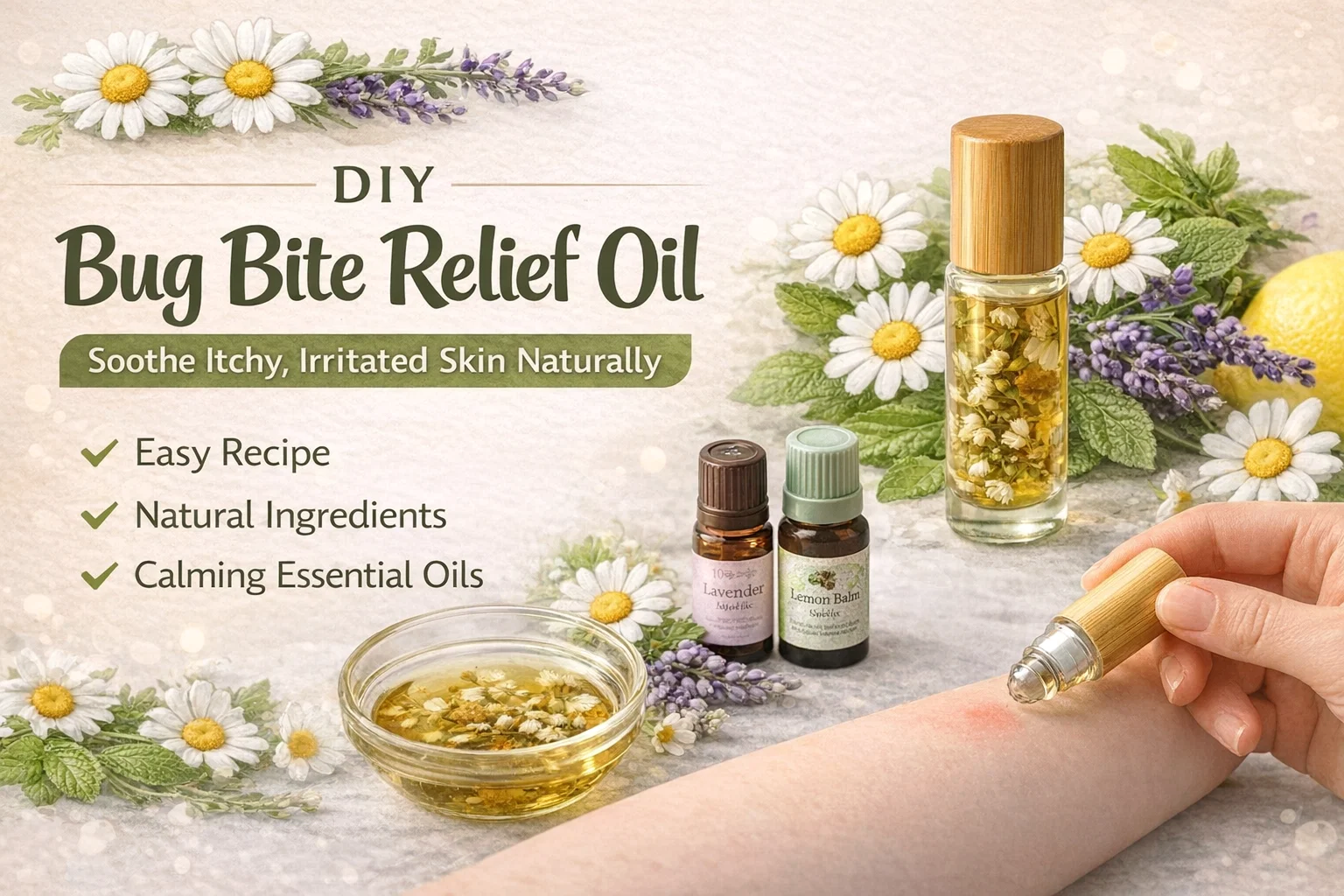
DIY Bug Bite Relief Oil Natural Soothing Remedy for Itchy Skin Insect Bites
Imagine spending a perfect summer evening outdoors, only to wake up the next morning with those familiar, itchy red welts. We have all been there. Whether it is a backyard barbecue or a deep-woods hike, mosquitoes and biting flies always seem to find us. While there are plenty of store-bought creams available, many of them contain synthetic fragrances and harsh chemicals that can further irritate sensitive skin. That is why creating your own DIY Bug Bite Relief Oil is such a game-changer for your natural first aid kit. By using the power of herbal-infused oils and pure essential oils, you can calm inflammation and stop the itch in its tracks without any mystery ingredients.
The Magic of Herbal Infusion: Why Chamomile and Lemon Balm?
The foundation of a truly effective bug bite remedy lies in the carrier oils. In this recipe, we use chamomile-infused oil and lemon balm-infused oil. Infusing herbs into a carrier oil like jojoba or sweet almond oil allows the lipid-soluble compounds of the plant to migrate into the liquid, providing a gentle yet potent base for your skin treatments.
Chamomile is famous for its anti-inflammatory properties. It contains bisabolol and chamazulene, which help to reduce redness and swelling almost immediately upon contact. When you apply it to a fresh bug bite, it acts as a soothing balm that tells your immune system to calm down. Lemon balm, on the other hand, is a member of the mint family and is highly regarded in herbalism for its antiviral and antihistamine-like effects. It provides a subtle cooling sensation and helps to prevent the spread of irritation across the skin surface.
The Powerhouse Essential Oils: Lavender and Peppermint
While the infused oils provide the healing base, the essential oils are the active workers that provide instant relief. Lavender essential oil is perhaps the most versatile oil in any home apothecary. It is naturally analgesic, meaning it helps to dull the pain and stinging sensation of a bite. Furthermore, it is a natural antihistamine, which is crucial because the itch we feel is actually our body’s allergic response to the insect’s saliva.
Peppermint essential oil adds the “wow” factor to this DIY oil. The menthol in peppermint creates a cooling sensation that overrides the “itch” signal being sent to your brain. It is a biological distraction that feels incredible on a hot, inflamed bite. When combined, these two oils create a synergistic effect that addresses both the physical swelling and the sensory discomfort of the insect bite.
How to Make Your DIY Bug Bite Relief Oil
Creating this blend at home is surprisingly simple and much more cost-effective than buying high-end boutique rollers. You will need a few basic supplies: a clean glass bowl, a stirring rod or small spoon, and a 50 ml glass roller bottle or dropper bottle. Using dark glass, such as amber or cobalt blue, is always recommended to protect the delicate essential oils from UV light degradation.
Ingredients Checklist
- 30 ml Chamomile-infused oil: The primary soothing base.
- 20 ml Lemon balm-infused oil: For antihistamine support.
- 6 drops Lavender essential oil: To stop the sting and promote healing.
- 3 drops Peppermint essential oil: For an instant cooling effect.
- 5 drops Vitamin E oil: This is optional but acts as a natural antioxidant to extend the shelf life of your oils.
Step-by-Step Instructions
Start by pouring your chamomile and lemon balm infused oils into your clean mixing container. If you are making your own infusions from scratch, ensure the dried herbs have been thoroughly strained out so they do not clog the roller ball later. Once your base oils are combined, carefully add the drops of lavender and peppermint essential oils. Precision is key here, as we want to maintain a skin-safe dilution of approximately 1 percent to 1.5 percent for adult use.
Next, add your Vitamin E oil if you are using it. Give the mixture a gentle stir to ensure all the oils are fully integrated. Finally, use a small funnel to pour the liquid into your glass roller bottle. Pop the roller ball top on securely, give it a quick shake, and your remedy is ready for action. You now have a professional-grade, natural relief oil that fits perfectly in your pocket or purse.
Understanding Dilution and Safety
One of the most important aspects of DIY skincare is understanding dilution ratios. This recipe is specifically designed to be around a 1.5 percent dilution, which is considered safe for daily use on localized areas for adults. Essential oils are incredibly concentrated substances, and applying them “neat” or undiluted can lead to skin sensitization or chemical burns over time. By suspending them in the chamomile and lemon balm carrier oils, we ensure that the active ingredients stay on the skin longer and penetrate deeper without causing harm.
If you are planning to use this on children, it is wise to cut the essential oil drops in half or consult with a certified aromatherapist. Always perform a small patch test on the inside of your wrist before applying it to a larger area to ensure you do not have any specific sensitivities to the plants used in this recipe.
Application Tips for Maximum Relief
For the best results, you should apply the Bug Bite Relief Oil as soon as you notice the bite. The earlier you can intervene in the inflammatory process, the less likely the bite is to turn into a large, itchy bump. Simply roll the oil directly onto the affected area and let it air dry. There is no need to rub it in vigorously, as the carrier oils will naturally absorb into the skin.
You can repeat this process 2 to 3 times a day as needed. Because this formula contains peppermint, be careful to avoid applying it near your eyes or on broken, bleeding skin. The cooling sensation is wonderful for an itch, but it can be quite intense on open wounds. If the bite has been scratched to the point of bleeding, stick to the chamomile and lavender components and omit the peppermint until the skin has closed.
The Benefits of a Roller Bottle
While you could keep this mixture in a standard dropper bottle, the roller bottle is truly the superior choice for bug bite relief. The stainless steel or glass ball provides a secondary cooling effect and allows for a “hands-free” application. This is particularly helpful when you are out on a trail and your hands might not be perfectly clean. The roller ensures a thin, even layer of oil is applied exactly where it is needed without any waste. Plus, the compact size makes it an essential item for travel, camping, or even just keeping in the glove box of your car.
Complementary Natural Habits for Bug Season
While this oil is a lifesaver for treating bites, a holistic approach to summer wellness includes prevention and internal support. Drinking plenty of water helps your body flush out the toxins introduced by insect saliva. Some herbalists also suggest increasing your intake of garlic or taking a B-complex vitamin during the peak of summer, as these can subtly change your scent profile to make you less attractive to mosquitoes.
Additionally, wearing light-colored, loose-fitting clothing can provide a physical barrier that bugs find difficult to penetrate. When you combine these preventative measures with your DIY Bug Bite Relief Oil, you can finally enjoy the great outdoors without the constant dread of the aftermath. Natural living is all about finding balance and using the gifts of the earth to support our bodies, and this simple recipe is a perfect example of that philosophy in practice.
Wrapping Up Your Home Apothecary Journey
Taking control of your family’s skincare by making your own remedies is a rewarding experience. Not only do you know exactly what is going into the products you use, but you also develop a deeper connection to the plants and their healing properties. This Bug Bite Relief Oil is more than just a way to stop an itch; it is a step toward a more sustainable and chemical-free lifestyle.
Once you see how effective this oil is, you might find yourself exploring other herbal infusions or essential oil blends. The world of DIY natural wellness is vast and full of possibilities. Keep your roller bottle handy this season, and share the recipe with friends and family who are looking for a better, more natural way to handle the “joys” of summer insects. Happy making and enjoy your itch-free adventures!