Why Your Calf Muscle Is Your Second Heart Prevent Blood Clots with Movement
You might think your heart is the only organ responsible for keeping your blood moving, but there is a silent hero working tirelessly in your lower legs. Often referred to by medical professionals as the peripheral heart, your calf muscles play a monumental role in your circulatory health. When you look at the complex network of veins and muscles in the human leg, you are looking at a sophisticated pumping system designed to fight gravity and return deoxygenated blood back to your chest. Understanding how this second heart functions is not just a fascinating anatomy lesson; it is a critical piece of the puzzle for preventing blood clots, reducing swelling, and maintaining long term vitality.
What Exactly Is the Second Heart?
Shutterstock
Explore
The term second heart refers specifically to the calf muscle pump, primarily involving the gastrocnemius and soleus muscles. While the heart in your chest is responsible for pushing oxygen-rich blood out to your extremities through high-pressure arteries, the journey back is much more difficult. Blood traveling from your feet up to your heart must battle the constant pull of gravity. This is where your calves step in. Every time you take a step, flex your foot, or even shift your weight, these muscles contract and squeeze the deep veins in your legs. This action propels blood upward, ensuring that it does not pool around your ankles.
The Role of Venous Valves
To understand why movement is so vital, we have to look at the internal structure of your veins. Unlike arteries, veins are equipped with one-way valves. Think of these like tiny French doors that only open in one direction. When your calf muscles contract, they squeeze the vein and force the blood through these valves. Once the muscle relaxes, the valves snap shut to prevent the blood from flowing backward. This rhythmic squeezing and locking is what keeps your circulation efficient. Without regular muscle contraction, the blood struggles to move, placing immense pressure on those tiny valves and increasing the risk of cardiovascular issues.
The Hidden Danger: Why Movement Is Non-Negotiable
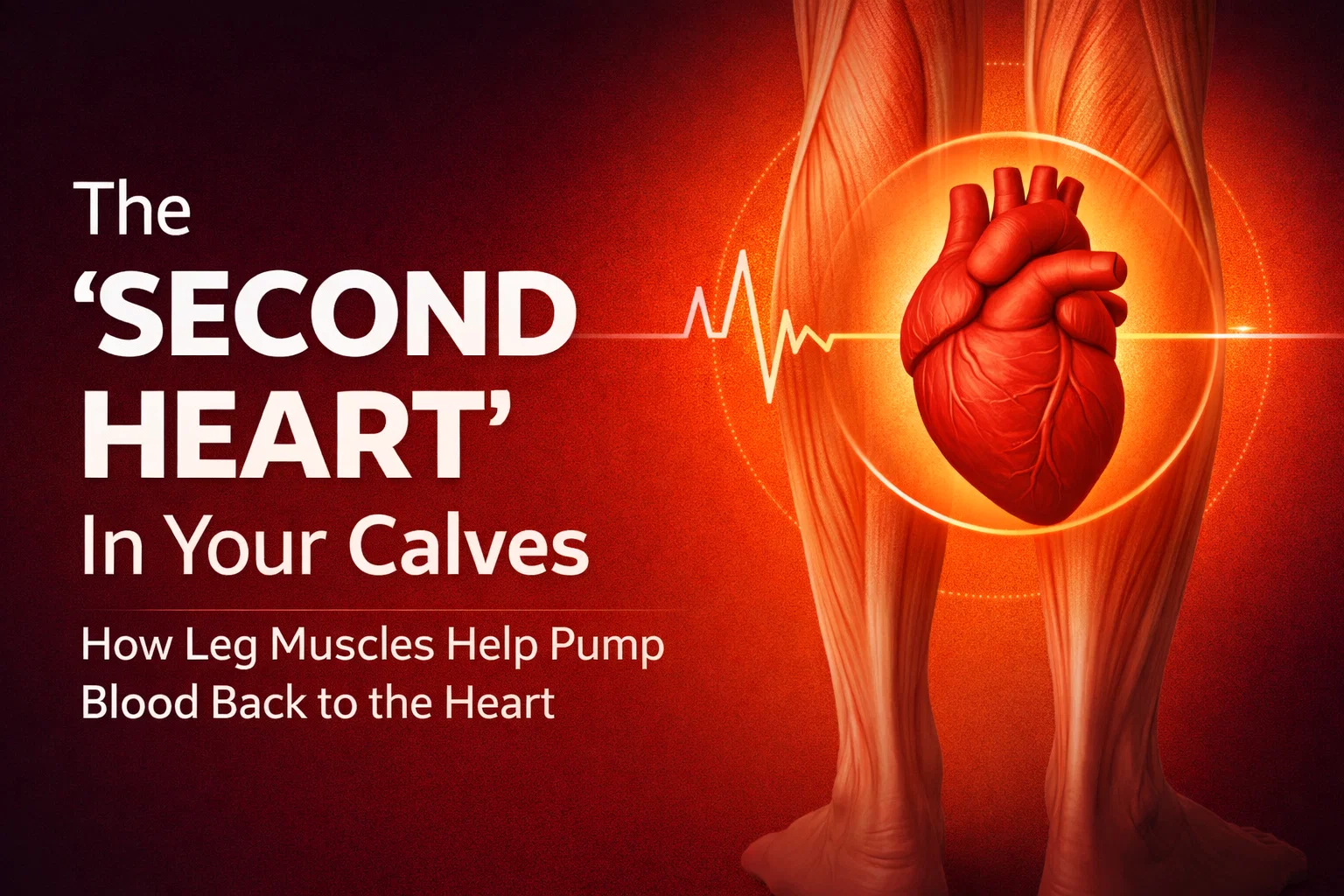
The image of a heart nestled within the calf muscle is a powerful metaphor for a very real medical necessity: movement. When we live sedentary lifestyles, our second heart effectively goes on strike. This lack of activity leads to venous stasis, a condition where blood flow slows down significantly. This sluggish movement is the primary breeding ground for blood clots, specifically Deep Vein Thrombosis or DVT. A clot in the leg is dangerous on its own, but the real threat occurs if a piece of that clot breaks off and travels to the lungs, causing a pulmonary embolism.
Recognizing the Signs of Poor Circulation
Your body is excellent at sending early warning signs when your second heart is not performing at its peak. You might notice a heavy or aching sensation in your legs after a long day of sitting or standing still. Other common symptoms include persistent swelling in the ankles, visible varicose veins, or a restless feeling in your legs at night. These are not just signs of fatigue; they are signals from your body that your calf pump needs more engagement to clear out metabolic waste and keep fresh blood circulating.
How to Activate Your Second Heart Every Day
The beauty of the calf muscle pump is that you do not need a gym membership to keep it healthy. Small, consistent movements throughout the day are far more effective than a single intense workout followed by hours of sitting. By incorporating simple habits into your routine, you can ensure that your circulation remains robust and your risk of clotting stays low.
- The Hourly Stroll: If you work a desk job, set a timer for every sixty minutes. Even a two minute walk to the kitchen or around the office is enough to prime the pump and move blood back to your chest.
- Seated Calf Raises: You can actually exercise your second heart while answering emails. Simply lift your heels off the ground while keeping your toes planted, hold for a second, and repeat. This engages the soleus muscle, which is a powerhouse for venous return.
- Ankle Circles and Flexing: When traveling on long flights or car rides, frequently flex your feet up and down and rotate your ankles. This mimics the natural motion of walking and keeps the valves in your veins working correctly.
- Hydration Matters: Staying hydrated keeps your blood at the right consistency, making it easier for your calf muscles to push it through the venous system.
The Long-Term Benefits of Leg Health
Focusing on your calf muscles does more than just prevent clots. Improved venous return has a ripple effect on your entire well-being. When your blood is moving efficiently, your heart does not have to work as hard to maintain systemic pressure. This can lead to lower resting heart rates and improved athletic performance. Additionally, better circulation means that nutrients are delivered to your skin and tissues more effectively, which can help reduce inflammation and promote a healthy, energetic glow from the inside out.
Combating the Effects of Aging
As we get older, our veins naturally lose some of their elasticity and our muscles can begin to atrophy. This makes the second heart even more important as the years go by. Maintaining strong, active calves is one of the best ways to preserve mobility and independence in later life. It prevents the chronic swelling that can make walking painful and protects the integrity of your vascular system against the wear and tear of time.
Simple Lifestyle Changes for Better Flow
Beyond exercise, there are several lifestyle choices that support your lower leg circulation. For instance, the shoes you wear play a significant role. High heels may look great, but they keep the calf muscle in a shortened, contracted state that prevents it from fully pumping. Switching to flat or supportive shoes allows the muscle to go through its full range of motion. Compression socks are another excellent tool, especially for those who spend long hours on their feet. They provide gentle external pressure that assists the muscles in squeezing the veins, making the entire process of venous return much more efficient.
Nutrition for Vascular Strength
What you put in your body affects the strength of your vein walls. Foods rich in flavonoids, such as berries, leafy greens, and citrus fruits, help keep your veins flexible and strong. Avoiding excessive salt intake is also key, as too much sodium leads to water retention and increased pressure on your leg veins. By combining a heart-healthy diet with consistent leg movement, you create a dual-layered defense system for your cardiovascular health.
A Proactive Approach to Wellness
In a world that increasingly encourages us to sit for long periods, we have to be intentional about our physical activity. Viewing your calves as a second heart changes the perspective from exercise being a chore to exercise being a vital maintenance task for your survival. You do not have to run marathons to stay healthy; you simply need to move. Whether it is taking the stairs instead of the elevator or doing a few stretches while watching television, every bit of movement counts toward a healthier you.
When to Consult a Professional
While movement is a powerful preventive tool, it is important to know when to seek medical advice. If you experience sudden, intense pain in one leg accompanied by redness or warmth, you should contact a healthcare provider immediately. Similarly, if you have chronic swelling that does not improve with elevation or movement, a specialist can help evaluate the health of your venous valves and provide a tailored plan to keep your circulation safe.
Conclusion: Honor Your Second Heart
The human body is an incredible feat of biological engineering, and the calf muscle pump is one of its most ingenious designs. By recognizing that you have a second heart in your legs, you gain a new appreciation for the simple act of walking. Protecting yourself from blood clots and maintaining peak circulation is not about drastic changes, but about honoring the need for consistent, rhythmic movement. Keep your legs active, stay hydrated, and remember that every step you take is a beat of that lower heart, pushing you toward a longer, healthier, and more vibrant life. Your body works hard for you, so give it the movement it needs to keep the rhythm going.
Would you like me to generate a list of specific Python automation scripts that could help track your daily movement or set reminders for these calf exercises?