High Potassium Food List Printable Eat, Limit Avoid Potassium Foods Chart PDF Guide
Navigating the world of nutrition can often feel like decoding a complex puzzle, especially when you are trying to balance specific minerals for your health. Potassium is one of those essential electrolytes that plays a starring role in keeping your heart beating, your muscles moving, and your nerves signaling correctly. However, knowing exactly which foods to load up on and which ones to keep at arm’s length can be a challenge. That is where a clear, visual guide becomes your best friend in the kitchen. Whether you are looking to boost your energy levels or following specific dietary advice from a professional, having a high potassium food list at your fingertips changes the game from guesswork to confidence.
Understanding the Power of Potassium
Potassium is far more than just a line item on a nutrition label. It is a vital mineral that functions as an electrolyte, helping to maintain the fluid balance in your cells. For many, increasing potassium intake is a natural way to support healthy blood pressure levels because it helps ease tension in your blood vessel walls. When you eat a diet rich in these whole foods, you are essentially giving your body the fuel it needs to function at its peak performance.
The beauty of focusing on potassium-rich ingredients is that they often come packaged with other incredible nutrients like fiber, vitamin C, and antioxidants. By prioritizing the “Eat” category of our list, you are not just hitting a mineral goal; you are embracing a holistic approach to wellness that radiates from the inside out.
Shutterstock
Explore
The Green Light: Foods to Enjoy Frequently
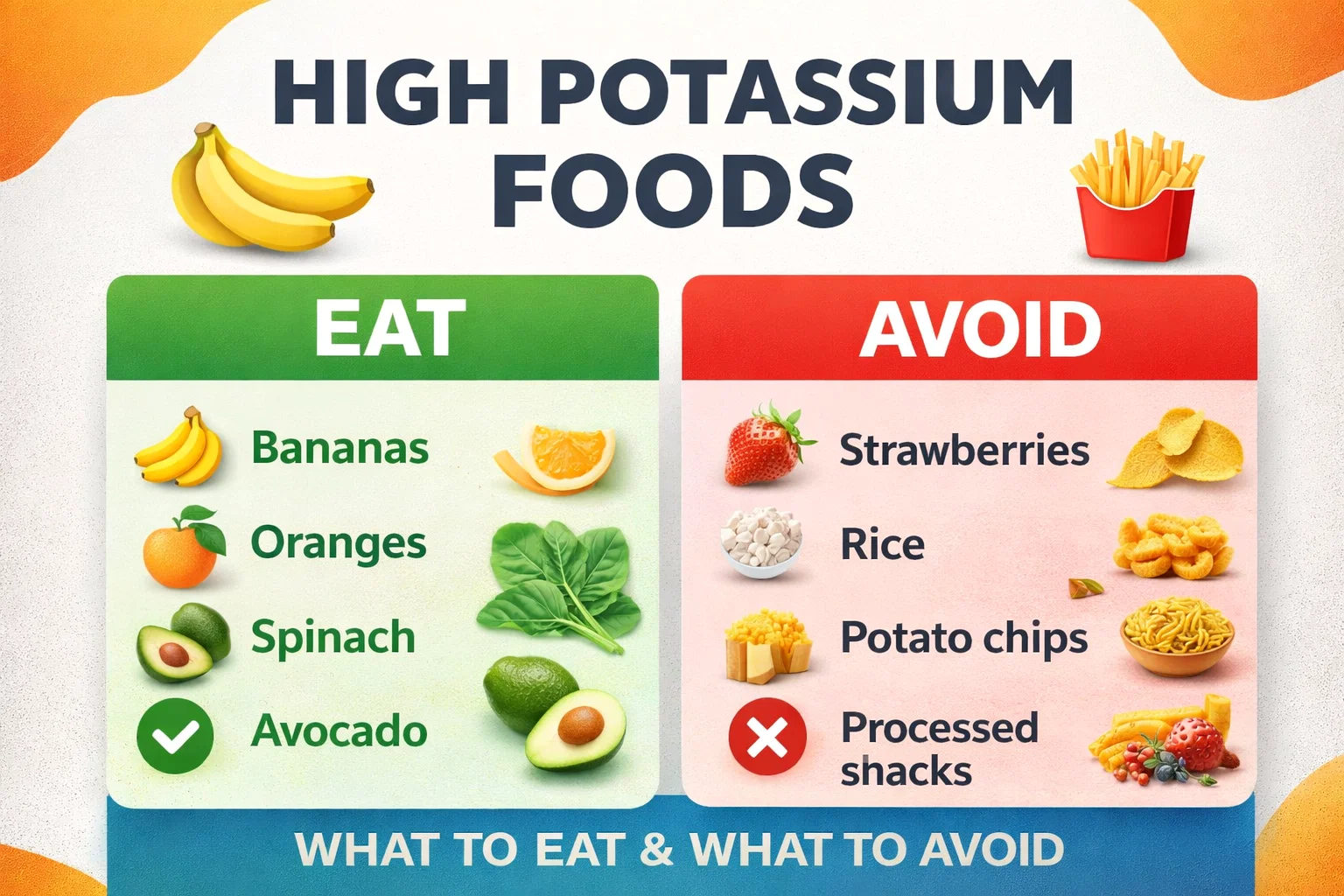
When you look at the “Eat” column of your printable guide, you will see a vibrant array of fruits, vegetables, and legumes. These are your heavy hitters. They are naturally dense in potassium and offer a variety of flavors to keep your meal prep exciting. Let us dive into some of the standout stars of this category.
Fruits That Pack a Punch
While everyone knows bananas are the poster child for potassium, they are just the beginning. Tropical fruits like mango, papaya, and guava are fantastic options that bring a taste of summer to your plate. If you are looking for something tart and refreshing, pomegranates and oranges provide that perfect zing along with a healthy dose of minerals. Dried fruits like prunes, dates, and apricots are also concentrated sources, making them excellent snacks for when you are on the move.
Vegetables for Every Meal
Your savory meals provide the perfect canvas for potassium-rich veggies. Potatoes and sweet potatoes are staples for a reason; they are incredibly versatile and high on the list. For the leafy green lovers, spinach, kale, and Swiss chard are essential. These greens can be tossed into smoothies, sautéed with garlic, or used as a base for a nutrient-dense salad. Do not forget about earthy beets and crunchy parsnips to add depth and variety to your roasting pan.
Legumes and Plant-Based Proteins
Beans, lentils, and chickpeas are the unsung heroes of a high potassium diet. They are budget-friendly, shelf-stable, and incredibly filling. Whether you are making a hearty black bean soup or a refreshing chickpea salad, these plant proteins ensure you are meeting your nutritional needs while staying satisfied throughout the day.
The Yellow Light: Foods to Enjoy in Moderation
The “Limit” category is all about balance. These foods are not inherently bad; in fact, many of them are quite healthy! However, they contain moderate amounts of potassium or other components that mean they should be enjoyed in controlled portions rather than as the primary focus of every meal. Maintaining a “Limit” list helps you diversify your diet without overdoing any single nutrient.
Balanced Fruits and Veggies
Items like peaches, pears, and nectarines are delicious additions to your diet but have a slightly lower potassium concentration than the “Eat” group. Similarly, vegetables like broccoli, carrots, and asparagus are nutritional powerhouses that fit perfectly into a balanced lifestyle when rotated with higher-potassium options. Zucchini and eggplant are great for adding volume to meals without skewing your mineral balance too far in one direction.
Nuts, Seeds, and Proteins
Nuts like almonds, walnuts, and pistachios offer healthy fats and protein, but because they are calorie-dense, a handful is usually plenty. When it comes to animal proteins, salmon, tuna, chicken, and beef fall into this middle ground. They provide essential amino acids and are part of a well-rounded diet, especially when paired with a large portion of those “Green Light” vegetables we discussed earlier.
The Red Light: Foods to Approach with Caution
In our “Avoid” or “Low Potassium” category, we often find highly processed foods, refined grains, and certain produce items that simply do not contribute much in the way of potassium. If your goal is to maximize your potassium intake, these items might be taking up space on your plate that could be better used by more nutrient-dense options. Conversely, if you have been told to watch your potassium levels for medical reasons, this list becomes your primary guide for what to skip.
Refined Grains and Processed Snacks
White bread, white pasta, and white rice have been stripped of many of their natural minerals during processing. While they provide quick energy, they lack the potassium punch of whole grains or starchy vegetables. Similarly, processed snacks like crackers and chips are often high in sodium, which can actually work against the benefits of potassium in your body. Popcorn and hard candies also fall into this category as they provide little to no nutritional value in terms of electrolytes.
Condiments and Beverages
It is easy to overlook what we drink or put on top of our food. Clear sodas, sweetened teas, and excessive coffee do not offer much in the way of potassium. Condiments like mayonnaise, ketchup, and soy sauce are often high in salt and low in minerals. Choosing fresh herbs or lemon juice for flavor instead can help you stay aligned with your health goals.
Practical Tips for Using Your Printable List
Having the information is the first step, but applying it to your daily life is where the magic happens. Here are a few human-friendly ways to make this list work for you without feeling overwhelmed.
- Fridge Placement: Print your list and tape it to the refrigerator. It serves as a visual reminder when you are hungry and looking for a snack.
- Grocery Store Ally: Keep a digital copy of the PDF on your phone. When you are walking down the produce aisle, you can quickly check if those berries or that avocado fits into your “Eat” plan.
- Meal Swaps: Instead of white rice, try a side of roasted potatoes. Instead of a processed granola bar, grab a handful of dried apricots and some almonds. Small shifts lead to big results.
- Batch Cooking: Use the “Eat” list to create big batches of soups or stews. Lentil soup with spinach and carrots is a potassium goldmine that tastes even better the next day.
Why a Visual Guide Matters
Studies show that we process visual information much faster than text alone. By using a color-coded system like the “Eat, Limit, Avoid” chart, you reduce the mental fatigue that often comes with dieting. You do not have to memorize every single milligram of potassium in a cup of spinach. Instead, you can look at the blue column and know you are making a great choice. This simplicity is key to long-term success and consistency.
The Holistic Connection: Beyond Just Minerals
Focusing on high-potassium foods naturally pushes your diet toward whole, unprocessed ingredients. This shift often leads to improved digestion thanks to increased fiber, better hydration from the high water content in fruits, and even improved skin health from the vitamins found in colorful produce. It is a domino effect of wellness. When you nourish your body with the intention of balancing your electrolytes, you are inevitably supporting every other system in your body at the same time.
Conclusion: Your Journey to Better Health
Taking control of your nutrition is a powerful act of self-care. This High Potassium Food List is not about restriction; it is about empowerment. It gives you the tools to make choices that align with your body’s needs, whether you are aiming for heart health, better muscle recovery, or simply a more vibrant life. By leaning into the “Eat” category and being mindful of the “Limit” and “Avoid” sections, you are setting yourself up for a sustainable and delicious way of eating.
Remember that every small choice adds up. You do not have to be perfect, you just have to be informed. Grab your printable guide, start experimenting with some new fruits and veggies, and enjoy the process of discovering what makes you feel your best. Your body will thank you for the extra boost of this essential mineral!
Ready to get started? Save this guide for later and start planning your next nutrient-rich meal today!