50 Journaling Prompts for Writing Your Personal History Life Story Memories
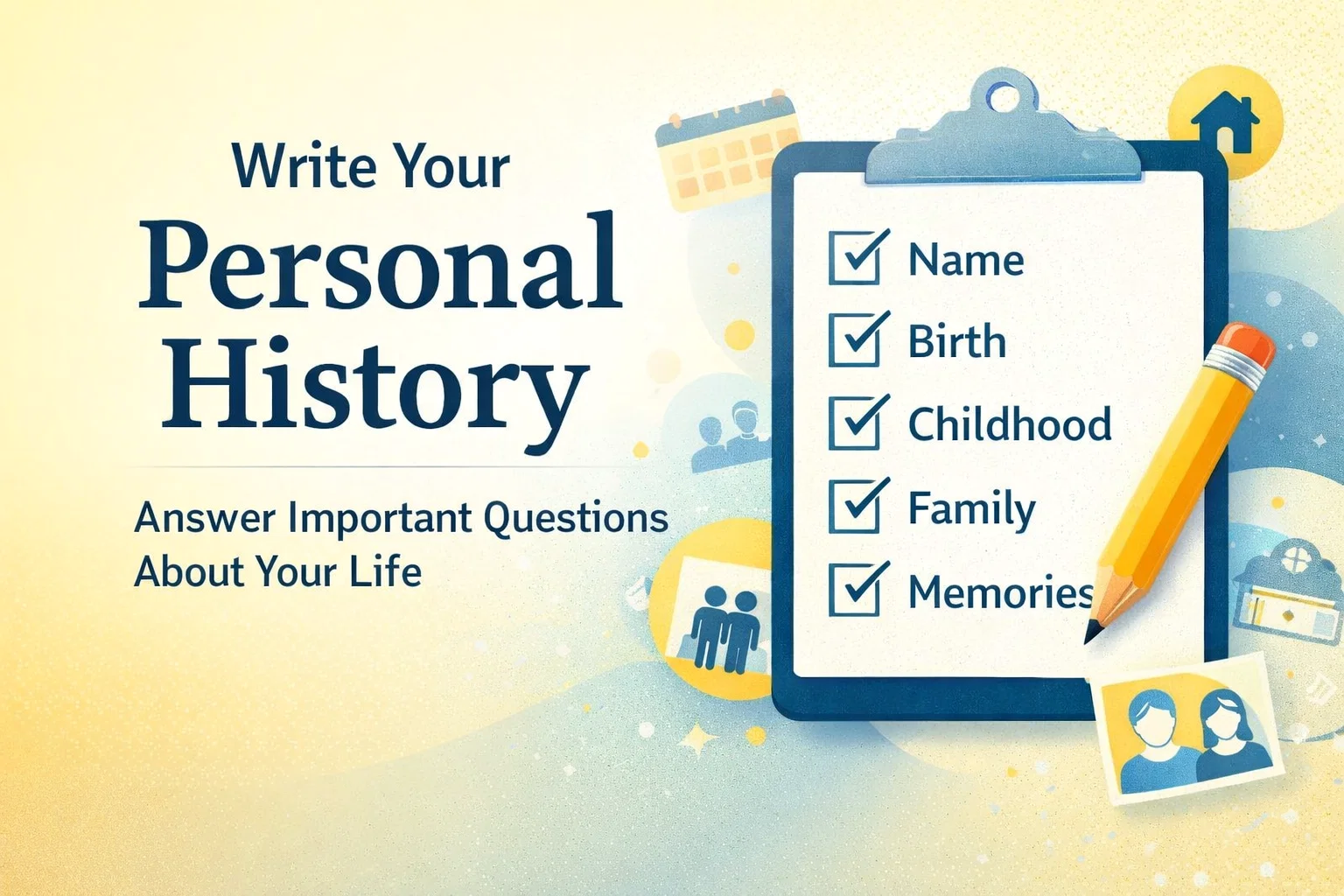
Have you ever sat down with a blank notebook, heart full of stories, only to find that the words simply won’t come? We all have a unique narrative woven from a lifetime of experiences, yet translating those memories into a written legacy can feel like trying to catch mist with your bare hands. The image of a personal history checklist serves as more than just a list of questions; it is a roadmap to the soul. Writing your personal history is one of the most profound gifts you can give to yourself and your future generations. It is an act of reclaiming your identity and ensuring that your voice resonates long after the present moment has passed.
In this guide, we are diving deep into how you can use structured prompts to break through writer’s block and build a comprehensive memoir. Whether you are a seasoned storyteller or someone who hasn’t picked up a pen since high school, the journey of self-discovery through writing is accessible to everyone. Let us explore how to turn these fifty prompts into a living, breathing document of your life.
Why Your Personal History Matters More Than You Think
In our fast-paced digital world, we often trade depth for speed. We post a photo on social media and move on, but these snippets rarely capture the essence of who we are. Personal history goes beyond the “what” and the “where” to explore the “why” and the “how.” It provides a bridge between generations. Think about your own grandparents. Don’t you wish you knew what their first day of work felt like, or what their childhood bedroom smelled like? By documenting your own story, you are providing that missing link for those who come after you.
Beyond the legacy aspect, writing is a powerful tool for mental clarity. As you move through prompts about your childhood, your favorite places, and your hardest challenges, you begin to see patterns in your life. You recognize your own resilience and the recurring themes that make you who you are today. It is a form of self-therapy that helps you process the past while grounding you in the present.
Getting Started: Setting the Scene for Success
Before you dive into the first question on the list, it is helpful to create an environment that fosters reflection. You don’t need a mahogany desk or a professional studio. What you need is a space where you feel comfortable being honest with yourself. This might be a quiet corner of your local library, a sunny spot in your garden, or even your bed with a laptop at the end of the day.
Choosing Your Medium
Are you a fan of the tactile feel of pen on paper, or do you prefer the speed of a keyboard? There is no wrong answer here. Some people find that longhand writing slows their brain down, allowing for more emotional depth. Others find that typing allows them to keep up with the rapid flow of memories. If you are tech-savvy, you might even consider a digital journaling app that allows you to attach photos directly to your entries. The key is consistency over perfection.
Establishing a Routine
The biggest hurdle to completing a personal history project is the feeling of being overwhelmed. Fifty prompts can seem like a lot if you try to tackle them all in one weekend. Instead, think of this as a marathon, not a sprint. Try to dedicate fifteen to twenty minutes a day to a single prompt. If a particular question sparks a long-forgotten memory, stay with it. If a prompt doesn’t resonate right now, skip it and come back later. The goal is to keep the momentum going without turning it into a chore.
Diving into the Prompts: Exploring Your Origins
The first few prompts on our list focus on your beginnings. These are the building blocks of your identity. Writing about your name, your birthplace, and your parents sets the foundation for everything that follows. When you write about your name, look for the stories behind it. Were you named after a distant relative? Does your name have a specific cultural meaning that has influenced your life? These small details add layers of richness to your narrative.
When you transition into writing about your parents and siblings, try to move beyond basic descriptions. Instead of just saying what your mom did for work, write about the specific things she would say when she was happy, or the way she handled a crisis. These character sketches turn names on a page into vibrant, relatable people for your readers.
The Magic of Childhood and Adolescence
The prompts focusing on your early years often yield the most vivid imagery. Think back to your childhood house. What was the layout? Was there a squeaky floorboard or a specific window you always looked out of? Describing your childhood bedroom can reveal so much about your early interests and personality. Was it organized and tidy, or was it a chaotic workshop of toys and books?
Favorite Places and Simple Joys
Childhood is often defined by the places we felt safest and the activities that made us lose track of time. Whether it was a hidden spot in the woods, a local park, or a grandparent’s kitchen, these locations are anchors for our memories. When you write about your favorite childhood activity, try to engage all five senses. Describe the sound of the wind, the taste of a specific snack, or the feeling of the sun on your skin. This sensory writing is what makes a personal history truly immersive.
The Teenage Transition
Adolescence is a time of immense change and often a bit of drama. Writing about your typical day as a teen or your high school experience can be both nostalgic and cringeworthy. This is where you can talk about your first car, your favorite music, and the friends who shaped your worldview. Don’t be afraid to be vulnerable here. Everyone struggles during their teenage years, and sharing those struggles makes your story more human and inspiring.
Navigating Adulthood: Milestones and Lessons
As the prompts move into your twenties, thirties, and beyond, the focus shifts toward independence and choice. This is where you document your career path, your relationships, and the moment you first left home. Leaving home is a universal rite of passage. Was it a moment of excitement, or was it clouded by homesickness? These emotional turning points are the “climax” of your personal history.
Work and Passion
Our jobs often take up a huge portion of our lives, yet we rarely write about them in detail. Use the prompts about your first job and your favorite job to reflect on what you learned about yourself in the professional world. Did your first job teach you the value of a dollar, or did it teach you that you never wanted to work in an office? These insights are valuable because they show your growth over time.
Love and Family
Relationships are the heart of the human experience. Writing about how you met a significant other or the experience of having children (if applicable) captures the deep connections that sustain us. Even if you aren’t in a relationship, writing about your close friends and the “chosen family” you have built is just as important. These are the people who have walked alongside you during your most significant moments.
Reflecting on the Big Picture
The final section of the prompts encourages a broader perspective. Questions about what you are most proud of, your bucket list, and the advice you would give your younger self allow you to step back and look at the trajectory of your life. This is the “wisdom” phase of the project.
What advice would you give your younger self? Often, the answers involve letting go of perfectionism, taking more risks, or spending more time with loved ones. When you write these things down, you aren’t just giving advice to a past version of yourself; you are reaffirming those values for your current self. It is a powerful way to close the loop on your history and look toward the future with intention.
Tips for Staying Motivated and Creative
Writing 1,500 words or a full memoir is a big task. To keep things fresh, try these strategies:
- Use Photos as Triggers: If you are stuck on a prompt, look through old photo albums. A single image can unlock a flood of memories that you might have forgotten.
- Talk It Out: If writing feels too hard, use the voice memo feature on your phone to record your answer to a prompt. You can always transcribe it later.
- Don’t Edit as You Go: The first draft is for getting the story down. Don’t worry about grammar or flow initially. You can polish the prose later.
- Keep it Fun: Add “bonus” questions of your own. What was your favorite movie in 1995? What is the best meal you’ve ever eaten? Small details add flavor.
The Value of the Unfinished Story
One of the most important things to remember is that your personal history is never truly finished because you are still living it. Don’t wait until you are “old” to start this project. Start now, regardless of your age. Even if you only answer ten of the fifty prompts, you have created something that didn’t exist before. You have captured a slice of time and a unique perspective that only you possess.
The checklist in the image is a starting point, but it is not a boundary. Feel free to wander off the path. If a question about your aunts leads to a three-page story about a family reunion in 1982, let it happen. The goal is to be authentic to your experience. Your life is a collection of stories, some grand and some microscopic, and every single one of them is worth telling.
Conclusion: Your Legacy Starts with a Single Word
Writing your personal history is a courageous act. It requires looking back at both the sunshine and the shadows. However, the reward is a deeper understanding of yourself and a lasting legacy for those you love. By using structured prompts like the ones we’ve discussed, you take the guesswork out of the process and turn a monumental task into a series of small, enjoyable reflections.
Remember that you don’t need to be a professional writer to have a story worth telling. Your voice, with all its unique quirks and perspectives, is exactly what makes your history valuable. So, pick a prompt that speaks to you today. Whether it is the origin of your name or the best part of your thirties, start writing. Your future self, and the generations to come, will thank you for it. Happy writing!
Would you like me to generate a specific list of additional prompts tailored to a different life stage, such as retirement or early childhood?