30 Gentle Ways to Be a Better Parent What Children Notice Most Mindful Parenting Tips
Have you ever paused during a hectic Tuesday afternoon, mid-phone call or while washing dishes, and wondered what your children are actually recording in their memory banks? We often stress over the big things: the expensive birthday parties, the overseas vacations, or getting them into the right extracurricular activities. Yet, if we look closely at the architecture of a child’s heart, we find that it is built on a foundation of microscopic interactions. The way we look at them when they speak, the tone of our voice when they make a mistake, and the simple act of being present are the true building blocks of their world. This transition from “big picture” parenting to “micro-moment” parenting is where the real magic happens.
The Invisible Language of Connection
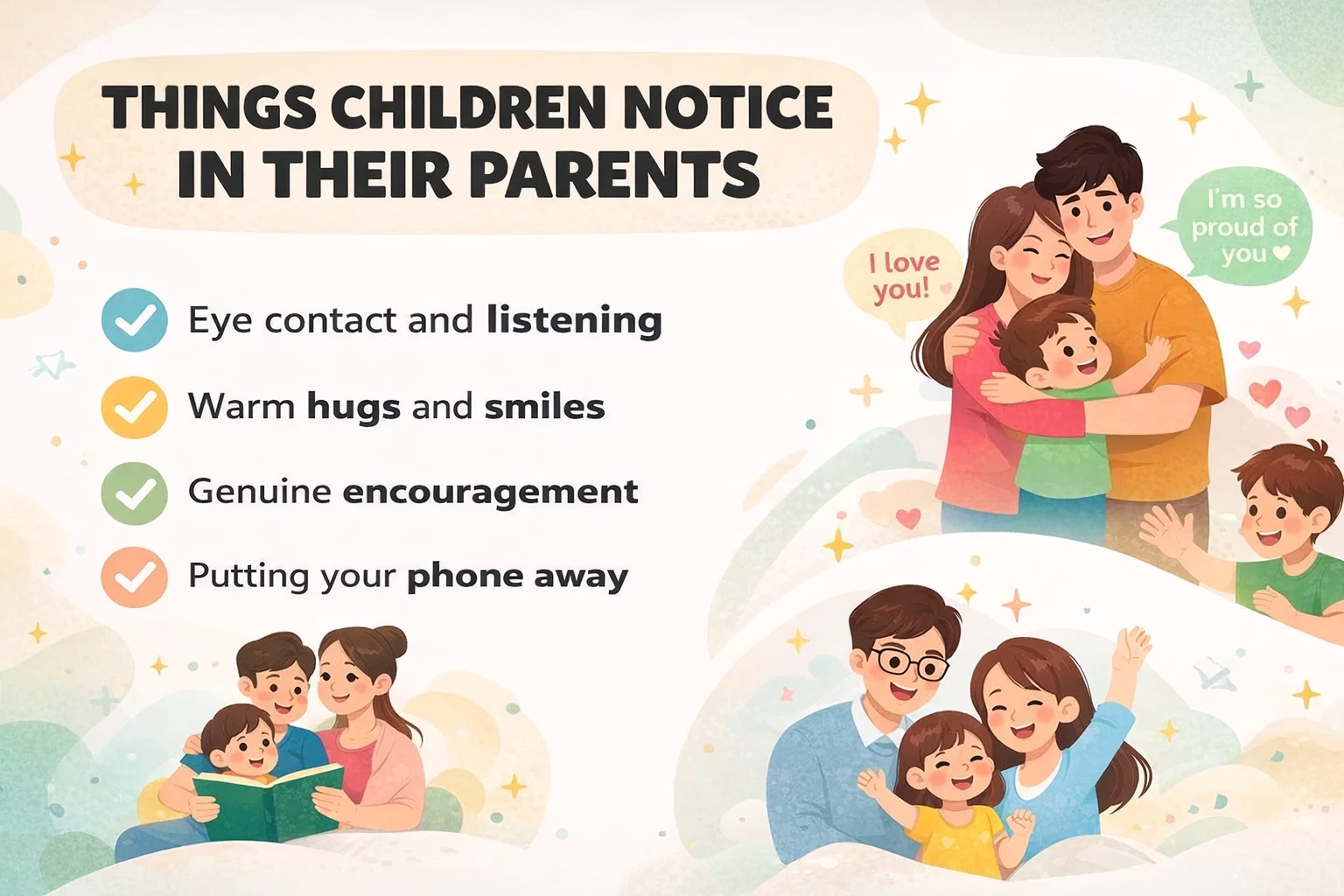
Children are like sponges, but not just for the words we say. They are masters of observing our non-verbal cues. When the image above highlights eye contact when you listen, it is touching on a fundamental human need: the need to be seen. In a world dominated by screens and digital distractions, giving a child your undivided gaze is a revolutionary act of love. It tells them that whatever they are saying, no matter how small or repetitive, is the most important thing in your world at that moment.
This invisible language extends to our physical presence. Think about the difference between a quick, distracted hug and a hug that lasts. A long hug allows a child’s nervous system to co-regulate with yours. It lowers cortisol and boosts oxytocin, creating a physical sense of safety that words alone cannot provide. These are the “silent” lessons in security that children carry with them well into adulthood.
The Power of Warm Greetings and Shared Smiles
How do you greet your child after a long day at school or when they first wake up in the morning? A warm greeting sets the emotional thermostat for the entire household. If our first interaction is a checklist of chores or a complaint about the mess, we send a message that our expectations are more important than their presence. On the other hand, a shared smile and a genuine “I am so happy to see you” build a bridge of connection that can withstand the inevitable storms of the day.
Gentle Corrections versus Rigid Discipline
One of the most profound shifts in modern parenting is the move toward gentle corrections. This does not mean a lack of boundaries; rather, it means enforcing those boundaries with empathy. When a child makes a mistake, they are often already feeling a sense of shame or failure. If we meet that mistake with harshness, we reinforce the shame. If we meet it with a smile after mistakes and a calm explanation, we teach them that failure is a part of growth.
Gentle correction focuses on the behavior rather than the child’s character. By using words of kindness even when we are frustrated, we model emotional intelligence. We show them that it is possible to be upset with someone’s actions while still deeply respecting their feelings. This distinction is vital for their future relationships and their own self-image.
Building Confidence through Small Victories
We often save our loudest cheers for the “A” on the report card or the winning goal in the soccer game. However, children notice when we notice their small victories. Did they share a toy without being asked? Did they try a food they usually dislike? Did they manage to tie their shoes after ten failed attempts? Noticing these moments tells a child that you are paying attention to their effort, not just their output.
- Celebrate the process: Focus on how hard they worked rather than the final result.
- Be specific: Instead of saying “Good job,” say “I noticed how patient you were while building that tower.”
- Encourage resilience: Use phrases like “I saw you try again even when it was hard.”
The Digital Divide: Putting the Phone Away
Perhaps the most challenging task for the modern parent is the battle against the smartphone. Our children are the first generation to compete with a glowing rectangle for their parents’ attention. When we consciously choose to put our phones away, we are making a statement of value. We are saying, “You are more interesting than my feed.”
Children notice the “still face” we often have when scrolling. They notice when we are physically present but mentally miles away. Creating phone-free zones, such as during meal times or the hour before bed, creates a sacred space for bedtime stories and deep conversation. These are the times when children feel safest to share what they really think and feel.
Listening Without Rushing
Our lives are often lived at a frantic pace, but childhood happens in slow motion. When a child is telling a story, they may stumble over words or take a long time to get to the point. The urge to finish their sentences or hurry them along is strong. However, listening without rushing is a form of respect. It shows them that their thoughts are worth the time it takes to express them. This builds the foundation for them to become confident communicators who believe their voice matters.
Creating a Sanctuary of Safety and Trust
At its core, parenting is about helping them feel safe. This safety isn’t just physical protection from the world; it is emotional safety. It is the knowledge that they can be silly without judgment and that they will find comfort when they are sad. When a child knows their home is a sanctuary where their feelings are respected, they develop the courage to explore the world outside.
Trust is built through the promises you keep. To a child, a “maybe later” that never happens is a broken promise. Being reliable in the little things—like remembering little details about their favorite hobby or showing up for playtime together—builds a reservoir of trust that you will need during the more difficult teenage years.
The Role of Play and Silliness
Play is the universal language of childhood. When we join our children in play, we meet them on their level. Being silly without judgment breaks down the hierarchy of parent and child and allows for pure, joyful connection. Whether it is a kitchen dance party, a make-believe adventure, or simply laughing at their jokes, these moments of shared joy are the ones that children will look back on with the most fondness.
Encouragement and the Power of “I’m Proud of You”
The words we speak to our children become their internal monologue. Hearing “I’m proud of you” or “I believe in you” acts as a shield against the criticisms they will inevitably face in the world. However, it is important to celebrate effort, not just wins. When we praise the “win,” we teach them that their value is tied to achievement. When we praise the “effort,” we teach them that their value is tied to their character and persistence.
Patience in tough moments is perhaps the hardest gift to give, but it is also the most memorable. When we stay calm while they are melting down, we are teaching them how to handle their own big emotions. We are showing them that their feelings are not too much for us to handle, which in turn teaches them that their feelings are not too much for them to handle.
Refining Your Parenting Daily
No parent is perfect, and the beauty of the list we’ve discussed is that it doesn’t require perfection. It requires intention. It is about the “smiles after mistakes” and the “gentle touch and presence.” If you had a rough day and lost your temper, that is an opportunity to model an apology and show them how to repair a relationship. Even that is something children notice and learn from.
Summary: The Legacy of Small Moments
As we navigate the complexities of raising humans, let us remember that the things children notice in their parents are rarely the things we see on a balance sheet or a resume. They notice the eye contact, the bedtime stories, and the way we celebrate them for exactly who they are. They notice the words of kindness and the way we remember the little details of their lives. By focusing on these thirty gentle ways to connect, we are not just being “better parents” in the moment; we are raising the next generation of emotionally healthy, confident, and compassionate adults.
Take a breath today and look for one small victory to celebrate. Put the phone down for ten minutes of dedicated playtime. Listen to a story without looking at the clock. These are the investments that pay the highest dividends in the long run. Your presence is the greatest gift you can ever give them, and it is the one thing they will never outgrow. Keep believing in them, and they will surely keep believing in themselves.
Would you like me to create a checklist of these parenting moments for you to track throughout the week?