The Art of Letting Go Visual Book Summary
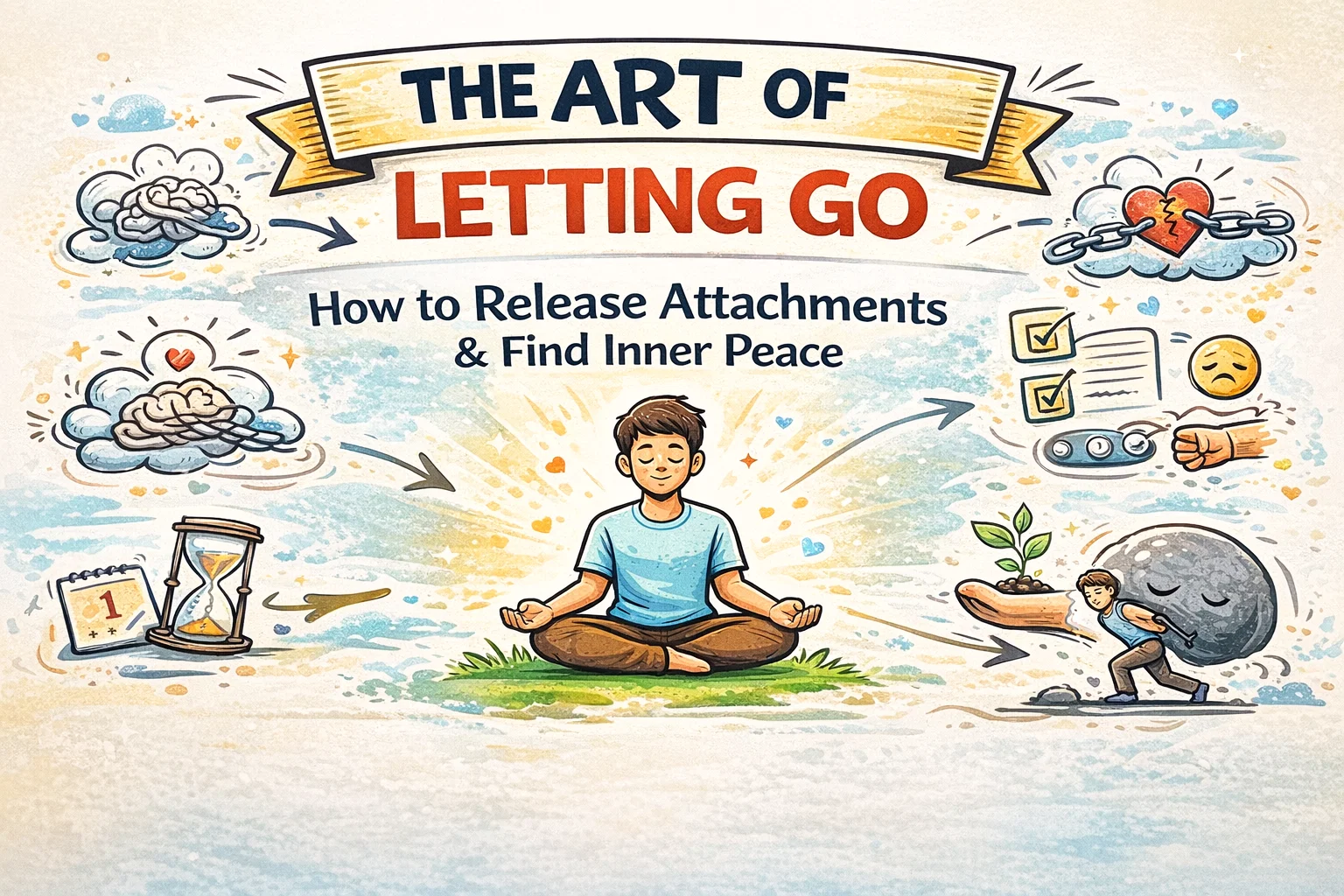
Have you ever felt like you are carrying a massive, invisible backpack filled with heavy rocks everywhere you go? Those rocks are usually our past regrets, our deep anxieties about the uncertain future, and our desperate need to control every single detail of our lives. We hold onto these heavy burdens tightly because we somehow believe they keep us safe or prepare us for the worst. However, in reality, they only weigh us down and prevent us from experiencing true joy. If you are feeling completely exhausted from constant overthinking and feeling stuck in old patterns, you are entirely in the right place. Today, we are diving deep into the profound and highly rewarding journey of releasing that unnecessary burden. We are going to explore the beautiful art of letting go, which is a transformative daily practice that can bring genuine inner peace, clarity, and renewed energy to your everyday life.
Understanding the True Meaning of Letting Go
When we hear the phrase “letting go,” many of us instantly picture a complete erasure of our memories. We mistakenly believe that letting go means we have to forget the past or pretend that painful experiences never happened to us. This misconception can actually prevent us from healing because our brains naturally resist forgetting significant life events. The truth is far more empowering and accessible.
It Is About Acceptance, Not Forgetting
Letting go is fundamentally about absolute acceptance. It is the brave, conscious act of acknowledging exactly what happened without allowing those past events to dictate your present emotional state. You keep the memories, and you keep the valuable lessons, but you intentionally detach the heavy emotional chains that bind you to the pain. Think of it as looking at an old photograph. You can see the image clearly, but it no longer has the power to make you cry or feel intense anger. You have accepted the reality of the situation, which immediately removes its power over you.
Freeing Yourself from Emotional Attachment
To truly free yourself, you must practice cutting the invisible cords of negative emotional attachment. Emotional attachment happens when we tie our current happiness to external factors, such as other people, specific outcomes, or past identities. When you actively choose to release these attachments, you are not saying that you do not care. Instead, you are declaring that your inner peace is your top priority. You learn to love and engage with the world without desperately clinging to it.
The Roots of Our Suffering: Attachment and Control
If we want to master this art, we first need to understand why we suffer in the first place. Much of our mental anguish stems directly from our deeply ingrained attachments and our unrelenting desire to control the uncontrollable.
Why We Cling to Expectations
Expectations are essentially premeditated resentments. We build elaborate scenarios in our minds about how our careers should progress, how our partners should behave, and how our lives should unfold. When reality fails to match these rigid blueprints, we experience profound disappointment and suffering. This suffering is a direct result of our attachment to a fantasy. By lowering our rigid expectations and adopting a mindset of curious observation, we open ourselves up to pleasant surprises rather than guaranteed disappointments.
The Crippling Fear of Loss
Another major pillar of attachment is the intense fear of loss. We often hold onto toxic relationships, unfulfilling jobs, or negative habits simply because they are familiar. The human brain is naturally wired to prefer a known negative over an unknown positive. Recognizing this fear is the first massive step toward overcoming it. You must remind yourself daily that letting go of something that no longer serves you creates vital space for something much better to enter your life.
How to Stop Overthinking and Embrace the Present
Overthinking is a modern epidemic. It is a exhausting mental treadmill where we run for hours but never actually reach a destination. When we overthink, we are usually either agonizing over past mistakes or catastrophizing about future problems. Neither of these places exists in reality.
The Transformative Power of Mindfulness
The ultimate antidote to overthinking is the practice of mindfulness. Mindfulness is simply the act of bringing your full, undivided attention to the present moment. When you feel your mind spiraling into a vortex of “what ifs,” you need to anchor yourself physically. You can do this by focusing entirely on your breathing, noticing the feeling of your feet firmly planted on the ground, or listening intently to the sounds in your immediate environment.
- Focus on the present moment: Your current reality is the only place where you have any true agency or power.
- Acknowledge the boundary of time: Accept that the future cannot be fully controlled and the past cannot be changed under any circumstances.
- Break the cycle: Every time you catch yourself ruminating, gently redirect your focus to a physical sensation right now.
Detaching from the Past to Heal Your Future
Your past is a place of reference, not a place of residence. Spending too much time dwelling on yesterday robs you of the beauty available today. Detaching from the past does not happen overnight, but it is entirely possible with consistent effort.
Releasing Heavy Emotional Baggage
Emotional baggage consists of the unresolved feelings we drag from one situation to the next. If you were betrayed in a past relationship, carrying that baggage means you will naturally distrust your next partner. To release this weight, you must process the original emotion. Journaling, speaking with a therapist, or practicing targeted meditation can help you unpack these heavy bags. Once you look at the baggage objectively, you can finally decide to leave it behind.
Memories Do Not Define Your Identity
A common trap is confusing our past experiences with our core identity. You might say to yourself that you are a failure because a business venture collapsed five years ago. However, your memories are simply events that occurred; they are not who you fundamentally are as a human being. You are a constantly evolving individual. When you separate your true identity from your historical timeline, you grant yourself the incredible freedom to reinvent yourself at any given moment.
Learning to Let Go of Control
We absolutely love to be in control. It provides us with a comforting, though entirely false, sense of security. The harsh reality of life is that we control very little outside of our own thoughts and our immediate actions.
Control Your Efforts, Not the Outcomes
You can study for weeks for an exam, but you cannot control the exact questions that will appear. You can prepare a flawless presentation, but you cannot control the mood of your audience. The secret to immense relief is to pour all your energy into your personal effort and completely detach from the final outcome. When you do your absolute best and then surrender the rest to the universe, you eliminate a massive source of daily anxiety.
Trusting the Process and Embracing Flexibility
Life is inherently unpredictable. If you are rigid like a dry branch, you will easily snap under the pressure of unexpected storms. However, if you are flexible like a living reed, you will bend with the harsh winds and survive perfectly intact. Being flexible is a sign of immense real strength. It means you trust the unfolding process of life, even when it takes you on a totally unexpected detour. Embrace the uncertainty, as it is the only place where true growth happens.
The Healing Power of Forgiveness and Detachment
Detachment is often viewed negatively, as if it means being cold or aloof. In the context of healing, however, detachment is a beautiful, self-preserving boundary. It is the realization that you cannot heal in the exact same environment that made you sick.
Anger Is a Poison You Drink Yourself
Holding onto anger and deep resentment is incredibly toxic. As the old saying goes, holding onto anger is like drinking poison and expecting the other person to die. The person who wronged you is likely living their life completely unaware of your internal suffering. Your anger is only hurting your own mind and your own physical body. Recognizing this absolute truth is often the catalyst needed to begin the forgiveness process.
Forgiving to Set Yourself Free
Forgiveness is incredibly misunderstood. It is absolutely not about excusing bad behavior, and it does not mean you have to invite toxic people back into your inner circle. Forgiveness is a completely selfish act in the best possible way. You forgive to free yourself from the heavy, suffocating emotional link to the person who hurt you. By letting go of the need for revenge or an apology you might never receive, you take your personal power back.
Releasing the Ego to Find Inner Peace
Our ego is the loud, demanding voice inside our heads that constantly screams for validation, insists on being right, and fiercely defends our pride. The ego is the very thing that makes letting go so incredibly difficult.
How Humility Attracts Inner Peace
When we operate from a place of ego, we are always on the defensive. We take everything personally, and we view every minor disagreement as a massive attack on our character. Letting go of the ego requires profound humility. It means admitting that you do not have all the answers, acknowledging that you make mistakes, and realizing that you do not need to win every single argument to be valuable. When you step back from the demands of the ego, you cultivate a quiet, unshakeable inner peace that external circumstances cannot easily disturb.
Why You Truly Deserve Peace
Embarking on the journey of letting go requires immense bravery. It asks you to confront your deepest fears, challenge your lifelong mental habits, and step out of your comfortable suffering into an unknown space of freedom. There will be days when you want to retreat into your old patterns of overthinking and aggressive control. When those days happen, it is vital to be gentle with yourself and remember why you started this process.
Always remember this fundamental truth: You let go, not because you are weak or because you are giving up. You let go because you are strong enough to realize what is no longer serving your highest good. You do the hard work of releasing the past, forgiving others, and trusting the uncertain future because you fundamentally deserve peace. You deserve a mind that is clear, a heart that is light, and a life that is truly your own. Start small today, take a deep breath, and allow yourself the beautiful grace of just letting it all go.