How to Stand Up for Yourself at Work Assertive Phrases to Use Without Sounding Defensive
Ever found yourself in a meeting where your best idea was interrupted before you could even finish the sentence? Or perhaps you have felt that familiar sting of being overlooked for a project you know you are perfect for, yet you stayed silent because you did not want to seem “difficult” or “aggressive.” We have all been there. The challenge of standing up for yourself in a professional setting is not just about having courage; it is about having the right vocabulary. Navigating office dynamics requires a delicate balance of firmness and poise so that your message is heard without building unnecessary walls between you and your colleagues.
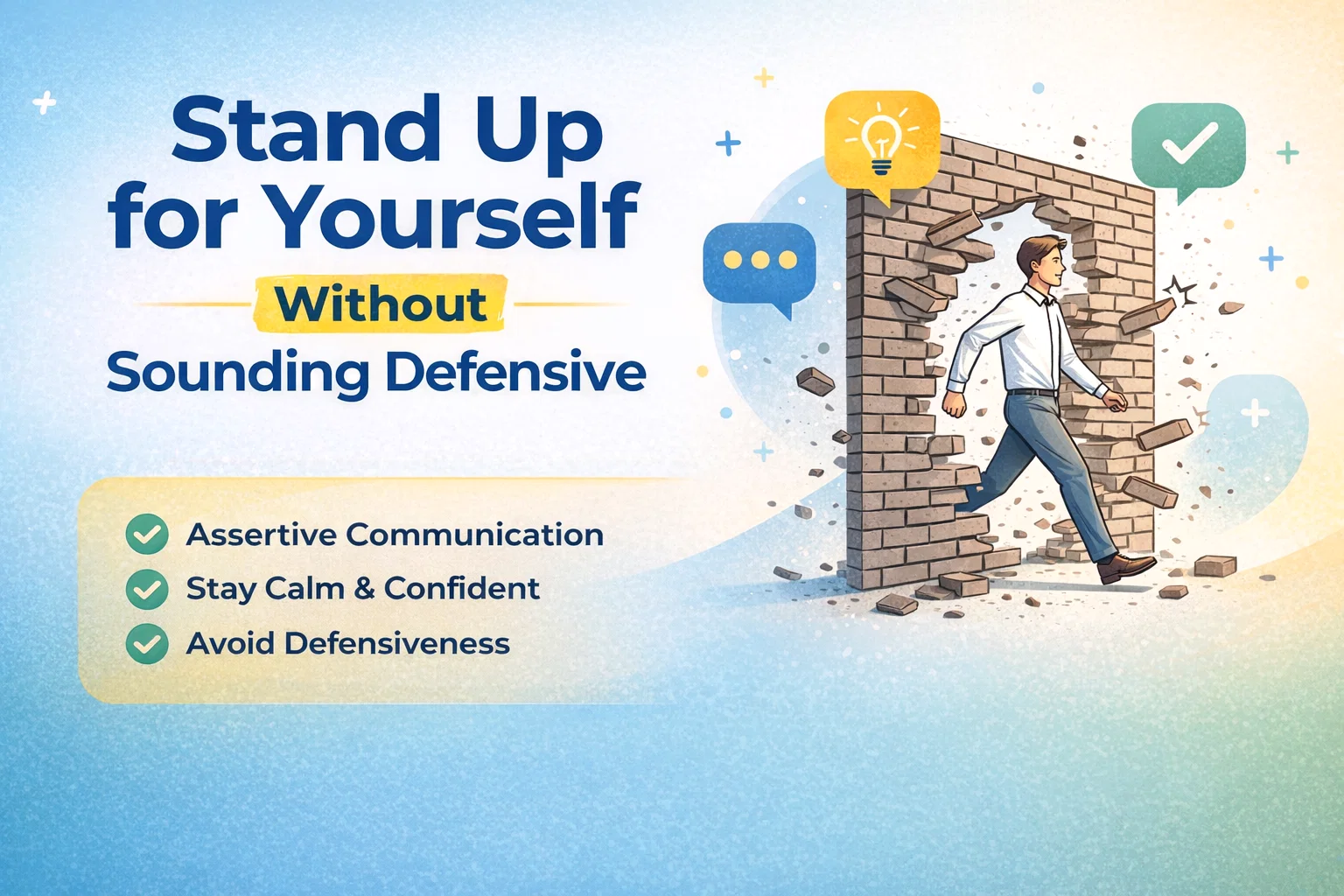
The image we are looking at today perfectly captures this struggle. It shows a person literally breaking through a brick wall, symbolizing the breakthrough that happens when we stop letting silence hold us back. But notice how he is walking through, not smashing everything in sight. This is the essence of assertive communication. It is a controlled, purposeful movement toward being seen and heard. In this guide, we are going to dive deep into the art of standing your ground without sounding defensive, providing you with the exact phrases and psychological strategies to elevate your career and your self-esteem.
The Psychology of Assertiveness vs. Defensiveness
To master the phrases shown in our visual guide, we first need to understand the internal shift that must occur. Defensiveness is a stress response. When we feel attacked or undervalued, our brain often slips into a “fight or flight” mode. If we “fight,” we might sound accusatory or sharp. If we “fly,” we stay silent and build resentment. Assertiveness is the healthy middle ground. It is the ability to express your needs, opinions, and boundaries clearly and respectfully.
When you use assertive language, you are not trying to win an argument; you are simply stating a fact about your experience or your requirements. This shift in intent changes your tone, your body language, and how others perceive you. By choosing calm, pre-planned phrases, you bypass the emotional triggers that lead to defensiveness, allowing you to remain the most composed person in the room.
Why We Struggle to Speak Up
Many of us were raised with the idea that being “polite” means being agreeable. In a professional context, this can lead to a “people-pleasing” habit that actually hurts your career. If you never ask for the opportunity, people assume you do not want it. If you never correct a misunderstanding, people assume the incorrect version is the truth. Breaking through that “brick wall” of social conditioning is the first step toward professional empowerment.
How to Handle Being Overlooked or Sidelined
One of the most frustrating experiences in the workplace is being a “silent contributor.” You do the work, you have the insights, but when it comes time for the spotlight or the decision-making, you are nowhere to be found. This is where active participation phrases become your best friend.
Asking to be Considered
If a new project is announced and your name isn’t mentioned, your first instinct might be to feel hurt and withdraw. Instead, try the phrase: “I’d like to be considered for that opportunity.” This is powerful because it is a direct statement of interest. It does not demand; it proposes. It tells your manager that you are ambitious and ready for a challenge without sounding entitled.
Gaining a Seat at the Table
Decisions often happen in “closed-door” meetings. If you find out a decision was made that affects your workflow without your input, use this: “I’d like to be part of that conversation.” This phrase establishes your stake in the project. It reminds others that your expertise is valuable and that including you will lead to a better outcome for everyone involved.
Reclaiming Your Voice When Interrupted
We have all dealt with the “interrupter.” This is the person who jumps in mid-sentence, often hijacking your point and making it their own. It can feel incredibly dismissive, but reacting with anger often makes you look like the one who has lost control.
Holding Your Ground with Poise
The next time someone cuts you off, wait for a tiny breath in their speech and calmly say: “I’d love to finish my thought.” This is a masterclass in professional boundaries. You are not telling them to shut up; you are simply stating that you are not finished. It forces the interrupter to acknowledge your presence and gives the floor back to you. Most people will apologize and let you continue once they realize they have stepped over the line.
Sharing Ideas When Dismissed
If you offer a suggestion and it is quickly brushed aside, do not let it die there. Use the phrase: “I have some ideas I’d love to share.” This signals that you have more substance to provide and that you are not finished contributing to the solution. It pushes back against dismissal by reinforcing the value of your perspective.
Correcting Misinformation and Reclaiming Credit
In the fast-paced world of business, facts can get twisted and credit can be misplaced. If you do not correct these issues immediately, they become the “official” record. However, correcting a boss or a peer can feel risky. The key is to focus on the “what,” not the “who.”
The Art of the Clarification
If someone else takes credit for your work or attributes your success to someone else, do not stay silent. Say: “Just to clarify, that was my contribution.” Notice the word “clarify.” It suggests that the error was just a simple mistake rather than a malicious act. This allows the other person to save face while ensuring that your hard work is accurately documented.
Pushing Back on Different Perspectives
When someone describes a situation in a way that is inaccurate or unfair to you, you can respond with: “That’s not the way I experienced it.” This is a brilliant phrase because it is impossible to argue with. You are not calling them a liar; you are simply stating your own reality. It opens the door for a deeper discussion about the facts without putting the other person on the defensive.
Navigating Feedback and Responsibility
Growth requires feedback, but sometimes that feedback is missing or we are given more than we can handle. Being assertive about your workload and your development is essential for avoiding burnout and staying on the path to promotion.
Showing Capability Without Being Asked
If you feel like you are stuck in a rut, take the initiative. Say: “I’m ready to take on more responsibility.” This is music to a manager’s ears. It shows that you are proactive and looking for ways to contribute to the company’s success. It moves you from a passive role to an active leader in your own career path.
Asking for Clarity After a Setback
Did you get passed over for a promotion? Instead of dwelling on the “why me,” go straight to the source. Try: “I’d love feedback on why I wasn’t selected.” This shows incredible maturity. It tells your superiors that you are committed to improvement and that you want to know exactly what steps you need to take to be the top choice next time. It turns a “failure” into a strategic learning opportunity.
Setting Emotional and Behavioral Boundaries
Sometimes the issues at work are not about tasks, but about how we are being treated or the environment we are working in. These are often the hardest conversations to have because they feel personal.
Naming Discomfort Calmly
If a colleague makes an inappropriate joke or treats you disrespectfully, you do not have to laugh it off. You can say: “That didn’t sit well with me.” This is a low-conflict way to flag a behavioral boundary. It lets the other person know they have crossed a line without you having to give a long lecture or start a confrontation.
Pushing Back on Micromanagement
If you feel like someone is hovering too much or controlling your every move, try: “I’d prefer more collaboration.” This reframes the power dynamic. Instead of saying “stop controlling me,” you are saying “let’s work together as equals.” It invites partnership while subtly asking for the autonomy you need to do your job effectively.
Redirecting Focus to What Matters
Offices can be breeding grounds for gossip and unnecessary tension. An assertive leader knows how to cut through the noise and get the team back on track. This not only saves time but also establishes you as a professional who values productivity over drama.
Dealing with Gossip and Tension
When a conversation starts to veer into unproductive territory or personal attacks, use the phrase: “Let’s stay focused on the work.” This is a polite but firm way to shut down negativity. It reminds everyone why they are there and positions you as someone who is focused on the “big picture.”
Transparency and Impact
If you need to deliver hard news or explain why a certain decision was made, try: “I want to be transparent about the impact.” This phrase signals that you are being honest and that you have considered the consequences of your actions. It builds trust because it shows you are not hiding behind corporate jargon or emotional outbursts.
Implementing These Phrases in Your Daily Life
Reading these phrases is one thing, but using them in the heat of the moment is another. Like any skill, assertive communication requires practice. You are essentially rewiring your brain to choose a new response instead of your old, habitual ones.
- Start Small: Practice with low-stakes situations, like with friends or at a restaurant, before trying them in a high-pressure board meeting.
- Watch Your Body Language: Your words say “I am confident,” so make sure your body agrees. Stand tall, maintain eye contact, and keep your voice steady and at a moderate volume.
- Prepare for the Reaction: Some people might be surprised when you start speaking up. That is okay. Stay calm and stick to your phrases. Most people will eventually respect your new boundaries.
- Review and Refine: After a difficult conversation, think back on how it went. Did you stay assertive? Did you slip into defensiveness? Use each experience as a building block for the next one.
The Power of “Quiet Confidence”
You do not need to be the loudest person in the room to be the most influential. In fact, true authority often comes from those who speak less but say more. As the visual in our image suggests, you can respond to doubt with “quiet confidence.” When you say, “I’m confident I can handle this,” you are not boasting. You are simply stating a fact based on your skills and experience. This type of self-assurance is magnetic and earns respect far more effectively than any aggressive tactic ever could.
Conclusion: Breaking Through Your Own Walls
Standing up for yourself is not about changing who you are; it is about uncovering the person who has been there all along. Every time you use one of these phrases, you are taking a sledgehammer to that brick wall of self-doubt and social expectation. You are proving to yourself and your colleagues that your voice has value, your time is important, and your contributions are essential.
Remember that professional growth is not just about learning new technical skills; it is about mastering the “soft skills” of communication and self-advocacy. By swapping out defensive reactions for assertive phrases, you transform your workplace experience from one of endurance to one of empowerment. So, the next time you feel overlooked or interrupted, take a deep breath, remember the person breaking through the wall, and speak your truth with poise and clarity. You have worked hard to get where you are, and you deserve to be heard.
Would you like me to help you draft a specific email response using these assertive principles for a situation you are currently facing at work?