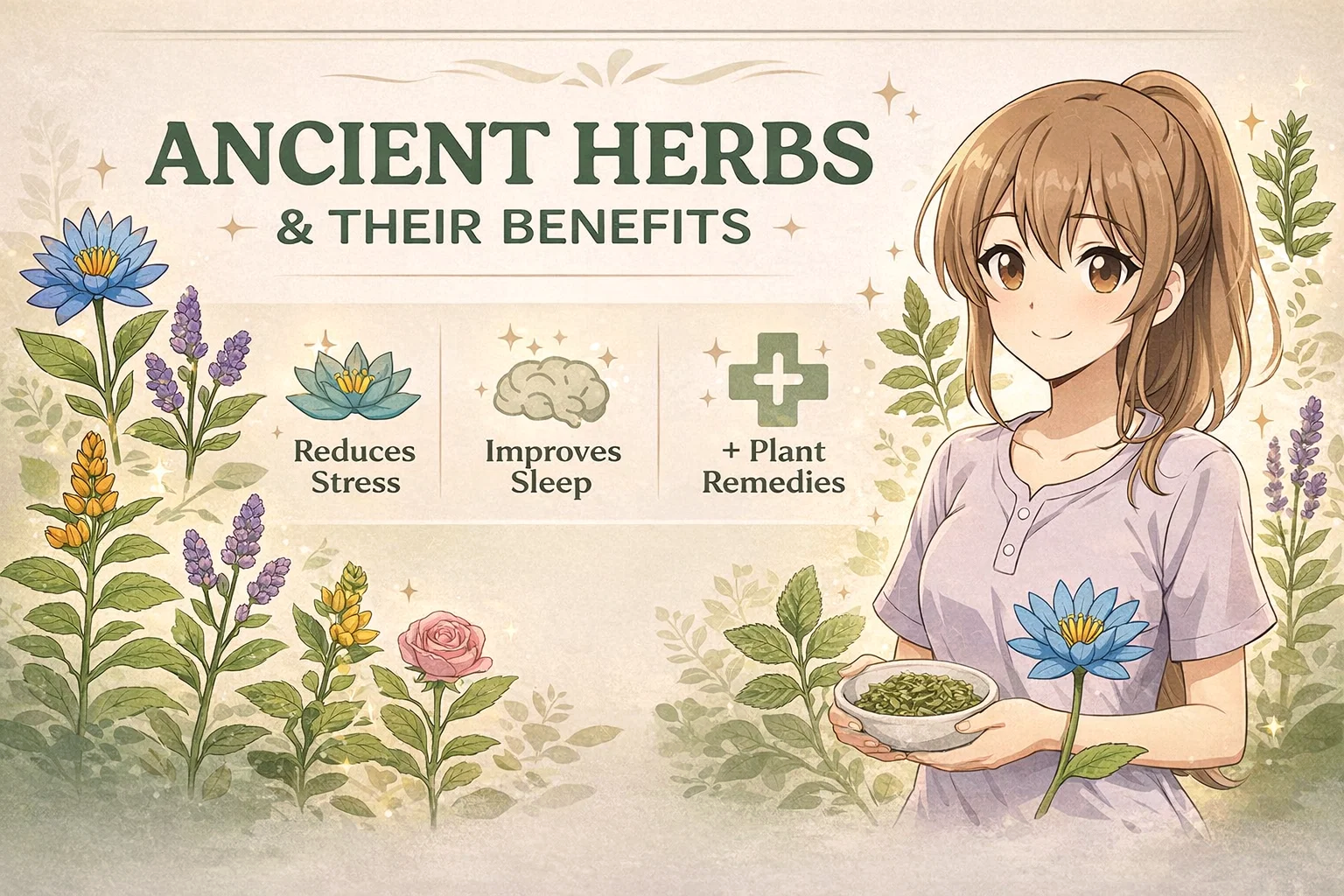
Ancient Herbs Their Benefits Natural Remedies for Anxiety, Sleep, and Holistic Wellness
Ancient wisdom is making a massive comeback in our modern, fast-paced world. While we have more technology than ever before, many of us are finding ourselves returning to the roots of wellness literally. The image of a serene young woman holding a bowl of herbs surrounded by botanical illustrations of Blue Lotus, Skullcap, and Wild Dagga isn’t just a pretty picture; it represents a growing movement toward natural, plant-based healing. If you have ever felt overwhelmed by synthetic options or simply wanted to feel more connected to the earth, exploring the world of ancient herbs is a transformative journey for both the body and the mind.
The Resurgence of Herbalism in Modern Wellness
In recent years, there has been a significant shift in how we approach health. Instead of just treating symptoms, many people are looking for holistic ways to support their overall vitality. Ancient herbs, which have been used for thousands of years across various cultures, offer a treasure trove of benefits that are now being validated by contemporary science. Whether it is the calming properties of Lavender or the lung-clearing power of Mullein, these plants provide a bridge between the wisdom of our ancestors and our current needs for balance and peace.
Why Ancient Wisdom Matters Today
Our ancestors didn’t have pharmacies; they had forests, meadows, and gardens. They understood the subtle energies of plants and how certain leaves, flowers, and roots could shift a person’s state of being. By revisiting these traditional uses, we tap into a biological harmony that has existed for millennia. Integrating these herbs into your daily routine is not about rejecting modern progress, but rather about enhancing your life with the gentle, effective support of nature.
Deep Dive into the Healing Properties of Ancient Herbs
The botanical guide shown in the image highlights several key players in the herbal world. Let’s break down some of the most potent plants mentioned and how they can specifically improve your quality of life. Understanding the “why” behind each herb allows you to curate a personal apothecary that meets your unique physical and emotional needs.
Blue Lotus: The Flower of Enlightenment
Blue Lotus (Nymphaea caerulea) was held in the highest regard by the ancient Egyptians. Often depicted in tomb paintings and spiritual texts, this beautiful aquatic flower is known for its ability to promote deep tranquility and facilitate lucid dreaming. When used mindfully, Blue Lotus acts as a nervous system relaxant. It helps to quiet the “monkey mind” that keeps us awake at night, making it a favorite for those who practice meditation or wish to explore the deeper realms of their subconscious during sleep.
Skullcap: Nature’s Answer to Anxiety
If you struggle with a racing heart or a constant sense of tension, Skullcap is an herb you need to know. Historically used in Native American medicine, this plant is a powerful nervine. It works by soothing the nervous system and releasing physical tension held in the muscles. Unlike some synthetic sedatives, Skullcap tends to be grounding without making you feel completely lethargic, making it an excellent choice for managing stress during a busy work week.
Wild Dagga: The Lion’s Ear for Euphoria
Wild Dagga, also known as Lion’s Ear, is a striking plant native to Southern Africa. It has been traditionally used by the Khoikhoi people for various medicinal purposes. In the context of emotional health, it is prized for its ability to ease anxiety and promote a mild sense of euphoria. It is a wonderful herb for those looking to lift their mood naturally and find a sense of lightheartedness in the face of life’s challenges.
Supporting Physical Vitality with Botanical Allies
Beyond emotional and mental health, many ancient herbs are powerhouses for physical recovery and systemic support. The plants we see in our gardens or wild spaces often hold the keys to better breathing, skin health, and immune function.
Mullein: The Guardian of the Lungs
Mullein is a tall, fuzzy-leafed plant that many might mistake for a common weed, but its medicinal value is immense. It is widely recognized as one of the best herbs for respiratory health. Mullein acts as an expectorant, helping to clear mucus from the lungs and soothe inflamed tissues. For those living in urban environments with high pollution or individuals recovering from seasonal congestion, Mullein tea or steam can provide immediate and profound relief.
Red Raspberry Leaf: The Nutrient Powerhouse
Red Raspberry leaves are much more than just the source of a delicious berry. They are incredibly rich in vitamins and antioxidants, particularly those that support reproductive health and systemic inflammation. Often called the “woman’s herb,” it is used to tone the uterus and balance hormones, but its high mineral content makes it a fantastic daily tonic for anyone looking to boost their nutritional intake through plant-based sources.
Calendula and Rose: Skin and Heart Connection
Calendula is famous for its skin-soothing properties, often used in salves to heal wounds and reduce inflammation. Meanwhile, the Rose is not just a symbol of love; it is a physical medicine that relieves tension and lifts the spirit. Both flowers remind us that beauty and healing often go hand in hand. Using these floral remedies can turn a simple skincare routine into a ritual of self-love and healing.
Enhancing Sleep and Dreams Through Herbal Rituals
One of the most fascinating aspects of the herbs featured in the image is their connection to the dream state. In a world where sleep disorders are rampant, turning to the botanical kingdom can offer a more holistic path to rest.
Calea Zacatechichi: The Dream Herb
Calea Zacatechichi, often referred to as the “Dream Herb” or “Bitter Grass,” has a long history of use by the Chontal Maya of Mexico. It is specifically used to strengthen the lucidity of dreams and improve dream recall. For those interested in the psychological benefits of dreaming or who use their dream state for creative inspiration, incorporating Calea can make the nocturnal experience much more vivid and memorable.
Passionflower and Lavender: The Ultimate Duo for Rest
While Lavender is the most well-known herb for relaxation, Passionflower is its perfect partner. Passionflower helps to increase levels of GABA in the brain, which lowers brain activity and helps you fall asleep faster. Combined with the stress-reducing scent of Lavender, these herbs create a synergistic effect that prepares the body for deep, restorative sleep. Instead of scrolling on a phone before bed, a cup of Passionflower tea and a Lavender-infused pillow can transform your sleep hygiene.
Practical Ways to Incorporate Ancient Herbs into Your Life
Knowing about these herbs is the first step, but the real magic happens when you begin to use them. You do not need to be a professional herbalist to start reaping the benefits of these plants. Here are some simple, accessible ways to bring herbal wisdom into your home.
- Herbal Infusions: This is the most common way to consume herbs like Spearmint, Peppermint, and Mullein. Simply steep the dried leaves in hot water for 10 to 15 minutes to extract their medicinal oils.
- Aromatic Pillows: Place dried Lavender or Rose petals in a small fabric pouch and keep it near your pillow to benefit from the calming scents throughout the night.
- Topical Salves: Infuse oils with Calendula or Indian Warrior to create your own natural balms for skin irritation or muscle pain.
- Dream Journaling: If you are using herbs like Blue Lotus or Calea Zacatechichi, keep a journal by your bed to record your experiences immediately upon waking.
Creating a Mindful Connection
When you use these herbs, try to do so with intention. Take a moment to appreciate the plant and the history behind its use. This mindfulness actually enhances the physiological benefits of the herb, as it helps to lower your cortisol levels and makes you more receptive to the healing properties of the botanicals.
Safety and Sourcing: A Responsible Approach
While herbs are natural, they are also powerful. It is vital to source your herbs from reputable suppliers who prioritize organic growing practices and ethical harvesting. Because plants absorb nutrients and toxins from the soil, you want to ensure that what you are putting into your body is as pure as possible.
Consulting with Professionals
If you are pregnant, nursing, or taking prescription medications, always consult with a healthcare provider or a certified herbalist before starting a new herbal regimen. Some plants can interact with medications or may not be suitable for certain health conditions. Being informed is a key part of the holistic journey.
Conclusion: Your Path to Natural Harmony
The world of ancient herbs is an invitation to slow down and listen to the wisdom of the earth. From the euphoric heights of Wild Dagga to the grounding presence of Skullcap, these botanical allies offer us a way to navigate the stresses of modern life with grace and vitality. By incorporating these plants into our daily rituals, we do more than just treat a cough or a sleepless night; we foster a deeper connection to the natural world and to ourselves. Whether you start with a simple cup of Peppermint tea or begin crafting your own complex tinctures, the journey toward holistic wellness is one of the most rewarding paths you can take. Embrace the power of these ancient healers and watch as your well-being flourishes in ways you never thought possible.
Would you like me to generate a specific herbal tea recipe or a guide on how to start your own indoor medicinal herb garden?