15 Gentle Nervous System Regulation Techniques for Anxiety Stress Relief
We have all been there: that sudden, tight clenching in the chest, the racing thoughts that refuse to slow down, or the heavy, buzzing energy that makes it impossible to focus. In our fast-paced world, our internal alarm systems are often stuck in the “on” position. This state of constant high alert is not just a mental burden; it is a physical reality within our nervous system. When we talk about feeling stressed or anxious, what we are often describing is a nervous system that has lost its way and needs a gentle path back to safety.
The good news is that you do not need an hour of meditation or a retreat in the mountains to find your center. Your body is equipped with a remarkable ability to reset itself through small, intentional sensory shifts. These are not just distractions; they are physiological signals that tell your brain the environment is safe. By engaging in gentle nervous system regulation, you can transition from a state of “fight, flight, or freeze” back into “rest and digest.” Let’s explore how these simple, science-backed habits can transform your daily well-being.
Understanding Your Nervous System: Why Regulation Matters
Before we dive into the techniques, it is essential to understand what we are actually doing when we “regulate.” Your autonomic nervous system is divided into two main branches: the sympathetic and the parasympathetic. Think of the sympathetic branch as the gas pedal (stress/action) and the parasympathetic branch as the brakes (rest/recovery). When we experience chronic stress, our foot stays heavy on the gas pedal, leading to burnout, digestive issues, and emotional exhaustion.
Regulation is the art of tapping the brakes. It is about building “vagal tone,” which refers to the health of your vagus nerve. This nerve is the primary highway of the parasympathetic system, running from your brain through your heart, lungs, and gut. When you practice the techniques we are about to discuss, you are essentially training your vagus nerve to respond more effectively, allowing you to bounce back from stress more quickly and stay grounded in the face of life’s challenges.
The Power of Breath: Taking Control of the Rhythm
The most direct way to influence your nervous system is through your breath. It is the only part of the autonomic system that we can control consciously. When you take 5 slow breaths, making the exhale significantly longer than the inhale, you are sending a biological message to your brain. Short, shallow breaths signal danger, while long, slow exhales signal peace.
Try the 4-7-8 method or simply focus on breathing out through pursed lips as if you are blowing through a straw. This resistance naturally slows the breath and activates the soothing power of the parasympathetic system. It is a tool you carry with you everywhere, completely free and instantly effective.
Grounding Your Senses: The 3-2-1 Technique
When anxiety takes hold, it often pulls us into the future (worry) or the past (rumination). Grounding brings you back to the only place where you can actually take action: the present moment. A classic and highly effective method is the sensory countdown. By naming 3 things you see, 2 things you feel, and 1 thing you hear, you force your brain to switch from “internal panic mode” to “external observation mode.”
This simple cognitive shift interrupts the loop of anxious thoughts. You might notice the texture of your desk, the hum of a refrigerator, or the color of a leaf outside your window. These observations root you in physical reality, reminding your brain that in this specific moment, in this specific room, you are physically safe.
Physical Connection: Pressing Into the Earth
Another powerful grounding technique is literally feeling the weight of your body. Press your feet firmly into the ground and breathe. Notice the sensation of the floor supporting you. This “earthing” or “grounding” sensation provides a sense of stability when your mind feels like it is floating away in a cloud of worry. If you are sitting, feel the chair against your back and thighs. Acknowledge the gravity that holds you steady; it is a constant, reliable force that provides a subtle sense of security.
The Magic of Temperature and Texture
Our skin is our largest organ and is packed with sensory receptors that communicate directly with the brain. We can use temperature to “shock” or “soothe” the nervous system back into balance. For example, splashing cool water on your face or holding an ice cube briefly can trigger what is known as the “mammalian dive reflex,” which naturally slows the heart rate and calms the system.
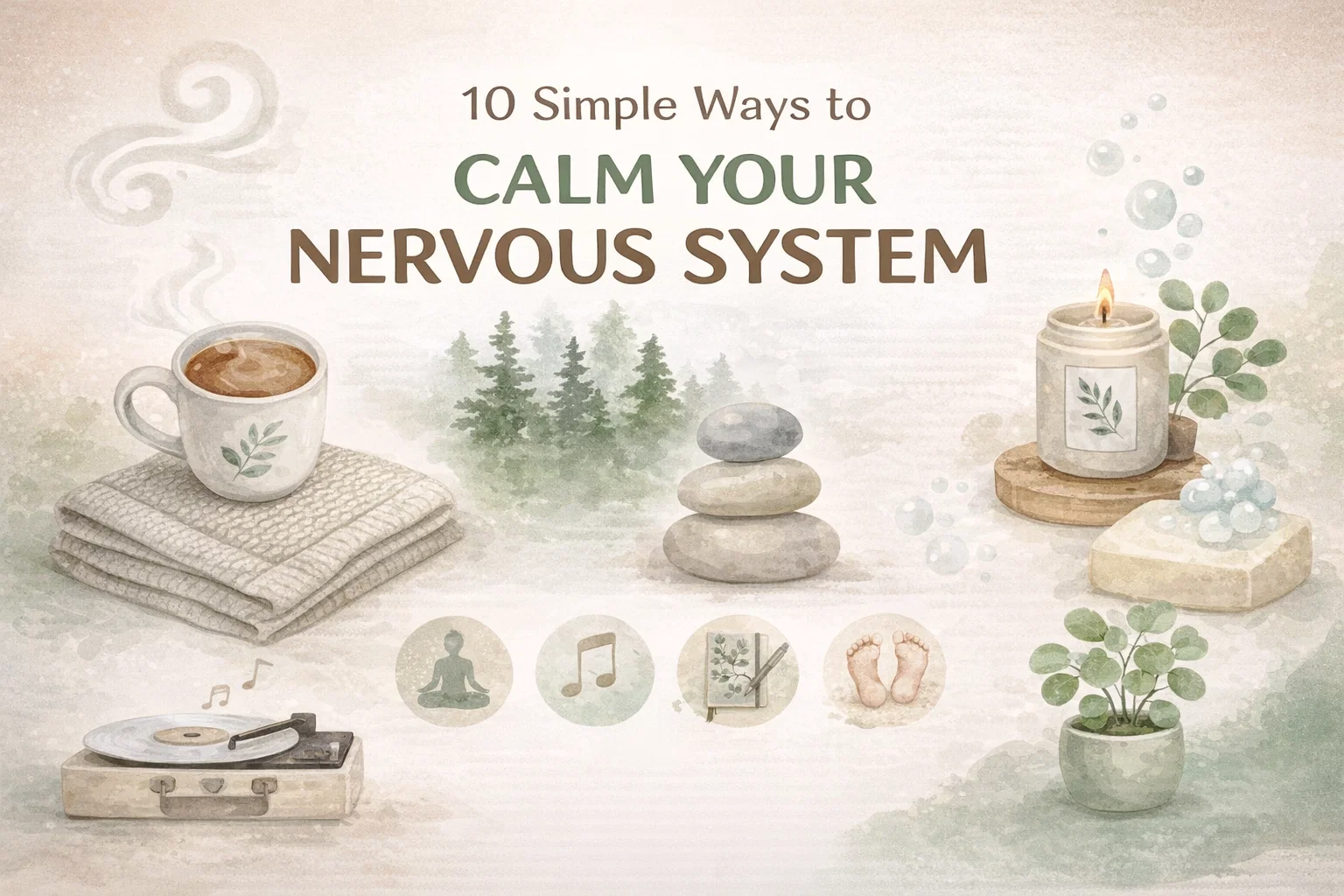
On the flip side, warmth can be incredibly nurturing. Washing your hands with warm water and focusing entirely on the sensation can be a micro-meditation. The warmth relaxes the muscles and provides a comforting sensory input. Similarly, sipping something warm, like herbal tea or warm lemon water, works from the inside out. The rhythmic action of swallowing combined with the heat creates a soothing internal embrace.
Creating a Sensory Sanctuary
Sometimes, the best way to calm the system is to limit the input it receives. This is where “cozy regulation” comes in. Wrapping yourself in a weighted blanket or putting on your favorite soft, oversized sweater provides a form of “deep pressure stimulation.” This mimics the feeling of a hug, which releases oxytocin and reduces cortisol levels.
- Drop your shoulders: We often hold tension in our upper body without realizing it. Let them fall away from your ears.
- Unclench your jaw: This is a common physical manifestation of stress. Creating space between your teeth can instantly signal relaxation to the brain.
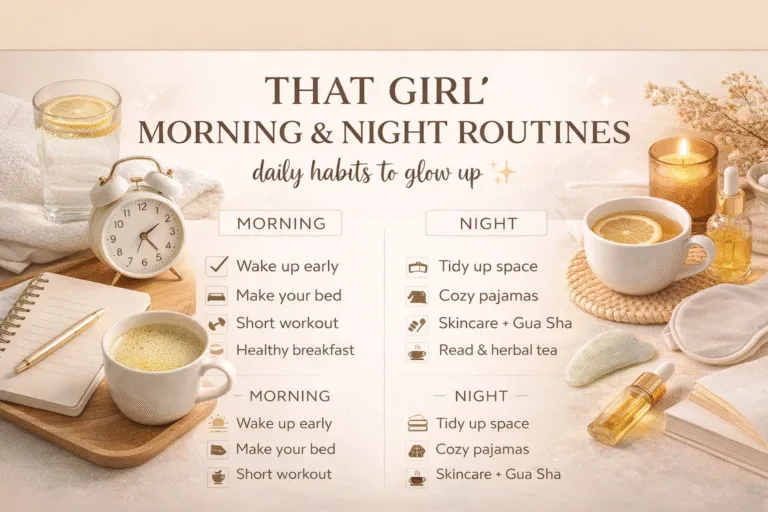
- Tidy one small space: External clutter often reflects and amplifies internal chaos. Cleaning just one drawer or your bedside table can provide a much-needed sense of order and agency.
Nature and Light: Realigning Your Internal Clock
Our bodies are designed to be in sync with the natural world. Spending all day under artificial blue light can wreak havoc on our circadian rhythms and stress levels. Stepping outside, even for just five minutes, to soak in natural light can do wonders. The expansion of your visual field—looking at the horizon or the tops of trees—is a physiological trigger for the nervous system to relax.
In nature, we often engage in “panoramic vision,” which is the opposite of the “tunnel vision” we experience when staring at a phone or computer screen. Moving your eyes across a natural landscape tells your brain that there are no immediate threats to focus on, allowing your amygdala to quiet down.
The Sound of Silence (and Soft Music)
Sound is a powerful regulator. While loud, jarring noises can trigger a startle response, gentle music or soft humming can do the opposite. Humming, in particular, is a fascinating tool because the vibration occurs right next to the vagus nerve in the throat. This internal vibration acts as a gentle massage for your nervous system. Whether you are playing a lo-fi playlist or simply humming a quiet tune to yourself, you are using sound to harmonize your internal state.
Emotional Release: Writing and Naming
Sometimes the pressure in our nervous system comes from “swirling thoughts” that have no place to go. When we leave these thoughts in our heads, they loop and grow. Writing them down on paper acts as an external hard drive for your brain. Once the thought is on paper, your brain feels it has been “processed” and can stop repeating it with such urgency.
Furthermore, there is a concept in psychology called “name it to tame it.” When you feel a wave of emotion, try to name what you are feeling without judging it. Saying “I am feeling overwhelmed right now” or “I feel a tightness of anxiety in my chest” moves the experience from the emotional center of the brain (the limbic system) to the rational center (the prefrontal cortex). This simple act of identification gives you a degree of separation and control over the feeling.
The Power of Affirmation
Your brain is always listening to your internal dialogue. When you are in a state of high stress, your internal voice is likely screaming about danger. Counteract this by intentionally repeating a calming mantra. A simple “I am safe right now” can be incredibly effective. Even if you do not fully believe it at first, the repetition creates a new neural pathway that competes with the “danger” signals. It is a way of parenting your inner child, providing the reassurance that the current storm will pass.
Building a Regulation Toolkit for Daily Life
The key to nervous system regulation is not to wait until you are having a full-blown panic attack to practice these techniques. Think of these habits like “nervous system hygiene.” Just as you brush your teeth every day to prevent cavities, you should practice regulation daily to prevent emotional burnout.
Pick two or three techniques that resonate with you and integrate them into your routine. Perhaps you start your morning with 5 slow breaths, take a “light break” at lunch, and wash your hands mindfully before dinner. These small moments add up, creating a more resilient and flexible nervous system over time.
Conclusion: Finding Your Way Back to Calm
Regulating your nervous system is not about eliminating stress entirely; that is an impossible goal. Instead, it is about becoming a better “pilot” of your own internal ship. It is about recognizing when the waters are getting choppy and knowing exactly which tools to reach for to keep yourself steady. Whether it is the warmth of a tea cup, the vibration of a hum, or the firmness of the ground beneath your feet, you have an incredible array of “gentle ways” to return to yourself.
Remember that healing and regulation are practices, not destinations. Some days will feel easier than others, and that is perfectly okay. By showing up for yourself in these small, sensory ways, you are honoring your body’s need for safety and peace. Be patient with yourself, keep breathing, and know that your calm center is always there, waiting for you to return. You have the power to soothe your system, one small step at a time.