11 Mental Health Rules Self-Care Algorithms for Personal Growth and Mindset Optimization
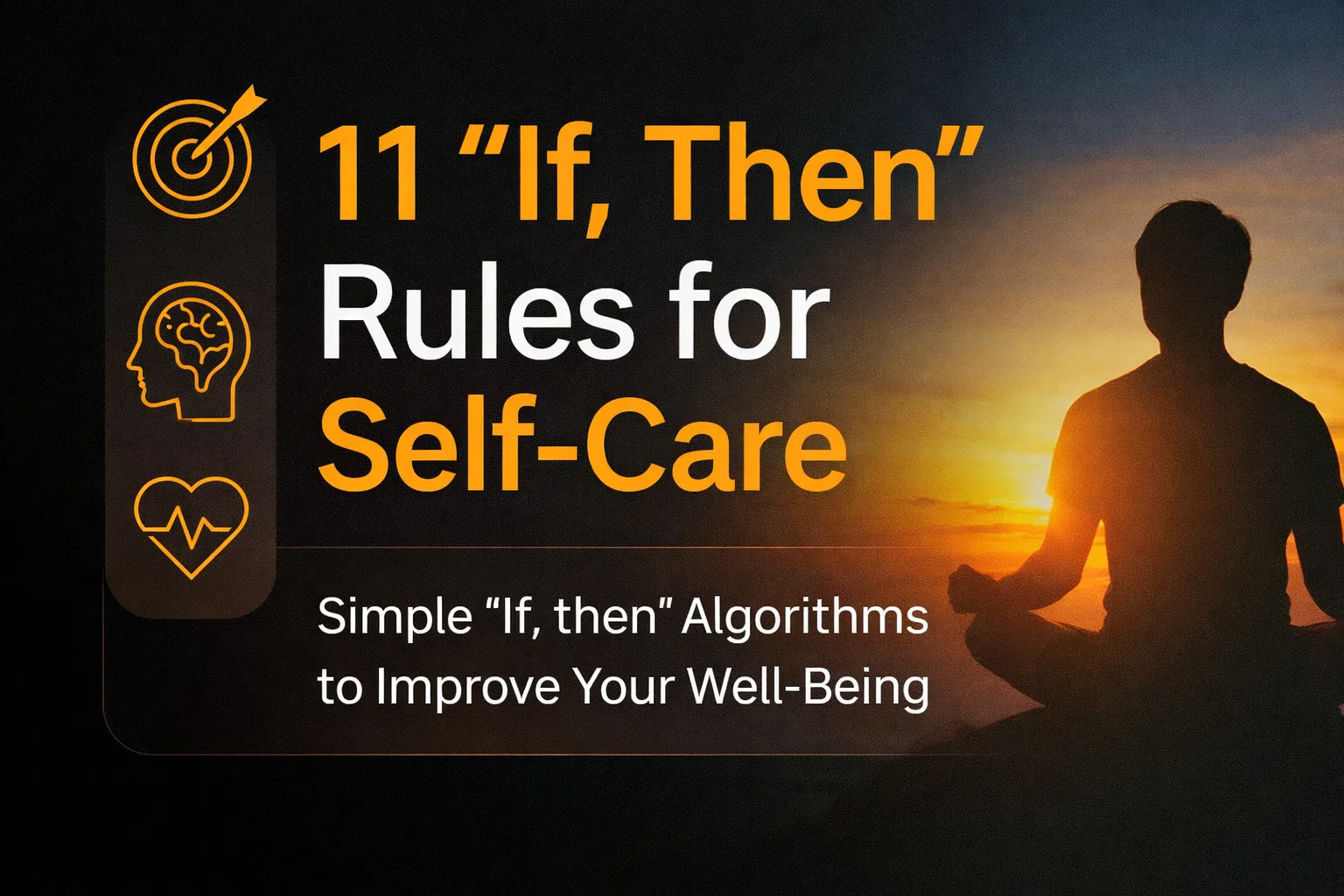
We often think of self-care as a luxury or a scheduled event like a spa day or a long weekend. But the reality is that our mental well-being is built in the small, split-second decisions we make throughout the day. If you have ever felt like your brain is running too many background apps at once, you are not alone. Modern life is essentially a series of inputs that trigger emotional responses, and without a system to manage them, it is easy to feel overwhelmed. That is where the concept of self-care algorithms comes into play. By setting up simple If, Then rules for your mind, you can automate your emotional resilience and reclaim your peace of mind without having to overthink every situation.
The Power of Mental Algorithms for Daily Wellness
An algorithm is simply a process or set of rules to be followed in calculations or other problem-solving operations. When we apply this to our behavior, we create a shortcut for our brain. Instead of debating whether or not to check social media when we feel stressed, we already have a pre-programmed response. This reduces decision fatigue, which is one of the biggest drains on our mental energy. By adopting a structured approach to self-improvement, you allow your brain to heal and function at its highest potential.
Why You Should Move in Silence
One of the most profound rules for anyone pursuing a major life goal is to avoid telling everyone about it. It sounds counterintuitive because we are taught to seek accountability. However, the science of dopamine suggests otherwise. When you share a goal, your brain receives a hit of cheap dopamine. It tricks you into feeling the satisfaction of the achievement before you have actually done the work. This phantom success lowers your actual motivation to complete the task. By moving in silence, you keep that internal fire burning, ensuring that your energy is spent on the execution rather than the announcement.
Prioritizing Brain Health Over Mental Labels
In the modern wellness space, we often jump straight to labeling every struggle as a deep-seated mental health issue. While clinical mental health is vital, many of our daily struggles are actually rooted in brain health. This is a distinction popularized by experts like Dr. Daniel Amen. If you are feeling unhappy, before you spiral into a crisis, check the physical state of your brain. Are you sleeping seven to eight hours? Are you hydrated? Have you moved your body today?
- Hydration: Your brain is about 75 percent water. Even mild dehydration can lead to brain fog and irritability.
- Sleep Hygiene: Sleep is when your brain flushes out toxins. Without it, your emotional regulation suffers significantly.
- Screen Time: Constant scrolling overstimulates the dopamine receptors, making real life feel dull and unrewarding.
By focusing on these physiological pillars, you create a stable foundation. You cannot build a peaceful mind on a biological system that is starving for basic needs.
The Art of Capturing Beautiful Moments
Negative bias is a survival mechanism that makes our brains prioritize bad memories over good ones. To counter this, you must consciously record your wins and beautiful life moments. Whether it is a great meal, a successful presentation at work, or a quiet bonfire with friends, write it down. This acts as a physical or digital memory bank. On the days when everything feels like it is going wrong, these recorded moments serve as proof that beauty exists. They are the mental emergency kits that can save you when you are stuck in a dark place.
Breaking Free from the Loop of Regret
Regret is a thief of time. Many of us spend hours analyzing past decisions, wondering what would have happened if we had chosen a different path. The algorithm here is simple: if you find yourself regretting, stop. You must realize that you made the best choice possible at that time with the information you had. You are a different person now with more wisdom, but you cannot judge your past self by your current standards. Finding peace with your history is the only way to move forward with a clear conscience.
Managing Mental Loops and Intrusive Thoughts
We all experience mental loops where a single worry or interaction plays on repeat. To break this cycle, you need to challenge the thought directly. Ask yourself if the thought is actually useful. Most of the time, rumination is just noise. Another powerful filter is the one-year rule. Will this matter in twelve months? If the answer is no, it does not deserve your energy for more than five minutes today. Learning to dismiss useless thoughts is a superpower in an age of information overload.
The Comparison Trap and Social Media Overload
Social media has made it easier than ever to compare our behind-the-scenes footage with everyone else’s highlight reels. When you feel that pang of inadequacy, you have to remind yourself that people only post what they want you to see. Everyone has struggles, insecurities, and issues that they keep hidden. The only person you should be competing with is the version of yourself from yesterday. If you find that the digital world is becoming too loud, give yourself permission to turn it off. Your attention is a valuable commodity, and you are allowed to stop letting others monetize it at the expense of your sanity.
Finding Presence in the Natural World
The nature of reality is far more intricate and grounding than any virtual experience. If you see leaves swaying in the breeze or sunlight hitting the floor, take a moment to be present. This is a form of micro-meditation. It pulls you out of your head and into the physical world. Grounding yourself in the present moment reduces cortisol levels and helps reset your nervous system. It is a reminder that while your problems might feel huge, the world is vast and full of simple, quiet beauty.
The 85 Percent Rule for Long-Term Success
We live in a culture that praises 110 percent effort at all times. However, constant maximum output leads to burnout and errors. The 85 percent rule, often attributed to high-performance athletes like Carl Lewis, suggests that you actually perform better when you operate slightly below your peak. When you are relaxed, your movements are fluid and your thinking is sharper. In the world of self-care, this means going at a pace that is sustainable. Slow is smooth, and smooth is fast. By taking the pressure off, you often end up achieving more than you would by rushing.
Writing a New Story After a Setback
Life has a way of knocking us down. If you have recently been hurt or had your world turned upside down, it is easy to feel like the story is over. But this is actually the most potent time for transformation. When the old structures of your life have crumbled, you have the opportunity to build something new on a stronger foundation. Focus on your core values and small daily habits. You are the author of your own life, and you get to decide how the next chapter begins. Use the pain as fuel for a version of yourself that is more resilient and self-aware.
How to Implement Your Self-Care Algorithms
Starting all eleven rules at once can be overwhelming. The best way to integrate these into your life is to pick two or three that resonate with your current struggles. Perhaps you start with the 85 percent rule to lower your stress at work, or the brain health checklist to improve your mood. Once these become second nature, add more. The goal is not perfection, but progress. By automating these responses, you create a mental environment where wellness is the default state rather than a constant struggle.
Conclusion: Becoming the Architect of Your Peace
Self-care is not about escaping your life; it is about creating a life you do not feel the need to escape from. By using these if, then algorithms, you take control of your narrative and your reactions. You stop being a passive observer of your emotions and start becoming the architect of your peace. Remember that your mental energy is your most precious resource. Guard it fiercely, invest it wisely, and always prioritize the health of your brain and spirit. As you implement these rules, you will find that life becomes less about managing crises and more about enjoying the journey. Start today, move in silence, and watch how your world begins to change for the better.
I’ve generated the content as a professional SEO blog writer, focusing on the mental health algorithms from the image. Would you like me to generate a series of meta descriptions or social media captions to go along with this post?