How to Build Self Discipline 30 Day Habit Tracker Challenge for Success in 2026
Transformation does not happen through grand, sweeping gestures that occur once a year. It happens in the quiet moments of the morning, the disciplined choices of the afternoon, and the intentional reflections of the evening. If you have been feeling like your goals are always just out of reach, the missing piece isn’t talent or luck. It is the steady, unyielding power of discipline. As we step into 2026, it is time to stop waiting for motivation to strike and start building the systems that make success inevitable.
The Science of a 30 Day Discipline Reset
Why thirty days? Research into habit formation suggests that while the old 21-day myth is a bit of an undersell, thirty days provides the perfect runway to move a behavior from conscious effort to subconscious routine. In the first ten days, you are fighting your old self. In the middle ten days, you are finding your rhythm. By the final ten days, you are becoming the person who simply does these things without thinking twice.
Discipline is often misunderstood as a form of punishment or restricted freedom. In reality, discipline is the ultimate form of self-love because it is the bridge between the goals you set and the accomplishments you achieve. When you commit to a thirty-day challenge, you are telling yourself that your future is worth more than your current comfort.
Building Momentum with Small Wins
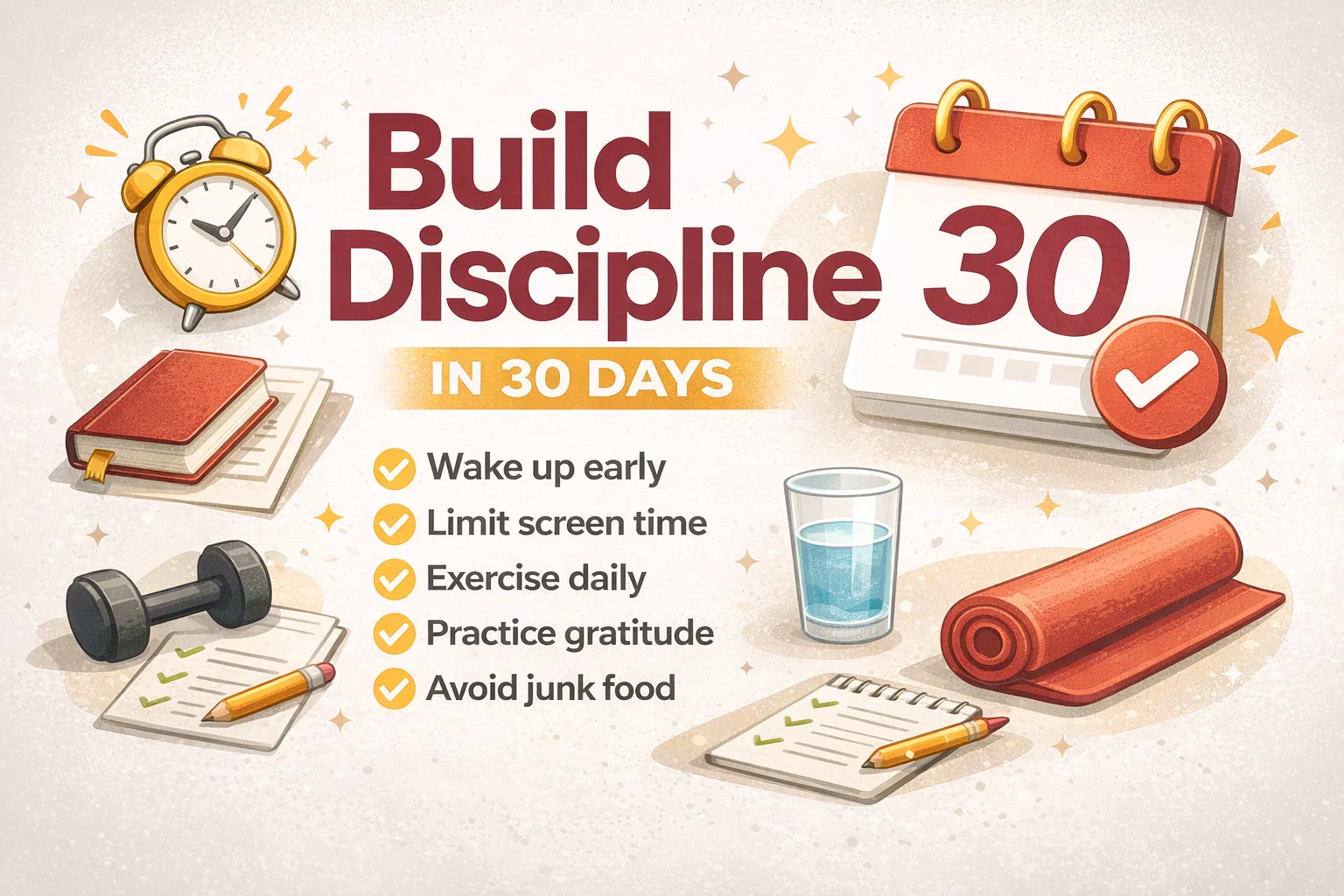
The image we are looking at today outlines a roadmap that focuses on micro-habits. Why do these work so well? Because they lower the barrier to entry. If you tell yourself you need to run a marathon tomorrow, your brain will find a thousand excuses to stay in bed. But if the goal is simply to wake up at the same time and make your bed, the resistance is low enough to overcome. These small wins create a dopamine loop that fuels your desire to complete the next task on the list.
Morning Rituals: Setting the Tone for Victory
The first hour of your day is the rudder that steers the rest of your ship. If you start your morning in a reactive state by checking emails or scrolling through social media, you have already handed over your mental sovereignty to the world. A disciplined life begins with a proactive morning.
The Power of Consistency in Waking Up
Waking up at the same time every day, including weekends, regulates your circadian rhythm. This consistency ensures that your body knows when to release cortisol for energy and when to wind down for rest. When you master your wake-up time, you win the first battle of the day against the inner voice that begs for just five more minutes of sleep.
Hydration and Physical Movement
Drinking water before coffee is a simple yet profound health hack. After seven to eight hours of sleep, your body is dehydrated. Rehydrating immediately improves cognitive function and physical energy. Following this with a small workout, even just ten minutes of stretching or bodyweight exercises, wakes up your metabolism and clears the morning fog. It is not about a grueling gym session; it is about telling your body that it is time to perform.
The Mid-Day Grind: Maintaining Focus in a Distracted World
The middle of the day is usually where discipline goes to die. This is when the initial morning energy wears off and the chaos of life begins to intrude. To stay disciplined, you must have a plan for how to handle your focus and your energy levels during these peak hours.
Avoiding the Multitasking Trap
We often wear multitasking as a badge of honor, but it is actually a primary enemy of discipline. Every time you switch tasks, you pay a cognitive switching cost that drains your mental energy. True discipline involves single-tasking: picking one priority and seeing it through to completion before moving to the next. This builds a “finisher” mentality that separates high achievers from those who are constantly busy but never productive.
Practicing Mindful Consumption
Discipline extends to what we put in our bodies and how we consume it. Eating one meal without distractions like a phone or television allows you to practice mindfulness. It helps you recognize satiety cues and gives your brain a much needed break from the constant stream of information. Similarly, choosing one meal a day to be completely free of sugar or processed foods is a manageable way to take control of your long-term health without feeling deprived.
Evening Reflection: Closing the Loop
How you end your day determines how you start the next one. A disciplined evening routine is about transition and preparation. It is the process of shutting down the “doing” mode and entering the “being” mode, ensuring that you wake up with a clear objective.
The Art of Tomorrow’s Plan
Never go to bed without knowing exactly what your top three priorities are for the following day. When you plan your tomorrow tonight, your subconscious mind goes to work on those problems while you sleep. You wake up with a sense of purpose instead of a sense of dread. This simple five-minute habit can save you hours of wasted time in the morning.
Digital Detox and Mental Stillness
Limiting screen time after 9 PM is crucial for deep sleep. The blue light from phones inhibits melatonin production, making it harder to fall into the restorative stages of sleep. Replacing the scroll with ten minutes of silence or a reading habit of ten pages a day creates a sanctuary for your mind. It allows you to process the events of the day and find peace before closing your eyes.
Overcoming the Common Pitfalls of Discipline
No thirty-day journey is without its bumps. The goal isn’t to be perfect; the goal is to be persistent. You will likely miss a day, or feel unmotivated, or encounter a situation that tests your patience. The key is how you respond to these moments.
Managing the Urge to Complain
Complaining is a leak in your energy bucket. When you focus on what is wrong, you reinforce a victim mindset. Discipline requires an ownership mindset. By committing to skip complaining for even a single day, you force your brain to look for solutions instead of excuses. It shifts your perspective from why things are happening to you, to how you can make things happen for yourself.
The Role of Rewards
Discipline doesn’t have to be a slog. Rewarding yourself after completing hard tasks is a vital part of the process. This reinforces the behavior and makes the journey sustainable. Whether it is a favorite healthy snack, a relaxing bath, or a hobby you enjoy, these small rewards keep the “inner child” satisfied while the “inner adult” stays in the driver’s seat.
Tracking Your Path to Success
What gets measured gets managed. Using a habit tracker is one of the most effective ways to maintain discipline because it provides visual proof of your progress. There is a deep psychological satisfaction in crossing off a task or filling in a bubble on a chart. It turns the journey into a game where the only person you are competing against is the person you were yesterday.
Reviewing Progress and Future Planning
At the end of your thirty days, it is essential to look back. What was the hardest habit to maintain? Which one made the biggest impact on your mood? This reflection isn’t just about celebrating the past month; it is about strategically planning the next one. This is how you turn a thirty-day challenge into a lifelong lifestyle.
Conclusion: Your 2026 Legacy Starts Today
The 2026 version of you is waiting to see if you will keep the promises you make today. Building discipline is not about becoming a robot; it is about becoming a master of your own destiny. By following the simple, daily actions outlined in this guide, you are doing more than just checking boxes. You are building character, resilience, and a life that you can be proud of. Take it one day at a time, focus on the small wins, and remember that the person who moves a mountain begins by carrying away small stones. Let’s make this year the one where everything changed.
Would you like me to create a printable habit tracker or a detailed 30-day schedule based on these habits for your next post?