Signs of Self-Abandonment How to Set Better Boundaries
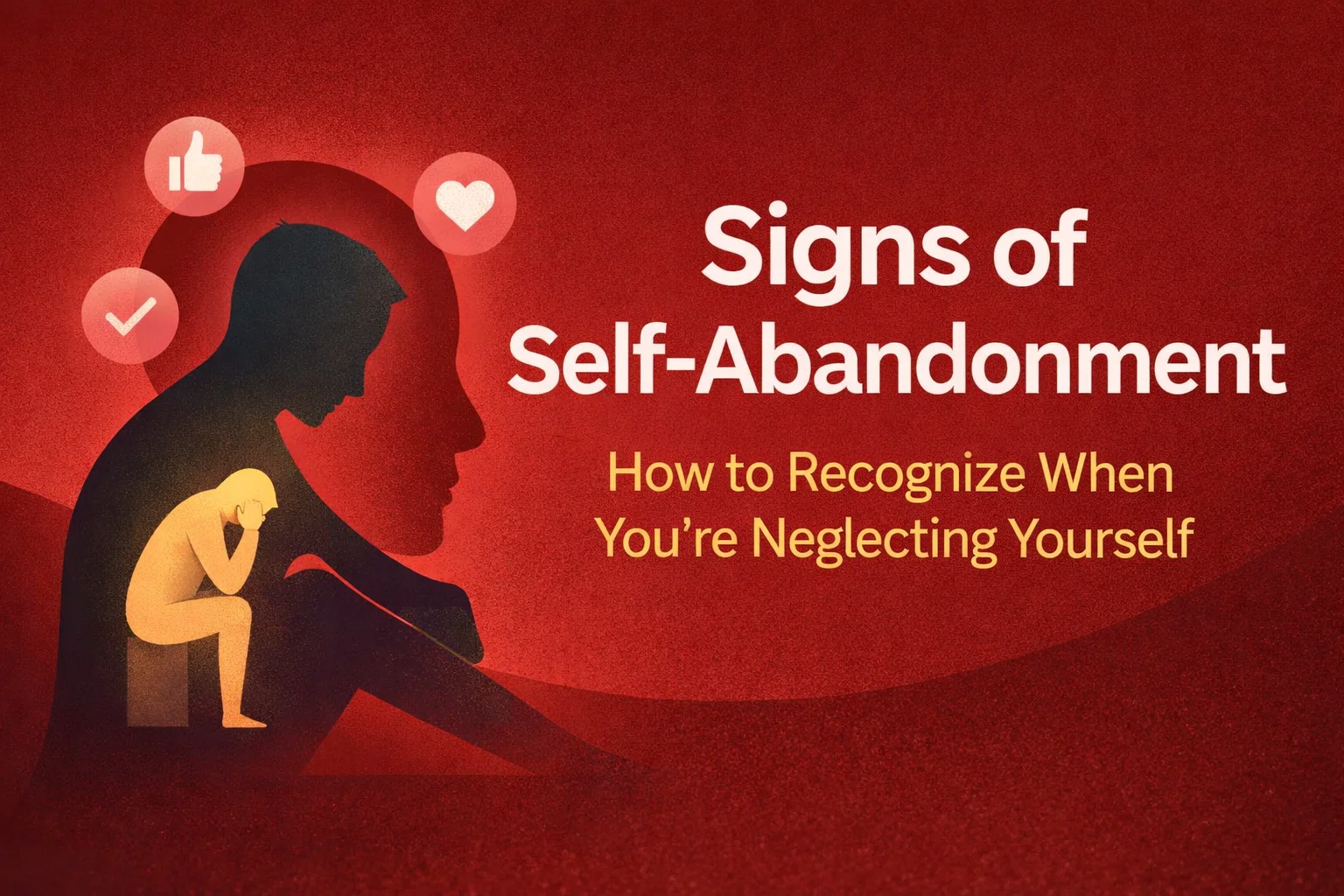
Have you ever looked around at your own life and realized you feel more like a background character than the lead? It is a subtle shift. You do not wake up one day and decide to give up on yourself. Instead, it happens in tiny, almost invisible moments. You agree to a favor you simply do not have time for. You bite your tongue when someone crosses a line. You push down your own desires to make room for someone else’s comfort. Before you know it, you are entirely disconnected from your true self. This is known as self-abandonment, and it is an incredibly common trap for those of us who care deeply about others and want to keep the peace.
Self-abandonment is the act of rejecting, suppressing, or ignoring your own needs, boundaries, and feelings to win approval or avoid conflict. It is a coping mechanism many of us learn early in life. But while it might temporarily smooth things over in your relationships, the long-term cost is your own mental wellbeing and authenticity. Today, we are going to dive deep into the everyday signs of self-abandonment and explore exactly how you can start reclaiming your space, setting healthy boundaries, and stepping firmly back into your own power.
The Chameleon Effect and Losing Yourself in Others
One of the most glaring signs that you are abandoning yourself is the tendency to shape-shift depending on who you are with. If you find your opinions, your humor, or even your core values changing to mirror the people around you, you are engaging in a subtle form of self-erasure. It is entirely natural to adapt slightly to different social settings, but completely altering your personality means you are seeking safety in blending in rather than standing out.
This shape-shifting often goes hand-in-hand with a desperate need for approval. When your sense of worth is entirely tied to how others perceive you, you will do just about anything to avoid their disappointment. You become a relentless people-pleaser, constantly scanning the room to figure out what version of yourself will be most acceptable to the crowd. You genuinely believe that being “nice” matters far more than being real. But toxic niceness is a heavy, suffocating mask to wear. It forces you to swallow your authentic reactions and replace them with a curated, sanitized version of yourself that offends no one but exhausts you completely.
This shape-shifting also leads to a terrifying loss of identity. When you spend years blending into the background of other people’s lives, you eventually wake up and realize you do not know what you actually enjoy anymore. If someone were to ask you what your favorite hobbies are or what your ideal weekend looks like without anyone else’s input, you might draw a total blank. You have spent so much energy curating a version of yourself that fits perfectly into different puzzle boxes that your original picture has faded. Rediscovering your core identity requires stripping away those layers of people-pleasing and getting comfortable with the idea of disappointing others.
Eventually, this leads to a life where you prioritize everyone else’s needs while entirely neglecting your own. You become the ultimate caregiver, the reliable friend, the employee who never says no. Yet behind closed doors, you are running on empty. You pour from a cup that has been dry for years, hoping that if you just give enough, someone will finally turn around and take care of you. But true, sustainable fulfillment requires you to validate and care for yourself first.
Silencing Your Inner Voice and Minimizing Your Dreams
We all have an internal compass. It is that sudden gut feeling, that physical reaction, or that quiet whisper telling us when a situation is simply not right for us. A massive part of self-abandonment involves actively ignoring this intuition even when things feel entirely off. You might find yourself rationalizing bad behavior from others or making elaborate excuses for situations that make you deeply uncomfortable.
Consider how many times you have ignored a red flag in a new friendship or relationship, only to look back months later and realize you knew the truth from the very beginning. Your intuition is a powerful, highly evolved survival tool. It processes subtle cues and micro-expressions that your conscious mind easily misses. By constantly second-guessing that intuition, you create a deep internal divide. Rebuilding that trust takes time. You have to start validating your own perceptions, even if you do not have hard evidence to prove exactly why you feel a certain way. If a situation feels wrong to you, that is enough of a reason to step away.
This internal silencing becomes extremely physical over time. You might catch yourself saying yes to requests, invitations, or favors when your entire body is screaming no. Your jaw clenches, your stomach ties in knots, and yet the word “yes” still falls right out of your mouth. By constantly overriding your physical and emotional cues, you teach yourself that your comfort does not matter. You train your brain to stop trusting its own warning signals entirely.
When you stop trusting yourself in the small things, you naturally begin to doubt yourself in the big things. This leads directly to staying small and minimizing your dreams or desires. Perhaps you have massive ambitions, but you water them down when talking to friends so you do not seem arrogant or out of touch. Or maybe you abandon your passions entirely because they do not fit into the neat, predictable box your family or partner expects you to stay inside. You convince yourself that asking for what you truly want is selfish, so you settle for a mere fraction of your true potential.
The Boundary Battle and the Fear of Conflict
If there is one universal truth about self-abandonment, it is that it thrives in the complete absence of boundaries. You might find yourself routinely betraying your own boundaries just to avoid conflict. Conflict is uncomfortable for everyone, but avoiding it at the cost of your own dignity is a dangerous trade. When you let people step over the lines you have drawn, you send a clear, undeniable message that your limits are merely suggestions.
Even when you do muster the courage to set a boundary, the aftermath is often riddled with intense guilt or anxiety. You might spend hours agonizing over a simple text message where you politely declined an invitation. You worry that you were too harsh or that the other person will abandon you forever. This guilt is a conditioned response. It is simply your brain reacting to the unfamiliar territory of self-advocacy. But feeling guilty about setting a boundary does not mean you did the wrong thing; it simply means you are breaking an old, deep-rooted habit.
This fear of conflict and boundary-setting often keeps you trapped in environments that drain or actively disrespect you. Whether it is a toxic workplace that demands your weekends or a friend group that constantly belittles you under the guise of “just joking,” you stay because leaving feels far too confrontational. You tolerate mistreatment and one-sided relationships primarily because you are deeply afraid of being alone. You decide that a bad relationship is somehow better than no relationship at all, settling for crumbs of affection while starving for genuine connection.
Emotional Suppression and the Trap of Spiritual Bypassing
To survive in a state of constant self-abandonment, you have to become an absolute expert at emotional suppression. You learn to push down your anger, your sadness, and your frustration to keep things peaceful for everyone else. You become the “chill” one, the person who is supposedly never bothered by anything. But suppressed emotions do not just vanish into thin air. They fester under the surface, eventually turning into resentment, chronic anxiety, and severe physical burnout.
In modern wellness and personal development circles, this suppression sometimes takes a very specific, deceptive form: spiritualizing your pain instead of actually feeling it. We call this spiritual bypassing. Instead of allowing yourself to feel legitimately angry about a betrayal, you might force yourself to just send them love and light or claim that everything happens for a reason. While maintaining a positive mindset is a wonderful tool for growth, using spirituality as a shield to avoid dealing with messy, painful human emotions is a profound way of abandoning your authentic self.
When you skip over the grief or the anger to get straight to the lesson, you invalidate your own human experience. This ties directly into another major sign: mistaking self-sacrifice for love. Society often glorifies the person who gives until it hurts. We praise the mother who never sleeps, the employee who never clocks out, and the partner who endlessly forgives toxic behavior. Because of this societal conditioning, we start to believe that our value in a relationship is directly proportional to how much we are willing to suffer for the other person.
If you are not exhausted, you must not care enough. This is a devastating lie. True, healthy love is expansive and reciprocal. It does not require you to set yourself on fire simply to keep someone else warm. When you constantly sacrifice your own wellbeing, you are not showing love; you are showing a deep lack of self-worth.
Reclaiming Your Power and Stopping the Cycle
Recognizing these signs is the very first and most important step toward healing. If you saw yourself in these patterns, please know that you are not alone, and you are definitely not broken. These are survival mechanisms that you adopted because they kept you safe at one point in your life. But you do not need them anymore. You are allowed to take up space. You are allowed to have a rich, vibrant life where your needs are consistently met.
Start with Small Acts of Honesty
You do not have to overhaul your entire personality overnight. Begin with micro-moments of honesty. When someone asks where you want to eat, actually state your preference instead of saying you do not care. When you feel tired, give yourself full permission to rest instead of pushing through to finish another chore. These small acts build the foundation of self-trust.
Reconnect with Your Physical Body
Because self-abandonment often involves disconnecting from your physical intuition, you need to practice tuning back in. Throughout the day, pause and ask yourself what you physically feel. Notice the tension in your shoulders or the shallowness of your breath. When you are faced with a decision, wait a full twenty-four hours before responding. Give your body the necessary time to process whether it is a genuine yes or a forced, people-pleasing yes.
Develop a Daily Self Check-In Routine
We schedule meetings, appointments, and coffee dates with friends, but we rarely schedule dedicated time for ourselves. To combat self-abandonment, you need to build a routine that forces you to check in with your own mindset. Whether it is five minutes of morning journaling or a quiet walk without your phone, use this time to ask yourself hard questions. What do I need today? Where am I feeling drained? Are my current commitments aligning with my personal growth? Making this a non-negotiable part of your daily habits ensures that you never drift too far from your own center.
Embrace the Discomfort of Boundaries
Understand that setting boundaries will feel terrible at first. Expect the guilt and the anxiety to show up, and let them sit in the passenger seat. They are allowed to be there, but they do not get to drive the car. Practice saying simple, firm phrases like, “I cannot commit to that right now,” or “I need some time to think about this before I give you an answer.” The more you practice flexing your boundary muscles, the less terrifying it becomes to protect your own peace.
Conclusion: Stepping Back into the Lead Role
Breaking the lifelong cycle of self-abandonment is a radical, beautiful act of self-love. It requires immense courage to look at your life, acknowledge exactly where you have been betraying your own needs, and actively choose a completely different path forward. It means letting go of the people and environments that demand your silence in exchange for their presence.
As you begin to honor your intuition, speak your ultimate truth, and set firm boundaries, you will notice a profound shift in your daily reality. You will no longer feel like a supporting character constantly catering to everyone else’s plotline. You will step firmly back into your main character energy, living a life that is authentically, unapologetically your own. The journey back to yourself is not always easy or comfortable, but it is without a doubt the most important journey you will ever take.