How to Change Your Identity and Build Better Habits for a New You
Have you ever caught yourself saying, That is just the way I am? It is a common phrase, often used to shrug off a stubborn habit or a personality trait we feel stuck with. But those six words can be incredibly limiting. They suggest that our identities are carved in stone, fixed from birth until the end of time. The truth is far more exciting. Your identity is not a static document; it is a fluid, evolving narrative that you have the power to rewrite every single day. Transformation does not require a massive, overnight overhaul. Instead, it happens through the quiet, repeated actions we take when no one is watching. By shifting your language and your habits, you can stop being a prisoner of your past and start becoming the architect of your future.
The Psychology of Identity and Change
To understand how to create a new version of yourself, we first have to look at what makes up an identity. Most of us define ourselves by our history. We think we are the sum of our past mistakes, our upbringing, or our previous successes. However, behavioral psychology suggests that identity is actually a feedback loop between our self-perception and our actions. When you perform an action, your brain takes a mental note. If you wake up early and go for a run, your brain says, I am the type of person who exercises. If you sit down to write every morning, you reinforce the identity of a writer.
The image we are discussing highlights a powerful linguistic shift: moving from That is just how I am to That is who I used to be. This simple change in tense is a psychological game changer. By using the past tense, you create distance between your current self and the behaviors you want to leave behind. You are acknowledging that while a certain habit may have served you or been part of you once, it no longer defines your present reality. This opens up the mental space required to adopt new, healthier patterns without the weight of your old reputation holding you back.
Breaking the Chains of Fixed Mindset
Many people struggle with a fixed mindset, the belief that their qualities are basic traits that cannot be changed. This mindset is the primary enemy of personal growth. When you believe your intelligence, your temperament, or your discipline levels are fixed, you stop trying to improve. You view failure as a reflection of your inherent worth rather than a temporary state of being.
Moving Toward a Growth Mindset
A growth mindset, on the other hand, thrives on challenge and sees failure not as evidence of unintelligence but as a heartening springboard for growth and for stretching our existing abilities. When you decide to create a new you, you are essentially adopting a growth mindset toward your own soul. You are deciding that your potential is unknown and that with effort and practice, you can cultivate new strengths. This shift is essential because habit change is rarely linear. There will be days when you slip up, and in those moments, a growth mindset allows you to see the slip as a data point rather than a reason to give up entirely.
How Habits Reshape Your Identity
If identity is the North Star, habits are the footsteps that lead you there. You cannot simply wish a new identity into existence; you have to earn it through consistent action. Every time you choose a healthy meal, you are casting a vote for a healthy identity. Every time you choose to react with patience instead of anger, you are casting a vote for a peaceful identity. Over time, these votes accumulate until the evidence of your new identity becomes undeniable.
The Compound Effect of Small Actions
One of the biggest misconceptions about personal transformation is that it requires huge, sweeping changes. We think we need to move across the country, quit our jobs, or spend four hours a day at the gym to see results. In reality, it is the small actions you repeat that have the greatest impact. This is often referred to as the compound effect. Just as a small amount of money invested regularly grows into a fortune over decades, small habits practiced daily lead to massive life changes over months and years.
The Power of Consistency Over Intensity
Intensity is great for short term goals, but consistency is the key to identity change. It is better to meditate for two minutes every day than to meditate for two hours once a month. The two minute daily practice keeps the identity of a meditator alive in your mind. It reinforces the habit loop and makes the action feel like a natural part of your day. When you focus on intensity, you risk burnout. When you focus on consistency, you build a foundation that can last a lifetime.
Practical Steps to Reinvent Yourself
Now that we understand the philosophy behind identity change, how do we put it into practice? The transition from the old you to the new you requires a strategic approach. It involves auditing your current life, defining your desired future, and bridging the gap with specific, actionable steps.
1. Audit Your Current Language
Start paying attention to how you talk about yourself in casual conversation. Do you say things like, I have always been messy, or I am just not a math person? These are self-imposed labels. Whenever you catch yourself using a limiting label, stop and rephrase it. Replace it with, In the past, I struggled with organization, but I am learning new systems now. This acknowledges the past struggle while keeping the door open for future improvement.
2. Define the Best Version of Yourself
Who is the person you want to become? Get specific. Do not just say you want to be successful. What does that look like? How does that person spend their mornings? How do they treat their colleagues? How do they handle stress? Once you have a clear picture of this person, you can start reverse engineering their habits. If the best version of you is someone who is physically fit, then your first step is to adopt the habits of a fit person.
3. Start Small with Micro-Habits
The easiest way to fail at habit change is to take on too much at once. Instead, pick one tiny habit that takes less than five minutes to complete. If you want to read more, commit to reading one page a night. If you want to drink more water, commit to drinking one glass when you wake up. These micro-habits are easy to maintain even on your worst days, which ensures that you keep the chain of consistency alive.
Overcoming the Resistance to Change
Even when we desperately want to change, there is often a part of us that resists. This is known as homeostasis, the body’s natural tendency to maintain a stable internal environment. Your brain likes what is familiar because familiar feels safe. When you try to change, your brain might send signals of discomfort or anxiety to pull you back to your old ways. Understanding that this resistance is a natural biological process can help you push through it.
Dealing with Social Pressure
Sometimes the resistance comes from the people around us. When you start changing your habits, it can make others feel uncomfortable about their own choices. They might tease you or try to tempt you back into old patterns. It is important to remember that their reaction is about them, not you. Stay firm in your new identity. As you consistently show up as this new version of yourself, the people in your life will eventually adjust to the new reality.
Navigating the Plateau of Latent Potential
In the beginning of any change journey, there is a period where you are putting in effort but not seeing much result. This is the plateau of latent potential. It is the reason many people give up after three weeks of dieting or a month of practicing a new skill. They feel like they are working hard but nothing is happening. However, change is happening beneath the surface. Just as an ice cube does not melt until the temperature hits a certain point, your habits are building up the energy required for a breakthrough. Trust the process and keep casting your votes.
The Role of Environment in Identity
Your environment is an invisible hand that shapes your behavior. If you want to change who you are, it helps to change where you are, or at least how your space is organized. If your goal is to eat healthier, but your kitchen counters are covered in snacks, you are making the change much harder than it needs to be. By designing your environment to make good habits easy and bad habits difficult, you reduce the amount of willpower required to stay on track.
- Visual Cues: Place your gym shoes by the door or your book on your pillow.
- Friction: Make it harder to do things you want to stop. For example, put the television remote in another room or delete distracting apps from your phone.
- Social Environment: Spend time with people who already have the habits you want to cultivate. Identity is contagious.
Embracing the Journey of Becoming
Creating a new you is not a destination; it is a lifelong process. There is no point where you have officially arrived and can stop growing. The most successful people in the world are constantly iterating on themselves. They are always looking for ways to refine their habits and expand their identities. When you embrace the journey of becoming, you find joy in the daily practice rather than just the end result.
The beauty of this approach is that it takes the pressure off. You do not have to be perfect today. You just have to be a little bit better than you were yesterday. You just have to keep showing up and doing the work. Over time, the person who used to be will fade into the background, and the person you were meant to be will take center stage.
Conclusion: Your New Story Starts Today
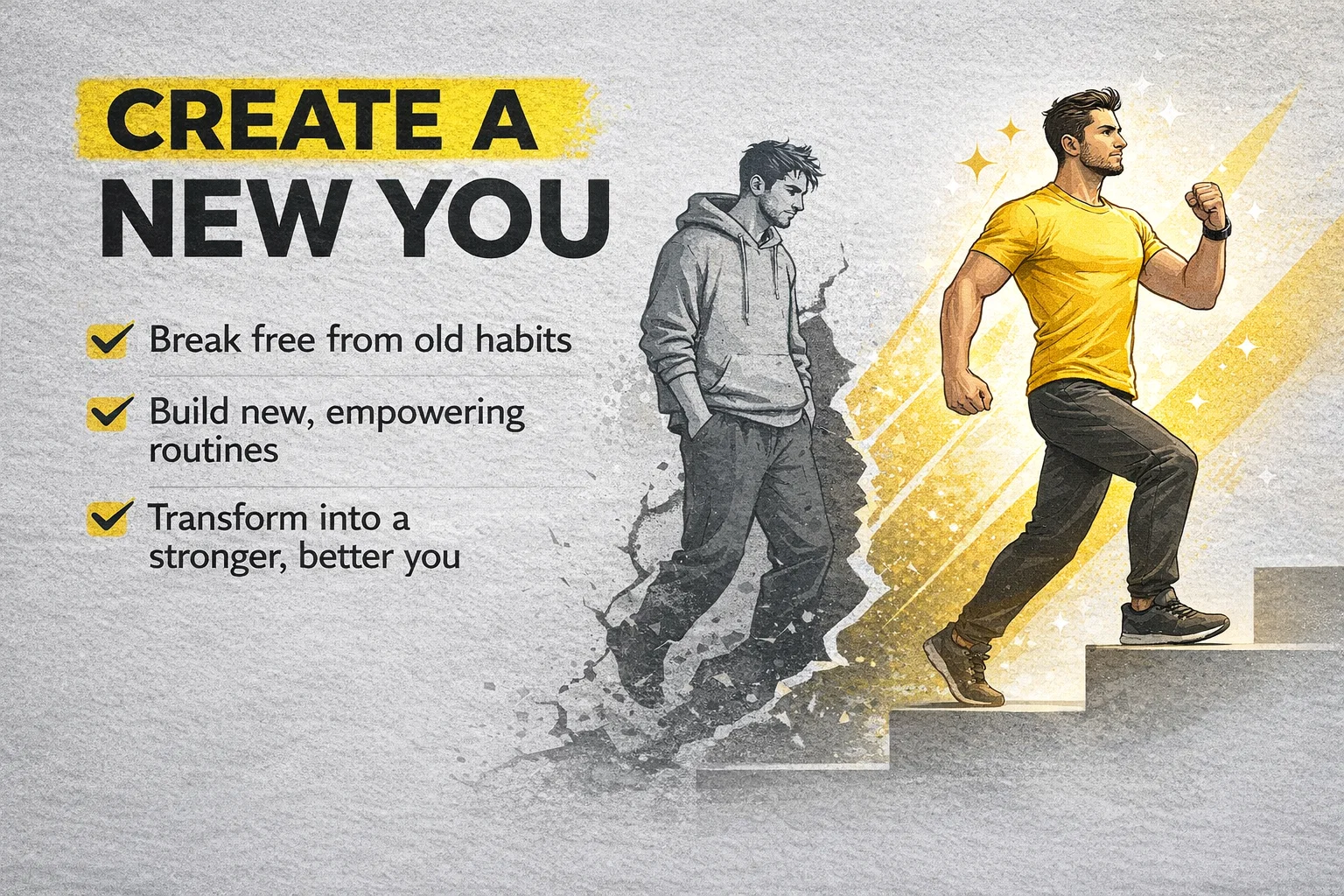
The image we started with offers a profound truth: your identity changes when your habits change. You are not a finished product; you are a work in progress. By refusing to be defined by your past and committing to the small, repeated actions that build character, you can truly reinvent yourself. It starts with a simple shift in your language and a dedication to the tiny wins that happen every single day. Stop looking back at who you were with regret and start looking forward to who you are becoming with excitement. The power to change is in your hands, one habit at a time. What is one small action you can take today to cast a vote for your new identity? Start there, and let the transformation begin.
Would you like me to help you create a specific 30-day habit plan based on a goal you have in mind?