How to Rebuild Your Identity and Change Your Habits for a Better You
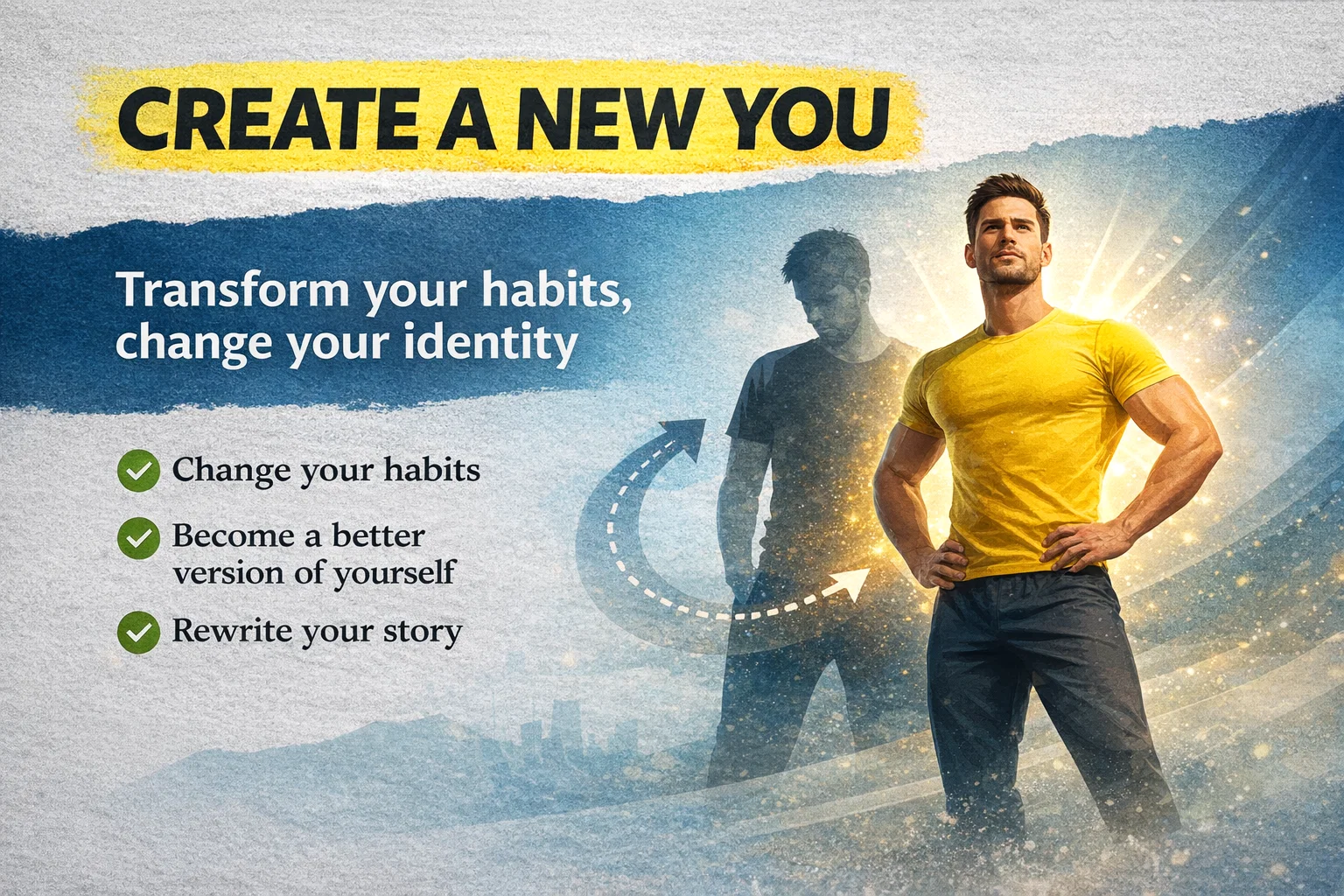
We often treat our personalities like they are set in stone, as if the way we reacted to a situation ten years ago is the way we are destined to react forever. But the truth is much more exciting: your identity is a fluid, evolving masterpiece that you have the power to redesign at any moment. The image we are looking at today hits the nail on the head by highlighting that identity is not a fixed point, but a reflection of the habits we choose to repeat. If you have been feeling stuck in old patterns or holding onto a version of yourself that no longer serves you, it is time to flip the script and start creating a new you.
Transformation does not happen because of one massive, life-altering event. It happens in the quiet, repetitive moments of your daily routine. When you change what you do, you inevitably change who you are. This guide will walk you through the psychological shifts and practical habits needed to shed your old skin and step into the person you have always wanted to become.
The Power of Language: Stop Saying That is Just How I Am
The words we use to describe ourselves act as a set of invisible boundaries. When you say, “I am just not a morning person,” or “I am just bad with money,” you are giving yourself permission to stay exactly where you are. You are essentially telling your brain that there is no point in trying to change because this trait is a fundamental part of your DNA. This is what psychologists call a fixed mindset, and it is the biggest obstacle to personal growth.
To start your transformation, you must first change your internal and external dialogue. The image suggests a powerful shift: instead of saying “That is just how I am,” start saying “That is who I used to be.” This simple change in tense does something incredible for your psychology. It acknowledges that while a behavior might have been true in the past, it no longer defines your present or your future. It creates space for growth and signals to your subconscious that the old version of you is officially retired.
Reframing Your Past Self
Think about a habit or a trait you have been trying to shake. Maybe you struggle with procrastination or you tend to be overly self-critical. When these old tendencies crop up, catch yourself before you identify with them. By labeling these behaviors as part of your past self, you create a psychological distance that makes it much easier to choose a different path in the moment. You are no longer “a procrastinator”; you are someone who used to procrastinate but is now learning the value of deep work.
Why Your Identity Changes When Your Habits Change
We often think we need to “find ourselves” before we can start living the life we want. In reality, you do not find your identity; you build it through your actions. Every action you take is a vote for the type of person you wish to become. If you want to be an athlete, you do not wait until you feel like one to start training. You start training, and after enough consistent sessions, your brain eventually catches up and says, “Oh, I guess I am an athlete now.”
This is the feedback loop of identity. Your habits provide the evidence for your identity. If you make your bed every morning, you have evidence that you are an organized person. If you write five hundred words every day, you have evidence that you are a writer. The more evidence you accumulate through your habits, the more deeply you will believe in your new identity. This is why habit formation is the most effective tool for long-term personality change.
The Science of Habit Loops
Understanding how habits work can help you manipulate them to fit your new identity. Every habit follows a simple loop: cue, craving, response, and reward. To build a new identity, you need to audit these loops in your current life. Are your current cues leading to responses that align with the “New You”? If not, it is time to redesign your environment to support the habits that will reinforce your desired identity.
Building a Stronger Version of Yourself One Small Action at a Time
One of the biggest mistakes people make when trying to “create a new you” is trying to change everything at once. They decide to start a new diet, a new workout routine, and a new career path all in the same week. This is a recipe for burnout. The most sustainable transformations are built on the back of micro-habits: small, almost effortless actions that you can repeat without fail.
The image reminds us that every small action you repeat helps you become a stronger, better version of yourself over time. These are the “marginal gains” of personal development. If you improve just one percent every day, the cumulative effect over a year is staggering. You do not need to be perfect; you just need to be consistent. Small actions lower the barrier to entry, making it harder for your brain to make excuses.
Examples of Micro-Habits for Identity Shifting
- For Health: Instead of committing to an hour at the gym, commit to putting on your workout clothes every morning.
- For Mindfulness: Instead of twenty minutes of meditation, start with just three deep, conscious breaths before you check your phone.
- For Learning: Instead of reading a book a week, commit to reading just one page before bed.
- For Productivity: Instead of clearing your entire inbox, commit to answering just one important email as soon as you sit down.
The Role of Consistency in Reinforcing Your New Self
Consistency is the glue that holds your new identity together. When you repeat an action, you are practicing a new way of being. This repetition carves new neural pathways in your brain, making the new behavior more automatic over time. Eventually, you reach a tipping point where it takes more effort to skip the habit than it does to do it. This is the moment your new identity has truly taken root.
It is important to remember that consistency does not mean perfection. Life will happen, and you will inevitably miss a day here and there. The key is to never miss twice. Missing once is an accident; missing twice is the start of a new habit. By getting back on track immediately, you prove to yourself that your commitment to your new identity is stronger than any temporary setback.
Tracking Your Progress
Using a habit tracker or a journal can be an incredibly effective way to visualize your progress. Seeing a streak of successful days provides a visual representation of the “votes” you have cast for your new self. It turns the abstract concept of personal growth into something tangible and rewarding. On the days when you feel like the old you is pulling you back, looking at your progress can give you the motivation to keep moving forward.
Overcoming the Resistance to Change
Even when we want to change, there is a part of us that resists it. Our brains are wired for survival, and survival often means sticking to what is familiar, even if what is familiar is unhealthy or limiting. This is known as homeostasis. When you start trying to “Create a New You,” your internal alarm systems might go off, making you feel anxious, tired, or doubtful.
Understanding that this resistance is a natural part of the process can help you push through it. It is not a sign that you are doing something wrong; it is a sign that you are successfully challenging your old boundaries. Expect the resistance, acknowledge it, and then keep moving anyway. The more you show up for your new habits, the quieter that voice of resistance will become.
Surrounding Yourself with the Right Environment
Your environment plays a massive role in who you are. If you are trying to become a more positive person but you spend all your time with people who complain, you are fighting an uphill battle. To support your new identity, you may need to curate your social circle, your social media feeds, and even your physical workspace. Surrounding yourself with people who embody the traits you want to develop will make the transition feel much more natural.
Embracing the Journey of Becoming
Creating a new you is not a destination you reach and then stop. It is a lifelong process of refinement and growth. As you master one set of habits, you will find new areas where you want to evolve. The beauty of this process is that you are always in the driver’s seat. You are the architect of your own character, and you have the tools to renovate whenever you see fit.
Do not be afraid to experiment. Not every habit will stick, and not every change will feel right immediately. Treat your life like a laboratory where you are constantly testing and learning. The goal is not to become a “perfect” person, but to become a person who is more aligned with their values, their passions, and their potential.
Finding Joy in the Process
If you only focus on the end goal, you will likely get frustrated by how long it takes to see results. Instead, try to find joy in the daily practice of your new habits. Celebrate the small wins, like the first time you catch yourself saying “That is who I used to be” or the first week you successfully complete a new micro-habit. These small moments of pride are what fuel long-term change.
Conclusion: Your Transformation Starts Today
The message in the image is simple yet profound: you have the agency to change. You are not a finished product; you are a work in progress. By shifting your language, focusing on your habits, and committing to small, consistent actions, you can build a version of yourself that you are truly proud of. The “Old You” had their time, but the “New You” is waiting to be created.
Start today by identifying one thing you used to be and one thing you want to become. Cast your first vote for that new identity right now. Whether it is a two-minute walk, a healthy meal, or a positive thought, every action counts. Your future self will thank you for the courage to change today.
Would you like me to help you brainstorm a list of micro-habits tailored to a specific goal, or perhaps create a weekly habit tracker template to get you started?