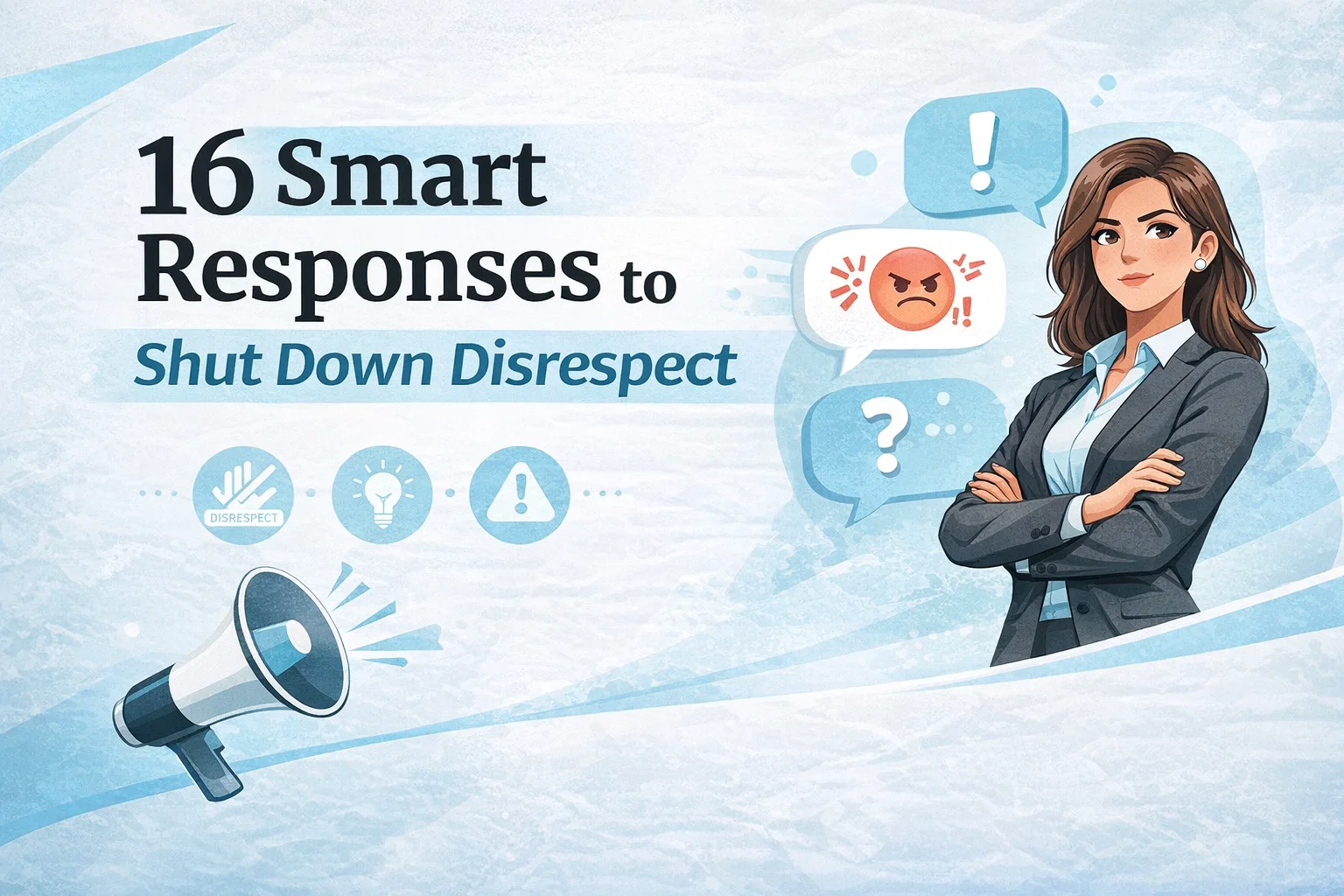
16 Smart Assertive Phrases to Shut Down Disrespect Improve Professional Communication
Navigating the modern professional landscape requires more than just technical expertise; it demands a high level of emotional intelligence and the ability to hold your ground. We have all been there. You are in a meeting, and someone cuts you off for the third time, or perhaps a colleague makes a subtle, passive aggressive remark that leaves you questioning how to respond without losing your cool. These moments of disrespect can be incredibly draining, often catching us off guard and leaving us ruminating on what we should have said long after the conversation has ended. The good news is that assertive communication is a skill that can be mastered with practice and the right set of tools.
The Power of Assertive Communication
Assertiveness is often misunderstood as being aggressive or confrontational. In reality, it is the healthy middle ground between being a doormat and being a steamroller. When you communicate assertively, you are expressing your needs, boundaries, and opinions clearly and respectfully. You are not attacking the other person; you are simply advocating for yourself. This balance is crucial for maintaining professional standards and fostering a culture of mutual respect within any team or organization.
By using specific, pre-planned responses, you remove the emotional heat from a situation. Instead of reacting with anger or retreating in silence, you provide a measured, professional retort that signals you are aware of the behavior and that it is not acceptable. This not only shuts down disrespect in the moment but also builds your reputation as a composed and confident leader.
Addressing Interruptions and Dismissive Behavior
One of the most common forms of workplace disrespect is the chronic interrupter. It is a power play that suggests your input is less valuable than theirs. Addressing this requires immediate and calm correction. Instead of fighting for airtime, try a factual observation. Saying, I notice you have interrupted me three times now, is incredibly effective because it is an objective statement of fact. It is hard to argue with a count, and it forces the interrupter to acknowledge their behavior without you having to raise your voice.
Similarly, when someone tries to dismiss your ideas with a wave of the hand or a sarcastic comment, you can use phrases that call for clarity. Asking, I would like to understand what you meant by that, puts the ball back in their court. It requires them to explain their disrespect, which often leads to them backing down once they realize their behavior is being scrutinized. It shifts the dynamic from you being the victim of a comment to them being the subject of an inquiry.
Maintaining Professional Standards
Disrespect often manifests as a slide in professional decorum. This might include gossiping, using inappropriate language, or distorting facts during a project debrief. In these instances, your role is to act as the anchor for the professional standard of the office. Using a phrase like, That is below our professional standard, removes the personal element and ties the behavior to the values of the company. It is a powerful way to shut down negativity because it frames the issue as a deviation from the collective goal rather than a personal spat.
When someone attempts to gaslight you or change the narrative of a past event, it is vital to stay grounded in reality. A simple, We both know that is not what happened, is a firm way to halt a false narrative. You do not need to get into a lengthy debate about every detail. By stating this clearly, you signal that you are not susceptible to manipulation and that the facts are non-negotiable.
Refocusing the Conversation
Sometimes, a discussion can spiral into an unproductive territory where emotions are high and respect is low. When you feel a conversation is de-escalating into an argument, use a reset phrase. Let us reset and discuss this professionally or Let us pause here and reset expectations are excellent tools for emotional regulation. These phrases provide a “circuit breaker” that allows both parties to take a breath and approach the problem from a fresh, more objective perspective.
Standing Firm in Your Expertise
In many professional settings, especially for those in specialized roles, disrespect can come in the form of questioning your authority or competence without cause. It is important to remember that you were hired for a reason. You have a seat at the table because of your skills and experience. When your expertise is unfairly challenged, you do not need to over-explain yourself. Phrases like, I am confident in my expertise on this matter or I have earned my place at this table, serve as reminders of your value.
These are not statements of arrogance; they are statements of fact. They serve to reinforce your boundaries and prevent others from undermining your contributions. When you speak with this level of quiet confidence, you naturally command more respect from those around you. It sets a tone that while you are open to collaboration, your fundamental competence is not up for debate.
Handling Differing Viewpoints
Healthy conflict is a part of any successful business, but it must be handled with care. You can disagree with a colleague’s strategy without it turning into a personal attack. Using phrases like, I have considered your view, here is mine, or Interesting take, here are the facts, allows for a robust exchange of ideas while maintaining a respectful tone. It acknowledges the other person’s input before pivoting to your own evidence-based conclusion. This approach fosters a culture of “disagree and commit,” where ideas are vetted thoroughly but the underlying respect for team members remains intact.
The Importance of Private Conflict Resolution
Public confrontation is rarely the best way to handle deep-seated disrespect. If a colleague is repeatedly crossing a line in front of others, it is often more effective to suggest a private meeting. Saying, I prefer to address this privately, shall we?, protects your professional image and prevents the other person from feeling backed into a corner in front of an audience. Private conversations allow for a more honest and less performative dialogue, making it easier to reach a genuine resolution.
During these private sessions, you can be even more direct about your boundaries. Using the phrase, My boundaries on this are non-negotiable, is perhaps the ultimate way to shut down disrespect. It leaves no room for ambiguity. It tells the other person exactly where the line is drawn and that there will be consequences if it is crossed again. Setting these limits is essential for your long-term mental health and career longevity.
Communicating Boundaries with Clarity
Clarity is the enemy of disrespect. Often, people overstep because they have been allowed to do so in the past or because the boundaries were fuzzy. By using clear, assertive language, you eliminate the gray areas. Whether it is about your workload, your personal time, or the way you are spoken to, being explicit is a form of kindness to yourself and others. It removes the guesswork and creates a predictable, safe environment for everyone to work in.
- Be Direct: Avoid “softening” your language with too many apologies or “justs.”
- Stay Calm: Your power lies in your composure. If you get angry, you lose the high ground.
- Focus on Facts: Describe the behavior, not the person’s character.
- Listen: Assertive communication includes hearing the other side, even if you disagree.
Improving Your Body Language
While the words you use are vital, your body language often speaks louder. To truly shut down disrespect, your physical presence must match your assertive phrases. Maintain steady eye contact, keep your posture open and upright, and use a steady, moderate tone of voice. Avoid fidgeting or looking away, as these can be perceived as signs of submissiveness. When your words and your body language are aligned, your message becomes much more impactful and harder to ignore.
Building a Culture of Respect
When you start using these 16 smart responses, you are not just helping yourself; you are setting a standard for your entire workplace. People take cues from those who carry themselves with self-respect. By refusing to tolerate dismissive or rude behavior, you encourage others to do the same. Over time, this shifts the group dynamic toward one of professional courtesy and mutual support. You become a role model for healthy communication, which is one of the most valuable traits a professional can possess.
It is also important to recognize and praise respectful behavior when you see it. Positive reinforcement can be just as powerful as setting boundaries. If a meeting goes particularly well or a difficult disagreement is handled with grace, acknowledge it. This helps solidify the “professional standard” you are aiming to uphold.
Conclusion
Mastering the art of shutting down disrespect is an ongoing journey. It requires a combination of self-awareness, courage, and a toolkit of reliable phrases. By incorporating these assertive responses into your professional vocabulary, you transform from someone who is reactive to someone who is proactive and in control. Remember that you have the right to be treated with dignity and that your voice deserves to be heard. Whether it is a simple reset of expectations or a firm statement about your expertise, these small shifts in communication lead to massive improvements in your career satisfaction and overall well-being. Start small, practice in low-stakes situations, and watch as your confidence and the respect you receive from others grow. You have earned your place at the table, now make sure you are treated accordingly.
Would you like me to help you create a specific Python script to automate the posting of this content to your WordPress site?