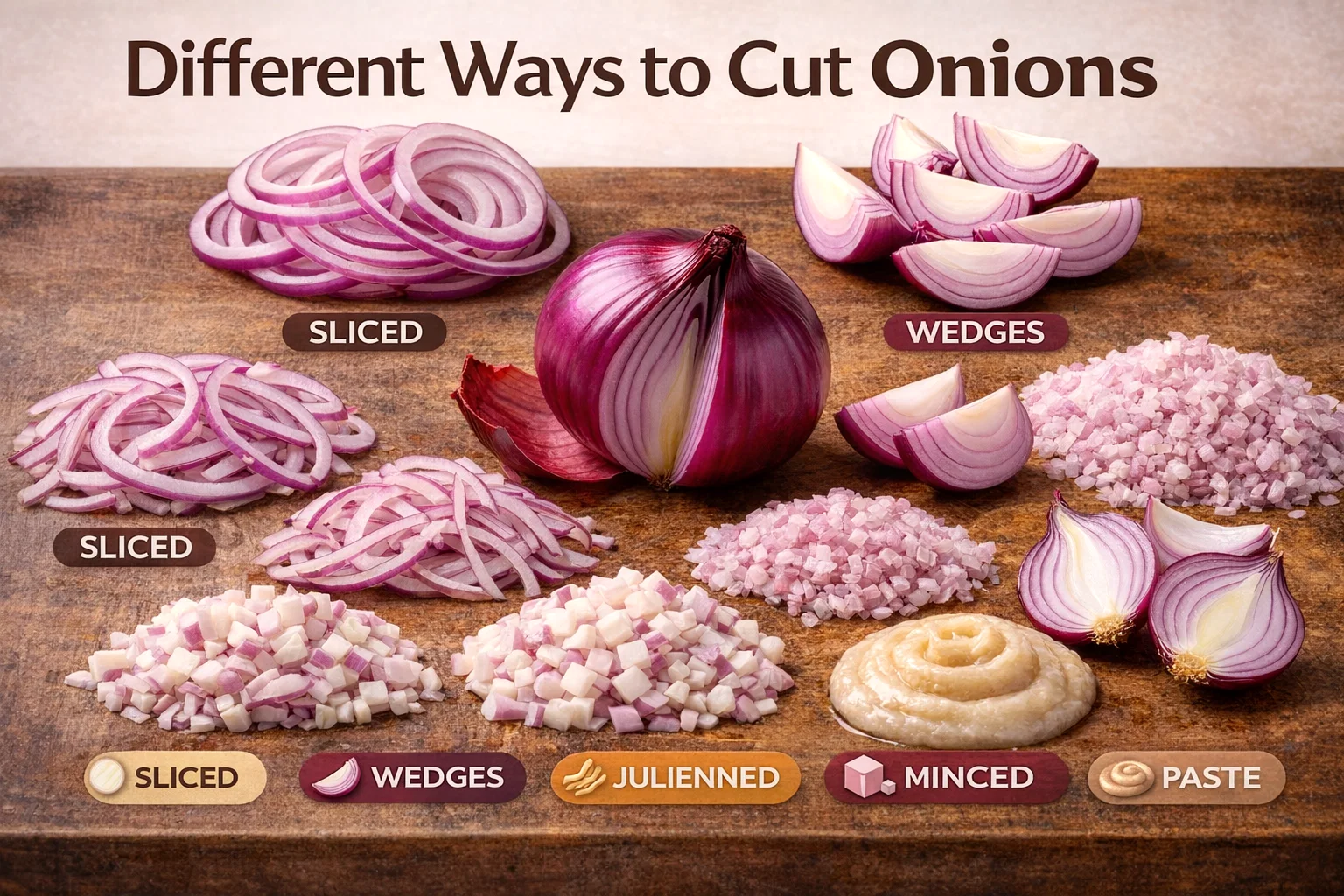
Mastering Onion Cuts 7 Essential Ways to Cut Onions for Every Recipe
Mastering the art of the knife is the first step toward becoming a confident home cook. While it might seem like a simple task, the way you cut an onion can fundamentally change the texture, flavor, and visual appeal of your final dish. Whether you are aiming for the crunch of a raw salad or the deep, caramelized richness of a slow cooked French onion soup, the geometry of your onion prep matters. By understanding the various ways to break down this kitchen staple, you unlock a world of culinary precision that saves time and elevates every meal you prepare.
The Essential Guide to Onion Cutting Techniques
Onions are the aromatic foundation of countless cuisines across the globe. From the sharp bite of a red onion in a Greek salad to the subtle sweetness of a white onion in a classic mirepoix, these versatile bulbs are indispensable. However, many home cooks stick to a basic chop without realizing that different shapes serve specific functional purposes in the pan. The surface area of the cut determines how fast the onion releases its sugars and how quickly it softens under heat. Mastering these techniques is about more than just looking like a pro; it is about controlling the chemistry of your cooking.
1. Sliced Onions for Salads and Sandwiches
Slicing an onion into thin, elegant rings is the go-to method for preparations where the onion remains raw or lightly pickled. When you slice an onion crosswise, you create beautiful circular shapes that offer a consistent crunch and a bright aesthetic. These are perfect for layering onto burgers, tucking into subs, or tossing into a fresh garden salad. For the best results, use a very sharp chef knife or a mandoline to ensure the rings are uniform in thickness, which prevents any single bite from being too overpowering.
2. The Versatile Wedge
Wedges are the sturdiest of all onion cuts. By halving the onion and then cutting each half into three or four thick pieces, you maintain the structural integrity of the layers. This makes wedges ideal for high heat applications like roasting or grilling. Because they are thick, they can withstand long periods in the oven without disintegrating, allowing the exterior to char and caramelize while the interior becomes tender and sweet. Try tossing red onion wedges with olive oil, balsamic vinegar, and rosemary before roasting them alongside root vegetables.
3. Julienne Cut for Stir Fries and Sauteing
Often confused with slicing, the julienne cut involves cutting the onion with the grain, from pole to pole (root to stem). This method follows the natural fibers of the onion, resulting in long, thin strips that hold their shape better than crosswise slices when exposed to heat. This is the preferred cut for stir-fries, where you want the onion to soften slightly but still provide a bit of structural “tooth.” It is also the secret to a great Philly cheesesteak, as the strips meld perfectly with the meat while maintaining their identity.
4. Minced Onions for Delicate Finishes
Mincing is the finest cut you can achieve with a knife, resulting in tiny, uniform bits that practically melt into a dish. This technique is essential for recipes where you want the flavor of the onion without the texture. Think of smooth pasta sauces, creamy soups, or vinaigrettes. Because the pieces are so small, they release their juices almost instantly, providing a powerful aromatic base. To mince an onion effectively, start with a standard dice and then run your knife through the pile in a rocking motion until the desired fineness is reached.
Advanced Onion Preparations
Beyond the standard knife strokes, there are specific preparations that cater to specialized recipes and regional cooking styles. These methods often require a bit more effort but yield results that a simple dice cannot match.
5. The Perfect Dice for Curries and Salsas
A clean dice is perhaps the most used skill in the professional kitchen. For curries, a medium dice ensures the onions cook down into a thick, jammy consistency that forms the body of the gravy. In fresh salsas, a small dice provides a uniform distribution of flavor so that every chipful has the perfect balance of heat, acid, and onion. The key to a great dice is leaving the root end intact while you make your initial vertical and horizontal cuts; this keeps the layers from sliding around as you work.
6. Onion Paste: The Secret to Rich Gravies
Onion paste is a staple in Indian and Southeast Asian cooking. Instead of using a knife, the onion is either grated or processed in a blender until it reaches a smooth, liquid consistency. When this paste is fried in oil, it undergoes a rapid transformation, turning deep brown and creating a foundation of intense umami. It is the secret behind the velvety texture of many restaurant style curries. If you are making a recipe that calls for a thick, integrated sauce, skipping the dice in favor of a paste can be a total game changer.
7. Halved Onions for Grilling and Pickling
Sometimes, less is more. Halving an onion is a fantastic way to prep for the grill. By keeping the root intact and simply splitting the bulb down the middle, you create a large flat surface that takes on beautiful grill marks. The layers stay together, allowing the onion to steam in its own skin while the cut side sears. Halved onions are also perfect for quick pickling jars, as they allow the vinegar solution to penetrate the layers slowly, keeping the center crisp while the edges soften and take on color.
Choosing the Right Onion for the Job
While the cut is vital, the variety of onion you choose also plays a massive role in the outcome of your dish. Not all onions are created equal, and some are much better suited for specific cuts than others.
- Red Onions: Best for slicing, dicing into salsas, and pickling. Their vibrant color and relatively mild raw flavor make them the king of cold dishes.
- Yellow Onions: The workhorse of the kitchen. They have a high sugar content, making them ideal for julienne cuts intended for caramelizing or dicing for long simmering stews.
- White Onions: These have a sharper, cleaner bite. They are the traditional choice for Mexican cuisine and work wonderfully when minced into pico de gallo or processed into a paste.
- Sweet Onions: Think Vidalia or Walla Walla. These are best served in thick slices or wedges where their natural sweetness can really shine without being masked by heavy spices.
Pro Tips for Pain Free Prepping
We have all been there: halfway through a pile of onions, eyes stinging and tears streaming. This happens because cutting an onion breaks its cells, releasing an enzyme that eventually produces a gas called syn-propanethial-S-oxide. When this gas hits the water in your eyes, it turns into a mild sulfuric acid. To minimize the tears, follow these simple kitchen hacks:
Keep Your Knife Sharp
A dull knife crushes the onion cells rather than slicing through them, which releases more of the irritating gas. A razor sharp blade makes clean cuts, keeping those enzymes contained and making your prep much faster and safer.
The Cold Method
Chilling your onions in the refrigerator for about thirty minutes before you start cutting can significantly reduce the amount of gas released. Cold enzymes react much more slowly than those at room temperature, giving you a longer window to finish your prep before the stinging starts.
Leave the Root for Last
The highest concentration of sulfur is located in the root end of the onion. By leaving the root attached while you slice or dice, you keep that section intact until the very end, keeping the most potent part of the onion away from the air for as long as possible.
Elevating Your Home Cooking
Once you feel comfortable with these seven ways to cut an onion, you will find that your efficiency in the kitchen skyrockets. You will no longer view prep work as a chore, but rather as a precise, rhythmic part of the creative process. Being able to look at a recipe and instinctively know whether to reach for a julienne or a mince is a hallmark of a seasoned cook. It allows you to focus on the flavors and the timing of your meal rather than struggling with the ingredients on your cutting board.
Experiment with these techniques in your next few meals. Notice how a julienne cut behaves differently in a pan than a standard slice. Pay attention to how the texture of your salsa changes when you move from a rough chop to a fine, professional dice. These small adjustments are the building blocks of culinary excellence.
Conclusion
Mastering the different ways to cut onions is a foundational skill that pays dividends every time you step into the kitchen. From the crisp rings in your favorite burger to the rich, blended paste in a gourmet curry, the versatility of the onion is truly unmatched. By selecting the right cut for the right cooking method, you ensure that your dishes are not only delicious but also textured and presented with professional flair. So, grab your chef knife, sharpen that blade, and start practicing these techniques today. Your taste buds and your dinner guests will certainly thank you.
Would you like me to generate a specific recipe that utilizes one of these cutting techniques, such as a traditional onion-base curry or a gourmet grilled onion salad?