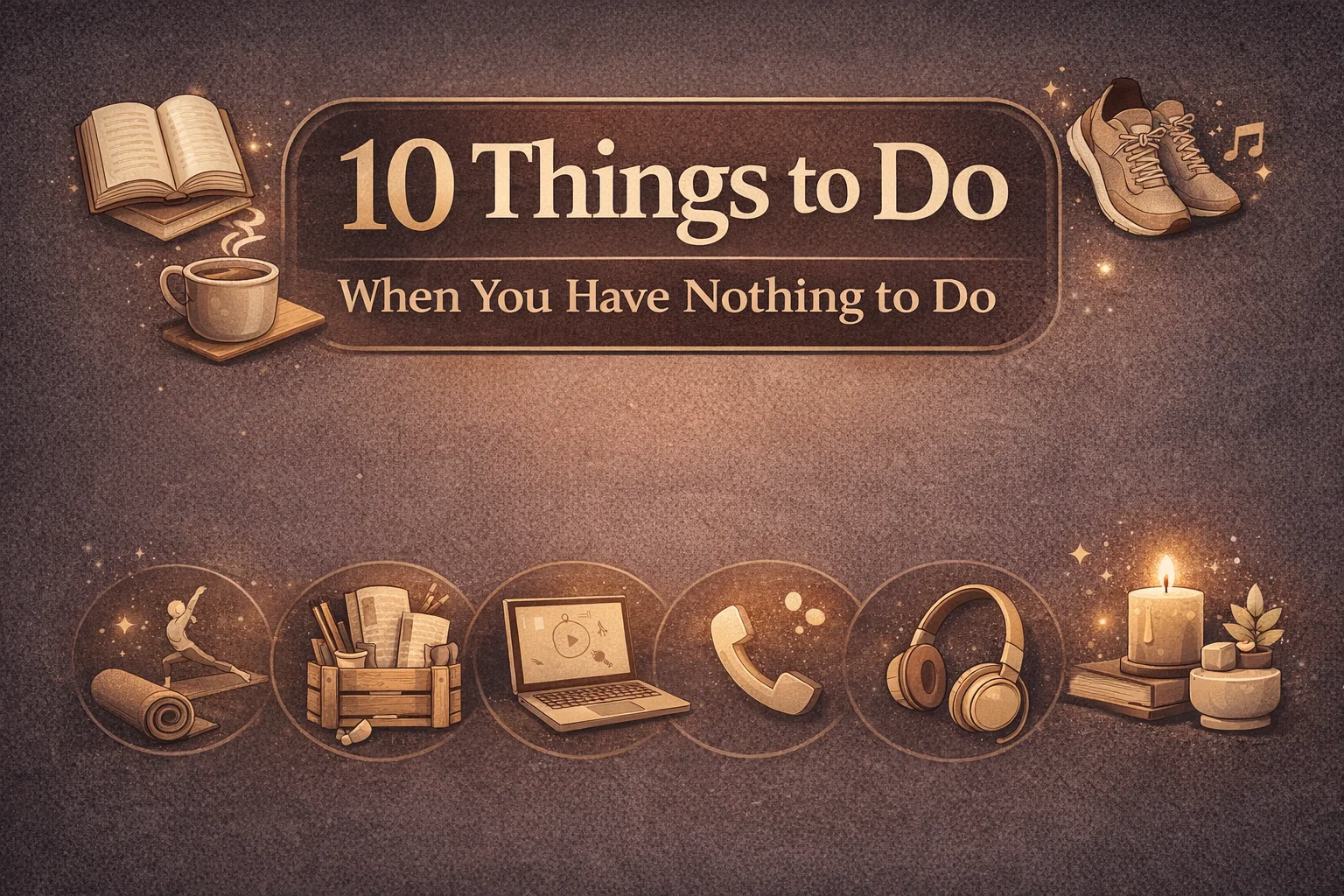
10 Productive Things to Do When Bored Meaningful Activities to Do When You Have Nothing to Do
We have all been there. You finally catch a break from the relentless pace of daily life, sit down on the couch, and realize you have absolutely no plans. While these moments of stillness are a gift, they can often feel restless or even a bit overwhelming if you do not know how to fill them. Instead of falling into the trap of mindless scrolling through social media, you can use this time to nourish your mind, body, and home. Turning a quiet afternoon into a meaningful experience is about choosing activities that leave you feeling better than when you started. Let us explore how you can transform your downtime into a series of small, intentional wins.
The Power of a Fresh Perspective: Getting Outside
One of the most immediate ways to shift your mood when you are feeling bored or stagnant is to change your physical environment. Stepping outside for a simple walk is more than just exercise; it is a mental reset. Fresh air and a change of scenery can clear away the mental cobwebs that accumulate when we spend too much time indoors. Whether it is a brisk walk around the block or a slow stroll through a local park, the act of moving your body in nature helps to lower stress levels and boost creativity.
The Benefits of Mindful Walking
When you go for a walk, try to leave your phone in your pocket. Focus on the sound of your footsteps, the feeling of the wind on your face, and the colors of the trees or buildings around you. This practice of mindful walking turns a basic physical activity into a meditative experience. It allows you to reconnect with the physical world and find beauty in the mundane details of your neighborhood.
Cultivating Your Inner World Through Reading and Learning
When the external world is quiet, it is the perfect time to expand your internal one. Picking up a book is one of the most rewarding ways to spend a free hour. Reading allows you to step into someone else’s shoes, explore a different era, or learn a skill that could change your life. If you have a stack of books gathering dust on your nightstand, now is the moment to finally dive in. If nothing on your shelf appeals to you, consider exploring a completely new genre like historical fiction, a biography, or a deep dive into philosophy.
Embracing the Joy of Lifelong Learning
If you prefer a more interactive approach, the internet is a goldmine for learning something new. You could spend thirty minutes watching a tutorial on a craft you have always wanted to try, such as watercolor painting or basic coding. Online courses and educational podcasts offer a way to engage your brain without the pressure of a formal classroom setting. The goal here is not necessarily to become an expert overnight, but to foster a sense of curiosity and growth.
Finding Clarity with Pen and Paper
Writing is a profound tool for self-discovery that requires nothing more than a notebook and a pen. When you have nothing to do, your mind often starts to wander toward worries or unorganized thoughts. Journaling gives those thoughts a place to land. By externalizing what is on your mind, you gain a sense of distance and clarity that is hard to achieve through thinking alone.
Creative Writing vs. Reflective Journaling
There are many ways to approach writing. You might try reflective journaling, where you simply “brain dump” everything you are currently feeling or thinking. Alternatively, you could start a creative writing project, like a short story or a poem. Even writing a list of things you are grateful for can significantly shift your perspective and leave you feeling more grounded and content. The act of creation, no matter how small, is a powerful antidote to boredom.
Creating a Sanctuary: The Art of Decluttering
Our physical environment is a reflection of our mental state. If your home feels cluttered or disorganized, it is likely that your mind feels a bit chaotic too. You do not need to tackle a full home renovation to feel the benefits of tidying. In fact, focusing on one small area can be incredibly satisfying. Start with a single junk drawer, your bedside table, or your digital desktop. Organizing these small spaces provides a sense of control and accomplishment.
The Psychological Shift of Organizing
As you sort through items and decide what to keep and what to let go of, you are practicing decision-making and mindfulness. Getting rid of things that no longer serve you creates physical and mental space for new energy to enter your life. Once a space is clean and organized, you will find it much easier to relax and focus on other meaningful tasks.
Nurturing Your Body Through Movement and Mindfulness
When you have a gap in your schedule, your body often appreciates a break from the static positions of modern life. You do not need to head to the gym for a high-intensity workout to feel the benefits of movement. Simple stretches or a twenty-minute yoga flow can release tension in your muscles and improve your circulation. Physical activity releases endorphins, which are natural mood lifters, making it a perfect choice for when you are feeling a bit sluggish.
The Practice of Stillness
Sometimes, the most productive thing you can do is absolutely nothing at all, but with intention. This is where mindfulness and meditation come in. Instead of “having nothing to do” being a source of anxiety, you can turn it into a practice of relaxation. Sit comfortably, close your eyes, and focus on your breath. Allow thoughts to come and go without judgment. Even five minutes of deep breathing can lower your heart rate and bring a sense of peace to your day.
The Magic of the Kitchen: Cooking and Baking
Cooking is a multi-sensory experience that forces you to be present in the moment. When you follow a recipe, you are engaging your sense of touch, smell, and taste. Baking a treat from scratch or trying out a complex dinner recipe is a wonderful way to channel your creativity. There is a deep sense of satisfaction that comes from taking raw ingredients and transforming them into something delicious that you can enjoy or share with others.
Slow Cooking as a Form of Self-Care
In our fast-paced world, we often view cooking as a chore to be completed as quickly as possible. When you have free time, try to view it as a ritual. Put on some music, pour a glass of water or tea, and take your time with the preparation. The process of chopping vegetables or kneading dough can be incredibly therapeutic. Plus, you get a tangible, tasty reward at the end of the process.
Strengthening Connections: Reaching Out to Others
Human beings are social creatures, yet we often let our busy lives get in the way of maintaining our most important relationships. If you find yourself with a free hour, use it to reconnect with a friend or family member. A simple phone call or a text message to say you are thinking of someone can mean the world to them. If circumstances allow, meeting a friend for a coffee or a quick walk adds a layer of social fulfillment that solitary activities cannot provide.
The Value of Deep Conversation
When you reach out, try to go beyond the “how are you” pleasantries. Ask about something specific in their life or share a thought that has been on your mind. Deep, meaningful conversations strengthen the bonds of your community and remind you that you are part of something larger than yourself. Social connection is a fundamental pillar of long-term happiness and well-being.
Audio Exploration: Music and Podcasts
Sometimes you want to be productive while keeping your hands busy with something else, like cleaning or gardening. This is where audio content shines. Putting on your favorite album can instantly change the atmosphere of your home and improve your mood. Music has a unique way of tapping into our emotions and providing a soundtrack to our daily lives.
Learning Through Your Ears
Podcasts are another fantastic way to fill the silence. Whether you are interested in true crime, personal development, history, or comedy, there is a podcast for every interest. Listening to experts discuss a topic or hearing people tell their stories can be incredibly engaging. It allows you to learn and be entertained simultaneously, making your downtime feel both productive and effortless.
Setting the Stage for Future Success
Finally, you can use your quiet moments to look ahead. This is not about stressing over your to-do list, but rather about intentional goal setting. Take a moment to think about what you want to achieve in the coming week or month. Writing down your intentions can help you stay focused when things get busy again. You might even spend a few minutes planning a future trip or a fun weekend activity to give yourself something to look forward to.
The Importance of Downtime Reflection
Reflecting on your progress and your desires helps ensure that your daily actions align with your long-term values. When you are constantly “doing,” it is hard to see the big picture. These pockets of silence are the perfect opportunity to check in with yourself and make sure you are heading in a direction that makes you happy.
Conclusion: Redefining “Nothing to Do”
Having nothing to do does not have to be a negative state. In fact, it is an invitation to explore parts of yourself and your environment that usually get ignored. By choosing to read, move, create, or connect, you turn a void of time into a meaningful experience. These ten activities are just the beginning. The next time you find yourself with a blank calendar, embrace the opportunity. You might find that these quiet moments become the most rewarding parts of your week. The key is to act with intention and choose activities that truly nourish your soul. Whether you are tidying a drawer or lost in a book, you are making the most of the life you are living.
Would you like me to generate a meta description or some SEO keywords for this blog post?