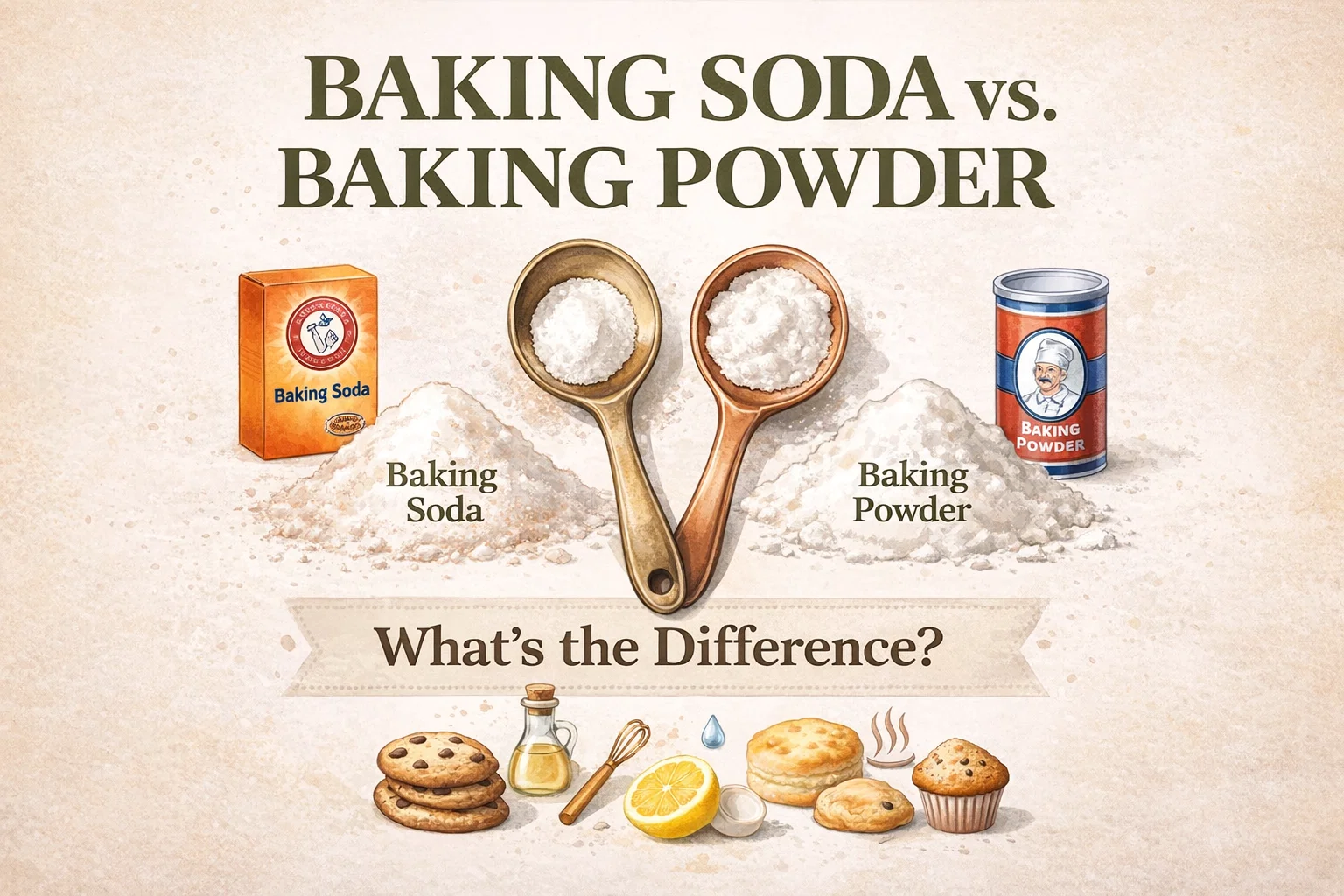
Baking Soda vs. Baking Powder The Ultimate Guide for Perfect Cookies, Cakes, and Biscuits
Have you ever stood in your kitchen, mid recipe, staring at two nearly identical white powders and wondering if they actually do the same thing? It is a classic baker’s dilemma. You reach for the baking soda, but the recipe calls for baking powder, or perhaps you have run out of one and hope the other is a worthy substitute. While they look the same to the naked eye, these two ingredients are the silent engines of the baking world, responsible for everything from the delicate crumb of a birthday cake to the satisfying crunch of a sourdough crust. Understanding the chemical dance between these leaveners is the first step toward moving from a recipe follower to a true kitchen artist.
The Fundamental Chemistry of Leavening
To understand why your muffins rise, we have to look at the science of leavening. Leavening is simply the process of incorporating gas into a dough or batter to make it light and soft. While yeast does this biologically through fermentation, baking soda and baking powder do it chemically. When these ingredients are activated, they release carbon dioxide gas. This gas gets trapped in the structure of your batter, expanding during the baking process to create those tiny air pockets we love in a fluffy biscuit or a light sponge cake.
What is Baking Soda?
Baking soda is the common name for sodium bicarbonate. It is a base, which means it sits on the alkaline side of the pH scale. Because it is a base, it requires an acid to create a reaction. Think back to your elementary school science fair volcano. When you mixed baking soda with vinegar, it bubbled up instantly. That is exactly what happens in your cookie dough. When baking soda meets an acidic ingredient and moisture, it creates carbon dioxide. Because the reaction happens the moment the ingredients touch, you usually need to get your batter into the oven quickly before the bubbles disappear.
What is Baking Powder?
Baking powder is actually a complete leavening package. It contains baking soda, but it also includes an acidic agent, usually cream of tartar, and a drying agent like cornstarch to keep the two from reacting in the container. Most modern baking powders are labeled as double acting. This means the first reaction happens when the powder gets wet, and the second reaction happens when it hits the heat of the oven. This provides a safety net for bakers, ensuring a good rise even if the batter sits on the counter for a few minutes.
The Role of Acids in Your Batter
Since baking soda needs an acid to work, the ingredients you choose for your recipe dictate which leavener you should use. If your recipe includes acidic components, baking soda is often the star of the show. Common acidic ingredients in baking include:
- Buttermilk and Yogurt: These fermented dairy products provide a tangy flavor and the perfect acidic environment for soda.
- Natural Cocoa Powder: Unlike Dutch processed cocoa, natural cocoa is quite acidic.
- Honey and Molasses: These natural sweeteners carry enough acidity to trigger a rise.
- Lemon Juice and Vinegar: Often used in vegan baking to create a quick lift.
- Brown Sugar: Because it contains molasses, it acts as an acid in your dough.
If your recipe does not have any of these ingredients, for example, a simple sugar cookie made with granulated white sugar and butter, you would use baking powder instead. Since the powder already has the acid built in, it only needs the liquid from your eggs or milk to start working.
Why Does Texture Matter?
Choosing between these two is not just about height; it is about the final “mouthfeel” and appearance of your baked goods. Baking soda does more than just lift; it also raises the pH of the dough. This higher pH weakens the gluten, leading to a more tender and chewy result. This is why baking soda is the preferred choice for chewy chocolate chip cookies. Furthermore, an alkaline environment speeds up the Maillard reaction, which is the scientific term for browning. If you want a deep, golden brown crust on your pretzels or soda bread, baking soda is your best friend.
On the other hand, baking powder is designed for neutrality. It provides a reliable lift without significantly altering the flavor or the color of the bake. This makes it ideal for delicate vanilla cakes, white breads, and airy muffins where you want a pale, soft crumb rather than a dark, crispy exterior.
Can You Substitute One for the Other?
This is the question every baker asks eventually. While it is possible to swap them, it is not a direct one to one exchange. Because baking powder contains other ingredients, it is much weaker than pure baking soda. Generally, you need about three times as much baking powder to get the same lifting power as baking soda. However, adding too much baking powder can leave a bitter, metallic aftertaste in your food.
Substituting Baking Powder for Baking Soda
If you have a recipe that calls for baking soda but you only have powder, you can use more powder, but be careful. Since the powder adds its own acid, the final flavor might be slightly different. You might also lose out on some of the browning that the soda would have provided.
Substituting Baking Soda for Baking Powder
This is the trickier swap. If you use pure baking soda in a recipe designed for powder, you must add an acid to the recipe to make it work. A common rule of thumb is to add a teaspoon of lemon juice or white vinegar for every half teaspoon of baking soda used. Without that acid, the baking soda will stay unreacted, leaving your cake flat and tasting like soap.
Testing for Freshness
There is nothing more disappointing than spending an hour preparing a beautiful cake only for it to come out of the oven as flat as a pancake. Leavening agents lose their potency over time, especially if they are exposed to moisture or humidity. It is a good habit to test your supplies every few months.
How to Test Baking Soda
Place a small amount of baking soda in a bowl and add a splash of vinegar or lemon juice. It should fizz violently and immediately. If it only bubbles slightly or stays still, it is time to throw it out and buy a fresh box.
How to Test Baking Powder
Since baking powder has the acid built in, you only need water to test it. Mix a teaspoon of powder into half a cup of hot tap water. It should bubble and foam up. If the water remains calm, your baking powder has expired.
Common Baking Mistakes to Avoid
Even with the right ingredients, small errors in technique can ruin your leavening. One major mistake is overmixing the batter. Once the baking soda or powder starts reacting, the gas bubbles are fragile. If you stir the batter too vigorously or for too long, you will pop those bubbles, leading to a dense and gummy texture. This is particularly important for pancakes and muffins; a few lumps in the batter are actually a sign of a good, fluffy breakfast to come.
Another common issue is incorrect measurements. Baking is chemistry, and the ratios matter. Using a “heaping” spoon instead of a level “measuring” spoon can drastically change the pH of your dough. Too much soda can cause a recipe to rise quickly and then collapse, leaving a crater in the middle of your cake. Always use standardized measuring spoons and level them off with a flat edge for the best results.
Conclusion: Mastering Your Kitchen Science
Mastering the art of baking is really about mastering the small details. While baking soda and baking powder might seem like minor players compared to flour and sugar, they are the elements that provide structure, texture, and color to your favorite treats. By recognizing that baking soda needs an acid for a quick, browning reaction and that baking powder provides a reliable, double acting lift, you can troubleshoot recipes and even begin to develop your own unique creations. The next time you see that “best for” list, you will know exactly why your cookies need that pinch of soda for the perfect chew and why your birthday cakes rely on powder for that cloud like fluffiness. Keep your ingredients fresh, measure with care, and do not be afraid to experiment with the wonderful science of leavening. Happy baking!
Would you like me to create an SEO-optimized meta description or perhaps some social media captions to help promote this post?