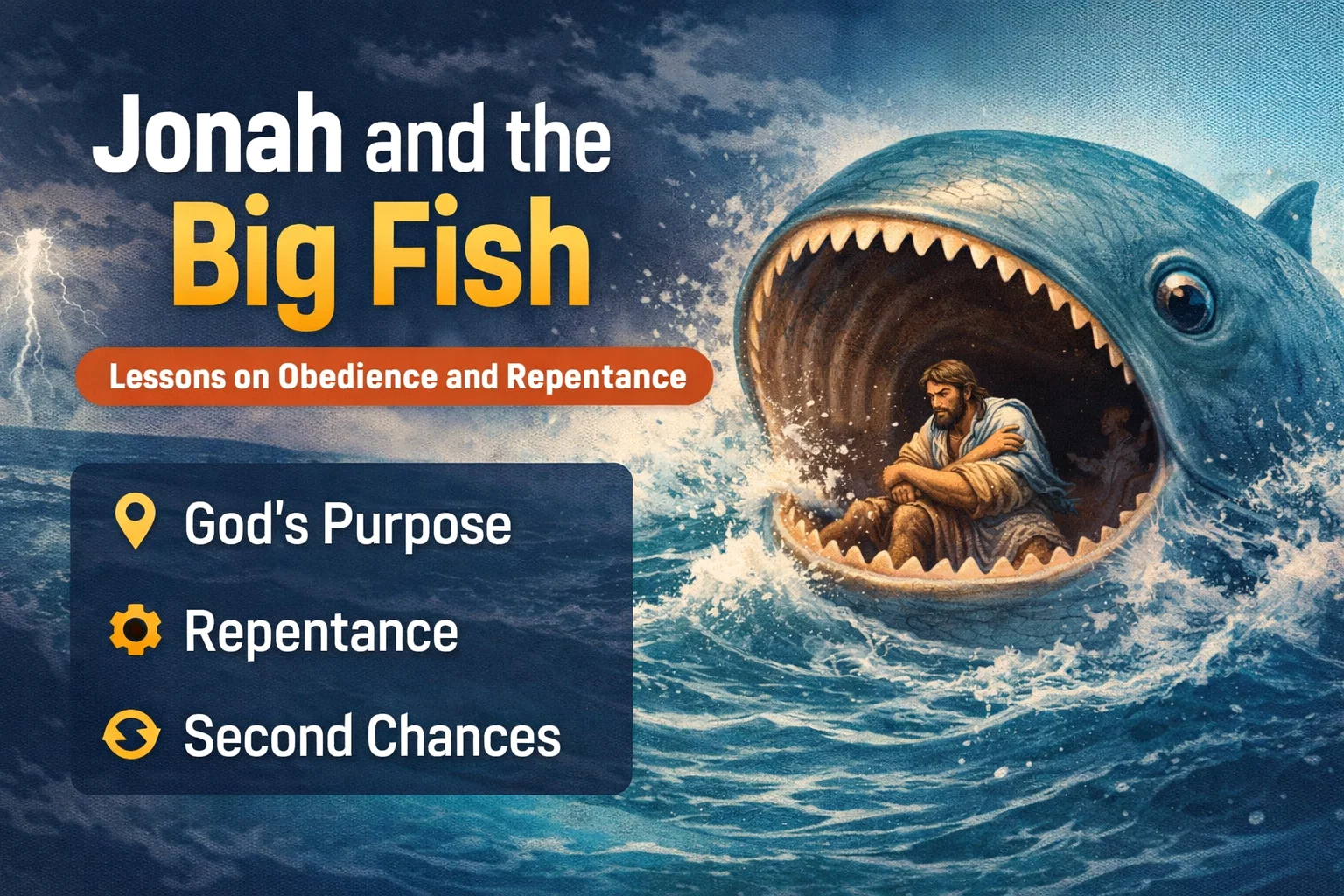
Jonah and the Big Fish Bible Story Lessons Repentance and Gods Mercy Infographic
The story of Jonah and the Big Fish is one of the most recognizable accounts in history, transcaging the boundaries of Sunday school classrooms and entering the realm of universal cultural literacy. However, beyond the spectacular imagery of a man surviving inside a sea creature, there lies a profound narrative about human resistance, divine persistence, and the overwhelming power of second chances. This ancient story serves as a mirror, reflecting our own tendencies to flee from difficult callings and our deep-seated need for compassion. When we look at the journey of Jonah, we are not just looking at a historical or theological footnote; we are looking at a roadmap for repentance and restoration that remains startlingly relevant in our modern, fast paced world.
Understanding the Call: Why We Run from Purpose
Every great journey begins with a call, but in Jonah’s case, the call was met with an immediate and firm rejection. The narrative starts with a clear instruction from God to go to Nineveh, a city known for its greatness but also its significant moral failings. Jonah’s reaction was not one of hesitation or fear, but of active rebellion. He didn’t just stay home; he bought a ticket for a ship heading to Tarshish, which was essentially the opposite end of the known world at the time.
The Psychology of Avoidance
Why do we run when we feel called to a specific purpose or task? For Jonah, it was a matter of heart and prejudice. He knew that if he preached to Nineveh and they repented, God would show them mercy. Jonah didn’t want them to receive mercy; he wanted justice. This highlights a common human struggle: the conflict between our personal desires and a higher calling. We often avoid the things that challenge our comfort zones or our preconceived notions of who is “deserving” of success or forgiveness.
The Illusion of the Opposite Direction
When Jonah fled to Tarshish, he was seeking a place where he could hide from his responsibilities. In our lives, “Tarshish” takes many forms. It might be a mindless distraction, a career path that doesn’t fulfill us but feels safe, or a physical relocation intended to leave our problems behind. The lesson here is that geography cannot solve a spiritual or internal conflict. No matter how fast the ship or how far the destination, the call remains until it is answered.
The Storm at Sea: When Resistance Meets Reality
Nature has a way of reflecting internal turmoil, and for Jonah, his rebellion manifested as a violent storm. While the sailors on the ship were terrified and crying out to their own gods, Jonah was found sleeping in the hold. This detail is crucial; it shows the lethargy that often accompanies a state of running away. Eventually, the reality of the situation could no longer be ignored. The storm was so fierce that the crew realized it was supernatural in origin, leading to the moment where Jonah had to face the consequences of his flight.
Accountability in the Midst of Chaos
One of the most sobering aspects of the story is how Jonah’s disobedience put others at risk. The innocent sailors were caught in the crossfire of his rebellion. This serves as a powerful reminder that our choices never happen in a vacuum. When we ignore our purpose or act out of bitterness, there is often collateral damage to the people around us. Recognizing this impact is often the first step toward genuine repentance. Jonah eventually admitted that he was the cause of the storm and suggested the unthinkable: that they throw him into the sea to save themselves.
The Big Fish: A Sanctuary in the Deep
To the casual observer, being swallowed by a massive sea creature looks like a death sentence. In the context of the story, however, the big fish was actually an instrument of salvation. God provided a way to preserve Jonah’s life in a place where survival should have been impossible. For three days and three nights, Jonah existed in the dark, damp belly of the fish, a period that served as a forced “sabbath” for reflection and prayer.
The Power of the Prayer in the Belly
It was in the darkest place imaginable that Jonah finally looked upward. His prayer, recorded in detail, is a beautiful tapestry of Scripture and personal realization. He acknowledged his desperate situation, recognizing that he had been “cast into the deep.” Most importantly, he shifted his focus from his own frustration to God’s holiness. This illustrates a vital truth: sometimes we have to hit rock bottom, or find ourselves in the “belly of a whale,” before we are willing to listen. The darkness became a sanctuary where Jonah could finally hear the voice he had been trying to drown out.
Reframing Disruption as Protection
We often view disruptions in our lives as punishments. A lost job, a failed project, or a period of isolation can feel like we are being swallowed whole. But what if those moments are actually God’s way of “disciplining to restore, not to destroy”? The fish wasn’t a prison; it was a transport vessel back to the path Jonah was supposed to be on. When we change our perspective on our “whale moments,” we can find the hidden mercy within the struggle.
The Second Chance: A Walk Through Nineveh
After three days, the fish spit Jonah out onto dry land. This is the ultimate “reset” button. Jonah was back where he started, but he was a changed man. When the call came a second time, he didn’t head for the docks. He went straight to Nineveh. His message was simple and direct: “Forty more days and Nineveh will be overthrown.”
The Surprising Response of a Great City
What happened next is one of the greatest recorded instances of mass repentance in history. From the king on his throne to the lowest citizen, the people of Nineveh took Jonah’s warning to heart. They fasted, wore sackcloth, and turned from their “evil ways.” This outcome was exactly what Jonah had feared, yet it was the very purpose for which he had been sent. It shows that no person or city is ever “too far gone” to experience a transformation.
Repentance Opens the Door to Mercy
The core of this narrative is the relationship between repentance and mercy. Repentance isn’t just about feeling sorry; it is about a change of mind and direction. When Nineveh changed its heart, God changed His plan for their destruction. This teaches us that the door to mercy is always unlocked; we simply have to be willing to walk through it. It requires humility to admit fault, but the reward is a total restoration of peace and purpose.
Key Lessons for Our Modern Lives
While the setting of this story is ancient, the principles are timeless. We can extract several “key lessons” that apply to our daily walk, whether we are navigating a career, building a family, or seeking personal growth.
- You cannot run away from your purpose: Attempting to avoid your true calling only leads to storms and whales. It is far better to face the challenge head-on with faith.
- God disciplines to restore: Challenges are often not signs of abandonment, but signs of a deep commitment to our growth and well-being.
- Second chances are a reality: No mistake is final. As long as there is breath, there is an opportunity to turn back and start again.
- Compassion is universal: We are called to be messengers of hope even to those we might find difficult to love or forgive.
Creating a Culture of Mercy
In a world that is often quick to judge and slow to forgive, the story of Jonah calls us to a different standard. It asks us to look at the “Ninevehs” in our own lives with eyes of compassion. Whether it is a coworker who has wronged us or a community we don’t understand, the invitation is to move toward them with a message of restoration rather than a heart of condemnation.
Conclusion: Your Own Journey to Nineveh
The story of Jonah and the Big Fish ends with a bit of a cliffhanger, as Jonah struggles with his own feelings about God’s mercy toward others. This is perhaps the most human part of the entire account. It reminds us that growth is a process, and even after a major “whale experience,” we still have things to learn. However, the overarching theme remains clear: God is a God of second chances who is more interested in our restoration than our destruction.
As you reflect on this story, ask yourself: Where am I running? What “storm” am I currently facing that might be an invitation to stop and listen? And most importantly, am I ready to accept the mercy being offered to me? We all have a Nineveh—a place where we are called to bring light, truth, and compassion. The journey might be difficult, and there might be a few big fish along the way, but the destination is always worth it. Embrace your second chance today and walk forward with the confidence that you are never truly alone, no matter how deep the waters may seem.
Would you like me to create a custom study guide or a set of discussion questions based on these themes for your next group meeting?