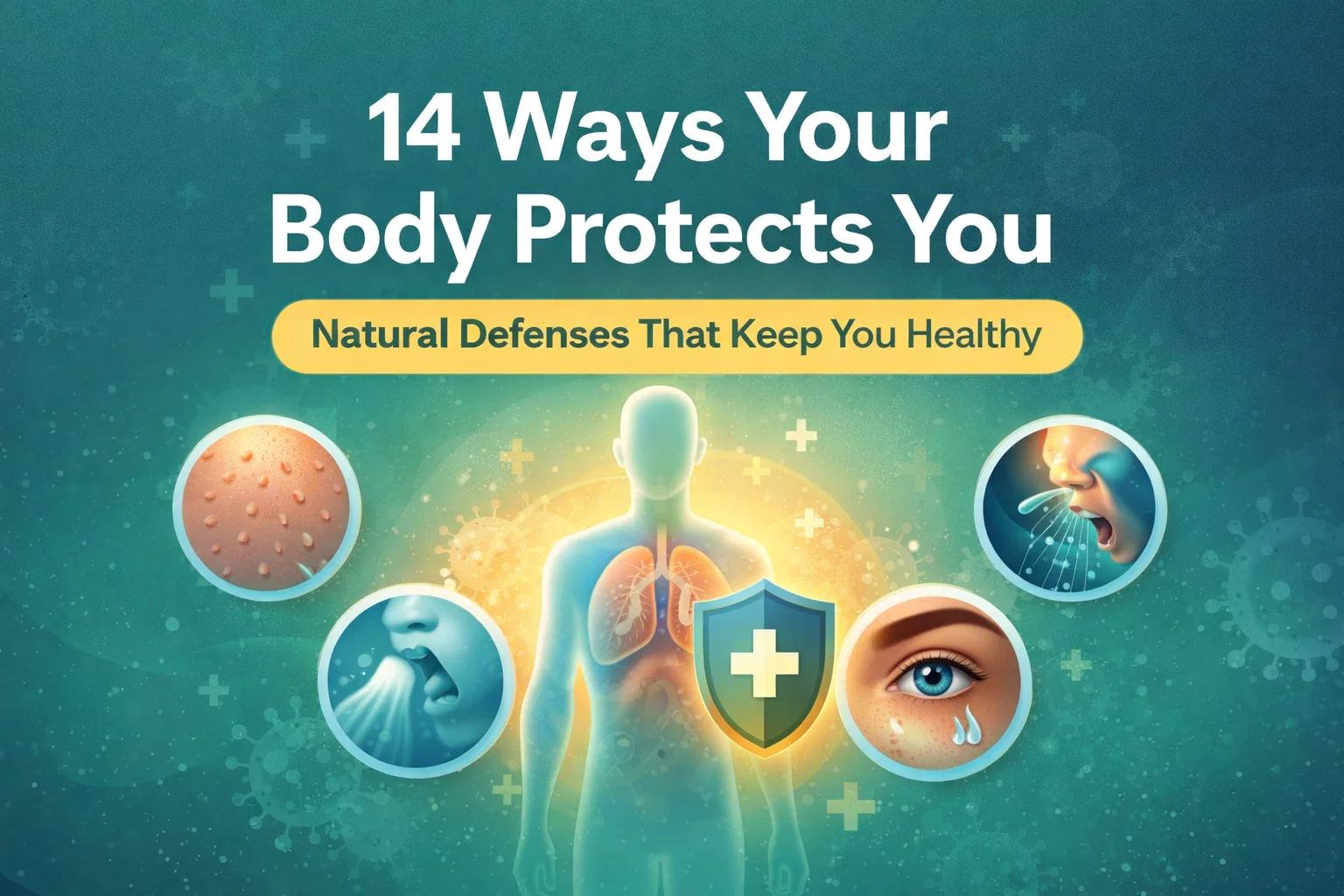
14 Fascinating Things Your Body Does Automatically to Protect You Human Body Facts Health
Our bodies are truly the most sophisticated machines ever created. While we spend a lot of our time worrying about what we eat or how much we exercise, there is a whole world of activity happening beneath the surface that we never even have to think about. From the moment you wake up until the long hours of the night while you sleep, your biology is running a complex security system designed for one single purpose: to keep you alive and thriving.
Most of the time, we view things like sneezing, shivering, or even a sudden fever as a nuisance. We reach for a tissue or a blanket and wish the sensation would just go away. But if we peel back the layers and look at the science, these are actually heroic acts performed by our cells and systems. When you understand these fourteen automatic responses, you start to view your health through a lens of gratitude rather than frustration. Let’s dive deep into the fascinating ways your body protects you every single day.
The First Line of Defense: Reflexes and Sensory Responses
The body does not have time to wait for your conscious mind to make a decision when danger is near. If you had to think, “Should I move my hand away from this hot stove?” you would be severely burned before the thought even finished. This is where your automatic reflexes come into play.
Reflexes: Your Internal Security Guard
Reflexes are instantaneous. They bypass the high-level processing centers of the brain and often loop through the spinal cord for maximum speed. This snap response is what allows you to catch your balance when you trip or pull back from a sharp object before you even feel the pain. It is your body’s way of prioritizing physical integrity over conscious thought.
Blinking: The Shield for Your Soul’s Windows
Your eyes are incredibly delicate and constantly exposed to the environment. Blinking happens so often that we rarely notice it, yet it serves two vital roles. First, it spreads a fresh layer of tears across the cornea to prevent dryness. Second, it acts as a physical shield. When a gust of wind blows dust toward your face, your eyelids snap shut faster than you can blink—literally. This protects the sensitive surface of the eye from micro-scratches and debris.
Temperature Regulation: Keeping the Internal Engine Stable
Human life exists within a very narrow temperature range. If our internal heat fluctuates too much in either direction, our enzymes stop working and our organs begin to fail. To prevent this, the body has developed a highly sensitive thermostat system.
Shivering: Turning Movement into Heat
When your internal temperature drops, your muscles begin to contract and relax at a rapid pace. This is what we call shivering. These microscopic movements require energy, and a byproduct of that energy expenditure is heat. By shivering, your body is essentially “idling” its engine to generate enough warmth to keep your vital organs functioning in cold conditions.
Goosebumps: A Relic of Our Evolutionary Past
Have you ever noticed your hair standing on end when a cold draft hits? These are goosebumps, caused by the contraction of tiny muscles at the base of each hair follicle known as the arrector pili. While this was more effective back when humans had thick fur—trapping a layer of air against the skin for insulation—it still serves as a signal today that your body is trying to conserve every bit of heat possible.
Sweating: The Ultimate Cooling System
On the flip side, when things get too hot, your body turns to evaporative cooling. Sweating is an incredible feat of biological engineering. As moisture is released through your pores and evaporates off your skin, it carries heat away with it. This allows humans to endure physical exertion and high temperatures that would be fatal to many other mammals.
The Respiratory Cleanup Crew
We breathe in thousands of gallons of air every day, and that air is rarely pure. It is filled with dust, pollen, bacteria, and pollutants. To keep the lungs clear, the body uses a variety of “expulsion” techniques.
Sneezing: The High-Speed Ejection
A sneeze is your body’s way of rebooting the nasal environment. When the sensitive membranes in your nose detect an irritant—be it pepper, dust, or a virus—it triggers a massive, coordinated blast of air. This force can travel at speeds over 100 miles per hour, effectively clearing the “pipes” so you can breathe easily again.
Coughing: Clearing the Lower Airway
While sneezing handles the nose, coughing handles the throat and lungs. If a piece of food goes down the wrong way or if mucus builds up due to an infection, the cough reflex kicks in to instantly clear the airway. It is a violent but necessary action that prevents choking and keeps our respiratory system unobstructed.
Nose Hairs: The Built-In Air Filter
Before the air even reaches the point of needing a sneeze or a cough, it passes through your nose hairs. These small bristles act as a primary filter, trapping large particles of dust and allergens before they can enter the deeper, more sensitive parts of your lungs. Think of them as the lint trap in your dryer, keeping the whole system running smoothly.
Detoxification and Healing Mechanisms
When the body is compromised by toxins or physical injury, it doesn’t just sit back and hope for the best. It takes aggressive action to repair the damage and remove the threat.
Vomiting: The Emergency Flush
Though it is one of the least pleasant experiences, vomiting is a life-saving response. If you ingest something toxic or if your stomach detects a harmful level of bacteria, your brain triggers an immediate “purge” command. This flushes out the harmful substances before they can be absorbed into the bloodstream, protecting your liver and other organs from potential poisoning.
Fever: Creating a Hostile Environment
Many people view a fever as the “illness” itself, but a fever is actually a sign that your immune system is working perfectly. Most viruses and bacteria thrive at normal body temperature. By raising the heat, your body creates an environment where invaders cannot easily replicate. Additionally, a higher temperature speeds up your metabolism, allowing your white blood cells to move faster and fight harder.
Scabs: The Biological Bandage
The moment your skin is broken, your blood begins a complex clotting process. This results in a scab. While it might be tempting to pick at them, scabs are essential “hard covers” that seal the wound. They keep out bacteria and provide a protected space underneath for new skin cells to grow and repair the gap. Without scabs, every minor scratch would be a doorway for a serious infection.
The Brain and Emotional Connection
Not all automatic responses are about physical invaders or temperature. Some are designed to protect our most complex organ: the brain.
Yawning: A Cool Breeze for the Mind
While we often associate yawning with boredom or sleepiness, recent studies suggest it serves a more physiological purpose. Yawning involves a deep inhalation of air and a stretching of the jaw, which increases blood flow to the skull. This helps cool down an overheated brain, keeping your cognitive functions sharp when you are tired or stressed.
Tears: Washing Away Stress and Dust
Tears serve a dual purpose. Basal tears are always present to wash out dust and keep the eye lubricated. However, emotional tears are unique to humans. When we experience intense stress or sadness, our bodies release “stress hormones” through our tear ducts. This is why you often feel a sense of relief after a good cry; it is a literal chemical release that helps bring your nervous system back into balance.
Skin Peeling: Discarding the Damage
If you have ever had a sunburn, you know the peeling process all too well. This is actually a protective mechanism called apoptosis. When skin cells are too damaged by UV radiation to repair themselves, they “commit suicide” to prevent themselves from turning into cancerous cells. The peeling is your body’s way of shedding the dangerous, damaged layers to make room for healthy, new skin.
Conclusion: Living in Harmony with Your Biology
It is easy to take our health for granted until something goes wrong. However, when we look at the fourteen things our body does automatically, it becomes clear that we are never truly alone in our health journey. We have an internal team working 24/7 to filter the air we breathe, regulate the temperature of our blood, and heal the wounds we sustain.
By understanding these processes, we can learn to work with our bodies instead of against them. The next time you feel a shiver or a sneeze coming on, take a moment to appreciate the incredible intelligence of your own biology. Your body is always listening, always reacting, and always doing its best to keep you safe. Embracing this holistic view of wellness allows us to live with more confidence and less fear, knowing that we are equipped with the ultimate survival toolkit right inside our own skin.
Would you like me to help you draft some social media captions to promote this blog post on your WordPress site?