Taxes Explained to Kids Simple Financial Literacy Guide
Teaching children about money is one of the most valuable gifts a parent can give. While counting coins and saving allowance are fantastic first steps, there is one financial reality that often gets left out of the conversation until adulthood: taxes. It sounds like a heavy, complicated topic, but it absolutely does not have to be! Imagine if you could explain complex financial concepts using something as simple and universally loved as a neighborhood lemonade stand. By breaking down these big ideas into bite-sized, relatable scenarios, we can raise a generation of financially savvy kids who truly understand how the economic world works around them.
Financial literacy is a crucial part of personal growth and development. When we introduce these concepts early, we remove the fear and confusion that many adults face when dealing with their finances. Using everyday activities like a DIY lemonade stand transforms a dry economics lesson into an engaging, hands-on game. Let us explore how you can use a simple pitcher of lemonade to explain everything from income tax to international customs duties to your children.
Why the Lemonade Stand is the Perfect Teaching Tool
The lemonade stand is a classic childhood rite of passage. It involves a small investment, a product to sell, customer interaction, and the thrilling prospect of making a profit. Because kids can physically see the lemons, the sugar, the cups, and the coins changing hands, it makes abstract concepts incredibly concrete. When you introduce the idea of taxes into this familiar setup, you are simply adding a few new rules to a game they already understand. You can easily set up a mock stand in your living room or backyard to walk through these scenarios together.
The Essential Taxes: Starting with the Basics
Before diving into the complexities of corporate finance, we need to start with the taxes people encounter every single day. These are the concepts your child will grasp fastest.
Income Tax: Sharing the Success
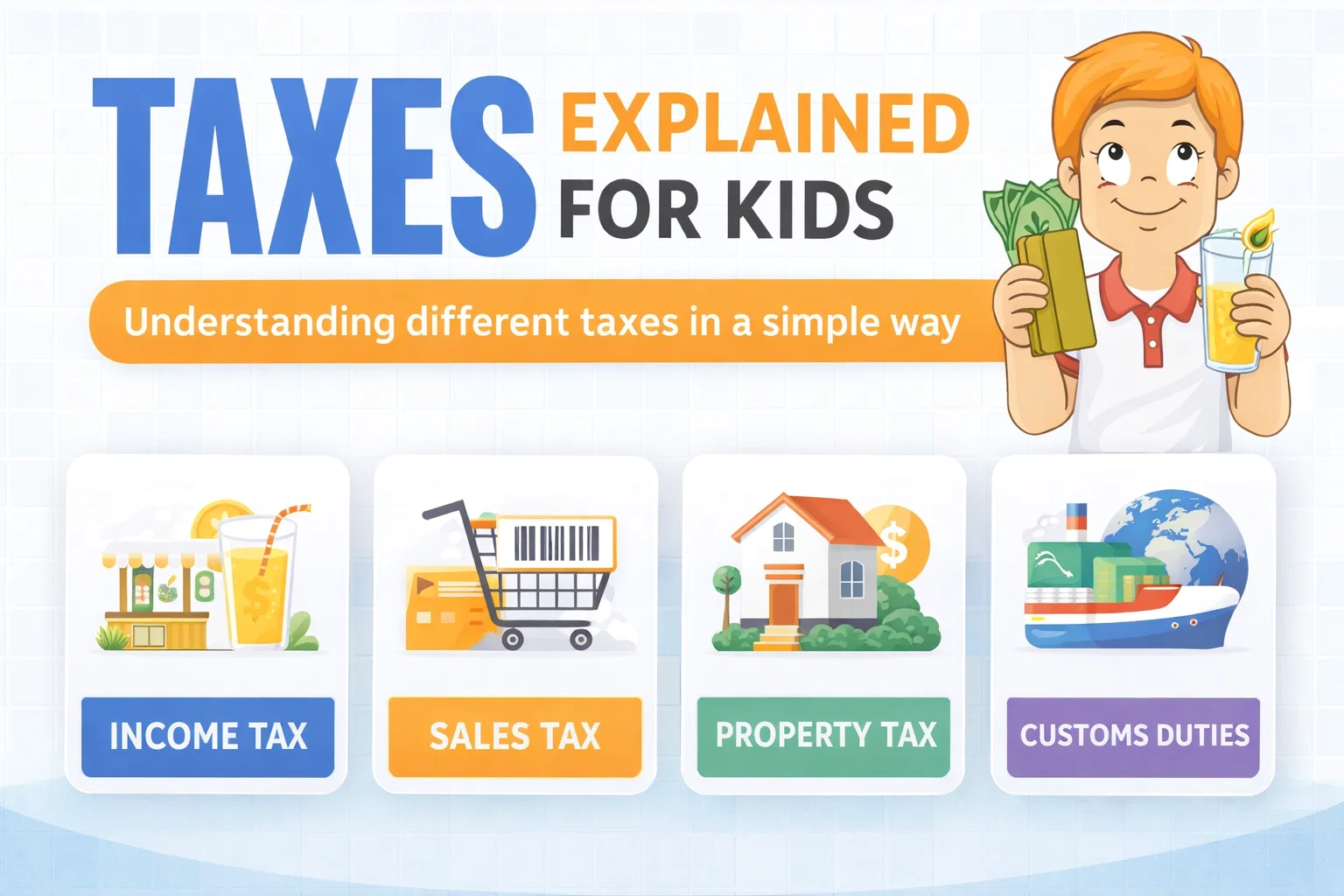
The Lemonade Stand Lesson: Imagine your child earns 10 dollars from selling their delicious lemonade. However, they have to give 2 dollars to you, their parents, because you helped them set up the stand, bought the initial supplies, and provided the space. This shared portion represents income tax.
The Real World Reality: You can explain that when companies and individuals make money, they have to give a portion of it to the government. The government then uses this money to pay for important things everyone needs, like fixing roads, building schools, and keeping the neighborhood safe. It is a way of contributing to the community that supports their business.
Sales Tax: The Extra Pennies for the Community
The Lemonade Stand Lesson: Suppose your child decides to sell a cup of lemonade for exactly 1 dollar. But, to follow the rules of the neighborhood, they have to ask their customers for an extra dime, making the total cost 1 dollar and 10 cents. That extra dime goes straight into a community jar used to keep the local parks clean and beautiful.
The Real World Reality: This perfectly illustrates sales tax. When companies sell products in stores, they often have to add a little extra money to the final price tag. This extra money does not stay with the store owner; it goes directly to the government to fund public services. This helps kids understand why an item marked as 5 dollars might actually cost a little bit more at the cash register.
Property Tax: Paying for the Best Spot
The Lemonade Stand Lesson: Location is everything! Suppose your child sets up a sturdy little table for their stand right on the busiest corner of your lawn. If they are playing a game where they have to pay a few coins every year just to use that specific, high-traffic spot on the street, they are learning about property tax.
The Real World Reality: Companies and homeowners pay taxes for owning or using buildings and land. The larger or more valuable the property, the more they contribute. This teaches children that owning space comes with ongoing responsibilities and costs.
Next Level Economics: Business and Employee Taxes
Once your child understands the basics of making money and paying a share, you can introduce the concepts that apply specifically to businesses and the people who work for them.
Corporate Tax: The Business Club Membership
The Lemonade Stand Lesson: Tell your child to imagine that running a business is like joining an exclusive club. To be allowed to set up their stand and sell to the neighborhood, they have to pay a special club membership fee. This fee is known as corporate tax.
The Real World Reality: This is a special tax just for companies. The more money a company makes, the more it has to pay to remain a part of the business club in a country. It helps kids see that businesses have different rules and financial obligations compared to regular individuals.
Payroll Tax: Taking Care of the Team
The Lemonade Stand Lesson: Running a busy stand is hard work, so your child hires their best friend to help pour the drinks and collect the money. When your child pays their friend for the help, they also have to set aside some extra money to put into a fund that pays for community things their friend uses, like schools and safe roads.
The Real World Reality: Companies do the exact same thing when they pay their employees. A portion of the money goes toward programs that support workers. It is a great way to introduce the idea that being an employer means taking responsibility for the broader community.
Specialty Taxes: Adding Complexity to the Mix
Not all taxes apply to everything equally. Sometimes, specific goods have their own unique rules. These concepts are great for older kids who are ready to understand nuanced economic policies.
Excise Tax: The Premium on Specific Items
The Lemonade Stand Lesson: Imagine your child decides to sell a super fizzy, extra-sweet version of their lemonade. The neighborhood rules state that this special drink is a luxury, or perhaps not the healthiest option, so the government says, “Okay, for every fizzy drink you sell, you need to give us an extra quarter.”
The Real World Reality: This is an excise tax. It is a special, extra price added to certain things that are either considered luxuries or items the government wants to discourage people from using too much. Companies pay these specific taxes when they produce or bring in these types of products.
Value-Added Tax (VAT): Paying for the Upgrades
The Lemonade Stand Lesson: Think about every time your child adds something cool to their basic lemonade. If they add a fancy umbrella straw, a scoop of fresh ice, or a sprig of mint, the value of the drink goes up. Imagine they had to pay a few extra pennies in tax every single time they added one of those special upgrades.
The Real World Reality: VAT is exactly what it sounds like. It is a tax added every time value is added to a product during its production journey. While not used everywhere in the same way, it is a vital global concept that shows how products increase in value and taxation from raw materials to the final sale.
Global Concepts: Expanding the Neighborhood
In today’s interconnected world, businesses rarely operate in just one place. You can use the lemonade stand to teach kids about international trade and complex accounting.
Customs Duties: Crossing the Border
The Lemonade Stand Lesson: Your child runs out of lemons and has to buy them from a friend who lives in a completely different neighborhood. When they bring those imported lemons back to their own stand, they have to leave a few pebbles or coins at the border of their neighborhood just for the right to bring them in. This acts like a customs duty.
The Real World Reality: Companies pay these types of taxes when they bring products or materials in from other countries. It protects local businesses and raises money for the country receiving the goods. This is a wonderful introduction to global trade.
Transfer Pricing: Keeping Things Fair Between Family
The Lemonade Stand Lesson: Picture having multiple lemonade stands in different areas, shared with a cousin. Your child and their cousin share the bulk lemons and sugar, but they need to decide on a fair price to charge each other for moving the supplies between the two stands. If they charge too much or too little, the profits at each stand look different.
The Real World Reality: Companies that have branches in different locations or countries have to set charges between those branches carefully. This affects their tax payments in various locations, ensuring that profits are reported fairly wherever the actual work is happening.
Deferred Tax: The Rules of Paying Later
The Lemonade Stand Lesson: Your child earns a lot of money today, but the specific rules of the neighborhood fund say they actually do not have to hand over their tax share until next summer. They have the money now, but they know they owe it later.
The Real World Reality: Taxes are usually based on published financials, but sometimes tax authorities will recognize certain income or expenses in a different year. Companies have to account for this money that they will eventually owe, teaching kids the importance of planning ahead and not spending everything in their pocket immediately.
Tips for Bringing These Lessons to Life at Home
Reading about these concepts is one thing, but putting them into practice is where the real learning happens. Here are a few ways to make these financial lessons stick with your kids.
- Host a Real Stand: Spend a weekend setting up an actual stand. Give them a tiny loan for supplies, and have them calculate their “taxes” at the end of the day. You can put the tax money into a family jar for a pizza night.
- Play Store: Set up a pretend grocery store in your living room. Give them play money and act as the cashier, explicitly adding a small percentage for “sales tax” on their purchases.
- Use Visual Aids: Draw charts or use colorful building blocks to represent a dollar. Break the blocks apart to physically show how much goes to supplies, how much is profit, and how much goes to taxes.
- Keep Conversations Open: When you are out shopping and see a receipt, point out the tax line. Explain in simple terms what that extra amount is doing for your town.
Wrapping Up Our Financial Journey
Demystifying the world of money is a powerful way to foster personal growth and confidence in children. By using relatable, fun analogies like the lemonade stand, we can take the intimidation out of financial literacy. Understanding income tax, sales tax, and even corporate tax no longer has to be reserved for high school or college courses. It can start right now, in your kitchen or on your driveway.
When we equip our kids with the knowledge of how money flows, how communities are funded, and the responsibilities of running a business, we are giving them a massive head start. They will grow up viewing taxes not as a confusing burden, but as a structured part of society and business. So grab some lemons, mix up some sugar water, and start having these incredibly rewarding conversations today. You might be surprised at just how quickly your little entrepreneurs grasp the big picture!