50 Best AI Prompt Engineering Tips for ChatGPT Master AI Prompting Strategy Writing Tunefultout
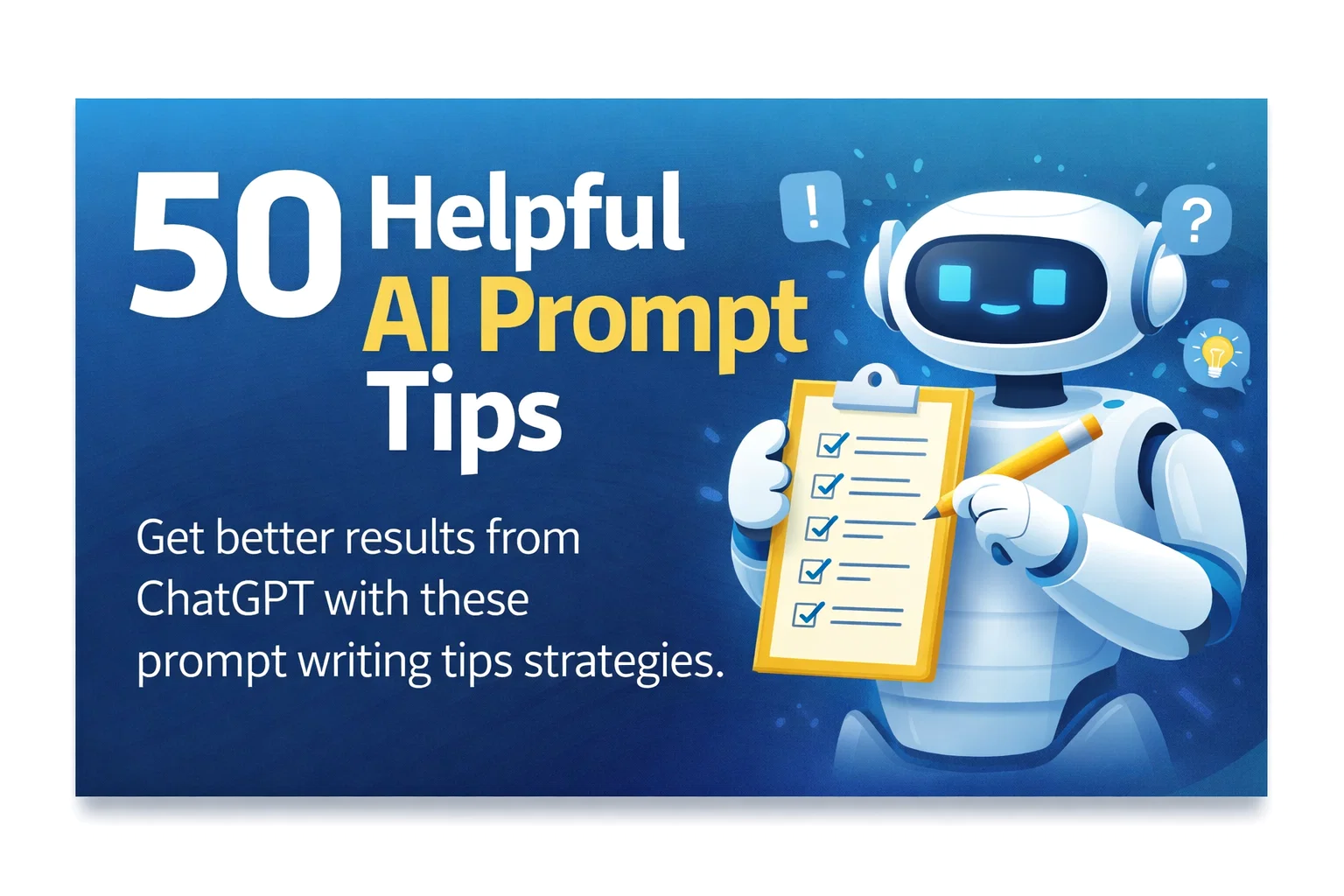
Unlocking the full potential of artificial intelligence often feels like learning a new language. You have this incredibly powerful tool at your fingertips, yet the results sometimes fall flat or miss the mark. The secret to bridging that gap isn’t in the software itself, but in how you communicate with it. Prompt engineering has evolved from a niche tech skill into a fundamental digital literacy. By mastering a few specific strategies, you can transform generic AI responses into high-quality, professional-grade outputs that save you hours of manual labor and sparking newfound creativity.
The Essential Mindset for AI Success
Before you type a single word into a prompt box, you need to establish the right mental framework. Thinking of AI as a magic wand is a common mistake; instead, view it as a highly capable but literal-minded intern. This intern has access to vast amounts of data but requires specific instructions to know which parts of that data are relevant to your current project.
Decide the exact outcome before you begin. Are you looking for a creative poem, a technical report, or a casual social media caption? If you aren’t clear on the goal, the AI certainly won’t be. Once you have a goal, assign a role. Telling the AI to act as a senior marketing consultant will yield a much different result than asking it to speak like a high school history teacher. This sets the stage for the vocabulary, tone, and depth of the response.
Another powerful mindset shift is the use of examples. Providing a “shot” or an example of the style you want is one of the most effective ways to reduce hallucinations and off-brand content. If you want a specific formatting style, show the AI one or two paragraphs of your previous work. This “few-shot prompting” gives the model a pattern to follow, which is much more effective than just describing the style in words.
Building a Robust Prompt Structure
A skyscraper is only as strong as its foundation, and the same applies to your prompts. A disorganized request leads to a disorganized answer. To ensure consistency, follow a reliable formula: Role + Task + Format. By starting with the persona, defining the specific action, and then specifying how you want that information delivered (such as a list, a table, or a code block), you eliminate 90 percent of the back-and-forth usually required to get a good result.
Context and Constraints
Context is the fuel that drives accurate AI generation. Adding time or date context is vital for topics that are sensitive to current events. Furthermore, giving background information before your request helps the AI understand the “why” behind your task. For instance, if you are asking for a business plan, tell the AI about your target demographic and your primary competitors first.
The Power of Placeholders
If you are building an automation script or a repeatable workflow, use placeholders like [INSERT TOPIC HERE] or [TARGET AUDIENCE]. This allows you to create a “master prompt” that can be reused for dozens of different articles or projects simply by swapping out the bracketed information. It keeps your workflow streamlined and ensures that your high-performing prompt structures remain intact across different sessions.
Techniques for Refining Your Answers
The first response you get from an AI is rarely the final version. Professional prompt engineers treat the first output as a rough draft. To get to the “gold,” you must be willing to iterate. Instead of starting over when a response is slightly off, feed the answer back to the AI with specific notes for improvement. You might say, “This is good, but make the second paragraph more punchy and remove the technical jargon.”
Compare two or more styles to see which one resonates better with your brand. You can ask the AI to write the same product description in a “luxury/elegant” tone and a “bold/disruptive” tone. Seeing the options side-by-side helps you identify the specific language that works. Additionally, don’t be afraid to ask “What is missing here?” AI can be surprisingly good at identifying gaps in its own logic or suggesting sections that would make a blog post more comprehensive.
Injecting Tone and Creativity
One of the biggest complaints about AI-generated text is that it can feel “robotic” or “dry.” You can easily fix this by incorporating mood or emotion words. Words like “urgent,” “whimsical,” “somber,” or “vibrant” act as stylistic filters. If you want to take it a step further, ask the AI to blend two writing styles. Imagine a tech tutorial written in the style of a noir mystery novel. While you might not use that for a professional manual, blending styles can help you find a unique brand voice that stands out in a crowded market.
- Use Metaphors: Ask the AI to explain complex topics using analogies. This makes your content much more relatable for human readers.
- Vary Formats: Don’t settle for just paragraphs. Ask for scripts, poems, or even a dialogue between two experts to keep your readers engaged.
- Adjust Reading Levels: If you are writing for a general audience, ask the AI to explain the topic at a “fifth-grade level” to ensure maximum clarity and accessibility.
Power Moves for Advanced Users
Once you have the basics down, you can start using “Power Moves” that truly separate the amateurs from the experts. One of the best ways to improve your prompting is to ask the AI to make prompts for you. You can describe a goal and ask, “What is the best prompt I could give you to achieve this result?” This often reveals parameters or keywords you hadn’t considered.
Chain of Thought prompting is another game-changer. By asking the AI to “think step by step” or “explain your reasoning,” you force the model to process the logic before jumping to a conclusion. This significantly increases the accuracy of mathematical problems, logical puzzles, and complex strategic planning. It allows you to see the “work” behind the answer, making it easier to spot errors in judgment.
Outputting to Tables and Checklists
For data-heavy tasks, always request a table. It is much easier to digest a comparison of three different software tools when they are laid out in columns rather than buried in five paragraphs of text. Once you have your information, you can also ask the AI to turn the answers into action checklists. This transforms passive information into an active tool that your readers can actually use in their daily lives.
The Importance of Human Oversight
Despite all these tips, the most important element of any AI workflow is the human at the helm. AI is a tool for augmentation, not a total replacement for human intuition and empathy. Always request references or sources when the AI makes factual claims, and be prepared to double-check them. AI models can sometimes “hallucinate” or confidently state incorrect facts.
Your job as the prompt engineer is to provide the “soul” of the content. Use the AI to handle the heavy lifting of research, outlining, and drafting, but spend your time on the final 20 percent: the editing, the personal anecdotes, and the nuances that make a piece of writing feel truly human. By combining these 50 prompting tips with your unique perspective, you create content that is not only efficient but also deeply impactful.
Conclusion: Your Journey to AI Mastery
Mastering AI prompting is a journey of constant experimentation. Every time you interact with a model, you learn something new about how it interprets language and logic. Start by implementing the Role-Task-Format structure today, and slowly layer in more advanced techniques like placeholders and chain-of-thought reasoning. As you become more comfortable, you will find that the “robotic” barrier disappears, leaving you with a versatile partner capable of bringing your most ambitious ideas to life. The future belongs to those who know how to ask the right questions. Start practicing these tips, refine your approach, and watch your productivity soar to new heights.
Would you like me to create a specific prompt template for your next blog post based on one of these strategies?