10 Genius Ancient Food Preservation Tricks How to Keep Food Fresh Without a Refrigerator
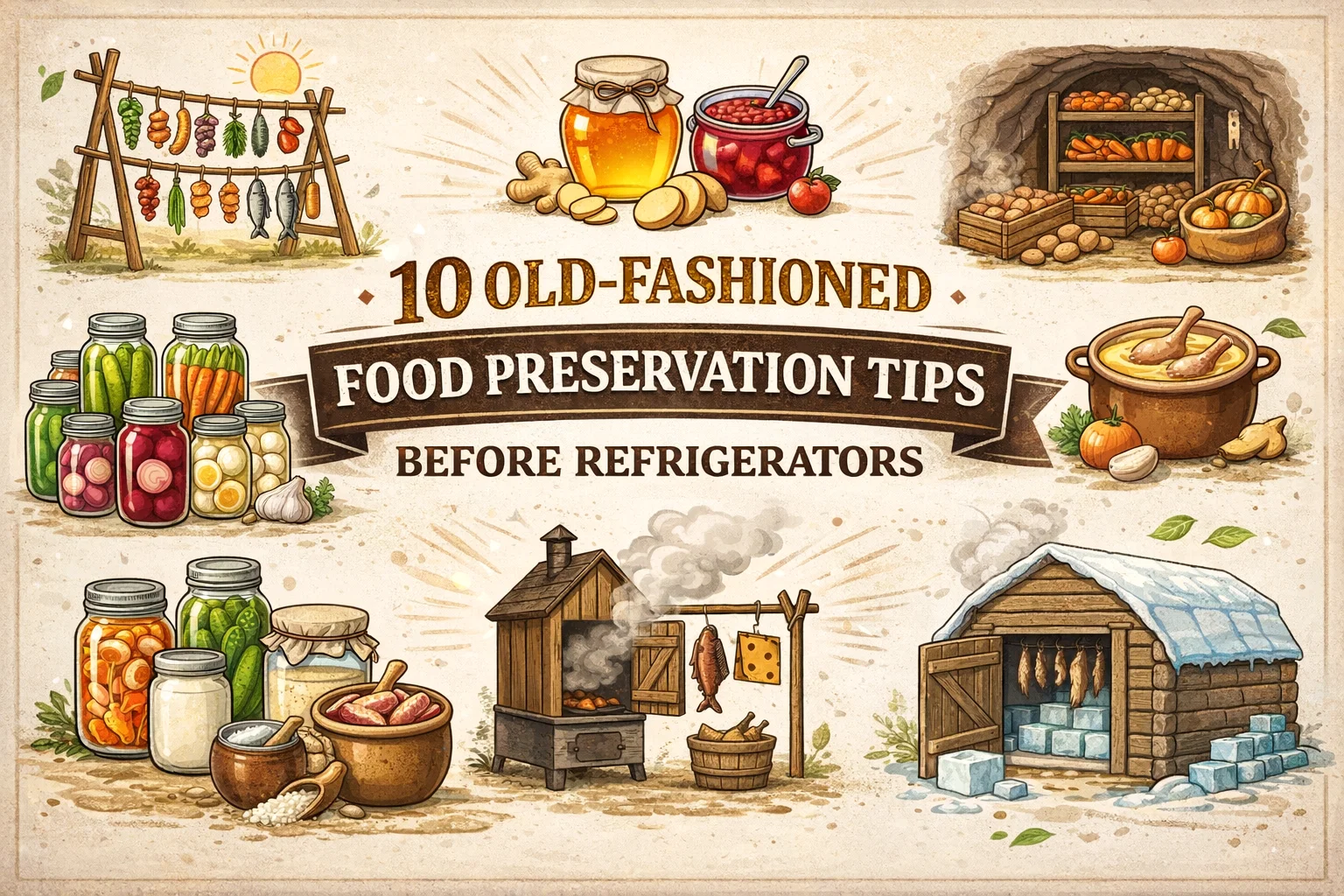
In an era where we rely on the hum of a refrigerator to keep our groceries from spoiling, it is easy to forget that humanity thrived for millennia without a single watt of electricity. Our ancestors were not just surviving; they were master chemists and environmental engineers who understood the delicate balance of moisture, temperature, and airflow. The image we are looking at today is more than just a charming infographic. It is a roadmap to food independence and a testament to ancient wisdom that is becoming increasingly relevant in our modern, sustainability-focused world. Whether you are a dedicated homesteader, a curious gardener, or someone looking to reduce your carbon footprint, rediscovering these ten genius food preservation tricks can transform the way you interact with your kitchen and your planet.
The Physics of Cold: Root Cellars and Ice Houses
Long before the invention of Freon and compressors, people looked toward the earth and the seasons to provide the cooling necessary for long-term storage. The concept is simple yet profoundly effective: use the natural insulation of the ground or the thermal mass of frozen water to stall the decay of organic matter.
The Magic of the Root Cellar
A root cellar is essentially a cool, dark, and damp underground room. By digging deep enough into the earth, our ancestors tapped into a constant temperature that remains stable regardless of the blistering heat or freezing winds above ground. This environment is the perfect sanctuary for “living” vegetables like potatoes, carrots, onions, and squash. These crops don’t just sit there; they are essentially in a state of suspended animation. The high humidity prevents them from shriveling, while the cool air prevents them from sprouting or rotting.
Ice Houses: Harvesting the Winter
In colder regions, the ice house was the ultimate luxury that eventually became a community staple. During the deep winter, massive blocks of ice were harvested from frozen lakes and ponds. These blocks were then packed into heavily insulated stone or wooden structures, often partially submerged in the ground, and covered in sawdust or straw. The insulation was so effective that ice could last well into the following autumn, providing year-round refrigeration for meat and dairy long before the first electric fridge was ever sold.
Dehydration: The Power of the Sun and Wind
Moisture is the primary catalyst for bacterial growth. If you remove the water, you remove the life support system for the microbes that cause spoilage. Drying is perhaps the oldest preservation method known to man, requiring nothing more than a bit of patience and the elements provided by nature.
Air and Sun Drying
Walking through an ancient village, you would likely have seen racks of fish, strips of meat, and garlands of herbs swaying in the breeze. By hanging food in a well-ventilated area with low humidity, the moisture evaporates naturally. This process concentrates the sugars and flavors, which is why a dried apricot or a piece of sun-dried tomato tastes so much more intense than its fresh counterpart. For fruits and vegetables, this method is a nutritional powerhouse, as it preserves most vitamins while creating a shelf-stable snack that lasts for months.
Smoking: Flavor and Protection Combined
Smoking is the sophisticated cousin of drying. While the heat from a slow-burning fire helps to dehydrate the food, the smoke itself contains antimicrobial compounds like phenols and organic acids. These compounds create a protective “skin” on the surface of meat, fish, and cheese, preventing mold and bacteria from taking hold. Beyond the preservation benefits, the culinary world would be a much duller place without the deep, earthy complexity that traditional smoking imparts to food.
The Chemistry of Preservation: Salt, Sugar, and Fat
When the environment cannot be controlled, our ancestors turned to chemistry. By changing the pH or the osmotic pressure of the food environment, they made it impossible for harmful pathogens to survive. This is where we see the birth of some of our favorite pantry staples.
Salting and Curing
Salt is a miracle mineral. Through a process called osmosis, salt draws moisture out of the cells of the food and the cells of any bacteria present, effectively dehydrating and killing the microbes. Curing meat with salt allowed maritime explorers to cross oceans and allowed farmers to survive long winters. From the salt cod of the Atlantic to the sauerkraut of Central Europe, salting transforms the texture of food, making it firm, savory, and incredibly resistant to spoilage.
Sugar and Honey Preserving
Similar to salt, high concentrations of sugar or honey act as a preservative by binding with water molecules, making them unavailable to bacteria. This is why a jar of properly made honey can literally last for thousands of years without spoiling. Our ancestors used this knowledge to create jams, jellies, and candied fruits. By simmering fruit in a thick syrup, they created a delicious, high-energy food source that could be enjoyed long after the harvest season had ended.
Storing in Fat: The Art of the Confit
If you have ever enjoyed a succulent leg of duck confit, you have tasted a preservation method born of necessity. Storing cooked meat under a thick layer of rendered fat creates a perfect airtight seal. Bacteria need oxygen to thrive; by submerging the food in fat, you cut off the air supply entirely. This method was common in rural France and other parts of Europe, where meat would be seasoned, cooked slowly in its own fat, and then tucked away in stone crocks for the winter months.
Harnessing Microbes: Pickling and Fermentation
Not all bacteria are the enemy. In fact, some of the most effective preservation methods involve recruiting “good” bacteria to fight off the “bad” ones. This is the foundation of the fermented foods that are currently trending in the health and wellness world.
The Pickling Process
Pickling typically involves submerging food in an acidic liquid like vinegar or a strong salt brine. The high acidity creates an environment where most spoilage-causing bacteria simply cannot function. Whether it is the crunch of a cucumber pickle or the zing of pickled beets, this method provides a bright, acidic counterpoint to heavy winter meals while ensuring that the harvest remains safe to eat for a year or more.
Fermentation: Nature’s Probiotic Kitchen
Fermentation is slightly different from pickling. Instead of adding acid, you create conditions that allow lactic acid-producing bacteria to flourish. These “good” microbes consume the natural sugars in the food and convert them into lactic acid, which naturally preserves the item. This process doesn’t just keep food from rotting; it actually increases the nutritional value by creating probiotics and making minerals more bioavailable. From the kimchi of Korea to the yogurt of the Middle East and the sourdough bread of Europe, fermentation is a global language of preservation.
Innovative Cooling: Clay Pots and Evaporation
In hot, arid climates where ice houses were impossible, people turned to the laws of thermodynamics. Evaporative cooling is a simple yet effective way to drop temperatures without a single moving part.
The Clay Pot in a Pot (Zeer Pot)
The “Zeer” pot system consists of a smaller clay pot placed inside a larger one, with a layer of wet sand in between. As the water in the sand evaporates through the porous outer pot, it pulls heat away from the inner pot, significantly lowering the internal temperature. This method can keep vegetables fresh for weeks in desert heat that would normally rot them in days. It is a brilliant example of how ancient people used the properties of materials like clay and sand to solve complex problems.
Conclusion: Bringing Ancient Wisdom to the Modern Kitchen
As we look back at these ten genius tricks, it becomes clear that preservation was once an art form that required a deep connection to the natural world. While we may not all be ready to dig a root cellar in our backyard or harvest ice from a local pond, there is so much we can take away from these heritage skills. Incorporating fermentation into our diets, learning to dry our own herbs, or even just understanding how to store vegetables more effectively can lead to less food waste and a more resilient household.
These methods remind us that we have the power to sustain ourselves using simple, natural processes. By blending this ancient wisdom with our modern lives, we create a kitchen that is not just a place for consumption, but a place of creation, tradition, and sustainability. So, the next time you put your groceries in the fridge, take a second to think about the salt, the sun, and the clay pots that paved the way for the food security we enjoy today.
Would you like me to expand on any specific preservation method or perhaps provide a guide on how to start your first fermentation project at home?