6 Foods to Naturally Detox Your Body Holistic Full Body Cleanse Guide for Better Health
Modern living often feels like a constant race against environmental stressors. From the processed foods we grab on the go to the invisible pollutants in the air we breathe, our bodies are under a continuous barrage of toxins. Fortunately, nature has provided us with an incredible internal filtration system. By focusing on specific whole foods, we can support our organs as they perform their daily miracle of detoxification. This guide explores how to revitalize your health by nourishing the six key pillars of a full body cleanse: the liver, lungs, skin, kidneys, blood, and digestive tract.
The Power of a Food Based Internal Reset
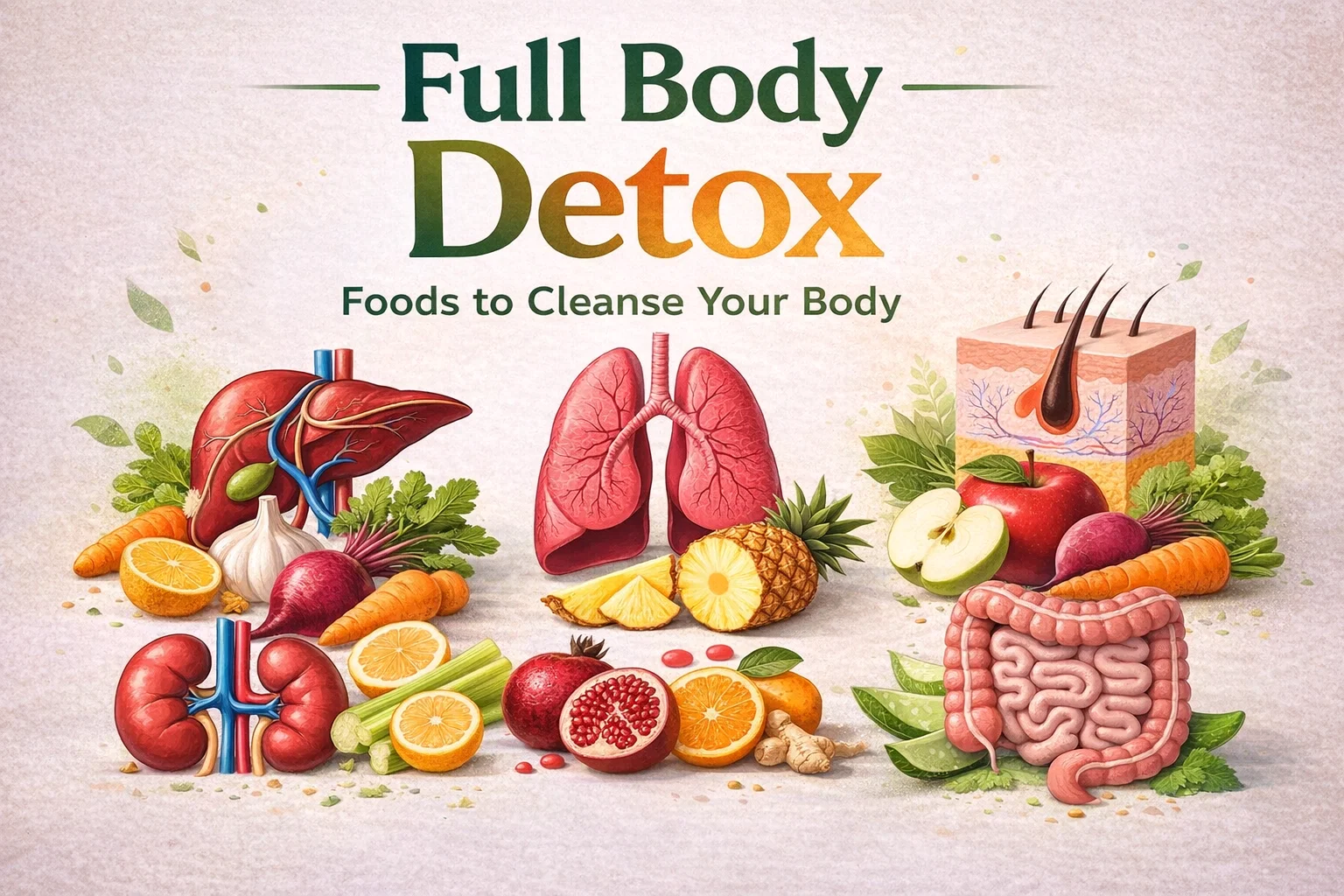
Many people hear the word detox and immediately think of restrictive juice fasts or expensive supplements. However, true detoxification is a biological process that happens 24/7 within your cells and organs. The goal of a food based cleanse is not to do the work for your body, but to provide the raw materials your organs need to function at their peak. When we eat vibrant, nutrient dense foods like those shown in our guide, we are essentially giving our internal engines a high quality tune up.
By incorporating these ingredients into your daily routine, you can experience a significant shift in your energy levels, mental clarity, and even your complexion. It is about moving away from the “quick fix” mentality and toward a lifestyle of consistent, holistic support. Let us break down exactly how these specific foods target your vital organs to facilitate a total body refresh.
Nourishing the Liver: Your Primary Filtration Plant
The liver is the heavy lifter of the detoxification world. It processes everything you eat, drink, and breathe, sorting through nutrients and neutralizing harmful substances. To keep this organ running smoothly, we look toward earthy, potent ingredients that stimulate bile production and provide essential antioxidants.
Turmeric for Inflammation Support
Turmeric is perhaps the most famous spice in the world of holistic wellness, and for good reason. Its active compound, curcumin, has been studied extensively for its ability to reduce inflammation within the liver. By adding turmeric to your soups, stews, or even a morning “golden milk” latte, you help protect liver cells from oxidative stress and improve overall metabolic function.
Beetroot and Carrots: The Dynamic Duo
Beetroots are rich in betalains, which are pigments that support the Phase 2 detoxification process in the liver. This is the stage where toxins are made water soluble so they can be excreted. Carrots complement this perfectly with their high beta carotene content, which converts to Vitamin A and helps prevent liver disease. Together, these root vegetables act as a powerful tonic for blood flow and organ health.
Shutterstock
Explore
Clearer Breathing: Supporting Your Lungs
We often forget that the lungs are a major excretory organ. Every time you exhale, you are releasing carbon dioxide and other gaseous wastes. In a world with increasing air pollution, supporting lung tissue is vital for maintaining high oxygen levels in the blood.
Garlic and its Antimicrobial Properties
Garlic is a powerhouse for respiratory health. It contains allicin, a compound known for its ability to fight off respiratory infections and reduce inflammation in the bronchial tubes. Eating garlic regularly can help clear out mucus and keep the airways open and resilient.
Pineapple and Ginger for Respiratory Relief
Pineapple contains an enzyme called bromelain, which acts as a natural mucolytic, meaning it helps break down and thin out mucus in the lungs and sinuses. When you pair this with the warming, anti inflammatory properties of ginger, you create a soothing environment for your respiratory system. Ginger also helps improve circulation, ensuring that fresh, oxygenated blood reaches all your extremities.
Skin Health: The Mirror of Your Internal State
The skin is the largest organ of the body and often the first place where internal toxicity shows up. Breakouts, dullness, and dryness are frequently signs that the other elimination organs are overwhelmed. To achieve that coveted “glow,” you must nourish your skin from the inside out.
Apples for Fiber and Hydration
The old saying “an apple a day keeps the doctor away” holds true for skin health. Apples are rich in pectin, a type of fiber that helps clear toxins from the gut before they can be reabsorbed and affect the skin. Their high water content also ensures that your skin cells remain plump and hydrated.
Carrot and Beetroot for a Radiant Complexion
Just as they help the liver, carrots and beets are essential for the skin. The Vitamin A in carrots promotes healthy cell turnover, preventing clogged pores and premature aging. Meanwhile, the nitrates in beets improve blood flow to the skin surface, giving you a natural, healthy flush and ensuring that nutrients are delivered where they are needed most.
Kidney Care: Balancing Fluids and Minerals
Your kidneys are responsible for filtering about 150 quarts of blood every single day to create urine. They manage your body’s fluid balance and ensure that your electrolytes stay within a healthy range. Without proper hydration and mineral support, the kidneys can become sluggish.
Cucumber and Celery: The Ultimate Hydrators
Cucumbers are nearly 96 percent water, making them the perfect food for flushing out the urinary tract. They also contain silica, which is great for connective tissue. Celery acts as a natural diuretic, helping the body eliminate excess sodium and uric acid. Together, these two vegetables help prevent the formation of kidney stones and reduce bloating.
Lemon for pH Balance
While lemons are acidic in their natural state, they have an alkalizing effect on the body once metabolized. Adding fresh lemon juice to your water in the morning can help change the pH of your urine, making it less hospitable for bacteria and helping to dissolve mineral buildup in the kidneys.
Shutterstock
Explore
Purifying the Blood: The Life Force Connection
The blood carries oxygen and nutrients to every single cell in your body. If the blood is “sluggish” or full of waste products, every other system suffers. Purifying the blood involves consuming foods that are high in antioxidants and compounds that improve circulation.
Pomegranate: The Antioxidant Powerhouse
Pomegranates are packed with polyphenols that protect the lining of the blood vessels. They help improve blood flow and prevent the oxidation of cholesterol, which is a key factor in heart health. Drinking pomegranate juice or eating the seeds provides a massive boost to your circulatory system.
Orange and Ginger for Vitality
Oranges provide the Vitamin C necessary for collagen production and the strengthening of capillary walls. Ginger, once again, proves its worth by acting as a circulatory stimulant. It thins the blood slightly in a natural way, making it easier for the heart to pump and for nutrients to reach deep into your tissues.
Revitalizing the Digestive Tract
If your digestion is stalled, your entire detox process comes to a halt. The digestive tract is the exit ramp for the body’s waste. If food sits in the colon for too long, toxins can be reabsorbed into the bloodstream. Fiber and soothing agents are the keys to a healthy gut.
Green Apples and Cucumber for Gentle Cleansing
Green apples are particularly high in malic acid, which helps with the digestion of fats and supports the liver. The fiber in both apples and cucumbers provides the “bulk” necessary to move waste through the intestines efficiently. This prevents constipation and keeps the gut microbiome in balance.
The Healing Touch of Aloe Vera
Aloe vera is not just for sunburns. When consumed as a juice or gel, it acts as a soothing balm for the lining of the digestive tract. It can help reduce inflammation in the gut and has a mild laxative effect that encourages regular bowel movements without the harshness of chemical stimulants.
How to Implement Your Full Body Cleanse
Knowing which foods to eat is the first step, but how do you actually put this into practice? You do not need to eat all of these foods at every meal. Instead, try to rotate them throughout your week. Start your morning with a glass of lemon water. For lunch, toss together a salad featuring grated carrots, beetroots, and cucumbers. For dinner, experiment with a stir fry that uses plenty of garlic, ginger, and turmeric.
Consistency is much more important than intensity. Instead of doing a three day “cleanse” and then returning to processed foods, try to make these ingredients staples in your pantry. Your body thrives on the steady supply of phytonutrients found in these whole foods.
The Importance of Lifestyle Factors
While food is a massive part of the puzzle, a full body cleanse is most effective when paired with healthy lifestyle choices. Ensure you are getting at least seven to eight hours of sleep, as this is when your brain and body perform their most intensive “housekeeping” tasks. Exercise is also crucial, as sweating helps the skin release toxins and physical movement encourages the lymphatic system to drain.
Finally, remember to reduce the “toxic load” coming in. This means limiting refined sugars, excessive alcohol, and highly processed oils. By reducing the amount of work your body has to do to process junk, you free up its energy to heal and regenerate.
Conclusion: Your Path to Lasting Wellness
A full body cleanse is not a destination; it is a journey of self care. By choosing to eat for your liver, lungs, skin, kidneys, blood, and gut, you are taking an active role in your longevity. These foods are more than just fuel; they are biological instructions that tell your body to thrive, repair, and renew. Start small by picking two or three foods from this list to focus on this week. Your body is an incredible machine, and with the right nourishment, it has an amazing capacity to keep you feeling vibrant, clear headed, and full of life. Embrace the power of nature and let your health shine from the inside out.
Would you like me to create a 7-day meal plan based on these specific ingredients to help you get started?