Lasagna Bulb Planting Guide Layer Flowers for Continuous Spring Blooms
Stepping out onto a patio or balcony in the early days of spring to find a vibrant, overflowing display of flowers is one of the most rewarding experiences for any gardener. However, many people struggle with the timing of their pots. You might get a beautiful burst of crocuses in March, only to be left with an empty, muddy container by April. The secret to fixing this common gardening headache is a clever technique known as lasagna bulb layering. By planting different varieties of flower bulbs in strategic tiers within a single deep pot, you can ensure a continuous wave of color that lasts from the last frost of winter all the way into the peak of spring.
What Exactly is Lasagna Bulb Layering?
The term lasagna gardening usually refers to a method of building soil, but when it comes to spring flowers, it describes a vertical planting strategy. Just like the layers of pasta, cheese, and sauce in the classic Italian dish, you are stacking layers of soil and flower bulbs on top of one another. This method is also known as “double-decker” or “triple-decker” planting. The goal is to maximize the flower output of a single container by utilizing the entire depth of the pot rather than just the top few inches.
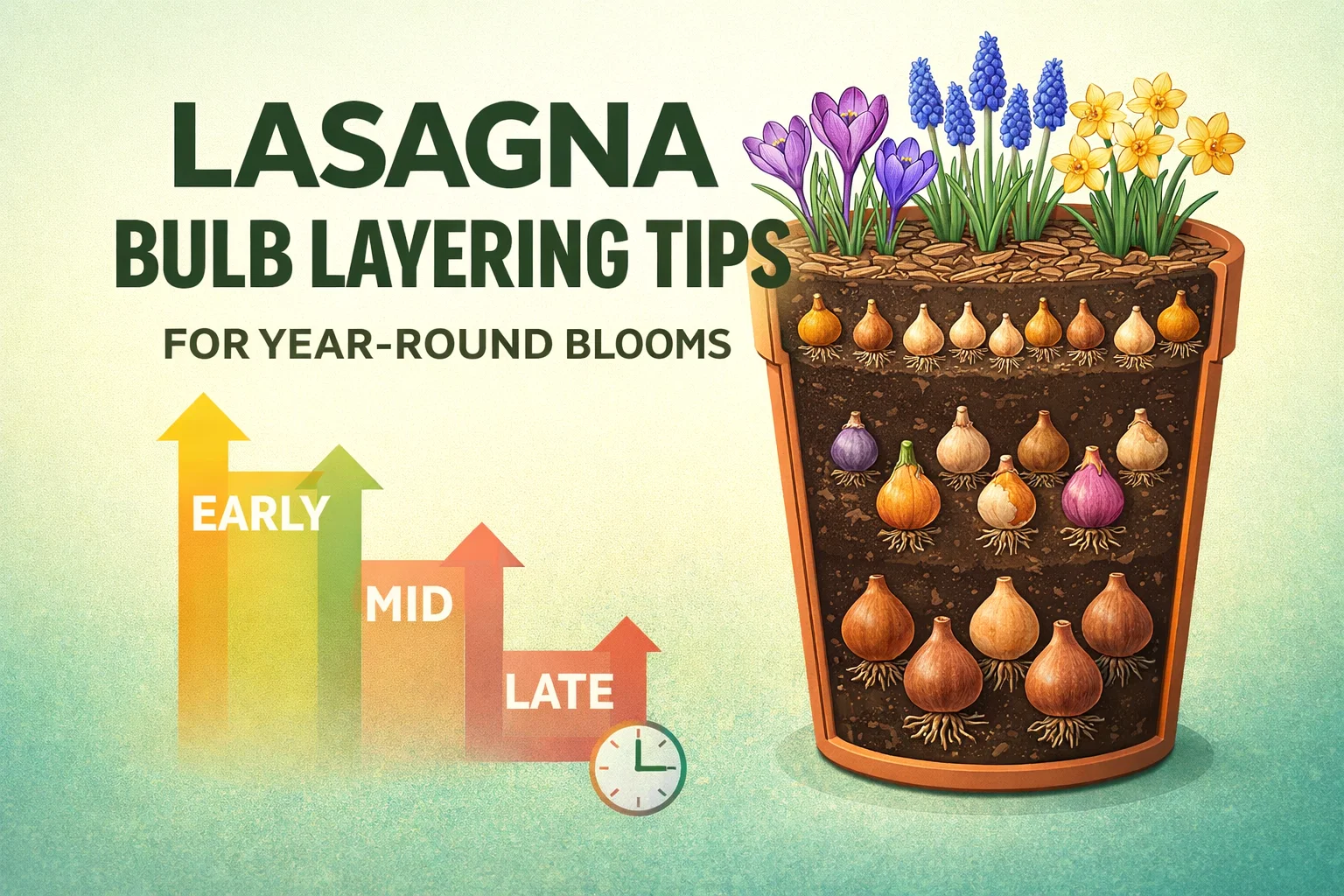
The logic behind this is simple but effective. Different bulbs have different natural internal clocks. Some, like Snowdrops and Crocus, are early risers that wake up at the first sign of thawing ground. Others, like Tulips and Alliums, prefer to wait until the sun is higher and the air is warmer. By stacking these varieties, the early bloomers shoot up first, and as they begin to fade, the mid-season flowers grow right past them to take center stage. Finally, the late-bloomers emerge for a grand finale. It is a self-contained, sequential flower show that requires almost no maintenance once the bulbs are in the ground.
Choosing the Right Container for Your Bulb Display
Before you even touch a bulb, you need to select the right home for them. Because you are planting three distinct layers of flowers, a standard shallow terra cotta pot simply will not cut it. You need depth to allow for root development and proper spacing between the tiers. A pot that is at least 14 inches deep is the gold standard for a successful lasagna planting. This depth provides enough room for about three inches of soil between each layer, which is crucial for preventing the bulbs from touching and potentially rotting.
Material also matters when it comes to winter health. Since these bulbs will be sitting outside through the coldest months of the year, your container needs to be frost-proof. Heavy-duty plastic, glazed ceramic, or treated wood are excellent choices. If you use traditional unglazed terra cotta in a climate that freezes and thaws repeatedly, the pot may crack before the flowers even have a chance to bloom. Most importantly, ensure your pot has excellent drainage holes. Bulbs hate sitting in stagnant water, which is the fastest way to cause fungal issues or rot.
The Bottom Layer: The Late Spring Showstoppers
The first layer you plant will be the deepest, sitting roughly 7 to 8 inches below the surface of the soil. This layer is reserved for the “Late Spring Bloomers.” These are typically the largest bulbs in your collection, such as standard Tulips or late-blooming Narcissus. Because these bulbs take the longest to develop and bloom, they need to be at the bottom where the soil stays cooler for longer. This depth also provides the structural support needed for taller stems, ensuring they do not topple over when they finally reach their full height in May.
When placing these bulbs, do not be afraid to pack them in a bit closer than you would in a traditional garden bed, but make sure they aren’t touching the sides of the pot. A distance of about an inch between bulbs is usually sufficient. Once they are positioned with their pointed ends facing up, cover them with 2 to 3 inches of high-quality potting mix. This soil buffer acts as a protective blanket and a source of nutrients for the roots.
The Middle Layer: Mid-Spring Transitions
The middle layer, situated about 4 to 5 inches deep, is where you place your mid-season stars. Daffodils and Hyacinths are the perfect candidates for this tier. These flowers usually bridge the gap between the very early mountain snows and the heat of late spring. Hyacinths are particularly wonderful for this layer because their intoxicating fragrance will begin to fill your garden just as the first layer of crocuses starts to wind down.
A critical tip for the middle layer is to stagger your bulbs. You should avoid placing a middle-layer bulb directly on top of a bottom-layer bulb. Instead, try to place them in the gaps between the bulbs below, much like a bricklayer offsets bricks. This ensures that the shoots from the bottom layer have a clear path to the surface and do not get trapped or crushed by the bulbs above them. Once your Daffodils or Hyacinths are set, add another 2 to 3 inches of soil mix.
The Top Layer: The Early Spring Wake-Up Call
The final layer is the shallowest, sitting only 2 inches below the surface. This is the home for the “Early Spring Bloomers.” Think of small, delicate bulbs like Crocus, Muscari (Grape Hyacinth), and Mini Narcissus. These are the hardy souls that often poke through a light dusting of snow to signal that winter is finally losing its grip. Because these bulbs are small, they do not need much soil depth to thrive.
For the top layer, you can go for a very tight spacing. This creates an “overflowing” look where the pot appears to be bursting with color the moment the season begins. Since these are the first to bloom, they set the tone for the entire display. After placing these small bulbs, cover them with a final layer of soil and perhaps a thin layer of decorative mulch or moss to help retain moisture and give the pot a finished, professional appearance.
Top 7 Tips for a Successful Lasagna Layering Project
- Think in Bloom Waves: Always check the packaging of your bulbs to confirm if they are early, mid, or late bloomers. Mix and match across all three windows.
- Prioritize Drainage: Add a layer of gravel or crocks (broken pot pieces) at the very bottom of the container to prevent soil from clogging the drainage holes.
- Use Fresh Potting Mix: Do not reuse old soil from last summer. Fresh mix provides the aeration and nutrients bulbs need for strong root growth.
- The Brick Pattern Rule: Always offset your bulbs. Never stack them directly like a tower; give every bulb its own “chimney” to the sun.
- Protect from Winter Wet: While bulbs need a chill period, they do not like being waterlogged. If you live in a very rainy climate, move the pot under a porch or eaves.
- The Single Watering Rule: Water the pot deeply immediately after planting to settle the soil around the bulbs, then leave it alone until you see green shoots in spring.
- Label Your Pots: It is easy to forget what you planted by February. Use a small garden marker so you know exactly what to expect.
Maintenance and Care Through the Seasons
Once your lasagna pot is planted in the autumn, the hard work is essentially over. Most spring bulbs require a period of “vernalization,” which is a fancy way of saying they need a cold nap to trigger their blooming cycle. If you live in a region with mild winters, you may need to look for “pre-chilled” bulbs or even place your pots in a cool garage to ensure they get the chill time they require.
When the first green tips begin to emerge, usually the Crocus or Muscari, you can start watering the pot more regularly. Ensure the soil stays moist but never soggy. As each wave of flowers finishes blooming, you can snip off the dead flower heads to keep the pot looking tidy. However, avoid cutting back the green leaves. Those leaves are busy photosynthesizing and sending energy back down into the bulb for next year’s growth. Once all the flowers have finished their show in late spring, you can either let the bulbs dry out and store them, or transplant them into your permanent garden beds.
Creative Color Combinations to Try
Part of the fun of lasagna layering is playing with color palettes. For a classic, elegant look, try a “White and Gold” theme. Use white Crocus for the top layer, yellow Daffodils for the middle, and white Tulips for the base. This creates a bright, cheerful display that stands out even on cloudy spring days. If you prefer something more dramatic, a “Sunset Mix” with purple Muscari, orange Tulips, and yellow Hyacinths can provide a stunning contrast.
Another popular option is the monochromatic pot. Planting different shades of pink, from the pale blush of early Miniature Narcissus to the deep magenta of late Tulips, creates a sophisticated, layered ombre effect. Because the flowers appear at different times, the look of the pot evolves every week, offering a slightly different shade of your favorite color as the season progresses.
Why This Method is Perfect for Modern Gardeners
In today’s world, many people have limited outdoor space. Whether you have a small urban balcony or a tiny backyard, you likely want to get the most “bang for your buck” out of every square inch. Lasagna bulb layering is the ultimate space-saving hack. It allows you to enjoy the variety of a full garden bed within the footprint of a single container. It is also an incredibly accessible project for beginners. You do not need expensive tools or years of experience; you just need a deep pot, some good soil, and a handful of bulbs.
Furthermore, this method is highly rewarding for those who practice mindfulness or self-care through gardening. There is something profoundly hopeful about planting bulbs in the dark, cold days of autumn and knowing that life is slowly developing beneath the surface. Watching those sequential waves of color emerge is a great way to stay connected to the rhythm of the seasons and celebrate the return of the sun.
Final Thoughts on the Lasagna Layering Method
Gardening should be about joy, and there is little that brings more joy than a pot that keeps on giving. By following the lasagna layering technique, you are essentially “programming” your garden to succeed. You take the guesswork out of spring timing and ensure that your outdoor space remains a focal point of beauty for months on end. It is a simple, effective, and deeply satisfying way to welcome the new year.
So, this autumn, when the air turns crisp, grab a deep pot and start layering. Whether you choose the delicate purple of a Crocus or the bold red of a Darwin Hybrid Tulip, you are setting the stage for a spectacular spring. Remember to keep your layers distinct, stagger your bulbs, and give them plenty of room to breathe. Before you know it, you will have a front-row seat to the best flower show in the neighborhood. Happy planting!