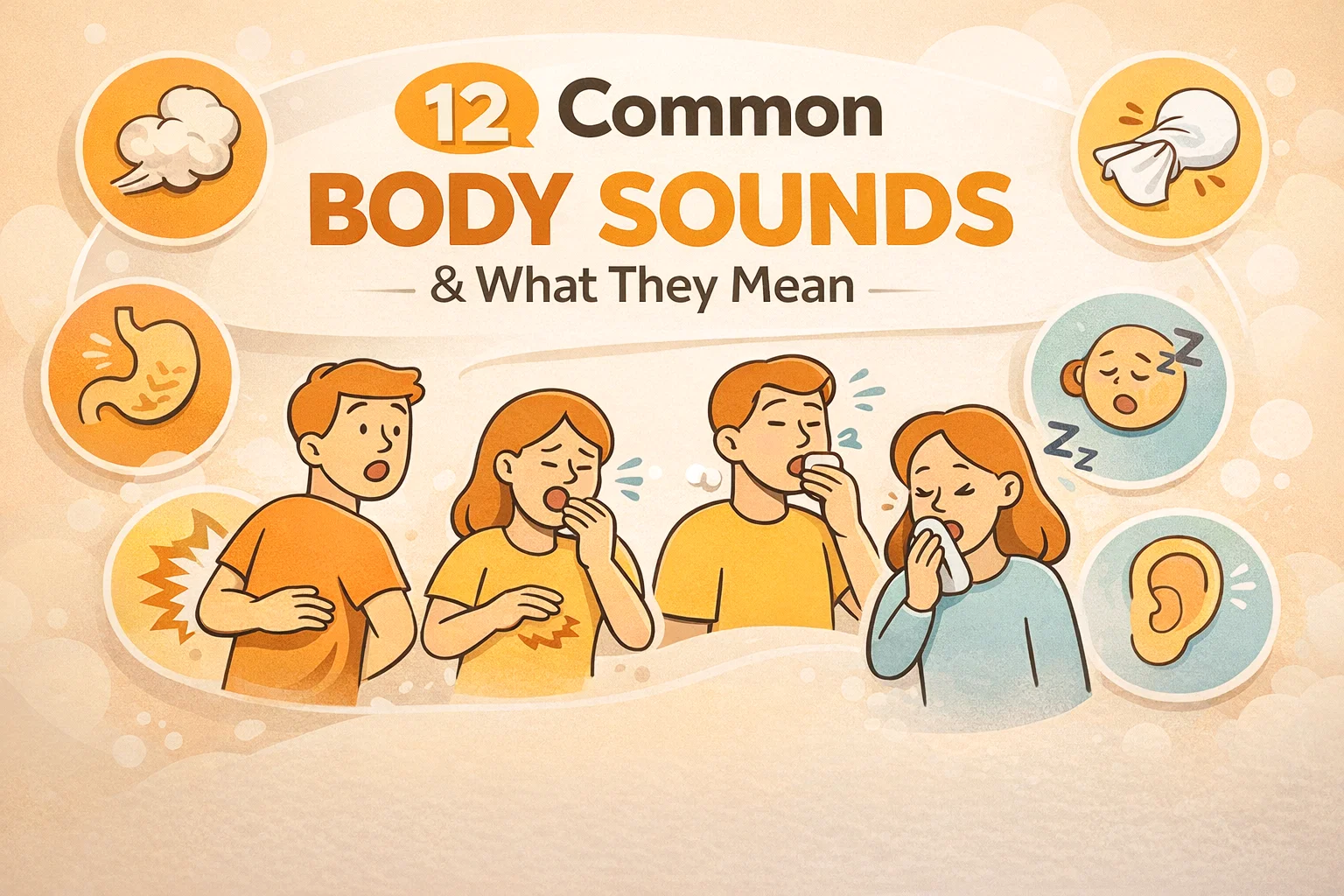
12 Common Body Sounds Explained Health Meanings and Holistic Wellness Tips
Our bodies are incredibly sophisticated communication systems. While we often focus on what we see in the mirror or how we feel after a workout, we sometimes forget that our bodies are constantly broadcasting signals through sound. From the sharp pop of a knuckle to the low rumble of a hungry stomach, these acoustic cues are part of a complex internal language. Most of the time, these sounds are perfectly normal signs that your biological machinery is hummable and healthy. Understanding what these twelve common body sounds actually mean can help you feel more connected to your physical self and provide peace of mind when things get a little noisy.
The Science of Sound: Why Our Bodies Make Noise
Before diving into specific sounds, it is helpful to understand the mechanics of why we make noise at all. Most bodily sounds fall into a few primary categories: the movement of gas or liquid through tubes, the friction of tissues sliding against one another, or the sudden release of pressure within a joint. In the world of holistic wellness, we view these sounds as feedback. They are not just random glitches; they are real-time reports on your digestion, respiratory health, and musculoskeletal alignment.
By paying attention to these cues, you can start to notice patterns. For example, do you find yourself burping more often after certain meals? Or does your neck crack only when you have been sitting at your desk for too long? These sounds are invitations to adjust your habits, improve your posture, or refine your nutrition.
Decoding Your Digestive System
The Truth About Farting and Burping
Flatulence and eructation (the technical terms for farting and burping) are often treated as social faux pas, but biologically, they are essential. Farting is a natural sign that your digestive system is active and that your gut microbiome is hard at work breaking down fiber and complex carbohydrates. On average, a healthy person may pass gas between 10 and 20 times a day. If you are eating a diet rich in plant-based whole foods, this is a sign that your beneficial bacteria are being well-fed.
Burping, on the other hand, is usually just the body’s way of releasing excess air. This often happens because we swallow air while eating too quickly, drinking carbonated beverages, or even talking while we chew. From a holistic perspective, frequent burping can be a gentle nudge to practice more mindful eating. Slowing down and chewing thoroughly not only reduces the amount of air you swallow but also jumpstarts the enzymatic process of digestion in the mouth.
What a Growling Stomach Really Means
That familiar gurgle, known as borborygmi, is not always a sign of hunger. While it definitely happens when you are ready for a meal, it is actually the sound of your digestive muscles contracting. This process, called peristalsis, moves food, liquid, and gas through the stomach and small intestines. Even when your stomach is empty, these “housecleaning” waves continue to sweep through the system to keep things moving efficiently. If your stomach is particularly noisy, it might just be a sign that your digestive fire is burning bright.
Shutterstock
Respiratory and Airway Cues
The Purpose of Sneezing and Coughing
Sneezing is your body’s high-speed reset button. When irritants like dust, pollen, or strong odors enter the nasal passages, the nervous system triggers a forceful expulsion of air to clear the area. It is a vital defense mechanism that protects your lungs from external debris. Similarly, coughing is a protective reflex designed to clear your airways of mucus, smoke, or stray food particles. While a chronic cough should always be checked out, the occasional cough is simply your respiratory system performing routine maintenance to ensure you can breathe deeply and clearly.
Yawning and Alertness
We often associate yawning with boredom or sleepiness, but the science is a bit more nuanced. Yawning is a common reaction that can help regulate alertness by increasing blood flow to the brain and even cooling the brain’s temperature. It is almost like a biological “system update” that helps your body transition between states of rest and activity. If you find yourself yawning frequently, it might be a sign that your body is craving a fresh hit of oxygen or a quick movement break to stay sharp.
Skeletal and Sensory Sounds
The Mystery of Joint Cracking
If your knees click when you stand up or your knuckles pop when you stretch, you are likely experiencing pressure changes within your joints. Most joints are surrounded by synovial fluid, which acts as a lubricant. This fluid contains dissolved gases like nitrogen and carbon dioxide. When you move a joint in a certain way, the volume of the joint capsule increases, causing the pressure to drop and the gases to form tiny bubbles that pop. This is generally harmless and can actually provide a sense of temporary relief or increased mobility. In the context of fitness and yoga, as long as the popping is not accompanied by pain, it is simply a sign of your body adjusting to movement.
Ear Crackling and Pressure
Do you ever hear a small popping or crackling sound in your ears when you swallow or yawn? This is usually related to the Eustachian tubes, which connect your middle ear to the back of your throat. These tubes open and close to equalize the pressure behind your eardrum. If you have been traveling, experiencing seasonal allergies, or even just dealing with a slight cold, these sounds might become more noticeable. It is a sign that your body is working hard to maintain equilibrium between your internal environment and the world around you.
Noises During Rest
The Rhythm of Hiccups
Hiccups are essentially small diaphragm spasms. The diaphragm is the primary muscle involved in breathing, and when it becomes irritated—perhaps from eating too quickly, drinking something very cold, or experiencing a sudden burst of excitement—it can contract involuntarily. This causes you to take a quick breath that is suddenly stopped by the closing of your vocal cords, creating the “hic” sound. While they can be annoying, they are usually short-lived. Traditional remedies like holding your breath or sipping water are often just ways to help the diaphragm find its natural rhythm again.
Light Snoring and Deep Relaxation
Snoring occurs when air flows past relaxed tissues in your throat, causing them to vibrate as you breathe. Light snoring can occur during periods of deep relaxation or when you are sleeping in a certain position. While heavy, disruptive snoring can sometimes indicate underlying issues like sleep apnea, a gentle sound during sleep is often just a byproduct of the body entering a state of profound rest. To support quieter sleep, many people find success with side-sleeping or using natural humidifiers to keep the airways moist.
When to Listen More Closely
While the twelve sounds discussed here are typically normal and healthy, it is important to be an intuitive listener. The key is to look for changes in “baseline” noise. If a sound that was once painless suddenly causes discomfort, or if a quiet system suddenly becomes very loud and stays that way, it may be time to consult a healthcare professional. For example, joint cracking with swelling, or a cough that lasts for weeks, warrants a closer look. Holistic health is about balance, and being aware of these shifts is the first step in proactive self-care.
Practical Tips for a Balanced Body
- Hydration is Key: Many body sounds, especially those in the joints and the digestive tract, can be influenced by your hydration levels. Water keeps the synovial fluid in your joints thick and your digestive tract moving smoothly.
- Eat Mindfully: To reduce excess gas and burping, try to eat in a calm environment. Focus on chewing each bite until it is nearly liquid. This simple habit can drastically reduce the “noise” of your digestion.
- Move Daily: Gentle movement, like walking or stretching, helps distribute joint lubricant and prevents the “stiffness” that can lead to more frequent joint popping.
- Breathing Exercises: Practicing deep, diaphragmatic breathing can help strengthen the diaphragm, potentially reducing the frequency of hiccups and improving overall lung capacity.
Conclusion: Embracing Your Body’s Natural Language
Our bodies are not silent machines; they are vibrant, living organisms that hum, pop, and growl as they go about the business of keeping us alive. By shifting our perspective from seeing these sounds as “gross” or “weird” to seeing them as helpful data points, we can foster a deeper sense of gratitude for our physical forms. Whether it is a sneeze clearing out dust or a stomach growl reminding you to refuel, these sounds are proof of a system that is active, responsive, and working hard for you every single day. The next time you hear a little click or a rumble, take a moment to appreciate the incredible biological symphony happening inside of you. Stay curious, stay mindful, and keep listening to the wisdom of your body.
Would you like me to generate some SEO-optimized meta tags or social media captions to go along with this blog post?