7 Secrets of Acetone for Cleaning Unexpected Household Hacks Tips
Finding a single product that can handle everything from your laundry room to your jewelry box is like finding a needle in a haystack. Most of us keep a bottle of acetone tucked away in a bathroom cabinet, reserved solely for the occasional manicure cleanup. However, if you are only using this powerful solvent for your nails, you are missing out on one of the most versatile cleaning agents ever discovered. From lifting stubborn gum to restoring the shine on your favorite watch, pure acetone is a professional-strength solution that can tackle the toughest household messes with ease.
The Science Behind the Magic: Why Acetone Works
To truly appreciate what acetone can do, it is helpful to understand why it is such an effective cleaner. Acetone is a simple organic compound that acts as a powerful solvent. This means it has the unique ability to break down other substances, particularly those that are oil-based or synthetic. When you apply it to a stain or a layer of grime, it works by dissolving the molecular bonds of the unwanted material, making it easy to wipe away without the need for intense scrubbing.
Safety First: Handling Professional Strength Acetone
While acetone is incredibly useful, it is important to remember that it is a high-strength chemical. When using it around the home, always ensure you are working in a well-ventilated area. Because it evaporates quickly, the fumes can become quite strong in small spaces. Additionally, it is highly flammable, so keep it far away from open flames or hot surfaces like a stove. Since it can be drying to the skin, wearing a pair of protective gloves is a smart way to keep your hands soft while you work through your cleaning checklist.
1. Saving Your Wardrobe: Removing Gum and Dye Stains
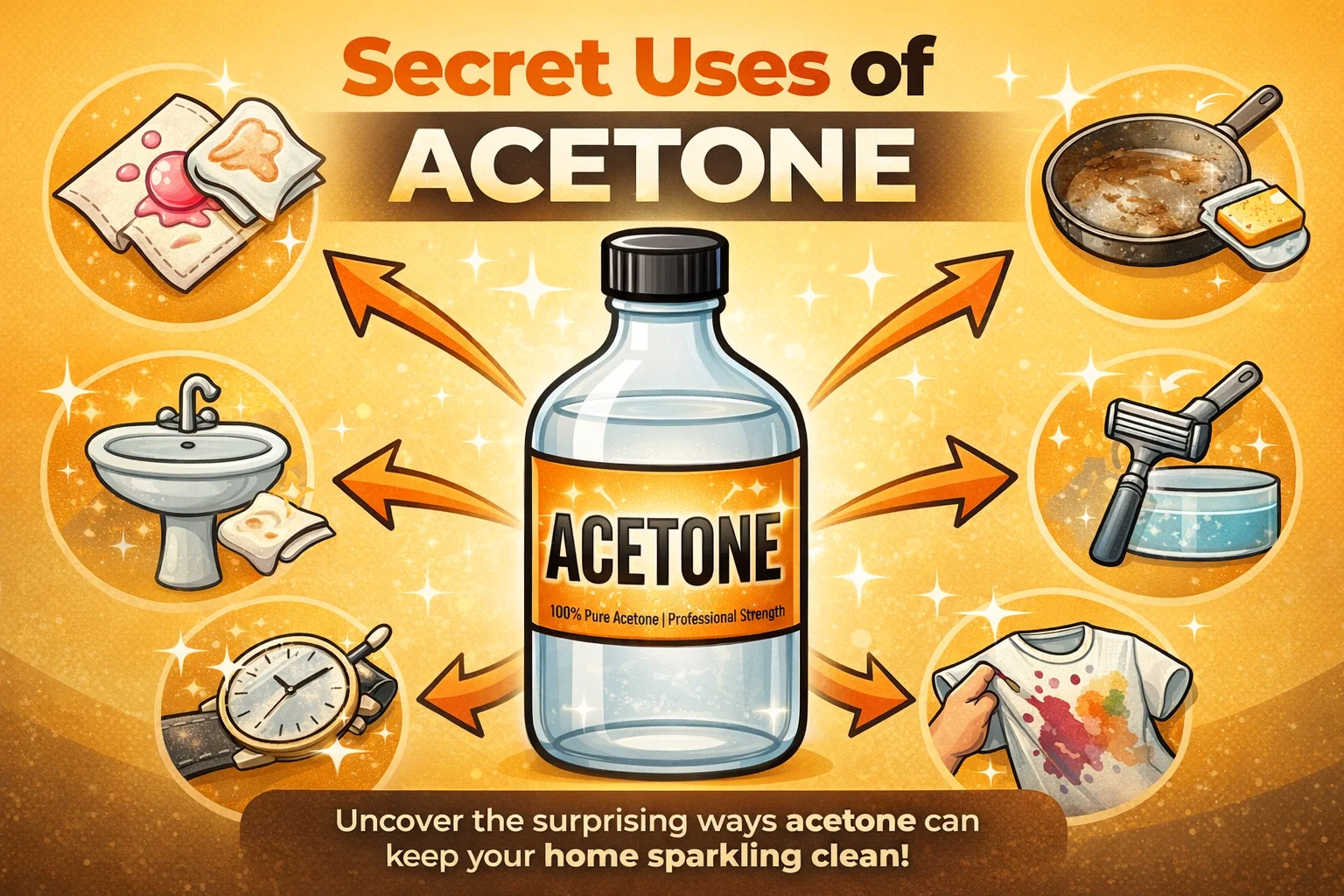
There is nothing quite as frustrating as finding a piece of chewing gum stuck to your favorite pair of jeans or a vibrant bag. Traditional methods like freezing the gum can take forever and do not always work on delicate fibers. This is where acetone shines. By carefully applying a small amount to the back of the fabric, you can dissolve the sticky bond of the gum, allowing it to lift right off without tearing the threads.
Beyond gum, acetone is a lifesaver for lifting unwanted dye stains. If a stray ink pen or a colorful garment has bled onto another fabric during a wash cycle, a targeted treatment with acetone can often pull that pigment out. This process works especially well on natural fibers, but you should always perform a spot test on a hidden hem to ensure the fabric color itself remains intact.
2. Kitchen Restoration: Cleaning and Polishing Pans
Over time, even the best cookware starts to show its age. Burnt-on food and layers of carbonized grease can create a stubborn film on the bottom of stainless steel pans that soap and water simply cannot touch. Instead of reaching for abrasive steel wool that might scratch the surface, try a microfiber cloth dampened with acetone. The solvent cuts through the tough grease bonds almost instantly, restoring the original luster of the metal and making your pans look brand new again.
3. The Secret to Sparkling Ceramics and Porcelain
Porcelain sinks and tubs are prone to developing a dull film from soap scum and mineral deposits. Over time, this buildup can make even a clean bathroom look dingy. Acetone is an excellent restorer for these surfaces. It effectively strips away the dullness and restores the high-gloss shine that porcelain is known for. Because it does not contain the gritty particles found in many cream cleansers, it provides a deep clean without the risk of creating micro-scratches where bacteria can hide.
4. Precision Glass Care: Removing Paint and Scratches
If you have recently finished a home renovation or a DIY painting project, you likely have a few stray splatters on your window panes. Scraping dry paint with a metal blade can easily lead to permanent scratches on the glass. A much safer and more effective method is to soften the paint with acetone. Once the paint is saturated, it loses its grip on the glass and can be wiped away or gently nudged off with a plastic scraper, leaving your windows crystal clear.
Polishing Your Watch Glass
One of the most surprising uses for acetone is in the realm of accessory maintenance. Light surface scratches on a watch face can make it difficult to read and diminish its value. By using a cotton swab dipped in a tiny amount of acetone, you can very gently buff the surface. This process works by microscopically leveling the top layer of certain types of acrylic or plastic watch crystals, effectively polishing out the scratches and renewing the clarity of the timepiece.
5. Hygiene and Maintenance: Prolonging the Life of Razors
Razors are expensive, and they often lose their edge not because the metal is dull, but because of a buildup of skin cells, hair, and soap residue. This debris can also harbor bacteria, leading to skin irritation or razor burn. Dipping your razor in a small container of acetone for a few seconds after use can sanitize the blades and dissolve any lingering gunk. This not only keeps your shave more hygienic but also prolongs the life of the blade, saving you money in the long run.
Mastering the Acetone Cleaning Routine
To get the most out of these tips, it is all about the technique. Here are a few best practices to keep in mind for your next cleaning session:
- Use a Microfiber Cloth: These cloths are gentle on surfaces and help the acetone pick up debris rather than just spreading it around.
- Work in Sections: Since acetone evaporates quickly, it is best to focus on one small area at a time rather than dousing an entire surface.
- Follow Up with Water: After using acetone on a surface like porcelain or metal, wipe it down with a damp cloth to remove any remaining residue.
- Storage Matters: Keep your bottle in a cool, dark place with the cap tightly sealed to prevent the liquid from turning into vapor over time.
Common Myths About Acetone and Cleaning
Because acetone is so powerful, there is often some confusion about where it can and cannot be used. One common myth is that it is safe for all plastics. In reality, acetone can melt or deform certain types of plastic, such as ABS or polystyrene. Always check the material of the item you are cleaning. Another misconception is that nail polish remover is exactly the same as pure acetone. While many removers contain it, they often include oils, fragrances, and dyes that can leave behind a greasy film or even stain the surface you are trying to clean. For household hacks, 100 percent pure professional strength acetone is the way to go.
When to Call in the Professionals
While these secrets are perfect for most everyday messes, there are times when a professional restorer might be needed. If you are dealing with a high-value antique or a very delicate silk garment, the risks of a DIY fix might outweigh the benefits. However, for the vast majority of household challenges, from gunked-up pans to paint-splattered windows, that little bottle of acetone is your greatest ally.
Final Thoughts on the Versatility of Acetone
It is time to look at that bottle of acetone as more than just a beauty tool. By bringing this professional-strength solvent into your regular cleaning rotation, you can save time, money, and a lot of frustration. Whether you are a DIY enthusiast looking to clean up after a project or a homeowner trying to keep every room looking its best, these unexpected uses offer a simple path to a cleaner, brighter home. The next time you encounter a stain or a scratch that seems impossible to fix, remember that the solution might already be sitting on your bathroom shelf. Give these secrets a try and watch as your home transforms into a sparkling, polished sanctuary. Your pans will shine, your windows will be clear, and your favorite clothes will be saved from the scrap heap, all thanks to the power of acetone.