How to Build a DIY Underground Root Cellar for Long-Term Food Storage and Preservation
Have you ever looked at a bountiful summer harvest or a massive haul from the farmers market and wondered how on earth our ancestors kept all that food fresh without a buzzing refrigerator? There is something deeply satisfying about the concept of a root cellar. It is the ultimate marriage of primitive engineering and modern sustainability. By harnessing the constant temperature of the earth, you can create a living pantry that preserves your fruits, vegetables, and preserves for months on end. This ancient method of food storage is making a massive comeback as more people look for ways to live a more self-sufficient, eco-friendly lifestyle.
The Magic of Underground Cooling
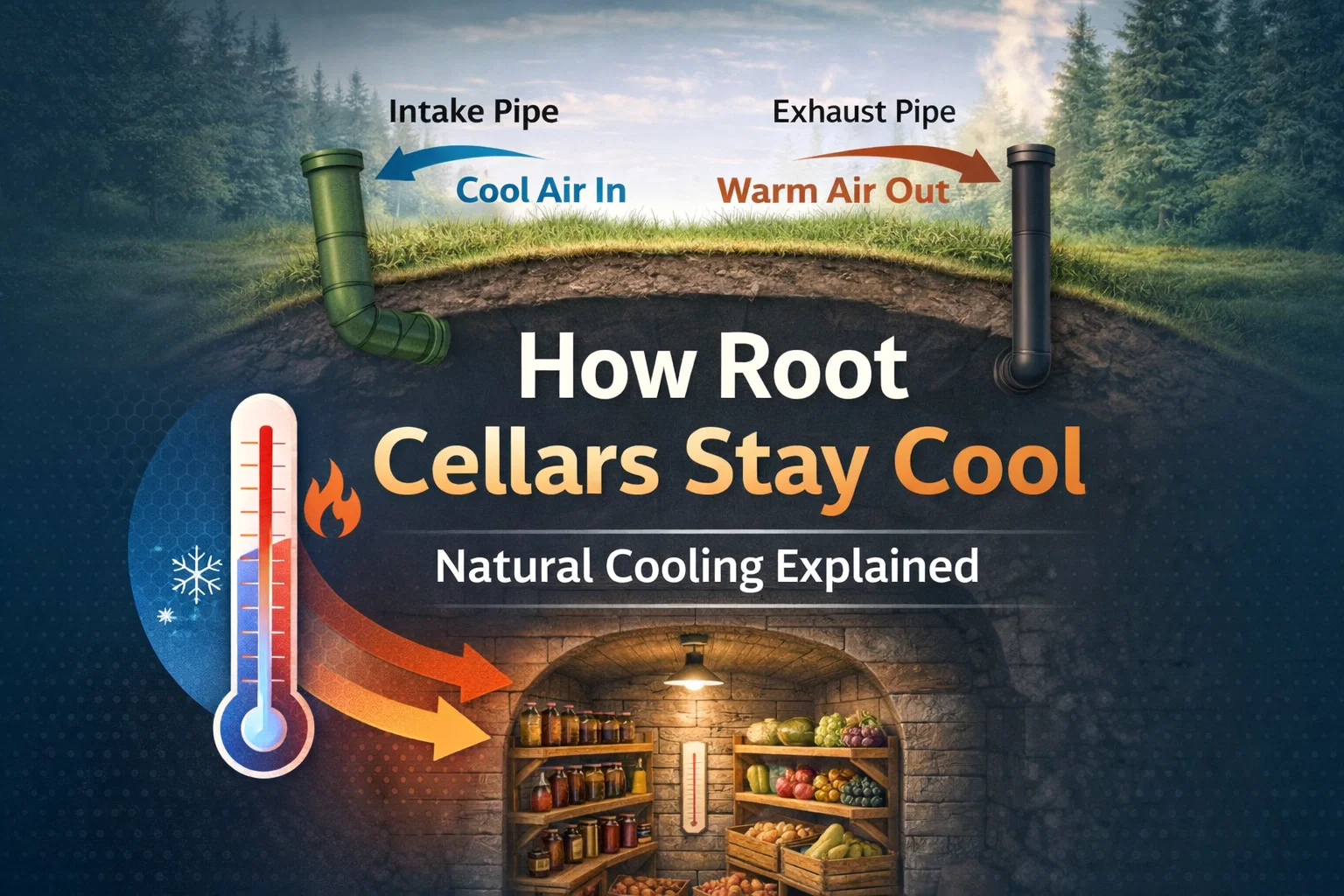
The image above perfectly illustrates the core mechanics of a functional root cellar. At its heart, a root cellar is a walk-in refrigerator powered entirely by the planet. Once you dig a few feet below the frost line, the earth maintains a remarkably stable temperature, usually between 32 and 40 degrees Fahrenheit. This is the sweet spot for food preservation. It is cold enough to slow down the biological processes that cause decay but warm enough to prevent the cell walls of your produce from freezing and turning into mush.
Beyond just temperature, the soil provides a natural level of humidity. Most root vegetables like carrots, beets, and potatoes need high humidity to stay crisp. In a standard kitchen fridge, the air is often too dry, which causes your veggies to shrivel up. An underground cellar provides that damp, cool environment that keeps a carrot tasting like it was pulled from the ground just yesterday, even in the middle of February.
The Science of Airflow: Intake and Exhaust Pipes
If you look closely at the diagram, you will see two very important features: the intake pipe and the exhaust pipe. Proper ventilation is the secret sauce of any successful storage cellar. Without it, your food will rot faster than you can eat it. This happens for two main reasons: heat buildup and ethylene gas.
Regulating Temperature with the Intake Pipe
The intake pipe, usually positioned lower to the ground, brings in cool, fresh air from the outside. Since cold air is heavier than warm air, it naturally sinks into the cellar. This constant influx of fresh air helps maintain that target temperature. During the autumn months, you can use this pipe to flush the room with cold night air, effectively pre-cooling your storage space before the deep freeze of winter sets in.
Removing Gases with the Exhaust Pipe
The exhaust pipe is positioned near the ceiling because warm air rises. As the produce in your cellar breathes, it releases a small amount of heat and a gas called ethylene. Fruits like apples are famous for pumping out ethylene, which acts as a ripening agent. If this gas stays trapped in the room, it will cause your potatoes to sprout and your leafy greens to yellow prematurely. A well-designed exhaust pipe allows these gases and excess heat to drift out of the chimney, keeping the atmosphere inside clean and stagnant-free.
Essential Design Elements for Your DIY Cellar
Building a root cellar requires more than just digging a hole in the backyard. To make it a functional part of your home, you need to consider the materials and the layout. The image shows a beautiful stone or masonry interior, which is an excellent choice. Masonry is a thermal mass, meaning it absorbs the cold from the surrounding earth and holds onto it, providing an extra layer of temperature stability.
- Earth Sheltering: The roof of the cellar should be covered with at least two to three feet of soil. This provides the insulation needed to keep the summer heat out and the winter frost at bay.
- Proper Shelving: Notice how the shelves are arranged in the visual. Using slatted wooden shelves or crates allows air to circulate around every single piece of produce. This prevents “hot spots” where mold could start to grow.
- Lighting: While you need a light to see what you are grabbing for dinner, the cellar should remain dark most of the time. Light can trigger sprouting in potatoes and bitterness in other vegetables.
- Drainage: The floor should ideally be gravel or dirt to allow moisture to seep in from the earth, but it must be well-drained so you are not walking into a muddy puddle.
What to Store in Your Underground Pantry
A root cellar is a versatile space that can hold a surprising variety of foods. It is not just for roots! When you organize your cellar, you should think about the different microclimates within the room. The highest shelves will be slightly warmer and drier, while the floor area will be the coolest and dampest part of the space.
The Heavy Hitters: Root Vegetables
Potatoes, carrots, beets, parsnips, and turnips are the kings of the root cellar. These should be stored in the coolest part of the room. Many gardeners find success by burying carrots and beets in buckets of damp sand or sawdust to keep them from drying out. Potatoes should be kept in the dark to prevent them from turning green and becoming toxic.
Fruits and Alliums
Apples and pears store wonderfully, but remember that ethylene gas we mentioned earlier? It is best to keep your fruit on the highest shelves near the exhaust vent so the gases can escape without affecting your vegetables. Onions and garlic, on the other hand, actually prefer a slightly drier environment. They are often hung from the ceiling or placed in mesh bags in the breeziest part of the cellar.
Canned Goods and Ferments
As you can see on the left side of the image, a root cellar is also a fantastic place for your masonry jars. The cool, dark environment is perfect for extending the shelf life of your home-canned salsas, pickles, and jams. It is also an ideal spot for crocks of fermenting sauerkraut or kimchi, as the stable temperatures allow for a slow, deep development of flavor.
Maintenance and Monitoring
A root cellar is a living system, and it requires a little bit of attention to keep it running smoothly. You cannot just shut the door in October and forget about it until Christmas. You will notice a thermometer prominently displayed in the center of the image. This is your most important tool. You should check the temperature and humidity regularly to ensure everything is within the safe zone.
You also need to “cull” your stock. Every week or two, take a quick walk through and look for any signs of spoilage. There is a lot of truth to the old saying that one bad apple spoils the bunch. If you spot a softening potato or a moldy onion, remove it immediately before the problem spreads to the rest of your harvest. This simple habit will save you a lot of heartache and wasted food.
The Benefits of Going Underground
Why bother with the manual labor of building and maintaining a root cellar in the age of high-tech appliances? The benefits go far beyond just saving a few dollars on your electric bill. First, there is the security of food storage. If the power goes out during a winter storm, your food remains perfectly safe. It is a form of insurance against the unexpected.
Second, the flavor is incomparable. Food stored in a root cellar maintains its texture and taste much better than food that has been frozen or chemically treated for supermarket shelves. There is a specific joy in eating a crisp, cool apple in the middle of January that still tastes like the autumn sun. Finally, it connects you to the seasons. Using a root cellar encourages you to eat what is in season and reduces your reliance on global supply chains that ship produce halfway across the world.
Embracing the Slow Life
Building an underground storage space is a commitment to a slower, more intentional way of living. It encourages us to think about where our food comes from and how we can preserve the bounty of the earth without excessive waste. Whether you are building a full-scale walk-in cellar like the one in the picture or starting small with a buried trash can or a cold room in your basement, you are taking a step toward a more sustainable future.
This project is perfect for the home gardener, the budding homesteader, or anyone who simply loves the idea of a well-stocked pantry. It turns the act of food storage into an art form. By understanding the simple physics of air, earth, and moisture, you can create a sanctuary for your food that will serve your family for years to come.
As you plan your own storage journey, remember to start with the basics. Focus on getting your ventilation right and choosing a location with good natural drainage. Once the foundation is set, you can enjoy the process of filling those shelves with colorful jars and crates of earth-covered treasures. It is a rewarding experience that pays off with every delicious, home-preserved meal you serve throughout the winter months. Happy building and even happier harvesting!