How to Build a Rural Biodigester for Clean Biogas Energy and Liquid Organic Fertilizer
Harnessing the power of nature to meet our everyday energy needs is no longer a futuristic dream. It is a practical reality that is currently transforming homesteads and rural communities around the world. Imagine a system where your kitchen scraps and livestock manure are not just waste products, but the primary fuel for your morning coffee and the secret ingredient to a flourishing garden. This is the magic of the rural biodigester, a sustainable technology that closes the loop of organic consumption and production. By mimicking the natural process of decomposition in an oxygen free environment, we can unlock a steady stream of clean biogas and high quality liquid fertilizer. It is an elegant solution for anyone looking to increase their self sufficiency while reducing their environmental footprint.
Understanding the Mechanics of Anaerobic Fermentation
At the heart of every biodigester lies a fascinating biological process known as anaerobic fermentation. While composting usually happens in the presence of air, a biodigester works in a completely sealed chamber. This environment allows specific types of bacteria to thrive, breaking down organic matter in a way that releases methane gas. This gas, often referred to as biogas, is a renewable energy source that can be captured and used just like the natural gas provided by utility companies. The beauty of this system is that it operates silently and continuously, turning what would otherwise be a source of methane emissions in a landfill into a contained, useful resource for the home.
The Role of the Anaerobic Chamber
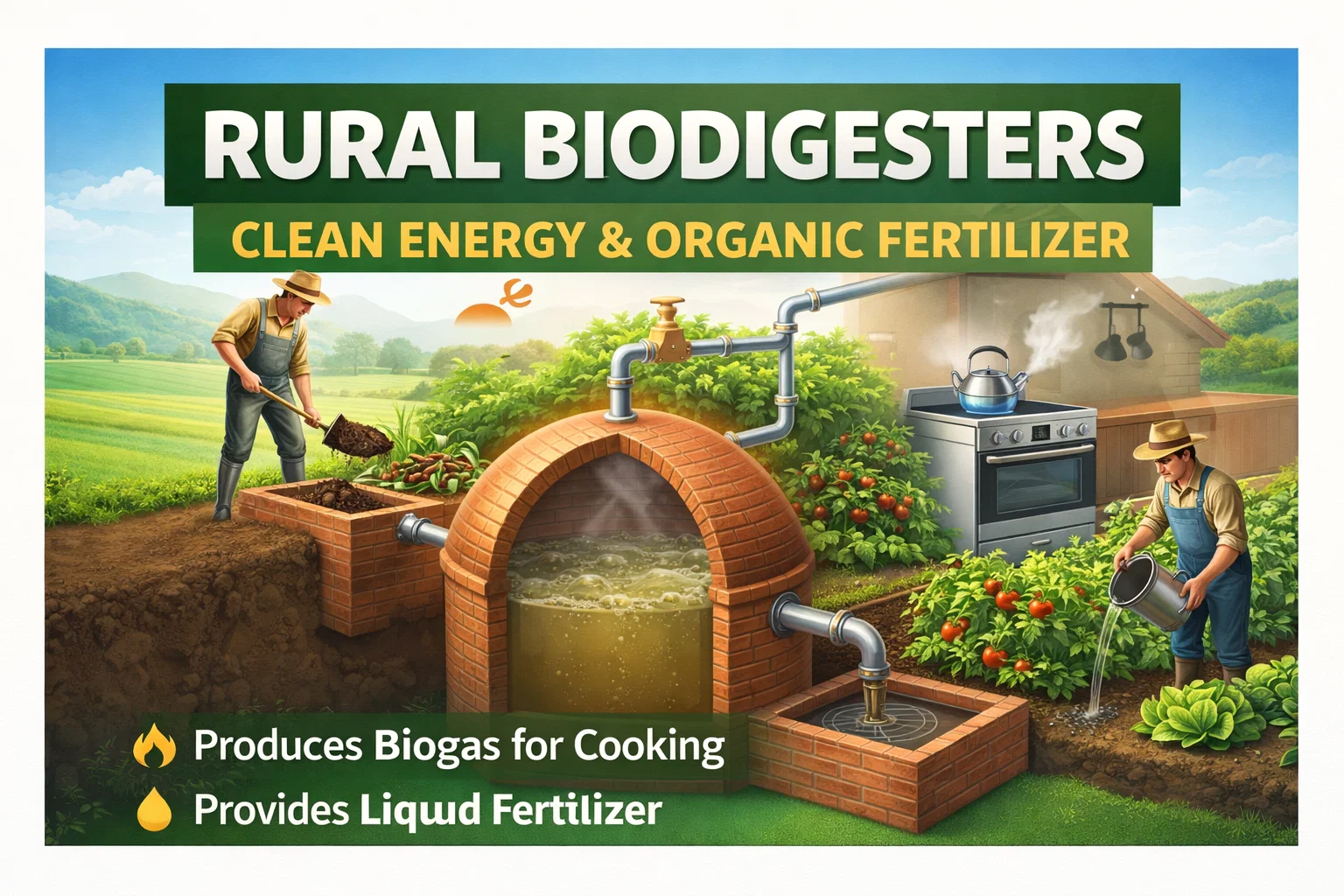
The anaerobic fermentation chamber is the most critical component of the entire setup. Often built underground or using durable masonry like brick, this dome shaped structure is designed to hold the slurry of water and organic waste. Because it is airtight, the pressure builds up naturally as the bacteria consume the waste, pushing the produced gas upward into a pipeline. The design must be robust enough to handle the slight pressure changes and ensure that no gas escapes into the atmosphere. This chamber acts as a living stomach, processing a variety of inputs into two distinct and valuable outputs: fuel and fertilizer.
The Inputs: Feeding Your Biodigester
To keep a biodigester running efficiently, it requires a steady diet of organic matter. On a rural property or a small farm, these inputs are usually abundant. The most common “fuel” for the system is animal manure, which is rich in the bacteria needed to kickstart the fermentation process. However, the system is surprisingly versatile and can handle a wide range of organic materials. Feeding the system is a simple daily task that involves adding fresh material into the organic matter inlet, usually located at a convenient height for shoveling or pouring.
Manure and Livestock Waste
For those with cows, pigs, or goats, manure is the gold standard for biogas production. It is highly nitrogenous and breaks down relatively quickly. When mixed with water to create a consistent slurry, it flows easily into the fermentation chamber. The constant supply of manure ensures that the bacterial colony inside the chamber stays active and productive. This also provides a sanitary way to manage animal waste, preventing runoff into local water sources and reducing odors around the barn.
Kitchen Scraps and Crop Residue
You do not need a full herd of cattle to benefit from this technology. Kitchen waste, such as vegetable peelings, fruit scraps, and leftover grains, can also be added to the mix. Even crop residues from the garden, like soft green weeds or spent tomato vines, contribute to the gas yield. By diverting these materials from the trash bin to the biodigester, you are effectively recycling the energy that went into growing that food in the first place. It is a way to ensure that nothing on the property goes to waste.
The First Output: Clean Biogas for Domestic Use
The most immediate benefit of installing a biodigester is the production of biogas. This gas is primarily methane, mixed with some carbon dioxide. Once it travels through the biogas pipeline and passes through a safety valve, it can be piped directly into a kitchen. For many rural families, this replaces the need for expensive propane tanks or the labor intensive practice of gathering firewood. Cooking with biogas is clean, as it produces no soot or smoke, which significantly improves the air quality inside the home.
Integration with Kitchen Appliances
A standard gas stove can often be converted to run on biogas with just a few minor adjustments to the burner nozzles. Once connected, the flame is steady and hot, perfect for boiling water, simmering stews, or frying. Because the gas is produced right on site, there is no monthly bill and no risk of running out of fuel during a delivery delay. It provides a level of energy security that is incredibly empowering for off grid living or homesteading.
Safety and Pressure Regulation
Safety is a priority in any gas system. A well designed rural biodigester includes a safety valve and a pressure gauge to ensure the gas is flowing correctly. Since the gas is produced at a relatively low pressure compared to industrial tanks, it is generally very safe to handle. The pipeline is typically made of durable materials like PVC or galvanized steel to prevent leaks and ensure the gas reaches the kitchen efficiently. Proper maintenance involves checking these lines occasionally to ensure the path remains clear and airtight.
The Second Output: Liquid Biol Fertilizer
While the gas often gets the most attention, the liquid byproduct, known as biol, is arguably just as valuable. As the organic matter is digested, the solid waste breaks down into a nutrient rich liquid that exits the system through the biol outlet. This is not just old manure; it is a fermented, bioavailable fertilizer that is much easier for plants to absorb than raw compost. The fermentation process also helps to kill off many pathogens and weed seeds, making the biol a cleaner alternative to traditional fertilizers.
Boosting Garden Productivity
Applying biol to your vegetable garden or orchard can lead to impressive results. It is packed with nitrogen, phosphorus, and potassium, as well as essential micronutrients. Because it is in liquid form, it can be diluted and used as a soil drench or even a foliar spray. Regular application helps to build soil health over time, encouraging a robust ecosystem of beneficial microbes. This leads to faster plant growth, higher yields of fruits and vegetables, and plants that are more resistant to pests and diseases.
A Natural Alternative to Chemical Fertilizers
For those committed to organic gardening, biol is the ultimate solution. It eliminates the need for synthetic chemical fertilizers, which can be expensive and harmful to the environment in the long run. By using biol, you are returning nutrients to the earth in a natural cycle. It is a sustainable way to maintain soil fertility year after year without relying on external inputs. This is especially beneficial for heavy feeders like tomatoes, peppers, and leafy greens, which thrive on the consistent nutrient boost provided by the biodigester.
The Environmental Impact of Biodigesters
The environmental benefits of rural biodigesters extend far beyond the individual homestead. These systems play a significant role in reducing greenhouse gas emissions. When manure and organic waste decompose in the open air, they release methane directly into the atmosphere, a gas that is many times more potent than carbon dioxide in terms of global warming. By capturing that methane and burning it for fuel, the biodigester converts it into much less harmful components while providing useful energy.
Reducing Deforestation and Carbon Footprint
In many parts of the world, wood is the primary fuel for cooking, leading to significant deforestation and habitat loss. A biodigester provides a viable alternative that protects local forests. Furthermore, by producing fertilizer on site, the carbon footprint associated with the manufacturing and transport of commercial fertilizers is eliminated. It is a holistic approach to environmental stewardship that addresses waste management, energy production, and soil health all at once.
Planning and Maintaining Your System
Setting up a biodigester requires some initial planning, but the long term rewards are well worth the effort. The size of the unit should be matched to the amount of waste produced daily and the energy needs of the household. A system that is too small will not provide enough gas, while one that is too large may be difficult to keep “fed” properly. Once installed, the maintenance is surprisingly minimal. It mostly involves the daily addition of waste and the occasional removal of any heavy sludge that may accumulate at the bottom of the tank over several years.
Consistent Feeding and Temperature
The bacteria inside the chamber are living organisms, and they thrive on consistency. It is best to feed the biodigester at the same time every day and maintain a proper balance of water and solids. Temperature also plays a role; these systems work most efficiently in warmer climates where the bacteria are most active. In colder regions, the chamber can be insulated or buried deeper in the ground to maintain the heat generated by the fermentation process itself. A healthy biodigester will have a slight, earthy smell, but it should never be offensive, indicating that the fermentation is progressing perfectly.
Conclusion: A Path Toward Sustainable Independence
The rural biodigester is more than just a piece of equipment; it is a symbol of a more conscious and sustainable way of life. It teaches us that waste is only waste if we fail to use it. By adopting this technology, we can turn our daily chores into an act of energy production and soil enrichment. It offers a clear path toward independence from volatile energy markets and a way to live in harmony with the natural cycles of our planet. Whether you are looking to save money, grow better food, or protect the environment, the biodigester is an investment in a cleaner, greener future for everyone. It is time to stop throwing away our potential and start fueled by the power of nature.