How to Stock a 1 Year Emergency Food Supply Ultimate Pantry Prep Guide
Building a self-sufficient home starts with one of the most basic human needs: a reliable food supply. The image of a perfectly organized, floor-to-ceiling pantry isn’t just a dream for the ultra-organized; it is a blueprint for security and peace of mind. In an era where supply chain disruptions and unexpected events have become more common, the art of long-term food storage has moved from a niche hobby to a vital life skill. Transitioning from a weekly grocery habit to a 365-day preparedness mindset requires a shift in how you view your kitchen and your resources. It is about creating a sanctuary of sustenance that ensures your family is nourished, no matter what happens in the outside world.
The Philosophy of a Year-Long Pantry
Before you buy your first bulk bag of grain, it is essential to understand the philosophy behind a year-long pantry. This is not about hoarding or fear; it is about stewardship and foresight. A well-stocked pantry acts like a savings account for your kitchen. When items are on sale, you buy ahead. When you have a busy month, you draw from your reserves. The ultimate goal is to create a closed-loop system where you are always eating what you store and storing what you eat. This “First In, First Out” method ensures that nothing goes to waste and your stockpile remains fresh and nutritious.
Assessing Your Household Needs
Every household has a unique culinary footprint. To stock for a year, you must first audit what your family actually consumes. If nobody in your home likes kidney beans, having fifty cans of them is not preparedness; it is a waste of space. Start by tracking your meals for two weeks. Note the primary ingredients that appear in every dish. These are your “anchor items.” For most, this includes grains like rice or pasta, fats like olive oil or butter, and proteins. Once you have a baseline of your weekly consumption, you can begin the math of multiplying those needs by fifty-two weeks.
Essential Categories for Long-Term Storage
To maintain health and morale over a long period, your pantry needs variety. A diet of just rice and beans will lead to “appetite fatigue,” which can be a real issue in high-stress situations. You want to aim for a balance of macronutrients and comfort items that keep spirits high. High-quality preparedness involves looking at several distinct categories of food.
Grains and Starches: The Foundation
Grains are the caloric backbone of any long-term pantry. They are generally inexpensive, have a long shelf life when stored correctly, and are incredibly versatile. White rice, rolled oats, and pasta are the champions of the preparedness world. While brown rice is more nutritious, its natural oils cause it to go rancid much faster than white rice. If you are stocking for a full year, focus on white rice for longevity and supplement with other grains like quinoa or buckwheat in smaller, vacuum-sealed quantities.
Proteins and Legumes
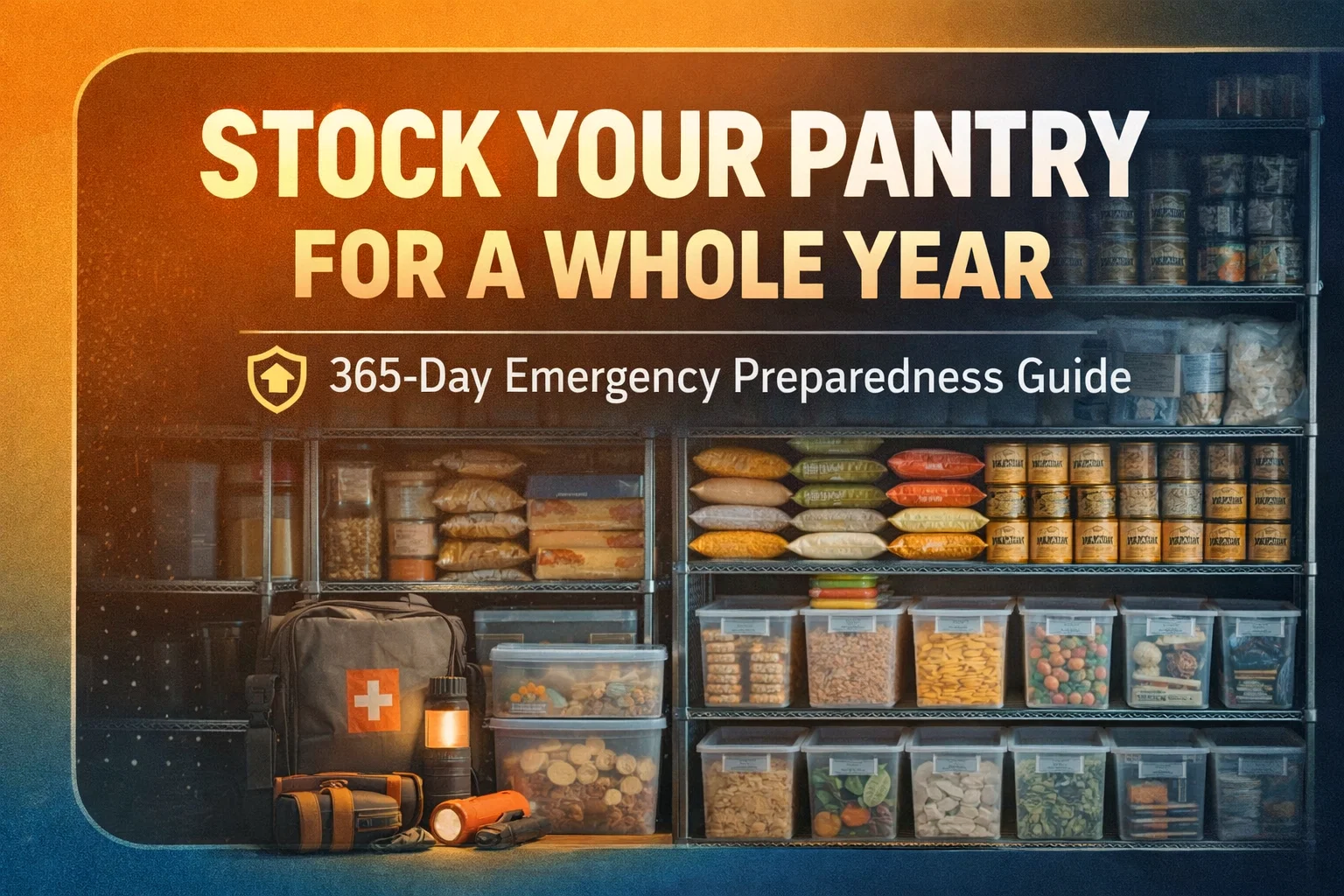
Beans, lentils, and chickpeas are the powerhouse of the pantry. They provide essential fiber and protein while being shelf-stable for years. Beyond dry goods, consider canned meats such as chicken, tuna, and beef. The image shows a variety of “MREs” or Meals Ready to Eat, which are fantastic for quick nutrition, but for daily cooking, traditional canned goods and dry legumes offer more culinary flexibility. Don’t forget professional-grade protein powders or collagen, which can be easily added to morning oats or smoothies to boost nutrition without requiring extra cooking time.
Mastering Food Preservation Techniques
A 365-day guide wouldn’t be complete without discussing how to keep that food edible for the duration. The enemies of food storage are heat, light, moisture, and pests. The clear bins shown in the visual are excellent for organization and seeing your inventory at a glance, but they should ideally be kept in a cool, dark environment. For items intended to last several years, you might consider more advanced methods.
Mylar Bags and Oxygen Absorbers
For dry goods like flour, sugar, and grains, Mylar bags are the gold standard. When you place food in a Mylar bag with an oxygen absorber and heat-seal the top, you are creating an environment where spoilage is nearly impossible. This can extend the shelf life of white rice or beans to twenty years or more. This is the “set it and forget it” portion of your pantry, providing a deep reserve that you don’t necessarily have to rotate every month.
The Role of Home Canning
If you have a garden or access to seasonal farmers’ markets, home canning is a game-changer. Pressure canning allows you to store meats, stews, and vegetables that are ready to heat and eat. Water bath canning is perfect for high-acid foods like jams, pickles, and tomato sauces. Having jars of home-cooked food on your shelves adds a level of flavor and “home-cooked” comfort that commercial cans simply cannot match.
Water Storage and Filtration
While the focus is often on the colorful bins of food, water is the most critical element of preparedness. A year-long food supply is useless if you don’t have the water required to rehydrate dry beans or cook pasta. A general rule of thumb is one gallon of water per person per day for drinking and basic hygiene. For a year-long plan, storing 365 gallons per person might be physically impossible for most homes. Therefore, you need a two-pronged approach: storage and filtration. Keep a few weeks’ worth of water on hand in BPA-free containers, and invest in a high-quality gravity-fed water filter that can process water from rain barrels or local sources if needed.
Organization and Inventory Management
The beauty of the organized shelving unit in the image is that it allows for an instant visual audit. If you can’t see what you have, you don’t have it. Use a labeling system that includes the “Use By” date in large, bold letters. Digital tools or even a simple clipboard hanging on the pantry door can help you track what you use. When you take a jar of peanut butter out, mark it down. This prevents the “pantry black hole” where items get pushed to the back and expire before they can be used.
Creating a “Working Pantry” vs. “Deep Storage”
Smart preppers often split their supply into two sections. The Working Pantry contains the items you use every day: the half-opened bag of flour, the spices, and the snacks. This is the area you access constantly. The Deep Storage is where the bulk of your year-long supply lives. By keeping these separate, you minimize the exposure of your long-term supplies to light and air, ensuring they stay at peak quality until they are truly needed.
The Often Overlooked Essentials
Calories are important, but morale is what gets you through a long-term situation. A year of plain rice and beans is a grueling prospect. This is where the “extras” become essential. Spices, condiments, and fats are the secret weapons of a prepared kitchen. Stock up on bulk salt, black pepper, cinnamon, and cumin. Store honey and maple syrup, which have nearly indefinite shelf lives. Fats like coconut oil and ghee are also vital, as they provide the essential fatty acids your brain needs to function clearly under stress.
Health and Hygiene in the Pantry
Preparedness extends beyond the dinner plate. A portion of your shelving should be dedicated to “non-food” pantry items. This includes multivitamins, basic first aid supplies, and hygiene products like soap and toothpaste. If you are stocking food for a year, you should also be stocking the means to stay clean and healthy. Alcohol-based hand sanitizers and bleach (for water purification) should also have a dedicated spot on your racks.
Starting Small: The Stepped Approach
Looking at a photo of a fully stocked pantry can be intimidating. You do not need to buy a year’s worth of food this afternoon. In fact, doing so often leads to buying things you won’t actually eat. Start with a three-day supply. Once that feels comfortable, move to two weeks. From two weeks, aim for a month. Before you know it, you will have the confidence and the inventory to sustain your household for three, six, and eventually twelve months. This incremental growth allows you to learn the rhythms of your kitchen and adjust your storage habits accordingly.
Conclusion: The Peace of Preparedness
Ultimately, stocking your pantry for a year is an act of love for yourself and your family. It is about removing the “what ifs” from your daily life. When you walk into a room filled with organized bins of grains, proteins, and comforts, you aren’t just looking at calories; you are looking at security. You are ensuring that no matter what the future holds, your home remains a place of abundance and stability. Start today by picking up a few extra staples during your next grocery run, and begin building your own ultimate preparedness sanctuary. The peace of mind that comes with a full pantry is worth every bit of effort and planning.