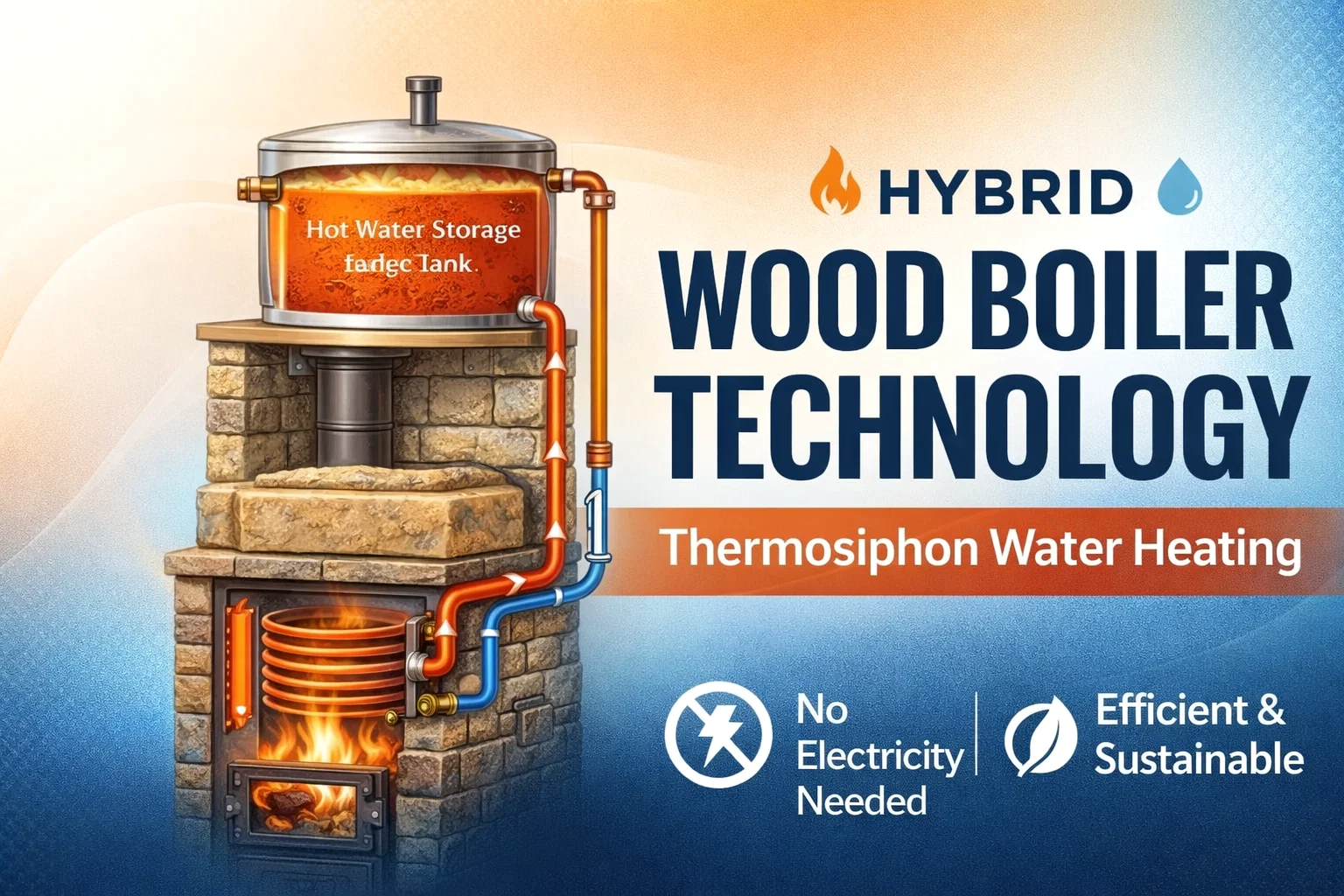
Hybrid Heating System Off-Grid Masonry Stove with Thermosiphon Hot Water Tank
Imagine a heating system that works entirely without electricity, requires no noisy pumps, and continues to radiate a gentle, penetrating warmth long after the last log has burned to ash. This is not some futuristic technology, but rather a brilliant refinement of ancient masonry principles combined with the elegant physics of thermosiphon circulation. The hybrid masonry stove represents the pinnacle of sustainable home heating, offering a level of energy independence that modern forced-air systems simply cannot match. By integrating a thick stone thermal mass with a copper coil heat exchanger, this system provides both space heating and a reliable source of hot water, making it a dream setup for off-grid living or anyone looking to drastically reduce their carbon footprint.
The Physics of the Masonry Stove: Why Thermal Mass Matters
At the heart of this hybrid system is the masonry stove itself. Unlike a standard metal wood stove, which gets very hot quickly and cools down just as fast, a masonry stove is designed to store heat. The secret lies in the Thick Stone Thermal Mass. When you light a fire in the combustion chamber, the hot gases do not just fly straight up the chimney. Instead, they are directed through a series of internal gas channels. These channels wind through the heavy brick or stone structure, allowing the masonry to absorb the intense heat of the fire.
Once the stone is “charged” with heat, it begins to radiate that energy back into the room slowly and steadily. This process, known as radiant heating, is much more comfortable than the dry, blowing air of a furnace. It feels like the warmth of the sun on a spring day. Because the stone holds onto the heat so effectively, you often only need to burn one or two hot fires a day to keep a well-insulated home comfortable for twenty-four hours. This makes it an incredibly efficient way to use wood as a fuel source.
Understanding the Gas Channel System
The efficiency of a masonry stove is largely due to the internal labyrinth of gas channels. In a conventional fireplace, a large percentage of the heat escapes through the chimney. In a hybrid masonry system, the Hot Gases are forced to travel a long path before they reach the exit. As they move through these channels, they transfer their thermal energy to the surrounding stone. This ensures that by the time the smoke leaves the chimney, it is much cooler because the heat has been successfully captured and stored in your home’s thermal mass.
Thermosiphon Technology: Hot Water Without Pumps
The most innovative feature of the system shown in the diagram is the integration of Thermosiphon Technology. In most modern homes, moving hot water from a heater to a storage tank requires an electric pump. However, a thermosiphon system relies entirely on the natural laws of physics. Specifically, it uses the principle that hot water is less dense than cold water and will naturally rise.
Inside the stove, a Copper Coil Heat Exchanger is positioned directly in the path of the heat. As the fire burns, the water inside these copper coils heats up rapidly. Because it is hot, it begins to rise through the piping toward the Hot Water Storage Tank located above the stove. As the hot water enters the tank, it displaces cooler water, which is then pushed down the return line back into the copper coils to be heated again. This creates a continuous, silent loop of water circulation that requires zero moving parts and zero electricity.
The Components of a Passive Water Loop
- Copper Coil Heat Exchanger: This is where the magic happens, transferring fire energy directly into your domestic water supply.
- Upper Storage Tank: Acting as a thermal battery for your water, this insulated tank keeps water hot and ready for use in radiators or taps.
- Purge Valve and Air Vent: These are critical safety components that prevent pressure buildup and ensure that air bubbles do not stall the natural flow of the water.
- Insulated Piping: To maintain the temperature differential that drives the thermosiphon, the rising pipes must be well-insulated to prevent heat loss before the water reaches the tank.
The Benefits of an Electricity-Free Heating Solution
In an era where we are increasingly dependent on the power grid, there is something incredibly reassuring about a system that requires No Electricity Needed. During a winter power outage, most modern homes become cold very quickly because their furnaces rely on electric fans and electronic ignitions. A hybrid masonry stove continues to function perfectly regardless of what is happening with the local utility company. This makes it an essential component for any serious homesteading or survivalist setup.
Beyond the reliability, there is the factor of sustainability. Wood is a renewable resource, and when burned at the high temperatures achieved in a masonry stove, it burns very cleanly with minimal emissions. By using the heat for both your living space and your water, you are essentially getting double the utility out of every log you throw on the fire. It is a holistic approach to energy that respects the resources used.
Installation and Maintenance Considerations
While the benefits are numerous, a hybrid heating system like this requires careful planning. A masonry stove is a permanent, heavy structure that often requires its own dedicated foundation. You cannot simply “plug and play” a stone stove the way you might a pellet stove. The weight of the Thick Stone Thermal Mass means that it must be integrated into the very bones of the house. This is why these systems are most popular in new builds or major renovations where the floor can be reinforced to handle several tons of stone and brick.
Routine Maintenance for Longevity
To keep the system running at peak efficiency, there are a few maintenance tasks to keep in mind:
- Ash Removal: The Ash Drawer located at the bottom of the unit makes it easy to clear out debris. Because these stoves burn so hot, they produce surprisingly little ash compared to a standard fireplace.
- Chimney Sweeping: Like any wood-burning appliance, the chimney and gas channels should be inspected annually for creosote buildup, though the high-efficiency burn usually keeps this to a minimum.
- Valve Checks: The Safety Valve and Air Vent on the water tank should be tested periodically to ensure they are clear and functioning, protecting the system from over-pressurization.
Designing Your Home Around the Hearth
Because the masonry stove radiates heat outward in all directions, it works best when placed in a central location within the home. In traditional European designs, the stove was often built into a central wall so that it could heat multiple rooms at once. Some designs even include built-in benches, known as “heated loungers,” where you can sit directly against the warm stone on a cold winter evening. It becomes the heart of the home, a gathering place that provides physical comfort and a beautiful aesthetic focal point.
The Hot Water Out line from the storage tank can be connected to various parts of the house. You can run this water to a series of radiators in bedrooms that are further away from the stove, or you can use it for your daily shower and kitchen needs. The versatility of the system is one of its greatest strengths, allowing you to customize the heat distribution based on your specific lifestyle and home layout.
The Role of the Purge Valve
In any water-based heating system, air is the enemy. If an air pocket gets trapped in the pipes, it can stop the thermosiphon effect entirely, a phenomenon known as an air lock. The Purge Valve is strategically placed at the highest point of the system or near bends in the pipe to allow the user to bleed out any trapped air. This ensures that the water loop remains “solid” and that the natural convection remains strong and consistent.
A Sustainable Path Forward
The hybrid heating system shown in the diagram is more than just a piece of equipment; it is a philosophy of living. It encourages us to look at the basic laws of nature to solve our most pressing needs. By utilizing gravity, heat density, and the storage capacity of stone, we can create a home environment that is warm, safe, and independent of external systems. Whether you are building a cabin in the woods or looking to make your suburban home more resilient, the masonry stove with thermosiphon technology offers a time-tested, efficient, and deeply satisfying solution.
Investing in this type of technology pays dividends in the form of lower utility bills, a smaller environmental footprint, and the peace of mind that comes from knowing your family will be warm no matter what. It is a beautiful marriage of old-world craftsmanship and smart engineering that continues to prove its worth centuries after the first masonry stoves were ever built.
Conclusion: Embracing High-Efficiency Natural Heating
As we look toward a future where energy efficiency and sustainability are more important than ever, the hybrid masonry stove stands out as a beacon of common sense. It manages to be high-tech in its efficiency while remaining low-tech in its operation. By eliminating the need for electricity and maximizing the potential of every piece of wood, it provides a level of comfort that is unmatched by modern HVAC systems. The combination of radiant space heating and passive water heating creates a truly “total” home solution. If you are looking for a way to heat your home that is as beautiful as it is functional, this hybrid system is undoubtedly worth your consideration. It is a quiet, powerful, and sustainable way to bring warmth into your life while staying connected to the natural world.