DIY Masonry Stove Thermosiphon Water Heating System Off-Grid Sustainable Home Heating
Harnessing the ancient wisdom of masonry and combining it with the principles of thermodynamics, the masonry stove with a thermosiphon water heating system represents a pinnacle of sustainable home engineering. In an era where energy costs are skyrocketing and the desire for off-grid independence is growing, this traditional technology offers a remarkably modern solution. Unlike a standard wood stove that provides a quick blast of heat that vanishes as soon as the fire dies down, a masonry stove acts as a giant thermal battery. It captures the intense energy of a fast, hot fire and slowly releases it over the course of twelve to twenty four hours. By integrating a copper heat exchanger and a thermosiphon system, this setup does more than just heat your living space; it provides a continuous supply of hot water without the need for a single watt of electricity.
The Science Behind the Masonry Stove
To understand why this system is so effective, we must look at the concept of thermal mass. The core of a masonry stove is constructed from high-density materials like stone, brick, or soapstone. These materials have a high specific heat capacity, meaning they can soak up a massive amount of energy. When you light a fire in the combustion chamber, the internal gas channels guide the hot exhaust through a labyrinthine path inside the stone structure. Instead of the heat escaping immediately through the chimney, it is absorbed by the thick stone walls. This process is known as radiant heat storage, and it is the secret to the gentle, bone-deep warmth that masonry stoves are famous for.
Maximizing Combustion Efficiency
One of the primary benefits of this design is the efficiency of the combustion process itself. In a conventional metal wood stove, homeowners often dampen the air intake to slow down the burn, which leads to incomplete combustion, creosote buildup, and smoke. In a masonry stove, the fire is meant to burn hot and fast. This high temperature ensures that almost all the fuel is converted into heat, leaving behind very little ash and producing minimal emissions. The stone thermal mass then takes that concentrated burst of energy and manages the distribution, ensuring your home remains at a steady, comfortable temperature without the constant need to feed the fire.
Understanding the Thermosiphon Water Heating System
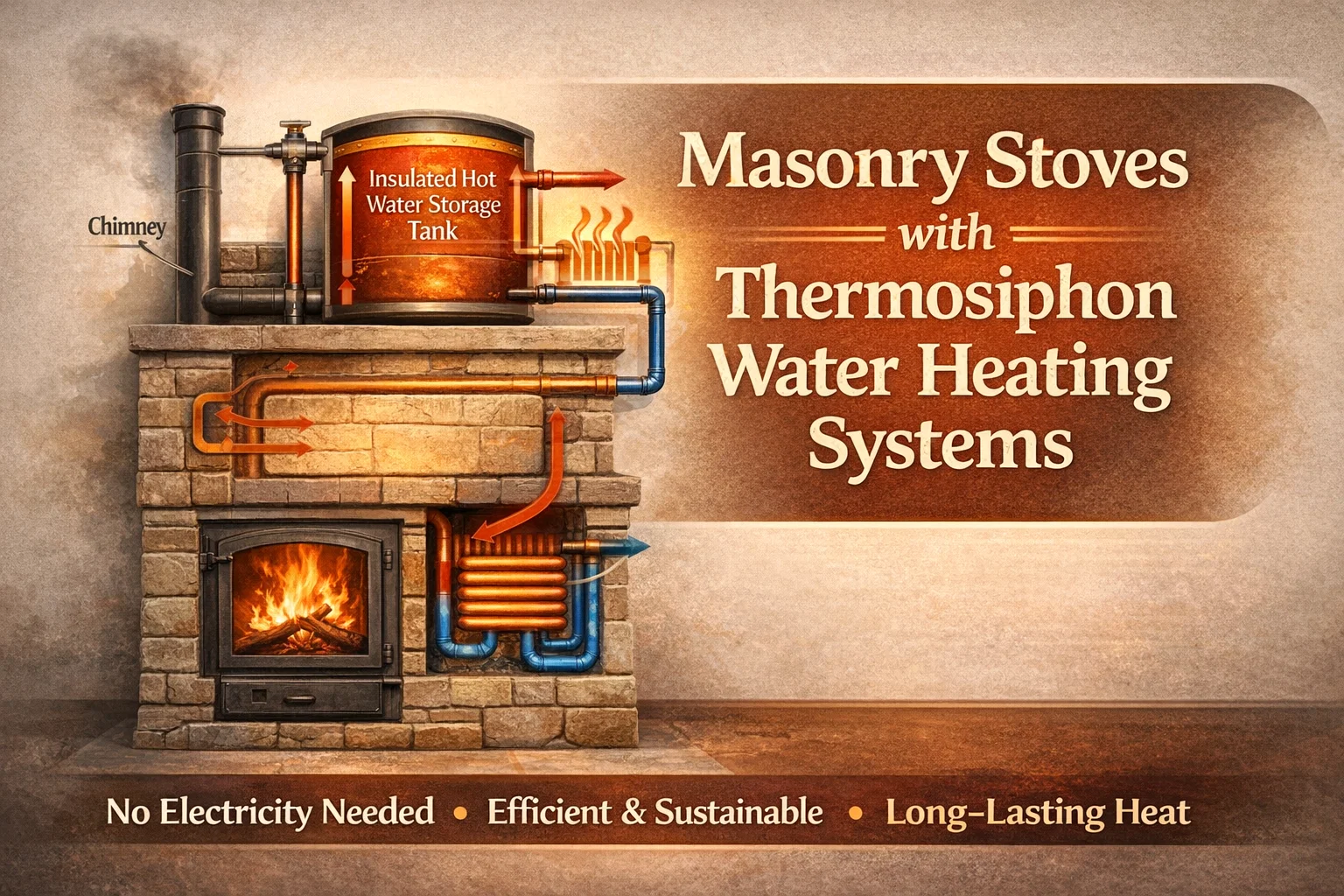
The addition of a thermosiphon system takes the utility of a masonry stove to a whole new level. Thermosiphoning is a method of passive heat exchange based on natural convection. It relies on the simple physical principle that hot water is less dense than cold water. By placing a copper heat exchanger within the path of the internal gas channels, the system can heat water as the stove itself warms up. As the water inside the copper coils gains temperature, it naturally rises through the piping and into an insulated hot water storage tank located above the stove level. This movement occurs entirely through gravity and temperature differentials, eliminating the need for mechanical pumps or electronic controllers.
The Role of the Copper Heat Exchanger
Copper is the preferred material for the heat exchanger due to its incredible thermal conductivity. It quickly picks up the heat from the hot gases passing through the internal channels and transfers it to the water flowing inside the pipes. In the diagram, you can see how the cold water return enters the bottom of the coil, gets heated by the surrounding thermal mass, and exits the top as hot water. This creates a continuous loop. As you draw hot water for taps or radiators, cold water enters the system to be heated, keeping the cycle in motion as long as the stone mass remains warm.
Components of a Sustainable Heating Powerhouse
Every part of this masonry stove is designed for longevity and performance. Starting from the bottom, the combustion chamber is built to withstand extreme temperatures, often featuring a cast iron door and a dedicated ash drawer for easy maintenance. Above the firebox, the internal gas channels are the veins of the system, carrying the hot gases through the thermal mass. The thick stone layers act as the lungs, breathing heat into the room long after the flames have vanished. On top, the insulated hot water storage tank serves as the reservoir, ensuring that your household has access to hot water for showers, cleaning, and space heating even during a power outage.
Safety and Control Features
While the system is passive, it still requires smart design for safety. A purge valve is typically installed at the highest point of the plumbing to allow for the removal of air bubbles, which can block the natural flow of water. Furthermore, the insulation around the hot water tank is critical. Without proper insulation, the stored water would lose its heat back to the environment too quickly. With it, the system can provide hot water well into the morning after an evening fire. The chimney remains a vital component, providing the necessary draft to pull oxygen into the combustion chamber and safely venting the cooled exhaust gases once they have surrendered their heat to the masonry.
The Benefits of an Electricity Free System
In a world increasingly dependent on complex grids and digital infrastructure, there is a profound peace of mind that comes from a heating system that requires no electricity. If the power goes out during a winter storm, a home with a masonry stove and thermosiphon system remains warm and functional. There are no circulator pumps to fail, no sensors to glitch, and no pilot lights to blow out. This level of self sufficiency is highly prized by homesteaders, off grid enthusiasts, and those looking to reduce their carbon footprint. By relying on physics rather than electronics, you create a resilient home environment that is prepared for any situation.
Lowering Your Carbon Footprint
Wood is a renewable energy source when harvested responsibly. Because masonry stoves burn wood so cleanly and efficiently, they represent one of the most eco friendly ways to heat a home. When you combine this with the fact that no electricity is used to move the heat or the water, the total energy savings are significant. You are essentially bypassing the utility company and tapping into a direct, natural cycle of energy production and storage. This is sustainable living in its most practical and aesthetic form.
Design Considerations for Your Home
Integrating a masonry stove into a home requires careful planning. Because of the weight of the stone thermal mass, these stoves require a reinforced foundation. They are often placed in the center of a house to allow the radiant heat to reach as many rooms as possible. The plumbing for the thermosiphon must also be calculated precisely, ensuring that the pipes have a consistent upward slope to the storage tank to prevent air locks and ensure a smooth flow. While the initial installation is a significant project, the result is a functional work of art that can last for generations.
Aesthetic and Lifestyle Impact
Beyond the technical advantages, a masonry stove becomes the heart of the home. Its presence is grounding and comforting. The radiant heat it emits feels different than the dry, forced air from a furnace; it is a gentle warmth that mimics the feeling of sunlight. Many homeowners incorporate benches or heated surfaces into the masonry design, creating cozy nooks for reading or resting. It encourages a slower, more intentional way of life where the daily ritual of tending the fire provides both physical warmth and a sense of connection to the domestic environment.
Maintenance and Longevity
One of the most impressive aspects of masonry stoves is their lifespan. Unlike a furnace or a boiler that might need replacing every fifteen years, a well built masonry stove can last for many decades. The lack of moving parts means there is very little that can break. Maintenance usually involves an annual cleaning of the internal gas channels and the chimney to ensure optimal draft and heat transfer. The copper heat exchanger is also incredibly durable, resisting corrosion and scaling over long periods. When you invest in a system like this, you are building an asset that adds permanent value and security to your property.
Conclusion: The Future of Traditional Heating
The masonry stove with a thermosiphon water heating system is a beautiful example of how we can look to the past to solve the challenges of the future. It proves that we do not always need more technology to live better; sometimes, we just need better design. By working with the laws of nature rather than trying to bypass them with mechanical force, this system provides reliable, efficient, and sustainable heat and hot water. Whether you are building a new eco friendly home or looking to upgrade your current homestead, the masonry stove offers a path toward true energy independence and a warmer, more resilient way of living. Embracing this technology means choosing a lifestyle of efficiency, sustainability, and unparalleled comfort.