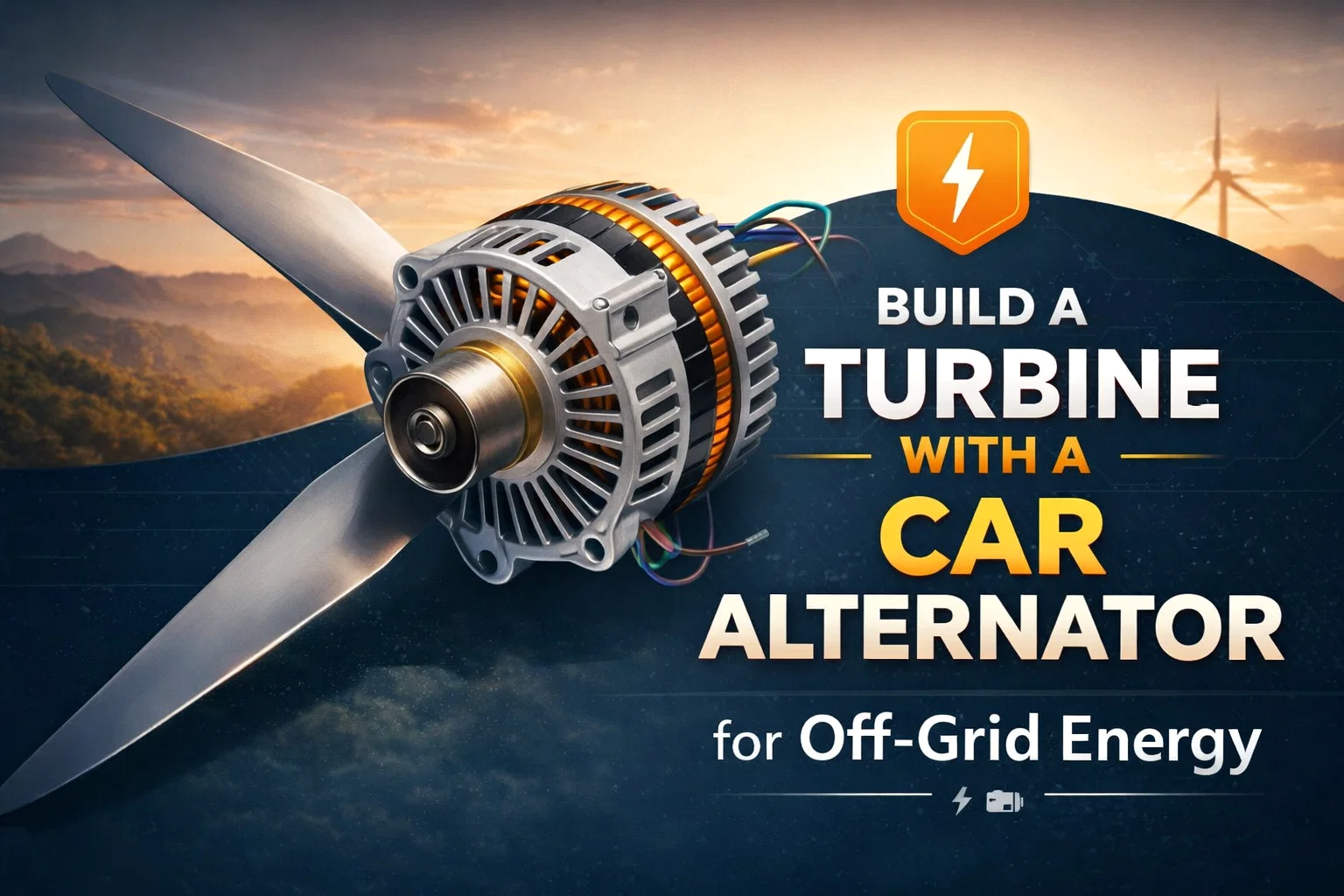
DIY Wind Turbine Build a Car Alternator Generator for Off-Grid Power
Harnessing the power of the wind is one of the most rewarding steps you can take toward true energy independence. While professional wind turbines can cost thousands of dollars, there is a brilliant workaround that DIY enthusiasts and homesteaders have been using for decades: the car alternator. By repurposing a standard automotive part designed to charge a car battery, you can create a robust, functional wind generator that provides reliable off-grid power for a fraction of the cost of retail systems. This project combines mechanical engineering with electrical savvy, resulting in a sustainable energy solution that you can build right in your own garage.
Why Use a Car Alternator for Wind Power
The core of any wind turbine is the generator, and car alternators are essentially high quality generators that are mass produced and easily accessible. They are designed to work in the harsh environment of an engine bay, meaning they are durable and capable of handling significant electrical loads. For someone looking to build an off-grid system, the car alternator is an ideal candidate because it is built to output 12V or 24V DC power, which is exactly what is needed to charge deep cycle battery banks.
Another major advantage is cost. You can often find used or refurbished alternators at scrap yards or online marketplaces for very little money. Even a brand new unit is significantly cheaper than a specialized permanent magnet generator (PMG). While there are some modifications required to make an alternator work at lower wind speeds, the foundation is solid and provides a professional grade electrical component for your DIY project.
The Basic Components of an Off-Grid Wind Turbine
To turn a car alternator into a wind turbine, you need more than just the alternator itself. The system requires several key components to capture wind energy and convert it into usable electricity. First, you need the turbine blades, which are responsible for catching the wind and creating torque. These are typically made from PVC pipe, wood, or carbon fiber, depending on your budget and the expected wind speeds in your area.
Next is the tail vane and the mounting assembly. The tail vane acts like a rudder, keeping the turbine pointed directly into the wind as it changes direction. The mounting assembly must be sturdy enough to handle the weight of the alternator and the centrifugal forces of the spinning blades. Finally, you have the electrical system, which includes the charge controller, the battery bank, and the wiring that carries the power from the turbine to your home or shed.
Understanding Alternator RPM and Wind Speeds
One of the biggest challenges when using a car alternator for wind power is the RPM requirements. In a vehicle, an alternator usually spins at several thousand RPMs because it is geared to the engine. However, a wind turbine generally spins at much lower speeds, often between 200 and 800 RPM. This discrepancy is why many builders choose to modify the alternator or use a pulley system to increase the speed of the shaft.
If you do not want to use a pulley system, you might consider rewinding the internal stator of the alternator with thinner wire and more turns. This modification allows the alternator to reach its “cut-in” voltage at a much lower speed, making it far more efficient in light breezes. This is a common practice among serious DIY power enthusiasts who want to maximize their energy harvest.
Step by Step Guide to Preparing the Alternator
Before you start building the frame, you need to prepare the alternator for its new life. Start by testing the alternator to ensure it is in good working condition. You can do this at most auto parts stores or by using a drill to spin the shaft while measuring the output with a multimeter. Once confirmed, you will need to address the excitation issue. Unlike permanent magnet generators, most car alternators require a small amount of electricity to create a magnetic field before they start producing power.
In a car, this is handled by the battery when you turn the key. For a wind turbine, you can use a small manual switch or a smart regulator that senses when the turbine is spinning fast enough to start charging. Some builders choose to replace the internal rotor with one containing permanent magnets, which eliminates the need for external excitation entirely and makes the turbine much simpler to operate.
Selecting the Right Turbine Blades
The blades are the engine of your wind turbine. For a car alternator build, you need blades that provide high torque to overcome the initial resistance of the alternator. Three blade designs are the most common because they offer a good balance between stability and speed. If you are a beginner, cutting blades from a large diameter PVC pipe is an excellent and low cost way to get started. These “airfoil” shapes are surprisingly efficient and can be adjusted by sanding the edges to reduce drag.
Building the Mounting Frame and Swivel
The frame holds everything together and must be able to withstand high winds. A common design involves using heavy duty steel tubing or angle iron. The alternator is bolted firmly to the front of the frame, while the tail vane is attached to a long arm at the back. The entire assembly is then mounted on a swivel, often made from a vehicle wheel spindle or a heavy duty pipe bearing. This swivel allows the turbine to rotate 360 degrees, ensuring it always faces the wind.
Safety is a huge factor here. You must include a “furling” mechanism, which is a design feature that allows the turbine to turn away from the wind during a storm. Without a way to slow down or move the blades out of the direct path of high velocity winds, the centrifugal force can cause the blades to shatter or the alternator to overheat.
Wiring and Battery Management
Once the mechanical parts are finished, it is time to focus on the electronics. You will run heavy gauge wire from the alternator down the tower to your battery room. Because wind power is variable, you cannot connect the alternator directly to your batteries without a charge controller. A dedicated wind charge controller will manage the incoming voltage and prevent the batteries from overcharging.
Additionally, you will need a “dump load.” A dump load is a device, usually a heating element, that consumes excess energy once your batteries are full. This keeps the turbine under load so it does not spin out of control when there is nowhere for the electricity to go. This is a critical safety component for any off-grid wind system.
Optimizing Your Location for Maximum Power
Even the best built turbine will fail to produce power if it is poorly placed. Wind speed increases with height, so getting your turbine as high as possible is essential. Aim for a tower that is at least 30 feet tall, or at least 15 feet higher than any obstacles within a 300 foot radius. Trees, buildings, and hills create “wind shadows” and turbulence that can significantly reduce the efficiency of your blades and cause unnecessary wear on the bearings.
Maintenance and Long Term Care
A DIY wind turbine is not a “set it and forget it” project. Like any mechanical device, it requires regular maintenance. Once or twice a year, you should lower the tower to inspect the blades for cracks, check the tension on any belts or pulleys, and grease the swivel bearings. Check the electrical connections for corrosion, especially if you live in a coastal area with salt air. Keeping an eye on these details will ensure your turbine stays productive for many years.
The Environmental and Financial Impact
Building your own wind turbine using a car alternator is more than just a fun weekend project; it is a statement of self reliance. By using recycled parts, you are keeping waste out of landfills and reducing your reliance on fossil fuels. Financially, once the system is paid for through its own production, every watt of electricity it generates is essentially free. This can lead to significant savings on your monthly bills or provide the essential power needed to run a remote cabin where utility lines are unavailable.
Conclusion
Transitioning to off-grid energy is a journey that requires patience, learning, and a bit of elbow grease. Using a car alternator to build a wind turbine is a classic DIY feat that bridges the gap between high tech green energy and affordable backyard engineering. It teaches you the fundamentals of electromagnetism, aerodynamics, and structural design while rewarding you with the tangible result of clean, renewable power. While it may take some trial and error to get your turbine spinning perfectly, the feeling of seeing those blades catch the breeze and knowing that you are generating your own electricity is incomparable. With the right tools, a bit of scavenged hardware, and a passion for sustainability, you can turn a simple car part into a powerful engine for independence.