9 Body Parts Where Emotions Are Stored as Pain Somatic Healing Emotional Release Tips
Have you ever noticed that your shoulders feel like they are up to your ears after a stressful day at the office? Or perhaps you have experienced a sudden wave of tears during a deep hip stretch in a yoga class? It is not just in your head. In fact, it is in your body. The concept of somatic memory suggests that our physical forms act as a living ledger for every emotional experience we have ever had. When we do not fully process a trauma, a grief, or even a daily frustration, that energy does not simply vanish. Instead, it settles into our tissues, muscles, and joints, manifesting as chronic tightness or unexplained pain. Understanding the map of where these emotions live is the first step toward a profound type of healing that goes far beyond the surface.
The Science of Somatic Storage
For a long time, Western medicine treated the mind and the body as two separate entities. However, modern neuroscience and psychology are finally catching up to ancient wisdom. The nervous system is the bridge between our thoughts and our physical sensations. When we experience a perceived threat or an intense emotion, our brain triggers a physiological response. If we are unable to complete that stress cycle, the leftover energy remains trapped in a state of high alert.
How the Nervous System Impacts Your Muscles
When you are stressed, your body enters a fight or flight state. Your muscles tighten instinctively to protect you from harm. If the stress is chronic, those muscles never get the signal to relax. Over time, this constant tension leads to what we identify as physical pain, but the root cause is actually an emotional trigger that has been put on loop. By identifying which part of the body is holding tension, we can begin to decode the specific emotional message our body is trying to send us.
Hips and the Weight of Unprocessed Grief
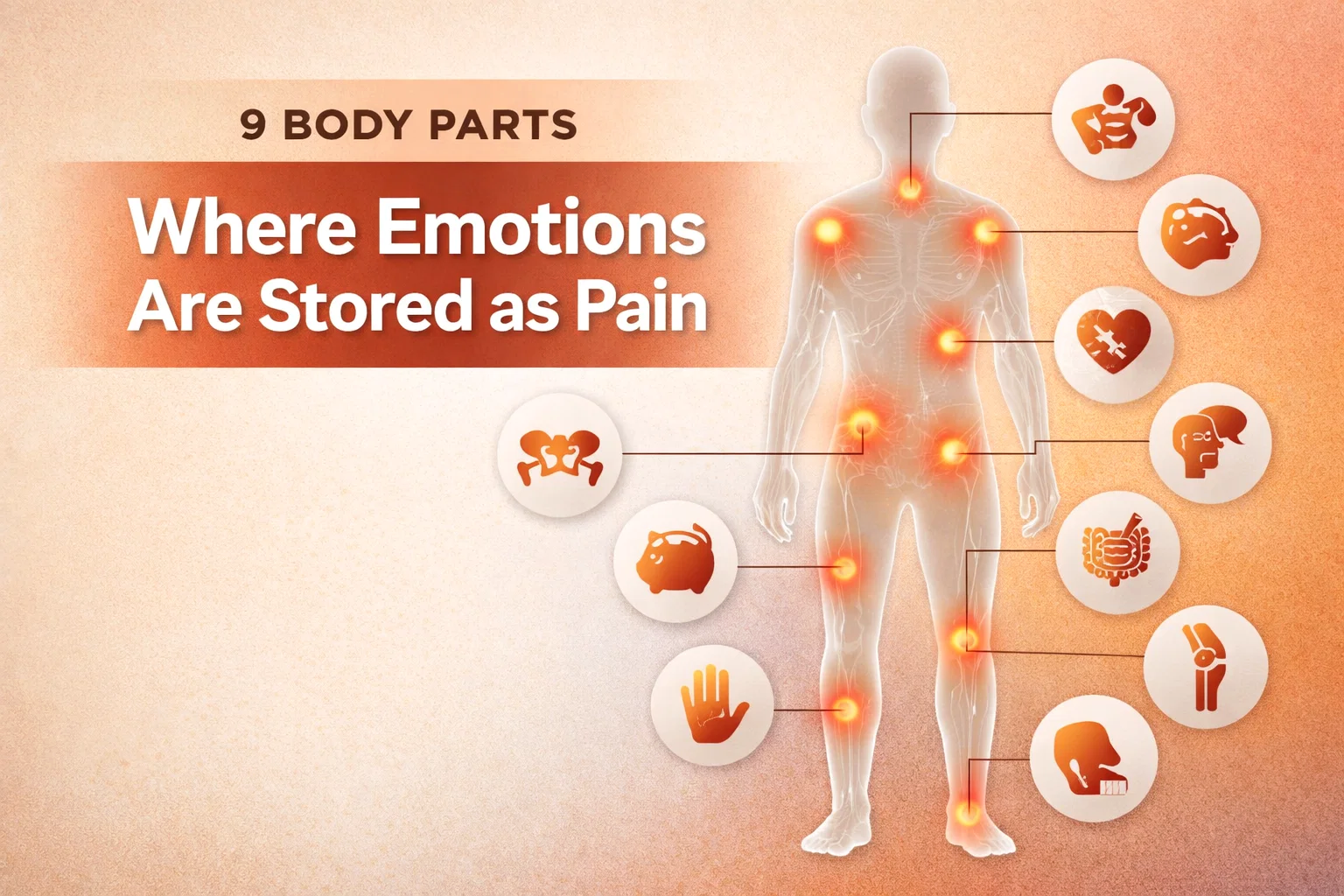
The hips are often referred to as the junk drawer of the body. This is because the psoas muscle, which is deeply connected to our fight or flight response, is located right in the pelvic region. When we experience deep sadness or unprocessed grief, we tend to curl inward to protect our vital organs. This constant contraction leads to extremely tight hips.
Many people find that during hip-opening exercises, they experience an unexpected emotional release. This is because you are literally stretching out the physical manifestations of old heartaches. Releasing the hips allows for a renewed sense of flow and helps you let go of the past that you have been carrying in your stride.
Shoulders and the Burden of Responsibility
We often use the phrase carrying the weight of the world on your shoulders, and this is a literal description of emotional storage. The trapezius muscles are highly reactive to the feeling of being overwhelmed. When you feel that you have too many responsibilities or that you are the only one holding everything together, your shoulders instinctively hike up toward your neck.
This type of pain is usually linked to a lack of support or a feeling that you cannot ask for help. It is a protective stance that signals a need to defend yourself against the pressures of life. Learning to delegate and setting boundaries is often the best medicine for chronic shoulder tension.
Lower Back Tension and Financial Stability
The lower back is our physical foundation. It supports the entire weight of the upper body and allows for movement and flexibility. Emotionally, this area is tied to our sense of security and survival. If you are struggling with fears regarding your finances, your career, or your home life, you might feel it in your lumbar spine.
When life feels uncertain, we lose our sense of being grounded. This instability translates into a lack of support in the lower back. Strengthening your sense of self-reliance and addressing your practical fears can often alleviate the physical pinching or aching in this region.
The Jaw and the Power of Unspoken Words
Do you wake up with a sore jaw or find yourself clenching your teeth throughout the day? The jaw is the center of communication and expression. When we repress anger, hold back a biting comment, or swallow our truth to keep the peace, the muscles in the jaw bear the brunt of that suppression.
Clenching is a way of holding back what needs to be said. It is an act of self-censorship that creates massive amounts of tension. Practicing mindful communication and finding healthy outlets for anger can help loosen the jaw and allow your authentic voice to emerge.
Chest Pain and the Lingering Effects of Heartbreak
The chest houses the heart and lungs, making it the center for love, connection, and breath. When we experience heartbreak or a deep sense of loneliness, we tend to hollow out our chest and round our shoulders forward to guard our hearts. This physical closing off restricts our breathing and creates a heavy, tight sensation in the center of the chest.
Emotional healing in this area involves learning to be vulnerable again. It requires opening the chest up to the world and allowing yourself to breathe deeply into the spaces that feel restricted. As the chest opens, the capacity to give and receive love often expands along with it.
The Neck and the Conflict of Inner Truth
The neck is the narrow bridge between the head and the heart. Often, we find ourselves in conflict when our logical mind wants one thing and our emotional heart wants another. This inner conflict manifests as a literal pain in the neck. It is also the area associated with self-expression and the throat chakra.
If you feel like you are living a life that does not align with your truth, or if you feel silenced in your environment, your neck will likely feel stiff. Flexibility in the neck represents an ability to see different perspectives and to speak your truth clearly without fear of judgment.
Stomach Issues and the Grip of Anxiety
The gut is often called the second brain because it contains a massive network of neurons that communicate directly with the mind. This is why we feel butterflies when we are nervous. However, chronic anxiety and unresolved trauma can lead to long-term digestive issues, bloating, and stomach pain.
The stomach is where we process and digest not just food, but life experiences. If you are overwhelmed by a situation that you cannot stomach, your digestive system will reflect that difficulty. Managing your nervous system through grounding techniques is essential for restoring gut health and emotional balance.
Hands and the Struggle for Control
Our hands are how we interact with the world. We use them to grasp, to build, and to hold on. When we are dealing with issues of control or feeling overwhelmed by the flow of life, we might experience tension or cramping in our hands and wrists. This is often a sign that we are gripping too tightly to a specific outcome.
Always gripping or fidgeting can signal a lack of trust in the natural progression of events. Learning to open your palms and practice the art of surrender can physically and emotionally relieve the pressure of trying to control the uncontrollable.
Knees and the Fear of Moving Forward
Knees represent our ability to bend, to be flexible, and to move forward in life. Pain in the knees is frequently associated with an ego that is too rigid or a deep-seated fear of change. If you are resisting a new chapter in your life or feeling stubborn about a particular path, your knees may bear the physical weight of that resistance.
Moving forward requires a certain amount of surrender and the ability to kneel or bow to the flow of life. Improving knee health often goes hand in hand with developing a more flexible mindset and embracing the transitions that come your way.
Practical Tips for Emotional Release
Identifying the location of your pain is a wonderful start, but how do you actually move the energy out of your body? Healing is a multifaceted process that involves both the mind and the physical form.
- Mindful Stretching: When you stretch a tight area, do not just focus on the muscle. Focus on the feeling. Ask yourself what emotion might be hiding there.
- Breathwork: Deep, intentional breathing sends a signal to your nervous system that you are safe. This allows your muscles to finally let go of their protective grip.
- Journaling: Writing down your thoughts can help bridge the gap between physical sensation and emotional awareness.
- Professional Support: Somatic experiencing practitioners or massage therapists who understand the mind-body connection can be invaluable guides.
Creating a Daily Check-In Ritual
You do not have to wait for chronic pain to start listening to your body. Take five minutes every morning to do a mental body scan. Start at your toes and move up to your head, noticing any areas of tightness. Send your breath into those spots and acknowledge whatever emotions might be present. This simple habit can prevent emotional energy from becoming stagnant and turning into physical distress.
Conclusion
Your body is an incredibly wise vessel that is constantly communicating with you. Pain is not always a sign of injury; sometimes, it is a desperate plea from your subconscious to look at something you have been avoiding. By honoring the connection between your emotions and your physical sensations, you open the door to a more holistic and compassionate way of living. Remember that healing is not about fixing something that is broken, but about listening to the parts of yourself that have been ignored for too long. Treat your body with the kindness it deserves, and it will reward you with a sense of lightness and freedom you never thought possible.