How to Anchor Your Morning with Intention A 3-Part Energy Check-In for Mindful Productivity
The transition from sleep to activity is one of the most vulnerable moments of the day. For many of us, the second the alarm goes off, our minds race toward a digital landscape of emails, news notifications, and an ever-expanding to-do list. We have been conditioned to believe that our value is tied directly to our output, leading to a frantic rush that leaves us feeling drained before the clock even hits noon. But what if there was a way to reclaim that power? By choosing to anchor your morning in intention rather than output, you set a foundation of clarity that dictates how you interact with the world around you.
The Shift from Output to Intention
Society often measures a successful morning by how many tasks we can check off before breakfast. We admire the 5 AM club and the hustle culture that demands immediate productivity. However, this high-pressure approach often leads to burnout and a sense of disconnection. When we prioritize output, we are acting as machines. When we prioritize intention, we are acting as humans. An intentional morning is not about doing less; it is about being more present in what you do. It is the difference between surviving your schedule and actually leading your life.
Anchoring your morning means creating a non-negotiable space where your internal state takes precedence over external demands. This practice acts as a psychological buffer, protecting your peace of mind against the inevitable chaos of the day. By starting with a focused internal check-in, you ensure that your actions throughout the day are aligned with your core values and current energy levels.
The Power of a 3-Part Energy Check-In
The concept of an energy check-in is simple yet profound. It requires only a few minutes of quiet reflection, but the ripple effects are felt for hours. Instead of looking at your calendar first, you look inward. This practice involves three specific questions designed to ground you in the present and prepare you for a balanced day.
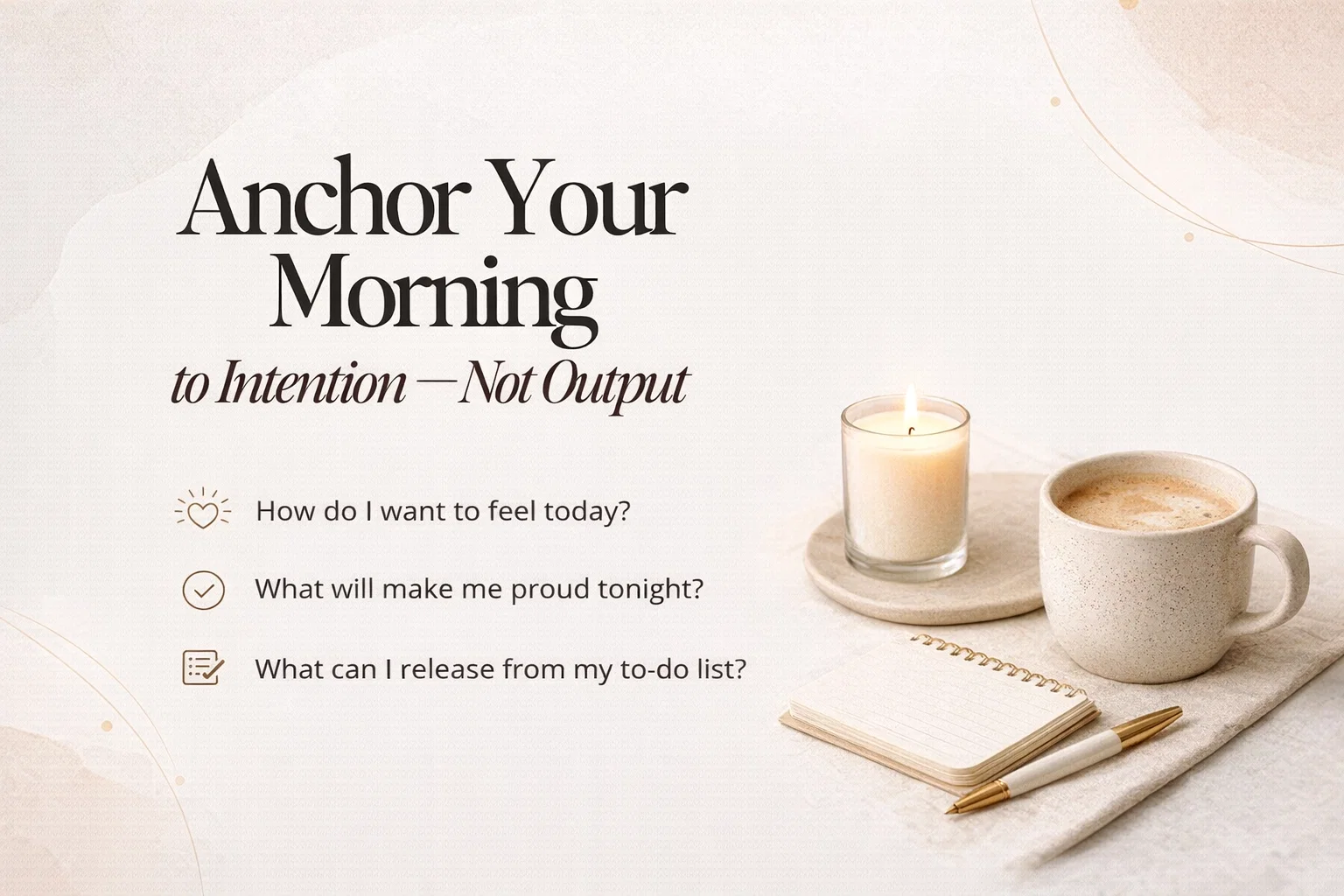
How Do I Want to Feel Today?
Most of our planning revolves around what we want to do, but we rarely consider how we want to feel. Feelings are the fuel for our actions. If you want to feel energized, your choices for food and movement will naturally align with that desire. If you want to feel calm, you might approach a difficult meeting with more patience and less reactivity. By naming the desired emotion, you give your brain a target. You are no longer at the mercy of your environment; you are the architect of your own emotional landscape.
What is One Thing That Would Make Me Proud Tonight?
To-do lists are notorious for being bottomless. Even if we finish ten tasks, we often focus on the five we missed. This question narrows your focus to a single, meaningful victory. This is not necessarily the biggest task on your list, but rather the one that holds the most significance. Perhaps it is finishing a difficult project, or maybe it is simply staying patient with your children during a busy evening. When you identify this one thing, you create a clear path to success. At the end of the day, regardless of what else happened, you can look back and feel a genuine sense of accomplishment.
What Can I Release From My To-Do List?
We often carry a heavy burden of “shoulds” that do not actually serve our goals or our well-being. This part of the check-in is an exercise in radical honesty and self-compassion. Look at your list and identify the items that are draining your energy without providing value. Maybe it is a social obligation you are dreading or a minor chore that can wait until the weekend. By consciously releasing something, you create breathing room. You give yourself permission to move at a slower, more sustainable pace, which ultimately leads to higher quality work and a better mood.
Leading with Clarity and Softness
The phrase “clarity and softness” might seem contradictory in a world that prizes “grind and grit,” but they are actually two sides of the same coin. Clarity gives you the vision to know where you are going, while softness gives you the grace to get there without breaking yourself. When you move through your day with clarity, you are efficient and decisive because you aren’t second-guessing your priorities. When you move with softness, you are resilient. You can handle setbacks without spiraling into frustration because you are anchored in your internal intention.
This approach allows you to step into the role of your highest self. Your highest self is the version of you that is wise, patient, and focused. It is the part of you that recognizes that your worth is inherent and not dependent on your inbox count. By starting the day with an intentional check-in, you invite this version of yourself to take the lead.
Practical Tips for a Mindful Morning
Implementing these changes does not require a total lifestyle overhaul. It is about small, consistent shifts that build over time. Here are a few ways to ensure your morning anchor holds firm:
- Keep Technology at Bay: Try to wait at least thirty minutes after waking up before checking your phone. This prevents other people’s priorities from invading your mind before you have had a chance to set your own.
- Create a Dedicated Space: Whether it is a favorite chair or a specific corner of your kitchen, having a physical spot for your check-in helps signal to your brain that it is time to be present.
- Write It Down: While a mental check-in is good, writing your answers in a journal is better. It externalizes your intentions and makes them feel more tangible and committing.
- Incorporate Sensory Elements: Light a candle, sip a warm cup of herbal tea, or listen to soft music. Engaging your senses helps pull you out of your head and into your body.
The Long-Term Benefits of Intentionality
Over time, these daily check-ins transform your relationship with productivity. You begin to notice patterns in your energy and moods, allowing you to plan your weeks more effectively. You become more discerning about where you spend your time and who you spend it with. Most importantly, you develop a deep sense of self-trust. You know that no matter what the day throws at you, you have the tools to return to your center.
This practice also has a positive impact on the people around you. When you show up to work or to your family with clarity and softness, you set a new standard for interaction. You are less likely to project your stress onto others and more likely to offer genuine support and presence. Your intentionality becomes contagious, encouraging others to also consider how they want to feel and show up in the world.
Conclusion: Your Morning is Your Own
Your morning is the most precious real estate in your day. It is the quiet before the storm, the blank canvas before the first stroke of paint. By choosing to anchor your morning in intention, you are making a powerful statement that your well-being matters more than your output. You are choosing to lead with your heart and mind rather than just your hands.
Remember that this is a practice, not a destination. Some days will feel easier than others, and that is perfectly okay. The goal is not perfection, but a consistent return to yourself. As you begin to integrate the 3-part energy check-in into your routine, notice the subtle shifts in your perspective. Watch how you begin to move through the world with a bit more ease, a bit more focus, and a lot more joy. You deserve to live a life that feels as good on the inside as it looks on the outside, and it all starts with how you choose to wake up.