7 Phrases to De-escalate Conflict Improve Communication in Relationships
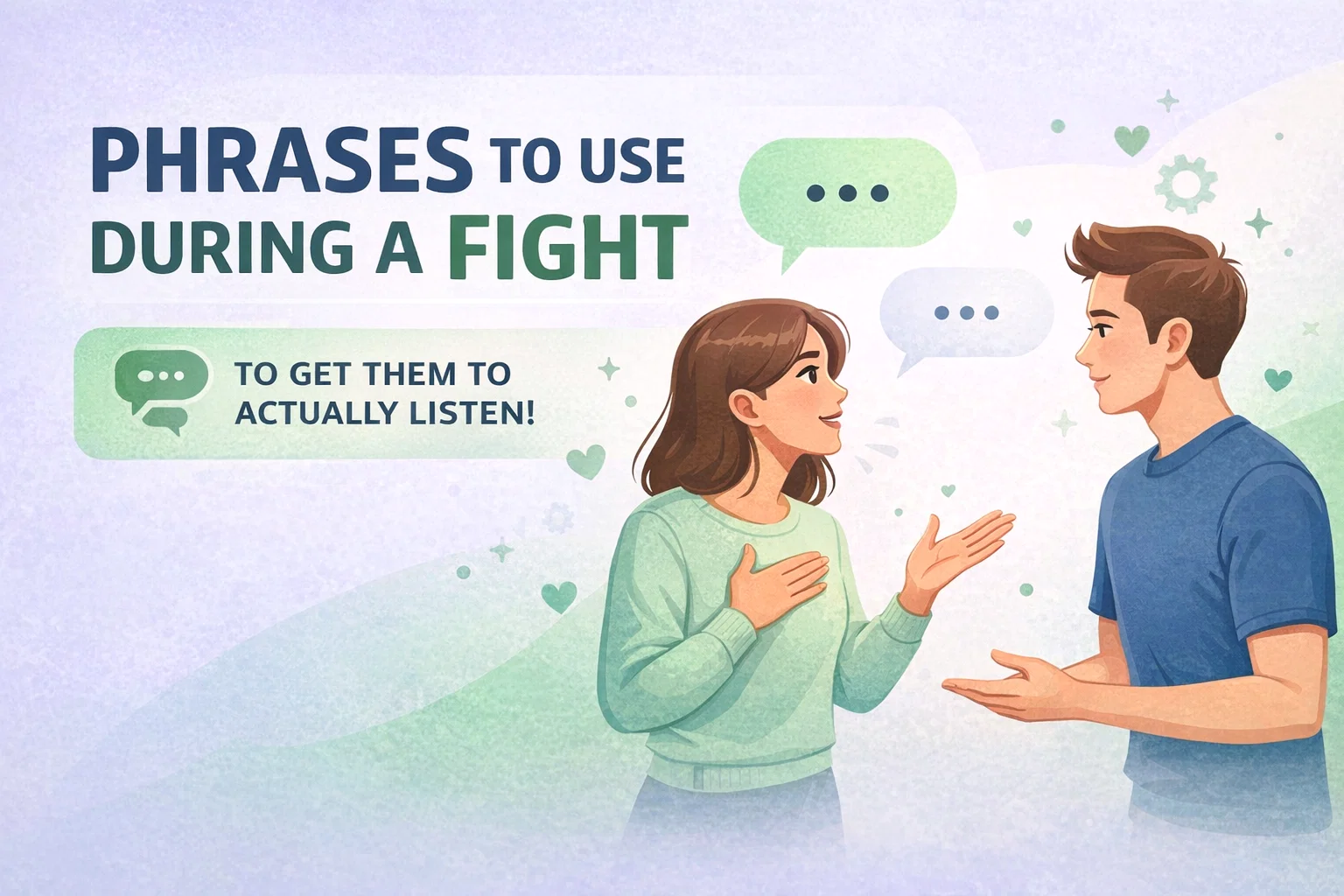
Conflict is an inevitable part of every meaningful relationship. Whether you are navigating the early stages of a new romance or you have been married for decades, disagreements are going to happen. However, the difference between a relationship that thrives and one that crumbles often comes down to a single factor: communication. When emotions run high and the heat of the moment takes over, it is incredibly easy to fall into defensive patterns, pointing fingers and raising voices. But what if you could change the entire trajectory of a fight with just a few carefully chosen words? The image we are looking at today highlights seven powerful phrases that act as a bridge, moving two people from a state of war to a state of collaborative problem-solving.
The Psychology of Conflict: Why We Stop Listening
To understand why these phrases work so well, we first have to look at what happens to the human brain during a fight. When we feel attacked or criticized, our nervous system often enters a state of fight or flight. In this state, the prefrontal cortex, which is the part of the brain responsible for logic and empathy, essentially goes offline. We become hyper-focused on self-protection. This is why you might feel like you are talking to a brick wall when you are arguing with your partner. They aren’t actually hearing your points because their brain is busy scanning for the next threat.
The phrases highlighted in our visual guide are designed to bypass this biological defense mechanism. By using “I” statements and emphasizing connection over correction, you signal to your partner’s nervous system that they are safe. When safety is established, the walls come down, and real listening can finally begin. This is the foundation of emotional intelligence in action.
Breaking the Blame Cycle with Impact Statements
One of the most common mistakes people make during a disagreement is focusing on the other person’s intent. Phrases like “You did this to hurt me” or “You always ignore my feelings” are instant triggers for defensiveness. Even if the person did something hurtful, they likely didn’t wake up with the goal of causing pain. When you attack their character or their intent, they will naturally move to defend it.
Shift Focus to Personal Impact
Instead of debating why they did what they did, focus on how it affected you. The phrase “I’m not saying you did this on purpose, I just want to talk about the impact it had on me” is a total game changer. It acknowledges that they might have had good intentions while still holding space for your hurt feelings. This allows your partner to take responsibility for the outcome without feeling like they are being labeled a villain.
Validating the Other Person’s Perspective
Similarly, saying “I know you didn’t mean to hurt me, but this is how it felt on my end” serves as a powerful validation tool. Validation does not mean you agree with everything the other person did. It simply means you recognize their reality while stating your own. This creates a “both/and” environment where two different experiences can exist at the same time without one person having to be wrong for the other to be right.
The Power of the Strategic Pause
Sometimes, a fight gains so much momentum that it feels like a runaway train. The insults start flying, the volume goes up, and the original issue is long forgotten. In these moments, the best thing you can do is hit the brakes. However, how you ask for that break matters immensely. If you just walk away, it can feel like abandonment. If you shout “Be quiet,” it adds fuel to the fire.
Talking With, Not Against
The phrase “Can we pause for a second? I want to talk with you, not against you” is one of the most loving things you can say in the middle of a heated moment. It reminds both parties that you are on the same team. It reframes the conflict from a competition to a collaboration. By explicitly stating that you want to work “with” them, you invite them back into a partnership.
Addressing the Hard Stuff Directly
Avoidance is the silent killer of relationships. Many people choose to “brush things under the rug” because they are afraid that bringing them up will cause a fight. The problem is that those issues don’t disappear; they ferment into resentment. Over time, that rug becomes a mountain that you can no longer walk over.
Choosing Honesty Over Comfort
Using the phrase “I get that this is hard to talk about, but I don’t want to brush it under the rug” shows a high level of maturity. It acknowledges the discomfort of the situation while prioritizing the health of the relationship. It says that the relationship is worth the temporary awkwardness of a tough conversation. This builds trust because your partner knows you won’t let small problems grow into irreparable ones.
Reframing the Goal: Figure It Out Together
In many arguments, we subconsciously adopt a mindset where there is a winner and a loser. We want to “win” the point or prove that we are right. But in a relationship, if one person loses, the whole relationship loses. The goal should never be victory; it should be resolution and understanding.
The “Us vs. The Problem” Mentality
A simple phrase like “I don’t want us to be on opposite sides, I want us to figure this out together” physically and mentally shifts the dynamic. It moves you from a face-to-face confrontation to a side-by-side partnership. Imagine the problem is sitting on a table in front of both of you. Instead of looking at each other, you are both looking at the problem and trying to solve it. This is the hallmark of a secure attachment style.
The Role of Gratitude in Conflict
It sounds counterintuitive to express gratitude when you are upset, but it is actually one of the most effective ways to keep a conversation productive. When your partner listens to something difficult without interrupting or getting angry, they are doing emotional work. Acknowledging that work encourages them to keep doing it.
Positive Reinforcement
Saying “I get that this is hard to hear, and I appreciate you listening” acts as positive reinforcement. It rewards the behavior you want to see. When people feel appreciated for their effort, they are much more likely to remain engaged and open-minded. It softens the blow of the “hard truth” you might be sharing and reminds them that you see their effort, not just their mistakes.
Leading with Care, Not Blame
At the end of the day, most of our frustrations in relationships stem from a deep desire to feel loved and connected. We bring things up because we care. If we didn’t care, we would just walk away. However, that care often gets lost in the delivery. We lead with criticism, and the love gets buried.
Setting the Intention Early
The final phrase in our guide, “I’m bringing this up because I care, not because I want to blame you,” sets a clear intention right at the start. It provides a “why” for the conversation. When your partner understands that your motivation is love and the desire for a better connection, they are much less likely to feel attacked. It frames the entire discussion as an act of intimacy rather than an act of aggression.
Putting These Phrases Into Practice
Knowing these phrases is one thing; using them when you are actually angry is another. It takes practice and a high level of self-awareness. Here are a few tips to help you integrate these communication hacks into your life:
- Start small: Don’t wait for a huge blowout to try these. Use them during minor disagreements to build the habit.
- Watch your tone: Words are only about 7 percent of communication. If you say these phrases with sarcasm or a raised voice, they won’t work. The energy behind the words must match the sentiment.
- Give grace: Your partner might not respond perfectly the first time. Keep using these tools anyway. They will likely start to mirror your behavior over time.
- Body language: Try to keep an open posture. Avoid crossing your arms or rolling your eyes, as these are non-verbal signs of defensiveness.
Conclusion: Building a Culture of Respect
Effective communication is not about never having a fight; it is about fighting “fair.” It is about ensuring that even when you disagree, the foundation of respect and love remains unshaken. By incorporating these seven phrases into your vocabulary, you are doing more than just winning an argument. You are building a culture of safety, vulnerability, and deep connection within your relationship.
Remember that the goal of every conversation should be to understand more and judge less. When you stop trying to “win” and start trying to connect, everything changes. These phrases are your toolkit for a happier, healthier, and more communicative life with the people you love most. Next time things feel tense, take a deep breath, remember you are on the same team, and choose words that heal rather than harm.
Would you like me to create a specific set of responses for a different scenario, such as workplace conflict or setting boundaries with family?