8 Mind-Blowing Family Psychology Facts That Explain Everything You Feel
Understanding the intricate web of family dynamics is like holding a mirror to our own souls. The way we were raised, the environment we grew up in, and the specific interactions we had with our parents and siblings serve as the blueprint for our adult personalities. Psychology offers a fascinating lens through which we can view these early experiences, helping us decode why we react to stress the way we do, how we navigate relationships, and even how we view our own self-worth. By diving into the hidden truths of family psychology, we can begin to bridge the gap between our past and our present, unlocking a deeper sense of self-awareness that allows for genuine growth and healing.
The Hidden Impact of Strict Parenting
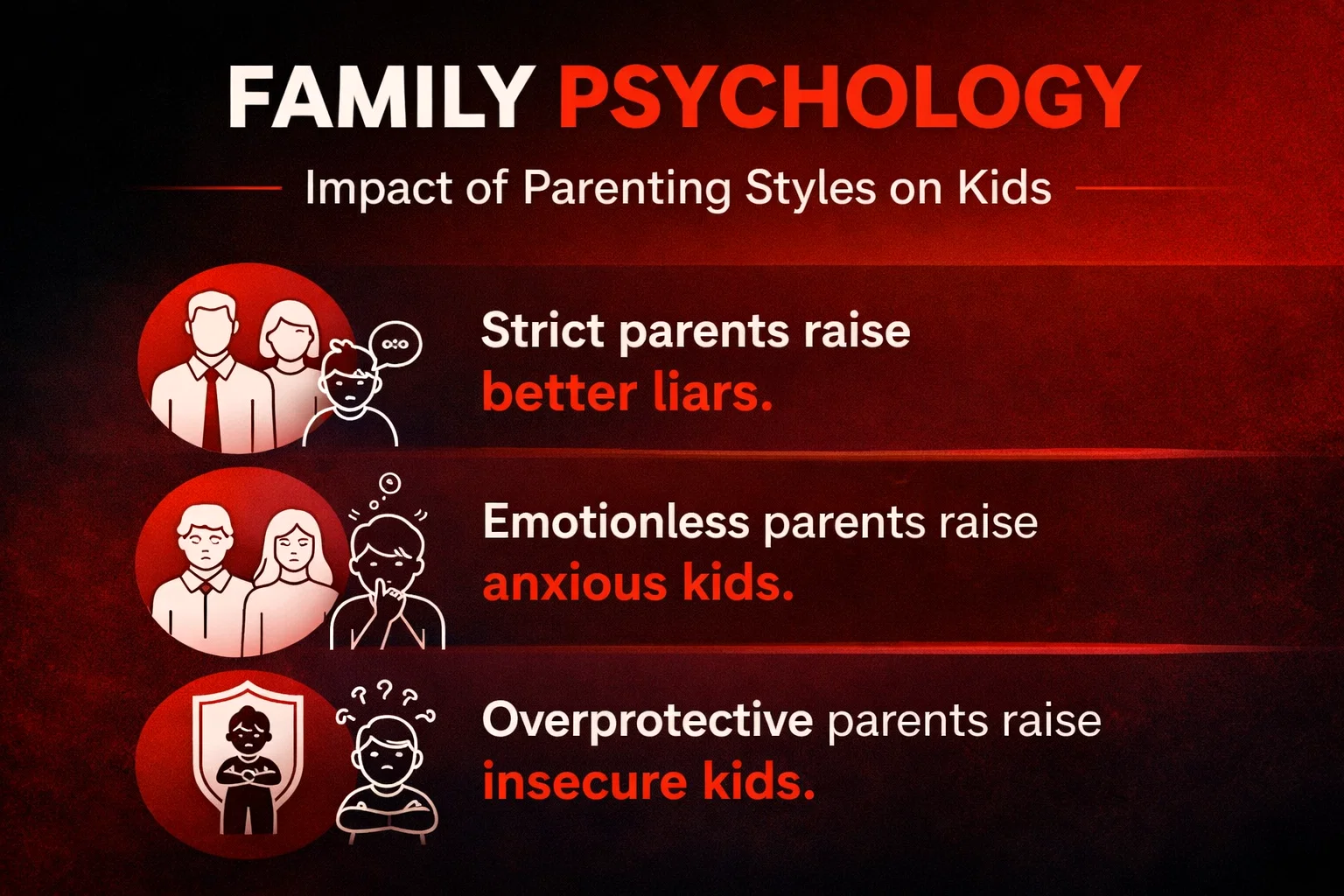
Many parents believe that a strict, authoritarian approach is the best way to ensure their children grow up to be disciplined and successful. However, the psychological reality is often quite different. When children are raised in an environment where rules are rigid and the fear of punishment is high, they often develop a unique set of survival skills. One of the most common outcomes is that strict parents inadvertently raise kids who are better liars. This happens because the child learns that honesty leads to trouble, while a well-crafted deception allows them to avoid conflict and maintain their autonomy.
The Development of Sophisticated Defense Mechanisms
When a child is constantly under a microscope, they become hyper-aware of their parents’ expectations. To protect themselves, they refine their ability to read social cues and manipulate information. While this might look like “getting away with things” in the short term, it can lead to a long-term habit of hiding one’s true self. In adulthood, these individuals might struggle with vulnerability because they have spent years perfecting a mask of compliance while keeping their true thoughts and feelings hidden away.
Emotionless Parents and the Highly Sensitive Child
Growing up with parents who are emotionally distant or unavailable can be a confusing experience. Children are naturally wired to seek emotional resonance and validation from their caregivers. When that resonance is missing, the child’s emotional system often goes into overdrive. Psychology suggests that emotionless parents often raise kids who feel everything too much. Because their external environment was a vacuum of feeling, their internal world becomes incredibly loud and intense as they try to compensate for the lack of connection.
Navigating Emotional Overwhelm as an Adult
As these children grow into adults, they may find themselves feeling deeply affected by the emotions of others. They become “empaths” not necessarily by choice, but because they had to become experts at sensing subtle shifts in their parents’ moods just to feel safe. This heightened sensitivity can be a superpower if managed well, but without self-care, it can lead to emotional exhaustion. Learning to set boundaries and distinguish between one’s own feelings and the feelings of others is a crucial step in the healing process for those raised in emotionally cold homes.
Praising Mistakes: Building Fearless Risk Takers
On the flip side of strictness is an environment that celebrates the learning process. Parents who praise mistakes rather than punishing them are doing something revolutionary for their child’s development. They are teaching the child that failure is not a dead end but a vital piece of information. This approach fosters a growth mindset, raising kids who grow up to be fearless risk-takers. These individuals aren’t afraid to try new things because their self-worth isn’t tied to being perfect on the first try.
The Benefits of a Failure-Friendly Environment
When a child knows they won’t be shamed for a mistake, they are free to explore, innovate, and push boundaries. In the professional world, these are the entrepreneurs, the creatives, and the leaders who aren’t paralyzed by the fear of what might go wrong. They view challenges as puzzles to be solved. By shifting the focus from the outcome to the effort, parents provide their children with the ultimate tool for success: resilience.
Overprotective Parenting and the Self-Esteem Struggle
Overprotection often comes from a place of deep love and a desire to keep a child safe from the world’s harsh realities. However, by “bubble-wrapping” their children, parents can unintentionally send a message that the child is not capable of handling things on their own. This often results in kids with shaky self-esteem. If a child is never allowed to face obstacles or make their own decisions, they never get the chance to build “competence,” which is the foundation of true confidence.
Breaking Free from the Safety Net
In adulthood, those who were overprotected may find themselves feeling anxious when faced with new responsibilities. They might constantly seek reassurance from others because they haven’t learned to trust their own judgment. Building self-esteem in this context involves taking small, calculated risks and proving to oneself that they can survive a mishap. It is about moving from a mindset of “I need help” to “I can handle this.”
Dads, Moms, and the Foundation of Self-Worth
The relationship between parents serves as the first model for what love and respect look like. Specifically, the way a father treats a mother has a profound impact on a daughter’s psychological development. Dads who mistreat moms often raise daughters who doubt their own worth. Because the father figure is usually the first example of “the masculine” in a girl’s life, his behavior sets the standard for how she expects to be treated by others later on.
Redefining Value and Healthy Relationships
When a daughter witnesses disrespect at home, she may unconsciously internalize the idea that her needs and feelings are secondary. Healing this wound involves a conscious effort to deconstruct those early observations. It requires recognizing that a parent’s behavior is a reflection of their own struggles and not a measure of the child’s value. Developing a strong sense of self-worth independent of male validation is a transformative journey for many women coming from such backgrounds.
The Youngest Child: Underestimated Geniuses
Birth order has long been a topic of interest in family psychology. The youngest child is often viewed as the “baby” of the family, someone to be looked after and sometimes even coddled. However, this positioning gives the youngest child a unique advantage. They grow up observing the mistakes and successes of their older siblings. This constant stream of observation often turns them into underestimated geniuses.
The Power of Observation and Adaptation
Because they are often left to their own devices while parents focus on the older kids’ bigger milestones, the youngest child develops a keen sense of social intelligence. They learn how to navigate complex family dynamics and negotiate for what they want. While they might be seen as less serious, they are often the most adaptable and creative thinkers in the room. They know how to work the system because they have been watching it from the sidelines their entire lives.
The Long Road from Neglect to Seeking Attention
Being ignored or neglected as a child is a profound form of trauma. Unlike active abuse, neglect is the absence of something necessary: attention and care. Children who are ignored often grow into adults who are always seeking attention. This isn’t necessarily a “vain” trait; rather, it is a survival mechanism. They are trying to fill a void that was left open during their formative years, desperately looking for the validation they never received.
Healing the Need for Constant Validation
For those who grew up feeling invisible, the journey to health involves learning how to give themselves the attention they crave. It means moving away from seeking external “likes” or applause and moving toward internal satisfaction. By acknowledging the “inner child” who just wanted to be seen, these adults can begin to build a stable sense of self that doesn’t depend on the constant gaze of others.
Moving Toward Awareness and Healing
The patterns we inherit from our families are powerful, but they are not a life sentence. Understanding the psychology behind your upbringing is the first step toward rewriting your story. Whether you were the child of strict parents, the ignored middle child, or the overprotected youngest, your history has shaped you, but your awareness is what will define your future.
Practical Steps for Psychological Growth
- Self-Reflection: Journaling about your childhood experiences can help you identify recurring patterns in your current life.
- Therapy and Support: Working with a professional can provide the tools needed to process early childhood wounds and build healthier coping mechanisms.
- Mindfulness: Staying present allows you to catch yourself before you fall into old, reactive habits that were formed in your youth.
- Setting Boundaries: Learning to say no to family dynamics that no longer serve you is essential for your mental health.
Conclusion: The Journey of Self-Discovery
Family psychology is a vast and complex field, but at its heart, it is about understanding the human connection. Our parents did the best they could with the tools they had, but that doesn’t mean we have to stay stuck in the shadows of their limitations. By shining a light on these psychological truths, we empower ourselves to live more authentically. We can choose to keep the strengths our families gave us while consciously letting go of the habits that hold us back. After all, it is psychology, and understanding the “why” is the greatest gift we can give to ourselves. Every step you take toward understanding your past is a step toward a brighter, more intentional future where you are the author of your own life.