Narcissists Born or Made 9 Core Roots of Narcissism Explained Psychology Tips
Understanding the human psyche is often like peeling back the layers of an onion. When we encounter complex personality traits like narcissism, the immediate question that arises for many is whether these behaviors are baked into a person’s DNA or if they are forged through the fires of their upbringing. This debate of nature versus nurture is at the heart of modern psychology, especially as we seek to understand the origins of grandiosity, emotional unavailability, and the need for constant external validation. By looking closely at the developmental roots of these traits, we can move away from simple labels and toward a deeper comprehension of how emotional armor is built over time.
The Fundamental Question: Nature or Nurture
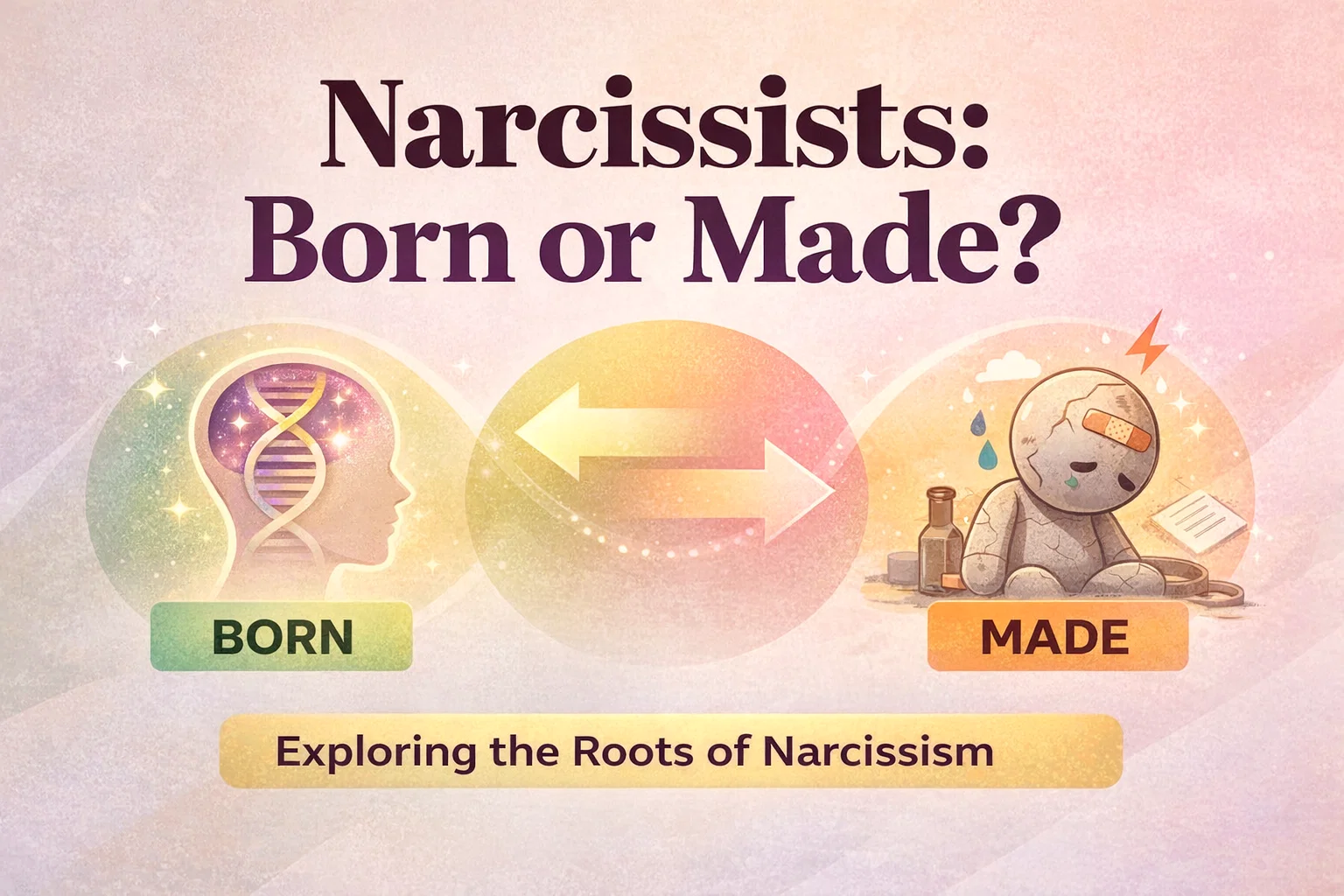
For decades, researchers have looked into the “Born or Made” dilemma. While some people seem to have a natural predisposition toward higher emotional reactivity or sensitivity, the vast majority of traits associated with narcissism are developed as survival mechanisms. It is rarely a single event that shapes a personality, but rather a consistent environment that rewards certain behaviors while punishing others. When a child’s environment feels unpredictable or emotionally unsafe, they must find ways to protect their core self. This protection often manifests as the very traits we identify as narcissistic in adulthood.
The Role of Temperamental Sensitivity
While much of narcissism is “made,” there is a biological component that acts as the foundation. Some children are born with a higher degree of temperamental sensitivity. This means they might experience emotions more intensely, have a stronger need for mirroring from their caregivers, and be more susceptible to feelings of shame. In a supportive, attuned environment, this sensitivity can become a superpower of empathy and creativity. However, in an environment that lacks emotional safety, this same sensitivity makes the child more vulnerable to the “made” factors that contribute to narcissistic development.
1. Chronic Shame and the Development of Grandiosity
One of the most significant contributors to narcissistic traits is chronic exposure to shame. When a child is repeatedly subjected to criticism, humiliation, or comparison, their sense of self-worth is constantly under attack. To survive this emotional onslaught, the psyche develops a defense mechanism: grandiosity. This grandiosity acts as a suit of armor. By convincing themselves they are superior or special, the individual creates a barrier that keeps the pain of shame at a distance. It is a tragic paradox where the person appears to have an inflated ego, but underneath that shell lies a deeply wounded child who feels fundamentally inadequate.
The Impact of Emotional Invalidation
Emotional invalidation occurs when a caregiver dismisses or mocks a child’s feelings. If a child is told they are “too sensitive” or that their feelings “don’t matter,” they learn that their internal world is not a safe place. Over time, they stop looking inward for validation and start looking exclusively outward. This creates a lifelong dependency on the opinions and praise of others to feel any sense of stability.
2. The Danger of Suppressed Vulnerability
In many environments where narcissism takes root, vulnerability is treated as a weakness or a liability. If a child is discouraged from expressing sadness, fear, or neediness, they learn to suppress these parts of themselves. This suppression leads to a state of emotional numbness. When you cannot be vulnerable with yourself, it becomes impossible to be truly intimate with others. This avoidance of intimacy is a hallmark of narcissistic relationships, as true closeness requires a level of exposure that feels life-threatening to someone who has been taught that vulnerability leads to punishment.
3. The Missing Piece: Lack of Emotional Repair
Conflict is a natural part of any relationship, but in healthy dynamics, it is followed by repair. This involves an apology, comfort, and an effort to understand what went wrong. When emotional repair is consistently missing, the child experiences “ruptures” that never heal. Without the experience of being comforted after a conflict, the child learns that they cannot rely on others for emotional regulation. They become hyper-independent in a way that is actually a defense against the disappointment of others. This lack of repair fosters an intolerance for vulnerability because they have no roadmap for how to fix things when they go wrong.
4. Being Valued as an Extension Rather than an Individual
Perhaps one of the most subtle ways narcissism is fostered is when a child is valued only as an extension of the caregiver. In these scenarios, the child exists to meet the caregiver’s emotional or image needs. They are praised when they win a trophy or look perfect, but their actual personality and needs are ignored. This creates blurred boundaries. The child learns that their value is performance-based and that they are essentially a tool for someone else’s ego. As adults, they may continue this pattern by viewing others as objects or extensions of themselves, leading to exploitation and entitlement.
5. Control-Based Caregiving and the Search for Safety
When an environment is unpredictable or power-driven, control becomes a substitute for safety. If a child grows up in a home where the rules change based on the caregiver’s mood or where power is used to dominate, they learn that the only way to be safe is to be the one in control. This “control-based” upbringing creates a worldview where life is a zero-sum game: you are either the one exerting power, or you are the one being controlled. This drive for dominance in adulthood is often a lingering attempt to finally feel secure in an unpredictable world.
6. Praise Without Attunement: The Trap of Admiration
It might seem counterintuitive, but constant praise can actually contribute to narcissism if it lacks emotional attunement. When a child is given admiration without emotional presence, they receive “empty calories” of validation. They are told they are amazing, but they don’t feel seen or known. This teaches the child that validation replaces connection. They grow up seeking a constant “fix” of admiration from the world because they never received the actual emotional nourishment of being understood for who they really are.
7. Conditional Attachment and the Externalized Self
Conditional attachment is a form of love that is tied to performance, behavior, or image. It communicates the message: “I will love you if you make me look good.” This makes authenticity feel incredibly unsafe. If the child shows their true self and it doesn’t fit the required image, they risk losing the attachment to their caregiver. To cope, they externalize their self-worth. Their value is no longer internal; it is based on their job title, their appearance, or their social status. This creates a fragile self-esteem that requires constant external reinforcement to survive.
Building a Path Toward Understanding and Healing
Recognizing these nine core roots allows us to see narcissism through a lens of developmental trauma rather than just “bad behavior.” While this doesn’t excuse harmful actions in adulthood, it does provide a framework for why these traits exist. For those who have been affected by narcissistic individuals, understanding these roots can help in setting boundaries and detaching from the emotional chaos. For those who see these traits in themselves, it offers a starting point for deep, transformative work.
Breaking the Cycle
Healing involves addressing the very things that were missing in childhood. This includes practicing emotional repair, allowing for vulnerability, and learning to value oneself for being rather than doing. It requires moving away from the “armor” of grandiosity and leaning into the discomfort of true intimacy. It is a difficult journey, but it is the only way to move from a life of performance to a life of genuine connection.
Conclusion: The Complexity of the Human Heart
The question of whether narcissists are born or made doesn’t have a simple, one-word answer, but the evidence points strongly toward the environment being the primary sculptor. Through chronic shame, suppressed vulnerability, and conditional love, a person learns to hide their true self behind a facade of perfection and control. By understanding these roots, we gain the tools to foster healthier environments for the next generation and more compassionate, informed approaches to mental health today. Knowledge is the first step toward breaking these cycles and building a world where emotional safety and authenticity are the standard, not the exception.