Ideas to Become a Better Person Self-Growth and Mindset Tips for Personal Development
Embarking on a journey toward self-improvement is one of the most rewarding commitments you can make for your mental health and overall happiness. Often, we think of personal growth as a series of massive, life-altering shifts, but the truth is much simpler. It is found in the way we handle a frustrating conversation, the grace we extend to ourselves after a mistake, and the intentional boundaries we set to protect our energy. If you have been feeling a pull to evolve or simply want to feel more aligned with your values, you are in the right place to begin that transformation.
The Power of Internal Dialogue and Self-Compassion
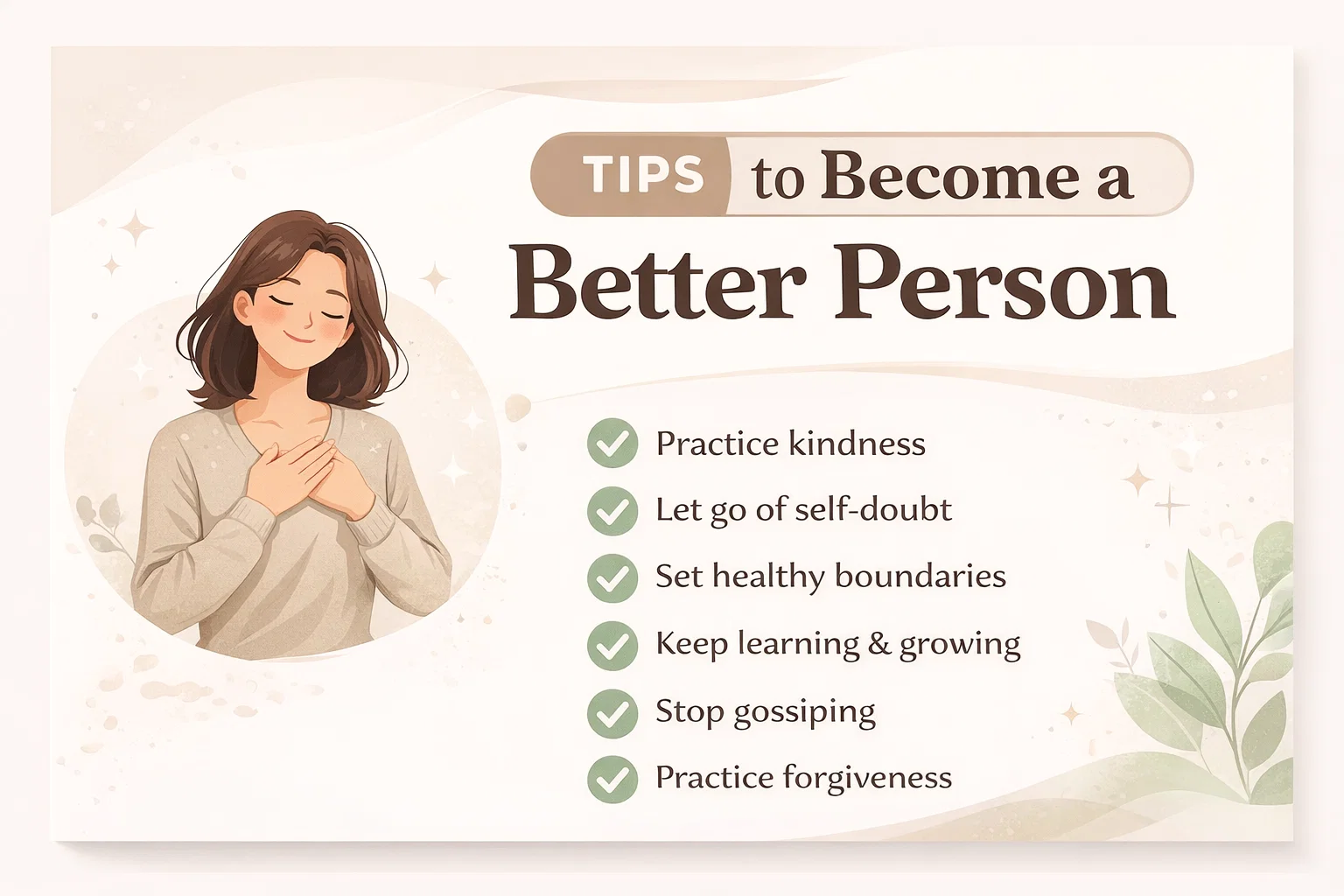
The foundation of becoming a better person starts within the confines of your own mind. We are often our own harshest critics, delivering a level of judgment to ourselves that we would never dream of directing toward a friend or even a stranger. Learning to talk to yourself nicely is not just about toxic positivity; it is about psychological safety. When you replace self-criticism with self-compassion, you create an environment where you are allowed to learn and grow rather than being paralyzed by the fear of failure.
Letting Go of Self-Doubt
Self-doubt acts as an anchor that keeps your potential weighed down. It whispers that you are not ready, not experienced enough, or simply not capable. To become a better version of yourself, you must learn to recognize these thoughts as passing clouds rather than absolute truths. Practice acknowledging the doubt, then proceeding anyway. Every time you act in spite of fear, that anchor loses its grip, allowing you to move forward with newfound confidence.
Cultivating a Growth Mindset in Daily Life
A growth mindset is the belief that your abilities and intelligence can be developed through dedication and hard work. This perspective transforms every challenge into an opportunity for education. When you embrace this way of thinking, you stop seeing “setbacks” and start seeing “data.” You realize that you are a work in progress, and that realization is incredibly freeing. It allows you to keep learning without the heavy burden of needing to be perfect right out of the gate.
The Importance of Lifelong Learning
The moment we stop learning is the moment we stop growing. Keeping your mind active and curious is a key trait of people who consistently evolve. This does not always mean formal education; it could be as simple as reading a book that challenges your worldview, practicing a new hobby, or listening deeply to someone whose life experience differs from yours. Staying curious keeps your heart open and your ego in check.
Navigating Social Dynamics with Integrity
How we interact with the world around us is the most visible reflection of our character. In a digital age where outrage is a currency, choosing not to entertain drama is a radical act of self-care. Drama drains your mental resources and pulls you away from your goals. By staying out of the fray and refusing to participate in gossip, you preserve your integrity and create a reputation as someone who is trustworthy and grounded.
No More Gossiping: A Path to Trust
Gossip might feel like a quick way to bond with others, but it actually builds a foundation of distrust. If someone knows you will talk about others behind their back, they instinctively know you will do the same to them. Transitioning away from gossip allows you to have more meaningful, high-vibe conversations. Focus on ideas, dreams, and positive experiences instead of the flaws of others.
Establishing Healthy Boundaries
You cannot be a “better person” if you are constantly burnt out because you cannot say no. Healthy boundaries are the fences that keep your garden beautiful. They are not meant to shut people out, but to show them where the door is. By clearly communicating what you will and will not tolerate, you prevent resentment from building up, which ultimately makes you a kinder and more present friend, partner, and colleague.
The Art of Appreciation and Kindness
Regularly acknowledging and appreciating the people in your life is a simple habit with profound effects. Everyone wants to feel seen and valued. A quick text to a friend saying you appreciate their support, or a genuine thank you to a coworker, can ripple out and improve their entire day. These small acts of kindness cost nothing but provide an immense return on investment for your relationships.
Performing Small Acts of Kindness
Kindness does not always require a grand gesture. It is in the small things: holding the door for someone, offering a sincere compliment, or leaving a positive review for a local business. These actions shift your focus from your own needs to the needs of the community, fostering a sense of connection and purpose that is essential for personal fulfillment.
Managing Your Physical and Mental Space
Our external environment often mirrors our internal state. If you are feeling overwhelmed, take a look at your physical surroundings. Reorganizing your closet or decluttering your workspace is more than just a chore; it is a symbolic way of saying “out with the old, in with the new.” It clears the stagnant energy and makes room for fresh ideas and better habits to take root.
Stop Assuming the Worst
Pessimism is a defense mechanism, but it is one that keeps you in a state of constant anxiety. When you stop assuming the worst about people’s intentions or future outcomes, you lower your stress levels significantly. Assume that people are doing the best they can with the tools they have. This shift in perspective allows you to approach life with curiosity rather than defensiveness.
The Hard Work of Forgiveness and Patience
Two of the most difficult yet essential traits to develop are patience and forgiveness. Cultivating patience means understanding that things often happen on a timeline that is not your own. It requires a level of trust in the process of life. Whether it is waiting in traffic or waiting for a career breakthrough, staying calm in the face of delay is a superpower.
Practicing Forgiveness and Apologizing
Forgiveness is not about letting someone off the hook for bad behavior; it is about releasing yourself from the burden of anger. Holding onto a grudge is like drinking poison and expecting the other person to suffer. Similarly, having the humility to apologize when you are wrong is a hallmark of emotional maturity. A sincere apology shows that you value the relationship more than your own ego.
Conclusion: The Journey of Continuous Evolution
Becoming a better person is not a checklist that you complete once and then forget. It is a daily practice of choosing growth over comfort and kindness over convenience. By focusing on these core pillars—mindset, integrity, boundaries, and kindness—you create a life that feels authentic and deeply satisfying. Remember to be patient with yourself during this process. Some days will be easier than others, but every small step forward is a victory worth celebrating. Start today by picking just one area to focus on, and watch how the rest of your life begins to transform in response.
Would you like me to generate some specific Python code to help automate your WordPress posting schedule for these articles?