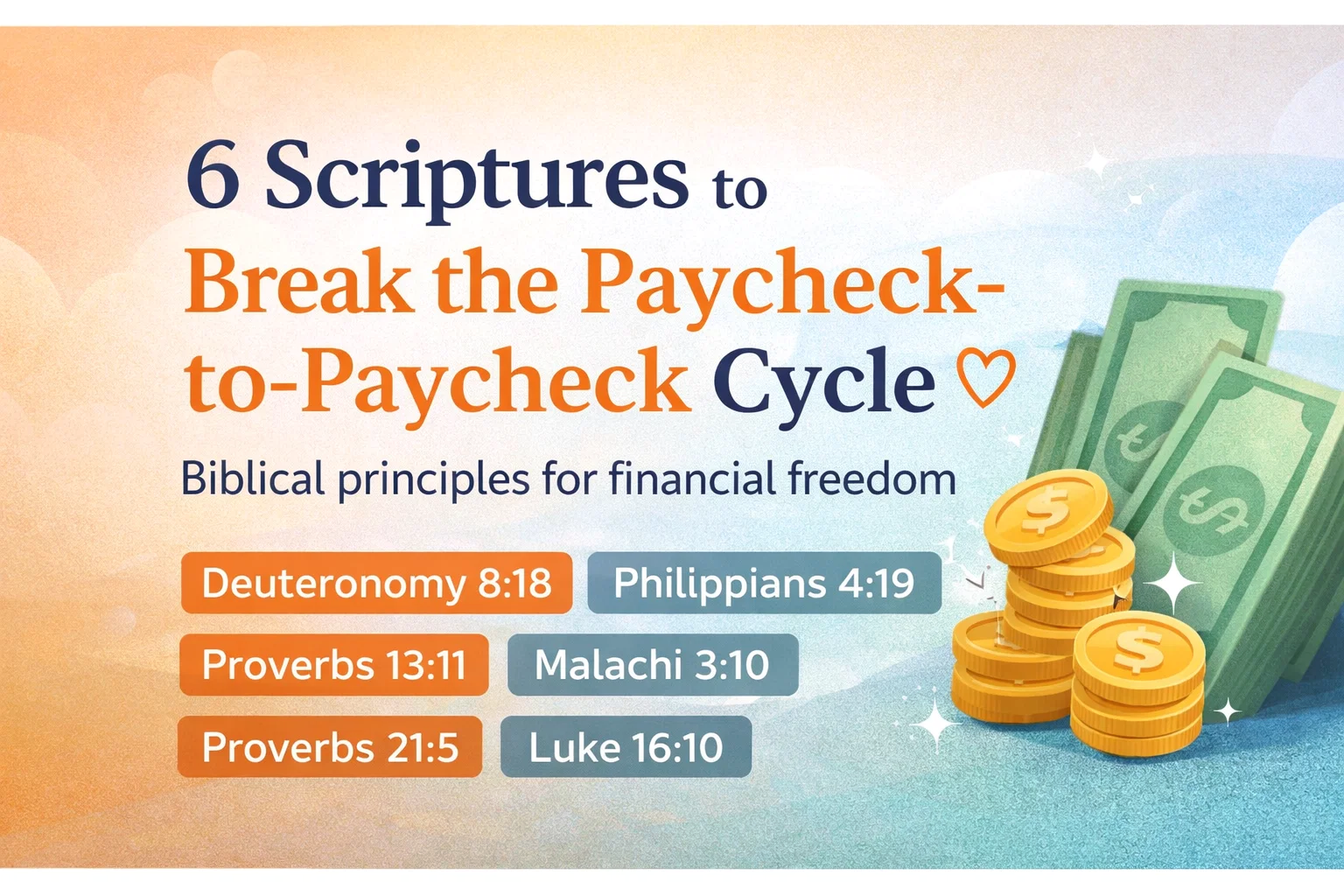
6 Scriptures to Break the Paycheck-to-Paycheck Cycle Biblical Financial Freedom Tips
Breaking free from the cycle of living paycheck to paycheck is a journey that requires more than just a better spreadsheet or a side hustle. It requires a fundamental shift in how we perceive resources, stewardship, and provision. For many, the weight of financial stress feels like an unending loop where every earned dollar is already spoken for before it even hits the bank account. However, there is a profound sense of peace and direction that comes from aligning your financial habits with timeless spiritual principles. By looking at ancient wisdom through a modern lens, we can find the discipline and the hope necessary to transform our economic reality.
The image of these six specific scriptures serves as a powerful reminder that financial health is not just about the numbers. It is about the heart, the mind, and the spirit. When we ground our financial goals in these truths, we move away from a mindset of scarcity and toward a life of intentionality and abundance. Let us dive deep into how these specific biblical foundations can help you break the cycle once and for all.
The Foundation of Wealth and Recognition
To change your financial trajectory, you must first understand the source of your ability to create value. Deuteronomy 8:18 reminds us to remember the Lord our God, for it is He who gives us the power to get wealth. This is a vital starting point because it removes the ego and the anxiety often associated with money. When we recognize that our talents, our health, and our opportunities are gifts, we approach our work with a sense of gratitude rather than desperation.
Shifting from Scarcity to Stewardship
A paycheck to paycheck cycle is often fueled by a scarcity mindset. This is the constant fear that there will never be enough. By acknowledging that your capacity to earn is a divine gift, you can transition into the role of a steward. A steward does not just spend; a steward manages resources with purpose. This shift allows you to look at your income as a tool for building a legacy rather than just a means to pay the next utility bill.
Trusting in Provision Amidst Financial Stress
One of the most quoted verses in times of need is Philippians 4:19, which assures us that God will supply every need according to His riches in glory. While this is incredibly comforting, it also challenges us to define the difference between our needs and our wants. Breaking the cycle often requires a period of sacrifice where we prioritize the essentials so that we can find stability.
Trusting in provision does not mean being passive. It means having the emotional and spiritual stability to make rational financial decisions. When you are not operating out of a place of panic, you are less likely to rely on high interest credit cards or payday loans to cover gaps. You begin to believe that a way out is possible, which is the first step toward actually finding that way out.
The Power of Diligence and Incremental Growth
In a world of get rich quick schemes and social media influencers flaunting overnight success, Proverbs 13:11 provides a sobering and necessary truth: wealth gained hastily will dwindle, but whoever gathers little by little will increase it. This is the golden rule of breaking the paycheck cycle. It is rarely a single event that changes your life; it is the accumulation of small, disciplined choices over time.
The Strategy of Little by Little
- Micro Savings: Even if you can only save ten dollars a week, the act of saving creates a psychological win that breaks the habit of spending everything you earn.
- Debt Reduction: Attacking small debts first builds momentum, proving to yourself that you are capable of changing your balance sheet.
- Skill Building: Investing a small amount of time each day into learning a new skill increases your value in the marketplace over time.
The incremental approach removes the overwhelming nature of financial recovery. You do not have to fix everything today. You just have to gather a little bit more today than you did yesterday.
Opening the Windows of Heaven through Generosity
It sounds counterintuitive to talk about giving when you feel like you do not have enough for yourself, but Malachi 3:10 introduces the principle of the tithe and the promise of overflowing blessings. This scripture challenges the believer to test the principle of generosity. From a practical standpoint, being generous breaks the grip that money has over your emotions. It proves that you are in control of your money, rather than your money being in control of you.
When you practice generosity, even in small amounts, it forces you to organize your finances. You cannot be intentionally generous if you do not know where your money is going. This naturally leads to better budgeting, more awareness of spending habits, and a more disciplined lifestyle. The spiritual promise is an open window of blessing, and the practical result is a more focused and controlled financial life.
Planning and the Danger of Haste
Proverbs 21:5 states that the plans of the diligent lead surely to abundance, but everyone who is hasty comes only to poverty. This is a direct endorsement of the most important tool in your financial arsenal: the budget. Diligence in this context means sitting down and telling your money where to go instead of wondering where it went at the end of the month.
Avoiding the Haste Trap
Haste manifests in many ways in our modern economy. It is the impulse buy at the checkout line, the subscription you signed up for without thinking, and the luxury item purchased on a whim to soothe a bad day. These hasty decisions are the primary reason the paycheck cycle continues. By implementing a diligent plan, you create a buffer between your impulses and your actions. Abundance is the result of a series of well planned, diligent steps taken over months and years.
Integrity in the Small Things
Finally, Luke 16:10 tells us that one who is faithful in a very little is also faithful in much. Many people wait until they have a high salary to start practicing good financial habits. They tell themselves that they will start saving or giving once they reach a certain income bracket. However, the cycle is broken at the level of the very little.
If you cannot manage one thousand dollars with integrity and wisdom, you will not be able to manage ten thousand dollars. The habits you form while you are struggling are the same habits that will sustain you when you are thriving. Faithfulness in the small things means tracking every dollar, being honest about your debts, and staying committed to your goals even when progress feels slow.
Creating a Daily Practice for Financial Freedom
Knowing these scriptures is one thing, but applying them to the daily grind of bills and expenses is another. To truly break the cycle, you must integrate these truths into your routine. This involves a combination of spiritual reflection and practical action. You might start your morning by meditating on the idea of stewardship, and then spend ten minutes reviewing your bank transactions from the previous day.
Visual reminders, like the sticky note in the image, can be incredibly effective. Placing these references on your car dashboard, your bathroom mirror, or inside your wallet serves as a constant nudge to stay the course. When you are tempted to make a hasty purchase, seeing Proverbs 21:5 can provide that split second of clarity needed to walk away.
Overcoming the Emotional Hurdles of Debt
The paycheck to paycheck cycle is often accompanied by a heavy blanket of shame. This shame can make it difficult to even look at your bank account. However, these scriptures offer a path that is free from condemnation. They provide a framework for growth and restoration. Understanding that your value is not tied to your net worth allows you to face your financial reality with courage.
As you apply these principles, you will likely encounter setbacks. There will be unexpected car repairs or medical bills that seem to reset your progress. In those moments, returning to the promise of provision in Philippians 4:19 is essential. It allows you to stay resilient. Resilience is the secret ingredient that turns a temporary setback into a minor detour on the road to total financial freedom.
Conclusion: A New Chapter of Stewardship
Breaking the paycheck to paycheck cycle is a profound act of self care and spiritual discipline. It is a declaration that you will no longer be a slave to your circumstances but a master of your resources. By grounding your journey in the wisdom of Deuteronomy, Philippians, Proverbs, Malachi, and Luke, you are building your house on a rock. The winds of economic uncertainty may blow, but your foundation will remain secure.
Take these six scriptures and let them permeate your decision making. Let them guide your budget, inspire your generosity, and calm your anxieties. As you gather little by little and remain faithful in the small things, you will look back and realize that the cycle was not just broken by more money, but by a transformed mind and a diligent heart. Your journey toward abundance starts with the very next choice you make. Embrace the process, trust the principles, and watch as your financial life begins to reflect the peace and order you have always desired.