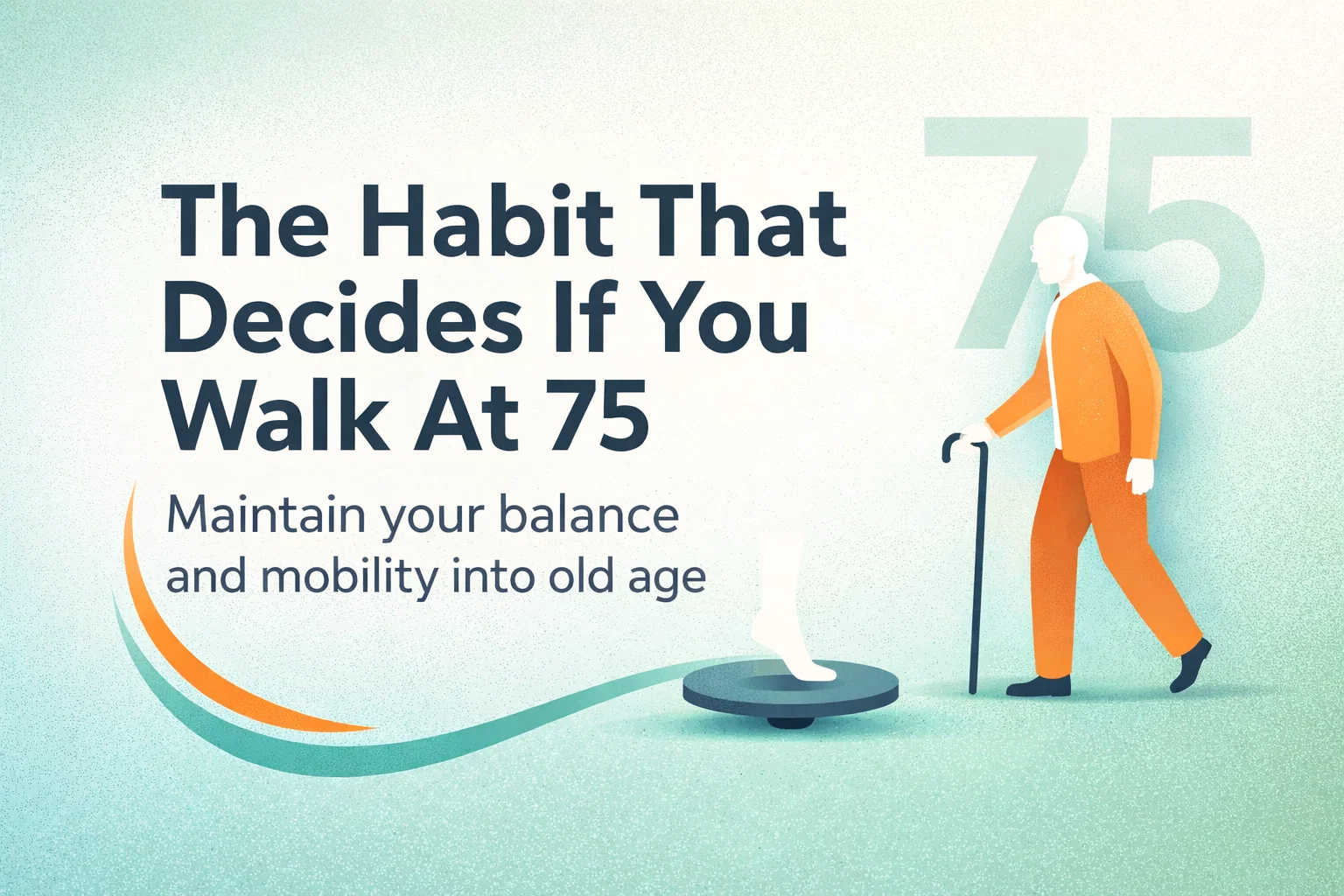
9 Tips for Longevity Mobility Habits to Stay Active and Independent After 75
We often think of aging as a sudden shift that happens when we hit a certain birthday, but the reality is much more subtle. Your ability to walk, climb stairs, and maintain your independence at 75 is being decided right now by the small, seemingly insignificant habits you repeat every day. Longevity isn’t just about adding years to your life; it’s about adding life to your years. If you want to ensure that your future self is mobile, strong, and capable, it is time to look at the functional markers of health that go far beyond what you see in the mirror. From the way you stand to the way you sleep, every choice is a vote for the person you will be decades from now.
The Ultimate Litmus Test: Can You Balance on One Leg?
There is a simple test that can predict your functional age better than a birth certificate: the single-leg balance. If you cannot hold a steady balance on one leg for at least 30 seconds, your body might be aging faster than the calendar suggests. Balance is a complex coordination between your inner ear, your vision, and your proprioception, which is your body’s ability to sense its position in space. As we age, these systems can degrade if they aren’t challenged.
Poor balance is one of the leading indicators of future fall risks. By practicing this one simple move while you brush your teeth or wait for your coffee to brew, you are training your nervous system to remain sharp. This isn’t just about standing still; it is about maintaining the neuromuscular connections that keep you upright when life throws you off balance.
True Strength: The Floor-to-Standing Transition
When we talk about strength, many people visualize heavy deadlifts or bulging biceps. However, true functional strength is defined by your ability to navigate the world with ease. One of the most critical markers of longevity is the ability to get up from the floor without using your hands for support. This movement requires a combination of core stability, leg power, and joint flexibility.
If you find yourself avoiding the floor because it feels too far away or too difficult to get back up, that is a sign that your mobility is beginning to fade. Muscle size is a matter of aesthetics, but the ability to move your own body weight through a full range of motion is the ultimate symbol of freedom and independence. Keeping this skill sharp ensures that a simple trip or a seated activity doesn’t turn into a physical crisis later in life.
The Foundation of Movement: Why Ankle Health Matters
Most age-related falls don’t start with a lack of willpower; they start with weak ankles. Your ankles are the foundation of every step you take. If they are stiff or weak, your gait changes, your knees take on more stress, and your risk of tripping increases exponentially. Simple heel raises, performed every single day, can be a game changer for your long-term mobility.
Strengthening the calves and the small stabilizing muscles around the ankle joint creates a “buffer” against uneven pavement or slippery surfaces. When your ankles are strong, your body can react more quickly to changes in terrain. It is a small investment of time that pays massive dividends in confidence and safety as the years go by.
Wake Up Your Nervous System by Going Barefoot
Modern shoes are marvels of engineering, but they often act like sensory deprivation chambers for our feet. We have thousands of nerve endings in our soles that are designed to communicate with the brain about the ground beneath us. When we wear thick-soled shoes all day, every day, that sensory input is muffled, and our nervous system becomes less responsive.
Walking barefoot, especially on natural surfaces like grass or sand, helps reawaken these neural pathways. It forces the tiny muscles in your feet to engage and strengthens your natural arch. By letting your feet “feel” the world, you improve your posture and your overall sense of balance. Think of it as a daily calibration for your body’s GPS system.
Move First, Scroll Later: Breaking the Morning Stiffness
In our digital age, the first thing many of us do upon waking is reach for a smartphone. This habit does more than just clutter your mind; it can actually stiffen your body. When you spend the first twenty minutes of your day in a hunched position looking at a screen, you are setting a tone of stagnation for your joints and muscles. Your body has been still for hours, and it needs movement to circulate synovial fluid and “grease” the joints.
Making a pact to move before you scroll is one of the best gifts you can give your physical health. Even five minutes of light stretching or a short walk around the house can signal to your nervous system that it is time to be active. Movement acts as a natural lubricant for the body, preventing the chronic stiffness that often accumulates when we prioritize digital consumption over physical presence.
The Protein Rule: Fueling Your Muscles After 40
As we cross the threshold of 40, our bodies change the way they process nutrients. Sarcopenia, or age-related muscle loss, begins to speed up if we aren’t intentional about our intake. One of the most common mistakes people make is drinking coffee on an empty stomach and skipping a high-protein breakfast. Muscle is the “organ of longevity,” and it requires amino acids to maintain its structure.
Prioritizing protein before or alongside your morning coffee helps stabilize blood sugar and provides the building blocks your muscles need to resist breakdown. Whether it is eggs, a high-quality protein shake, or Greek yogurt, getting that early dose of nutrition ensures that your metabolism remains stoked and your strength stays intact. You cannot build a lasting house without the right materials, and you cannot maintain a strong body without adequate protein.
The Midnight Deadline: Why Sleep Quality Peaks Early
We have all heard that we need eight hours of sleep, but the timing of those hours is just as important as the quantity. Most of the body’s physical repair and hormonal regulation happens during the hours before midnight. When you consistently stay up late, you miss out on the peak secretion of growth hormones that facilitate tissue repair and brain detoxification.
Sleeping before 11 PM aligns your body with its natural circadian rhythm. This isn’t just about feeling rested; it is about allowing your biological systems to perform the deep maintenance required to keep you youthful. If you want to wake up feeling vibrant and ready to move, you have to respect the recovery window that nature provided.
Mobility Doesn’t Disappear; It Fades Through Neglect
One of the biggest myths about aging is that we simply “lose” our flexibility and strength overnight. In reality, mobility is a “use it or lose it” commodity. It fades slowly, through days of sitting too long, weeks of skipping stretches, and years of avoiding challenging movements. We don’t stop playing because we grow old; we grow old because we stop playing and moving.
The good news is that the body is incredibly resilient. Even if you haven’t prioritized movement in years, you can start today. Mobility isn’t about being able to do a split; it is about being able to reach the top shelf, tie your own shoes, and walk through a park without pain. It is a slow fade that can be stopped and even reversed with consistent, daily intention.
Cultivating a Mindset of Longevity
To truly change your health outcomes, you have to shift your perspective from short-term fixes to long-term sustainability. It is easy to get caught up in weight loss goals or aesthetic changes, but those are secondary to the goal of functional longevity. When you view your body as a vehicle that needs to last 100 years, your daily habits take on a new level of importance.
This mindset shift allows you to find joy in the process. You aren’t doing heel raises because you have to; you are doing them so you can hike with your grandkids in twenty years. You aren’t eating protein because a diet told you to; you are eating it to protect the muscles that allow you to travel and explore. Every habit mentioned here is a building block for a future filled with energy rather than limitations.
Conclusion: Your Future Self is Counting on You
The path to walking strong at 75 isn’t paved with complex biohacks or expensive equipment. It is built on the foundation of simple, repeatable actions. Balance, strength, nutrition, and rest are the pillars that support a long and vibrant life. By integrating these nine habits into your daily routine, you are taking control of your aging process rather than letting it happen to you.
Remember that health is not a destination, but a continuous journey of self-care and awareness. Start with one habit today, whether it is practicing your balance or going barefoot for ten minutes. Your future self will thank you for the effort you put in now. Stay curious, stay active, and keep moving toward the best version of yourself.
Would you like me to generate a meta description or a list of tags for this WordPress post?