Traditional Irish Soda Bread Recipe Easy 4-Ingredient No-Egg Homemade Bread Tutorial
There is something undeniably magical about the smell of freshly baked bread wafting through a kitchen. It evokes a sense of comfort, heritage, and home that few other scents can match. While many artisan loaves require hours of proofing, specialized starters, and precise temperature controls, the humble Irish Soda Bread stands as a testament to the beauty of simplicity. This rustic, crusty loaf is a cornerstone of Irish culinary history, born from a time when expensive ingredients were scarce but ingenuity was plentiful. If you have ever felt intimidated by yeast or the technical demands of kneading, this is the recipe that will turn you into a confident home baker in less than an hour.
The Fascinating History of Irish Soda Bread
To truly appreciate the flavor of a traditional soda bread, it helps to understand where it came from. Contrary to what many believe, soda bread was not a luxury item. In the mid 1800s, Ireland faced significant economic hardship. Most households did not have access to ovens as we know them today; instead, they cooked over open hearths using heavy iron pots called bastibles. Furthermore, the wheat grown in Ireland at the time was soft wheat, which does not react well with yeast. The introduction of bicarbonate of soda, or bread soda, changed everything. It allowed people to create a rising loaf using the reaction between the alkaline soda and the acidic buttermilk.
The Science Behind the Rise
Unlike standard sandwich bread, which relies on biological fermentation via yeast, soda bread is a product of a quick chemical reaction. When the bread soda meets the lactic acid in the buttermilk, it immediately begins to produce carbon dioxide bubbles. These bubbles expand in the heat of the oven, giving the bread its signature lift. Because this reaction happens so fast, speed is the name of the game. The less you handle the dough, the better the texture will be. Overworking the dough can lead to a dense, tough loaf, so a gentle touch is essential for that perfect crumb.
Deconstructing the Four Essential Ingredients
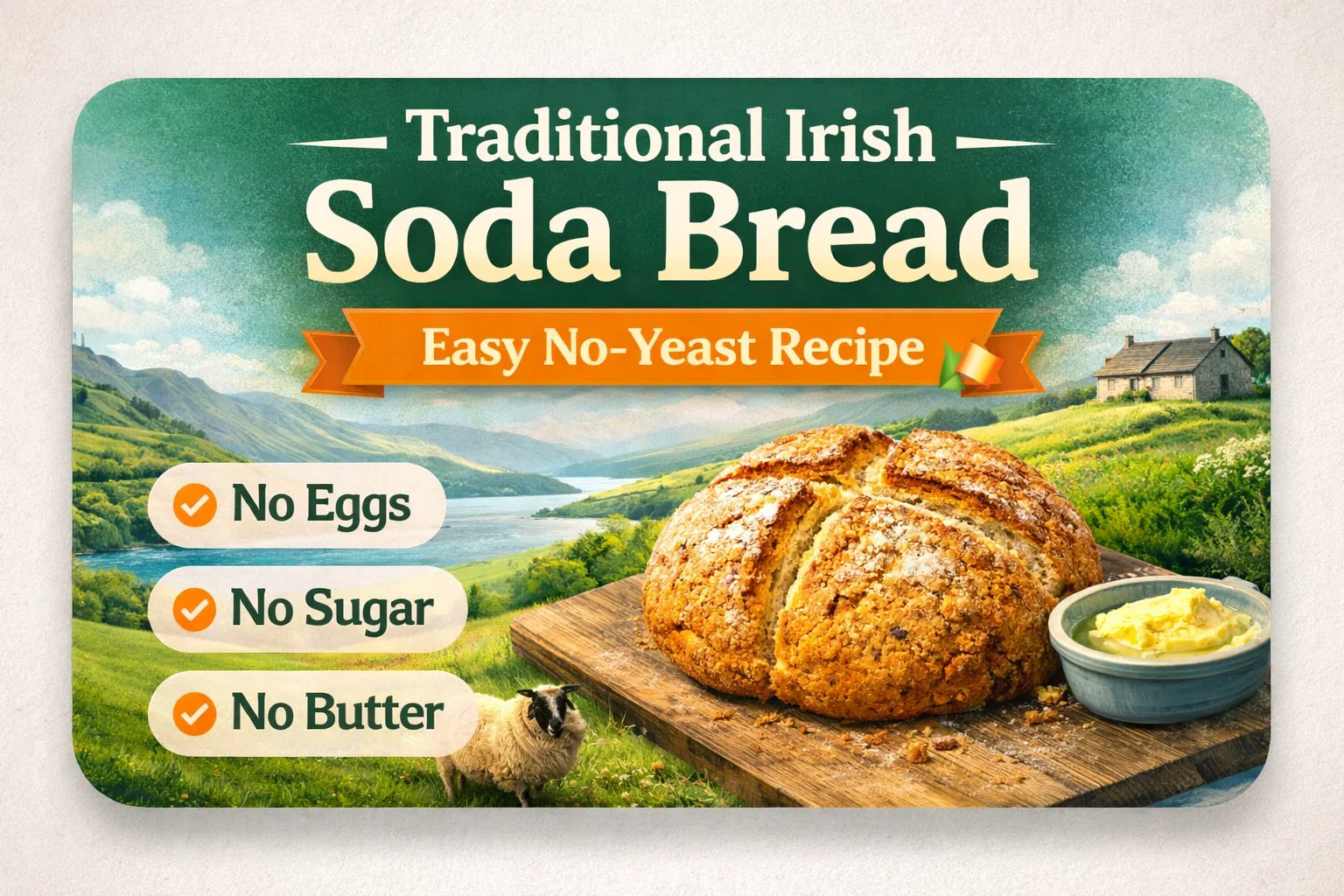
The beauty of the classic recipe lies in its minimalism. You do not need eggs, sugar, or even butter to create a world class loaf. Let us look at the role each of these four staples plays in the baking process.
- Plain Flour: While many breads call for high protein bread flour, traditional soda bread thrives on all purpose or plain flour. This ensures the bread remains tender rather than chewy.
- Bread Soda: This is the leavening agent. Ensure your baking soda is fresh for the best rise. Even a small amount creates a powerful reaction.
- Salt: Essential for flavor. Without it, the bread can taste flat. It also helps to tighten the gluten structure slightly.
- Buttermilk: This is the magic ingredient. It provides the acidity needed to activate the soda and adds a subtle tang that defines the flavor profile of Irish baking.
Step by Step Guide to Baking the Perfect Loaf
Ready to get your hands floury? Follow these steps to achieve a golden, crusty finish every single time. Preparation is key here, so make sure your oven is fully preheated before you even start mixing your ingredients.
Step 1: Prep and Sift
Preheat your oven to 200 degrees Celsius or 400 degrees Fahrenheit. In a large mixing bowl, combine 450 grams of plain flour with one teaspoon of salt and one teaspoon of bread soda. Sifting these together is a great way to ensure there are no clumps of soda, which can leave a bitter taste in the finished bread.
Step 2: Creating the Well
Make a well in the center of your dry ingredients. Pour in 400 milliliters of buttermilk. Use a wooden spoon or even your hand shaped like a claw to gently bring the flour into the liquid. Stop the moment the dough comes together. It should be soft and slightly sticky, not dry and crumbly.
Step 3: Shaping with Care
Turn the dough out onto a lightly floured surface. Do not knead it like you would a sourdough. Instead, just gently tuck the edges under to form a round disk about an inch and a half thick. Transfer this directly onto a baking tray or into a preheated cast iron skillet.
Step 4: Scoring the Cross
This is perhaps the most important part of the process. Use a sharp knife to cut a deep cross into the top of the dough, extending right to the edges. Legend says this is to let the fairies out, but scientifically, it allows the heat to penetrate the thickest part of the loaf, ensuring the center is fully cooked while the outside stays crisp.
Variations: White vs Brown Soda Bread
While the white loaf is a classic, many Irish households prefer the heartier, nuttier flavor of brown soda bread. The process remains almost identical, but the flour ratio changes to add more texture and fiber. For a perfect brown loaf, try using 350 grams of wholemeal flour and 100 grams of white flour. This combination provides the structure of white flour with the rich, earthy tones of the whole grain. Some people even like to add a handful of oats to the top for an extra crunch and a beautiful rustic aesthetic.
Serving Suggestions for the Ultimate Experience
Irish Soda Bread is best enjoyed when it is still slightly warm from the oven. The contrast between the crunchy exterior and the soft, steaming interior is a culinary delight. To keep the crust soft, some bakers wrap the hot loaf in a clean tea towel as it cools, which traps just enough steam to soften the outer layer.
The Butter Rule
If you are eating soda bread, high quality butter is non negotiable. A thick slab of salted Irish butter melting into the warm bread is the simplest and best way to enjoy it. The saltiness of the butter perfectly complements the mild tang of the buttermilk.
Pairing with Savory Dishes
This bread is the ultimate companion for hearty stews and soups. Because of its dense structure, it is excellent for mopping up broth or gravy without falling apart. It also pairs beautifully with a sharp cheddar cheese and a plate of smoked salmon for a sophisticated lunch. If you have leftovers the next day, try slicing the bread and toasting it under a broiler. The flavors deepen when toasted, making it the perfect base for marmalade or even a fried egg.
Common Troubleshooting Tips for Home Bakers
Even though this recipe is simple, a few things can go wrong. If your bread is too dense, you likely overworked the dough. Remember to mix only until the flour is hydrated. If the center of the loaf is gummy, try baking it for an extra five minutes. You can check for doneness by tapping the bottom of the loaf; it should sound hollow when fully baked. Finally, if you do not have buttermilk, you can make a quick substitute by adding a tablespoon of lemon juice or white vinegar to regular milk and letting it sit for five minutes, though the texture may vary slightly from the traditional version.
Why You Should Start Baking Today
In a world of fast food and processed snacks, taking thirty minutes to bake a loaf of bread from scratch is a revolutionary act of self care. It connects you to a long lineage of home cooks who used basic ingredients to nourish their families. There is no special equipment required, no expensive ingredients to source, and no professional training needed. All you need is a bowl, some flour, and a bit of enthusiasm.
Baking this bread is a fantastic way to involve children in the kitchen as well. Since there is no waiting for dough to rise, they can see the results of their work almost immediately. It teaches the value of simple ingredients and the joy of sharing something handmade with loved ones.
Conclusion: The Timeless Appeal of the Soda Loaf
The traditional Irish Soda Bread is more than just a recipe; it is a piece of living history that continues to bring joy to modern tables. Its versatility, ease of preparation, and incredible flavor make it a must have in any baker’s repertoire. Whether you are serving it alongside a steaming bowl of potato leek soup or enjoying a slice with your morning tea, this bread reminds us that the best things in life are often the simplest. So, preheat your oven, grab your buttermilk, and experience the satisfaction of breaking into your very own homemade loaf today.