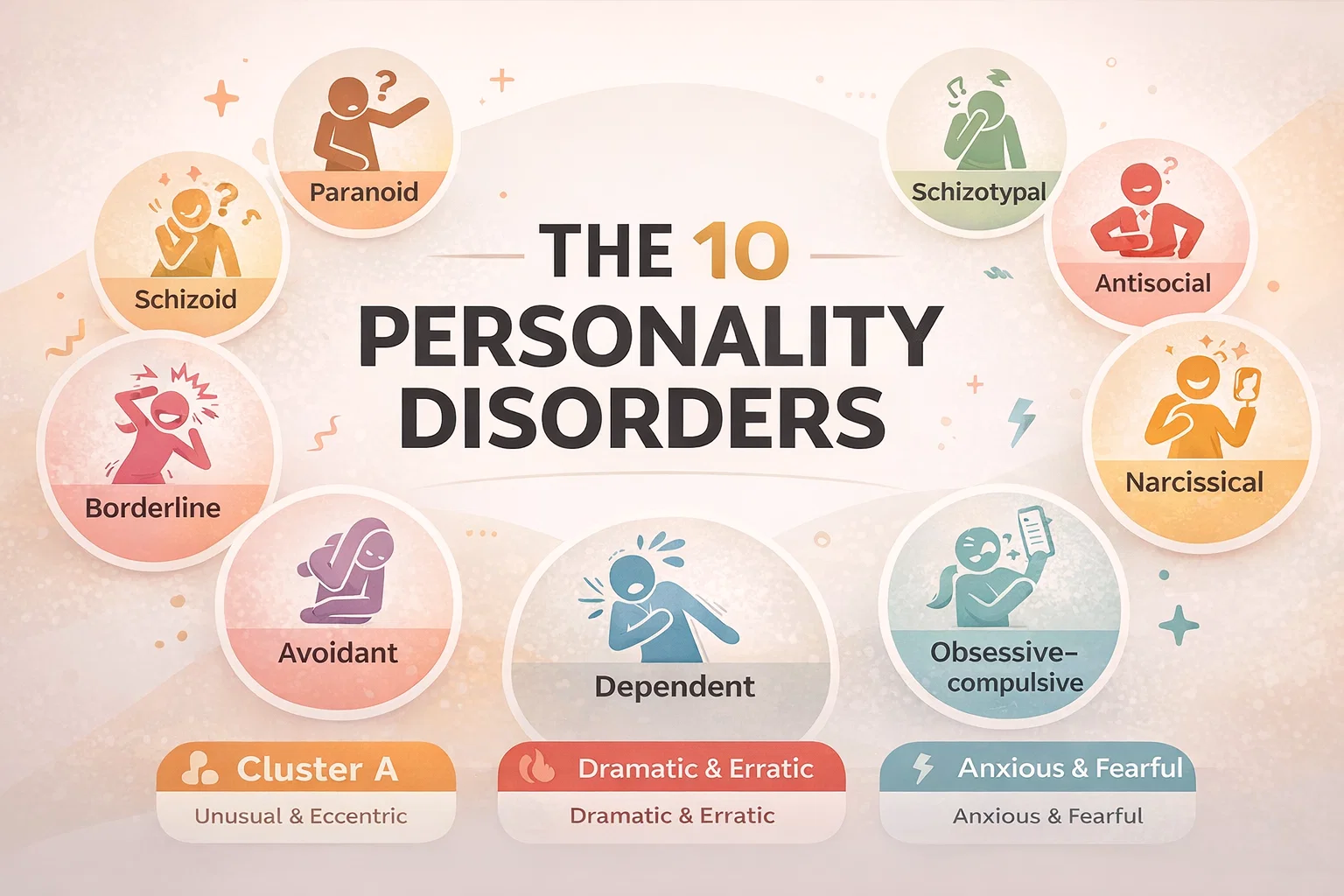
10 Types of Personality Disorders Chart Clusters A, B, and C Mental Health Guide
Understanding the complexities of the human mind is a journey that often begins with a single step toward awareness. When we look at the landscape of mental health, personality disorders represent a significant and often misunderstood area of study. These are not just fleeting moods or occasional quirks; they are deeply ingrained patterns of thinking, feeling, and behaving that can significantly impact how an individual relates to the world and themselves. By breaking these down into organized categories, we can begin to peel back the layers of stigma and replace confusion with compassion and knowledge.
What Are Personality Disorders?
At their core, personality disorders are a class of mental health conditions characterized by enduring maladaptive patterns of behavior, cognition, and inner experience. These patterns are typically displayed across many contexts and deviate markedly from those accepted by the individual’s culture. These patterns develop early, usually by adolescence or early adulthood, and are rigid and pervasive.
The diagnostic framework used by mental health professionals typically organizes these ten distinct disorders into three main groups, known as clusters. Each cluster is defined by shared descriptive characteristics that help clinicians and students of psychology better understand the underlying themes of the behavior. Whether it is the eccentricity of Cluster A, the emotional intensity of Cluster B, or the anxiety-driven nature of Cluster C, each category offers a window into the diverse ways the human psyche adapts and reacts to life’s challenges.
Cluster A: The Unusual and Eccentric
Cluster A is often referred to as the odd or eccentric group. Individuals with these disorders may appear to have social patterns that others find strange or peculiar. There is often a common thread of social withdrawal and distorted thinking.
Paranoid Personality Disorder
The hallmark of Paranoid Personality Disorder is a pervasive distrust and suspiciousness of others. People with this condition often assume that others have intellectual or malicious motives, even when there is little to no evidence to support such a claim. They may be quick to feel slighted and often hold long-lasting grudges. This constant state of hyper-vigilance makes it incredibly difficult to form close, trusting relationships, as they are always looking for the hidden “catch” in every interaction.
Schizoid Personality Disorder
Unlike those who fear others, individuals with Schizoid Personality Disorder generally have a profound disinterest in social relationships altogether. They are often described as loners who prefer solitary activities and rarely express strong emotions. While they might appear cold or indifferent, it is often a matter of a genuine lack of desire for intimacy rather than a fear of it. They may find little pleasure in most activities and can seem detached from the social world around them.
Schizotypal Personality Disorder
Schizotypal Personality Disorder is characterized by acute discomfort in close relationships combined with cognitive or perceptual distortions and eccentricities of behavior. Individuals might have odd beliefs or “magical thinking” that influences their behavior, such as a strong belief in clairvoyance or telepathy. Their speech may be unusual, and they often experience significant social anxiety that does not diminish with familiarity, largely because it is rooted in paranoid fears rather than self-consciousness.
Cluster B: The Dramatic and Erratic
This cluster is perhaps the most well-known in popular culture. It involves patterns of emotional instability, dramatic behavior, and often impulsive actions. The interpersonal relationships for those in Cluster B are frequently intense and volatile.
Antisocial Personality Disorder
Antisocial Personality Disorder involves a long-standing pattern of disregard for, or violation of, the rights of others. This often manifests as a failure to conform to social norms or laws, deceitfulness, and a lack of remorse after hurting others. While media often portrays this in extreme ways, in daily life, it may appear as chronic irresponsibility or impulsive behavior that disregards the safety of self or others. There is frequently a high level of charm used to manipulate situations to their advantage.
Borderline Personality Disorder (BPD)
BPD is characterized by a pervasive pattern of instability in interpersonal relationships, self-image, and affects, along with marked impulsivity. People with BPD may go to great lengths to avoid real or imagined abandonment. Their view of others can shift rapidly from extreme idealization to total devaluation. This emotional “rollercoaster” can lead to intense episodes of anger, depression, and anxiety that can last from a few hours to a few days. High sensitivity to rejection is a core component of this experience.
Histrionic Personality Disorder
Individuals with Histrionic Personality Disorder display a pattern of excessive emotionality and attention-seeking. They often feel uncomfortable or unappreciated when they are not the center of attention. Their behavior may be inappropriately seductive or provocative, and their expression of emotion is often shallow and shifts rapidly. They may use their physical appearance to draw attention to themselves and speak in a way that is excessively impressionistic but lacking in detail.
Narcissistic Personality Disorder
This disorder involves a long-term pattern of abnormal feelings of self-importance, an excessive need for admiration, and a lack of empathy for others. While they may appear incredibly confident, this often masks a fragile self-esteem that is vulnerable to the slightest criticism. They may believe they are “special” and can only be understood by other high-status people. This often leads to exploitative behavior in relationships, as they prioritize their own needs and recognition above all else.
Cluster C: The Anxious and Fearful
Cluster C is defined by pervasive patterns of anxiety and fear. Unlike the outward-reaching drama of Cluster B, these disorders often manifest as internal struggles with inadequacy, loss of control, or fear of rejection.
Avoidant Personality Disorder
Avoidant Personality Disorder is characterized by feelings of extreme social inhibition, inadequacy, and sensitivity to negative criticism. While they deeply desire social contact and intimacy, their fear of being ridiculed or rejected is so strong that they avoid social situations altogether. This is different from the schizoid preference for being alone; people with avoidant personality disorder want to be with others but are simply too afraid to try.
Dependent Personality Disorder
This disorder involves a pervasive and excessive need to be taken care of, which leads to submissive and clinging behavior and fears of separation. Individuals may have great difficulty making everyday decisions without an excessive amount of advice and reassurance from others. They often allow others to take responsibility for major areas of their lives and may go to excessive lengths to obtain nurturance and support, even to the point of volunteering for unpleasant tasks.
Obsessive-Compulsive Personality Disorder (OCPD)
It is important to distinguish OCPD from OCD (the anxiety disorder). OCPD is a personality style characterized by a general preoccupation with orderliness, perfectionism, and mental and interpersonal control, at the expense of flexibility, openness, and efficiency. They may be so focused on details, rules, and schedules that the main point of an activity is lost. Their rigidity often extends to morality and ethics, and they may find it difficult to delegate tasks unless others agree to do things exactly their way.
The Importance of Professional Diagnosis
While learning about these clusters is fascinating, it is vital to remember that these descriptions are intended for educational purposes. Human personality is fluid and complex. Many people may recognize a few of these traits in themselves or others from time to time, but a clinical diagnosis requires that these patterns are persistent, inflexible, and cause significant distress or impairment in functioning.
Mental health professionals use standardized criteria and clinical interviews to determine if someone meets the threshold for a disorder. Self-diagnosis can often lead to unnecessary anxiety or a misunderstanding of one’s own mental health journey. If you find that these descriptions resonate deeply with your experience, the best next step is to speak with a therapist or counselor who can provide a safe space for exploration and support.
Why Awareness Matters
The goal of categorizing these disorders is not to label people or put them in boxes. Instead, it is to provide a language for understanding specific struggles. When we understand that someone’s “eccentric” behavior might be a symptom of Schizotypal Personality Disorder, or that a friend’s “neediness” might be rooted in Dependent Personality Disorder, we can approach them with more patience and less judgment.
Awareness also helps individuals realize they are not alone. Knowing that there is a name for what you are feeling and that there are evidence-based treatments available can be incredibly empowering. From Dialectical Behavior Therapy (DBT) for BPD to Cognitive Behavioral Therapy (CBT) for various other clusters, the path to healing and management is well-traveled and effective.
Moving Toward Compassion
Ultimately, the study of the ten personality disorders is a study in human resilience and adaptation. Many of these patterns develop as coping mechanisms in response to early life trauma or specific environmental factors. By viewing these disorders through a lens of empathy, we contribute to a world that is more inclusive and supportive of mental health diversity.
As we continue to break down the barriers of stigma, we create an environment where people feel safe seeking help. Whether you are a student, a professional, or someone simply interested in personal growth, your commitment to understanding these conditions makes a difference. Let us keep the conversation going and continue to prioritize mental wellness for everyone.
In conclusion, the ten personality disorders divided into Clusters A, B, and C provide a structured way to understand various behavioral and emotional patterns. From the eccentricities of the first group to the dramatic flair of the second and the anxious nature of the third, each disorder presents unique challenges and requires specific approaches for support. By fostering a deeper understanding, we move closer to a society that values mental health as much as physical health, ensuring that no one has to navigate their internal world alone.
Would you like me to generate a set of frequently asked questions (FAQs) or a list of resources to include at the end of this post?