Best High-Iron Foods for Energy Top Iron-Rich Recipes Holistic Nutrition Guide
Feeling sluggish and drained of energy is a common struggle in our fast paced world. While we often reach for another cup of coffee to get through the afternoon slump, the real solution might be sitting right on your dinner plate. Iron is a powerhouse mineral that plays a critical role in how your body functions, yet it is one of the most common nutritional deficiencies worldwide. Understanding which foods are the highest in iron and how to incorporate them into your lifestyle is the first step toward reclaiming your vitality and supporting your long term health.
The Vital Role of Iron in Your Body
Before we dive into the specific foods shown in our guide, it is essential to understand why iron matters so much. Iron is a primary component of hemoglobin, a protein in your red blood cells that carries oxygen from your lungs to the rest of your body. If you are not getting enough iron, your body cannot produce enough healthy oxygen carrying red blood cells. This leads to iron deficiency anemia, which can leave you feeling exhausted, weak, and even short of breath.
Beyond just oxygen transport, iron is involved in many other vital processes. It supports a healthy immune system, helps regulate body temperature, and is necessary for the synthesis of certain hormones. For those focused on fitness or cognitive performance, iron is a non negotiable nutrient because it helps your muscles and brain function at their peak levels.
Getty Images
Understanding Heme vs Non Heme Iron
When you look at a diverse list of iron sources, you will notice they come from both animal and plant origins. It is important to distinguish between the two types of iron because your body absorbs them differently.
Heme Iron: The Highly Absorbable Option
Heme iron is found in animal products like beef, lamb, and oysters. This form of iron is highly bioavailable, meaning your body can absorb it very efficiently. If you include meat in your diet, these sources are often the fastest way to boost your iron stores. For example, a serving of beef or lamb provides a concentrated dose of iron that the body can put to work almost immediately.
Non Heme Iron: Powerhouse Plant Sources
Non heme iron is found in plant based foods such as spinach, lentils, beans, and tofu. While this type of iron is not absorbed as easily as heme iron, it is incredibly important for vegetarians, vegans, and those looking to reduce their meat intake. The key to success with non heme iron is knowing how to pair it with other nutrients to maximize absorption, which we will discuss later in this guide.
Top Animal Based Iron Sources
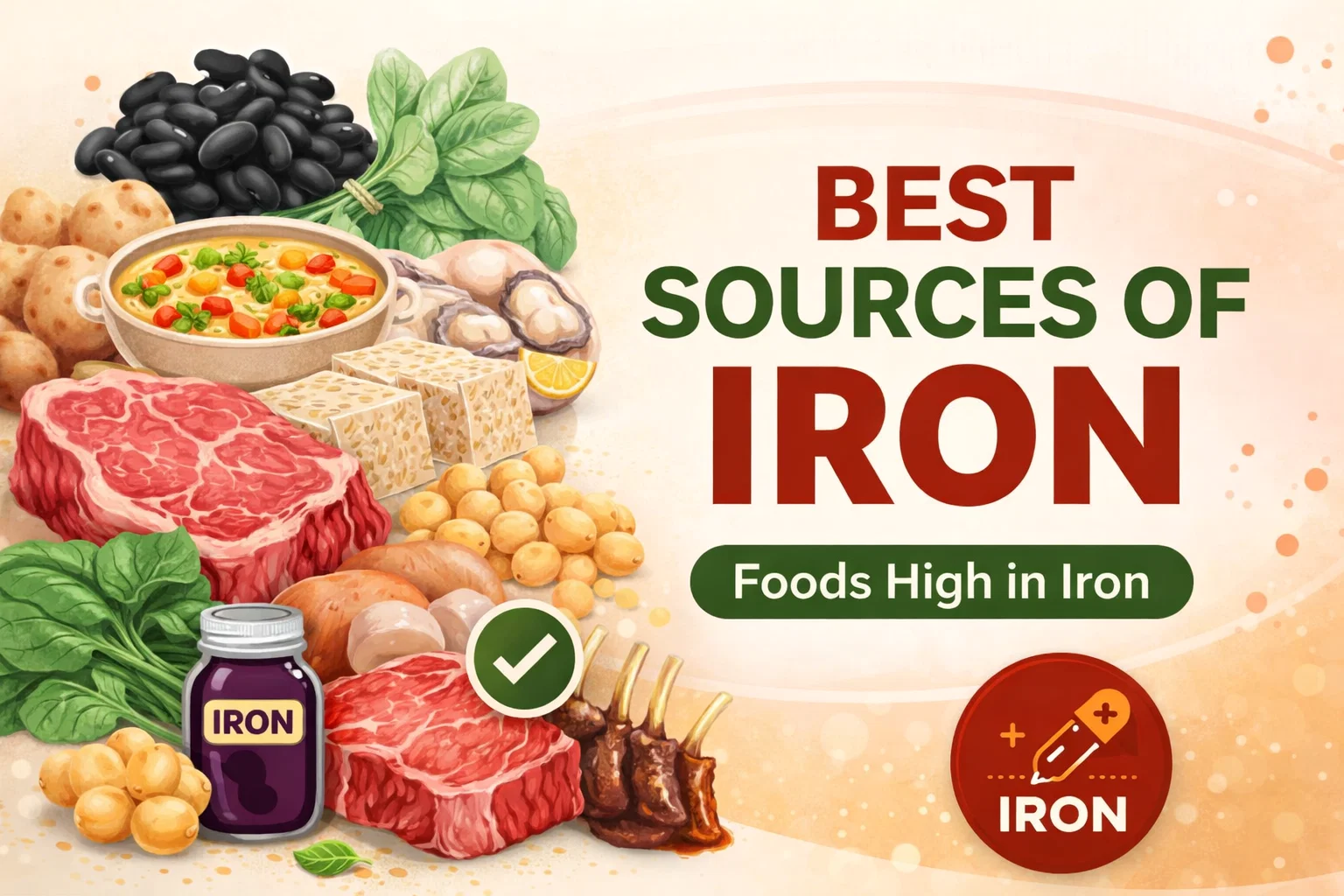
If you consume animal products, the following foods are some of the most potent sources of iron you can find. These are featured prominently in our visual guide for their high density of heme iron.
- Beef and Lamb: Red meats are famous for their iron content. A lean cut of beef or a serving of lamb chops provides a significant percentage of your daily requirement. These meats are also rich in B vitamins and zinc, making them excellent for overall metabolic health.
- Oysters and Shellfish: Many people are surprised to learn that oysters are one of the best sources of iron available. Just a few oysters can provide more than half of your daily iron needs. They are also packed with protein and omega 3 fatty acids.
- Eggs: While not as concentrated as red meat, eggs are a versatile and accessible source of iron. They are perfect for breakfast or as a quick protein boost in salads and grain bowls.
The Best Plant Based Iron Sources
Plant based iron sources are diverse and offer a wide range of additional health benefits, including fiber and antioxidants. Here are the top performers from our list.
- Lentils and Beans: Kidney beans and black beans are pantry staples for a reason. They are affordable, filling, and high in iron. Lentils, in particular, are a favorite for soups and stews because they cook quickly and absorb flavors beautifully.
- Leafy Greens: Spinach and Swiss chard are nutritional heavyweights. These greens provide a solid dose of iron along with vitamins A, C, and K. Sautéing them with a bit of garlic and olive oil is an easy way to get a large volume of greens into one meal.
- Tofu and Tempeh: These soy based proteins are staples in plant based diets. Tofu and tempeh are not only high in iron but also provide all nine essential amino acids, making them a complete protein source for those avoiding meat.
- Chickpeas: Also known as garbanzo beans, chickpeas are the star of hummus and many Mediterranean dishes. They are a fantastic way to add texture and iron to your lunch.
Surprising Sources: Potatoes and Chocolate
You might be happy to see that iron can be found in some of your favorite comfort foods too. Potatoes, especially with the skin on, contain a surprising amount of iron and potassium. Dark chocolate is another delightful source. A small piece of high quality dark chocolate can satisfy your sweet tooth while contributing to your daily mineral intake. Just remember to choose chocolate with at least 70 percent cocoa to get the most nutritional benefit.
How to Maximize Your Iron Absorption
Simply eating iron rich foods is only half the battle. You also need to ensure your body is actually absorbing that iron. This is especially true if you rely heavily on plant based sources.
The Magic of Vitamin C
One of the best ways to increase iron absorption is to pair your iron rich foods with a source of vitamin C. Vitamin C helps break down the iron into a form that is easier for the small intestine to absorb. For example, you could squeeze fresh lemon juice over your sautéed spinach, add bell peppers to your bean chili, or enjoy a glass of orange juice with your morning eggs.
Foods to Avoid While Eating Iron
Just as some foods help absorption, others can hinder it. Calcium can compete with iron for absorption in the body. If you are trying to maximize iron intake, try to avoid taking calcium supplements or consuming large amounts of dairy at the same meal as your high iron foods. Additionally, tannins found in tea and coffee can bind to iron and prevent it from being absorbed, so it is best to enjoy your caffeine fix between meals rather than with them.
Planning an Iron Rich Menu
Incorporating these foods into your daily routine does not have to be complicated. Here is a simple look at how you can build an iron focused day of eating.
Start your morning with a bowl of oatmeal topped with dried apricots or a spinach and egg omelet. For lunch, a hearty lentil soup or a chickpea salad with plenty of leafy greens is a great choice. For dinner, consider a stir fry with tofu or beef, loaded with broccoli and peppers to get that essential vitamin C boost. If you need a snack, a small handful of dark chocolate and nuts can bridge the gap between meals.
Signs You Might Need More Iron
How do you know if your iron levels are low? While a blood test is the only way to be sure, there are several common symptoms to watch for. If you frequently experience cold hands and feet, brittle nails, unusual cravings for non food items like ice, or a pale complexion, your body might be signaling a deficiency. Chronic fatigue that does not improve with rest is often the biggest red flag. If you notice these signs, focusing on the foods in our guide and consulting with a healthcare professional is a wise move.
The Connection Between Iron and Holistic Wellness
At its core, focusing on iron is about holistic wellness. It is about fueling your body with the raw materials it needs to perform at its best. When you prioritize nutrient dense foods like the ones shown in the image, you are doing more than just hitting a mineral target. You are supporting your heart health, your brain function, and your natural energy levels. This mindful approach to eating allows you to feel more connected to your body and empowered in your health journey.
Final Thoughts on Nourishing Your Body
Building a diet rich in iron is one of the most effective ways to support your overall health and ensure you have the energy to tackle your daily goals. By incorporating a mix of animal and plant based sources, such as beef, lentils, spinach, and even dark chocolate, you can create a varied and delicious menu that keeps your blood healthy and your energy high. Remember that small changes make a big difference over time. Start by adding one or two of these iron rich foods to your grocery list this week and notice how much better you feel when your body is properly nourished.
Focusing on your nutrition is an act of self care. Whether you are meal prepping for the week ahead or just looking for a quick dinner idea, let these iron rich sources guide you toward a more vibrant and energetic life. Your body will thank you for the extra support!
Ready to take control of your health? Start experimenting with these ingredients today and find new ways to make nutrition a delicious part of your routine. Save this guide as a reminder for your next grocery trip!