8 Survival Foods That Never Expire Long-Term Food Storage Emergency Prepping Checklist
Have you ever found a jar of honey in the back of your pantry that has turned solid and cloudy? Your first instinct might be to toss it in the trash, thinking it has gone bad. However, you would be throwing away a literal liquid gold that stays edible for thousands of years. Understanding which foods have an indefinite shelf life is not just a trick for survivalists or hardcore preppers. It is a fundamental skill for anyone looking to reduce food waste, save money, and build a resilient kitchen that can withstand any situation.
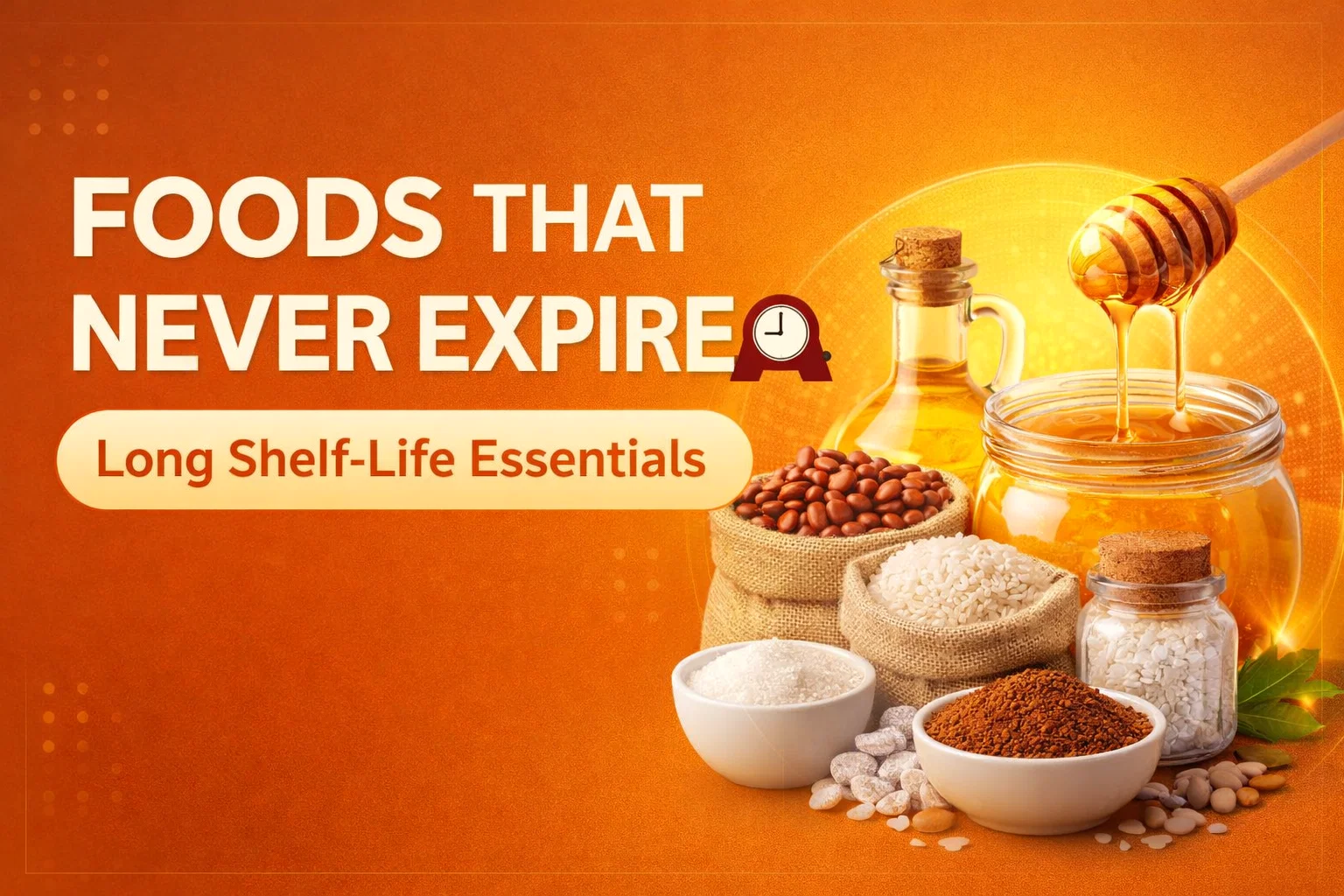
The image we are looking at today highlights a fascinating list of pantry staples that essentially never expire. From white rice to vinegar, these items are the backbone of a long-term food storage plan. In a world where supply chains can be unpredictable and grocery prices continue to climb, knowing how to stock your shelves with “eternal” foods is one of the smartest moves you can make for your household. Let us dive deep into the science of why these specific foods last so long and how you can store them to ensure they stay fresh for your grandchildren to enjoy.
The Science of Food Longevity
To understand why some foods last forever while others rot in a week, we have to look at the chemistry of decay. Most food spoilage is caused by three main factors: moisture, oxygen, and light. Microorganisms like bacteria, mold, and yeast need water to grow. This is why many of the items on our “never expire” list are naturally dry or have high concentrations of substances that inhibit bacterial growth.
Take honey, for example. It is naturally low in moisture and very acidic. When bees create honey, they flap their wings to evaporate water from the nectar, and an enzyme in their stomachs breaks down the sugars into gluconic acid and hydrogen peroxide. This creates an environment that is basically a fortress against bacteria. Similarly, salt and sugar are hygroscopic, meaning they pull water out of their surroundings. If a bacterium lands on a pile of salt, the salt will literally suck the moisture out of the bacteria, killing it instantly. This natural preservation is what makes these ingredients the ultimate long-term investment.
Honey: The Immortal Sweetener
Archaeologists have famously discovered pots of honey in ancient Egyptian tombs that are over 3,000 years old and still perfectly edible. Honey is the only food that truly lasts forever without any special processing. Over time, honey will likely crystallize, turning from a clear liquid into a thick, grainy solid. Many people mistake this for spoilage, but it is actually a natural process of the glucose separating from the water.
How to Revive Crystallized Honey
If your honey has hardened, do not throw it away. Simply place the glass jar in a bowl of warm water and stir it gently. The heat will reliquefy the crystals and return the honey to its smooth state. Avoid microwaving honey if possible, as high heat can destroy the beneficial enzymes and antioxidants that make raw honey a health powerhouse. As long as you keep the lid tight to prevent moisture from getting in, your honey will remain a sweet staple in your kitchen indefinitely.
Salt: The Essential Mineral
Salt is a mineral, not a biological product, so it technically cannot “die” or rot. Whether it is table salt, sea salt, or Himalayan pink salt, this seasoning is as stable as a rock. In fact, salt has been used for millennia as a preservative for meats and vegetables because it creates a lethal environment for microbes.
The Catch with Iodized Salt
While pure sodium chloride lasts forever, be aware that iodized salt has a slightly shorter shelf life of about five years. The iodine added to prevent thyroid issues can eventually degrade and lose its potency. For long-term emergency storage, it is best to stock up on pure sea salt or kosher salt. Keep it in a dry place, as salt easily clumps when exposed to humidity. Even if it does clump, it is still perfectly safe to use; you just might need to break it up with a fork.
White Rice vs. Brown Rice
The image notes that white rice can last 20 plus years, and this is a crucial distinction to make. White rice has been processed to remove the husk, bran, and germ. This removal is what allows it to stay fresh for decades. Brown rice, on the other hand, still contains the bran and germ, which are rich in natural oils. Those oils will eventually go rancid, giving brown rice a shelf life of only about six months to a year.
Optimal Storage for Rice
To hit that 20 year mark, you cannot just leave the rice in the plastic bag from the store. Oxygen is the enemy here. For the best results, transfer your white rice to food-grade buckets or Mylar bags with oxygen absorbers. Storing it in a cool, dark environment like a basement or a pantry away from the stove will ensure it remains a reliable source of carbohydrates during any emergency.
The Magic of Vinegar
Vinegar is the product of fermentation, which is already a form of controlled spoilage. Because it is highly acidic, usually containing acetic acid, it is self-preserving. White distilled vinegar, apple cider vinegar, and balsamic vinegar can sit on your shelf for a lifetime without ever becoming unsafe to consume.
You might notice some changes in appearance over time, such as the liquid becoming cloudy or a sediment forming at the bottom. In apple cider vinegar, you might even see the “mother” grow larger. None of these changes affect the safety of the vinegar. It will still be perfect for pickling, cleaning, or making salad dressings. Just keep the cap on tight to prevent evaporation.
Sugar: Sweet Stability
Much like salt, granulated sugar does not support bacterial growth because of its low moisture content. Whether it is white, brown, or powdered sugar, it will stay shelf-stable for an indefinite period. The biggest challenge with sugar is not spoilage but texture. We have all dealt with a brick of brown sugar that is hard enough to break a tooth.
Preventing Sugar From Hardening
To keep your sugar soft and scoopable, store it in an airtight container. If your brown sugar has already turned into a rock, you can soften it by placing a piece of bread or a damp paper towel in the container for 24 hours. The sugar will absorb the moisture from the bread and become soft again. Even if it stays hard, it is still chemically fine to eat.
Dried Beans and Legumes
The image suggests a shelf life of 10 years for dried beans. While they remain safe to eat far beyond a decade, they do undergo physical changes. As beans age, they lose the tiny amount of residual moisture they have left, which makes the skin tougher and the insides harder. This means that 15 year old beans might take significantly longer to cook and may never get quite as creamy as fresher beans.
However, from a nutritional standpoint, they are a fantastic protein source to keep in your long-term pantry. To make older beans more palatable, consider using a pressure cooker or adding a pinch of baking soda to the soaking water to help break down the tough cell walls. They are a staple of survival diets for a reason: they are cheap, filling, and incredibly durable.
Cornstarch and Instant Coffee
Cornstarch is a powerhouse thickening agent that stays forever stable as long as it is kept bone-dry. It is a vital ingredient for everything from gravies to DIY skincare recipes. If moisture gets into the container, it will clump and potentially grow mold, so a sealed glass jar is your best friend here.
Instant coffee is another surprising entry on the list. Because it has been dehydrated into a concentrated powder or granules, there is no moisture left to spoil. While the flavor might dull slightly after a few decades, it will still provide that essential caffeine kick when you need it most. It is an excellent item to include in a “bug-out bag” or emergency kit because it is lightweight and requires no special equipment to prepare.
Building Your “Forever” Pantry
Now that you know which foods can stand the test of time, how do you start building your supply? The key is not to go out and buy a lifetime supply of salt tomorrow. Instead, focus on a “store what you eat, eat what you store” philosophy. This means buying a little extra of these items each time you go to the store and rotating your stock so that you are always using the oldest items first.
Basic Supplies Checklist
- Airtight Containers: Glass Mason jars, Mylar bags, and food-grade plastic buckets are essential.
- Oxygen Absorbers: These small packets are crucial for removing oxygen from long-term storage containers.
- Labeling: Always mark your containers with the date of purchase and the date of storage.
- Environment: Aim for a storage temperature between 50 and 70 degrees Fahrenheit.
Common Mistakes to Avoid
One of the biggest mistakes people make when starting a long-term pantry is forgetting about the “fat” factor. Any food that contains high amounts of fat or oil, like nuts, whole grains, or brown rice, will eventually go rancid. Rancid fat is not just a matter of bad taste; it can be toxic. Stick to the low-fat staples mentioned in the image for your multi-decade storage and keep your oils and nuts for shorter-term use.
Another pitfall is improper sealing. Even “eternal” foods like sugar will attract pests if not sealed properly. Ants and weevils can find their way into surprisingly tight spaces. Using thick plastic or glass is the best way to ensure your food stays yours and doesn’t become a buffet for local insects.
The Peace of Mind in Preparedness
There is a unique sense of calm that comes from looking at a well-stocked pantry. Knowing that you have the ingredients to feed your family for weeks or months, regardless of what is happening in the world, is incredibly empowering. These foods are not just calories; they are a safety net. By focusing on items that never expire, you are making a one-time investment that offers a lifetime of security.
Whether you are a seasoned prepper or someone just looking to organize their kitchen better, these eight survival foods are the perfect starting point. They require very little maintenance and offer an incredible return on investment. Start small, stay consistent, and watch your pantry transform into a long-lasting resource for your home.
Conclusion
Building a pantry filled with foods that never expire is a practical and rewarding journey. By understanding the science behind food preservation and following proper storage techniques, you can ensure that your kitchen is always ready for whatever life throws your way. From the immortal sweetness of honey to the versatile power of salt and vinegar, these staples are truly the heroes of the modern home. Take a look at your pantry today and see which of these “eternal” items you can add to your next grocery list. Your future self will certainly thank you for the foresight and preparation.
Would you like me to help you create a specific inventory list or a shopping plan based on these long-term staples?