9 Silent Daily Habits That Are Destroying Your Organs
We often think of health hazards as obvious, looming threats like smoking a pack a day or eating fast food for every meal. However, the reality of our well-being is often dictated by the subtle, almost invisible choices we make from the moment we wake up until we drift off to sleep. These are the “silent” habits—routines so ingrained in our daily lives that we rarely stop to question them. Yet, over months and years, these seemingly harmless actions can silently erode the function of our most vital organs.
Your body is an incredibly resilient machine, capable of handling a significant amount of stress and recovery. But even the strongest machine has its breaking point. When we consistently ignore the biological needs of our lungs, heart, liver, and brain, we aren’t just feeling tired or groggy; we are actively contributing to long-term damage. The good news is that awareness is the most powerful tool you have. By shining a light on these nine silent habits, you can stop the damage in its tracks and start healing your body today.
1. The Breath of Life: Why Mouth Breathing Hurts Your Lungs
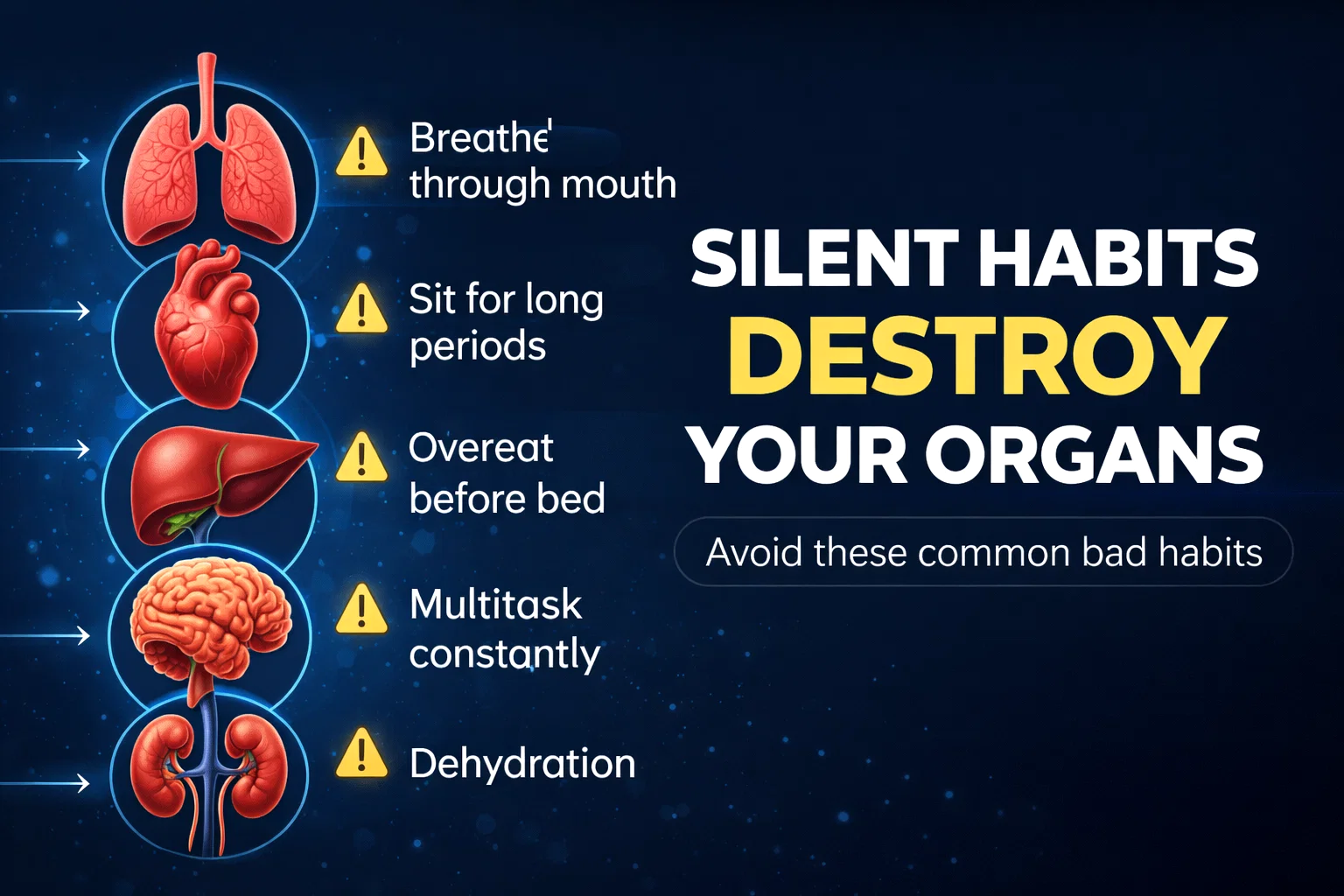
Breathing is the most fundamental act of living, yet many of us are doing it wrong without even realizing it. The image above highlights a critical issue: mouth breathing. While it might seem like just another way to get air into your body, breathing through your mouth bypasses the body’s natural filtration system. Your nose is designed with a complex system of hairs and mucous membranes that filter out dust, allergens, and pathogens. When you breathe through your mouth, you are sending raw, unfiltered, and often dry air directly into your lungs.
This habit does more than just dry out your airways. It can lead to a decrease in oxygen uptake. Nasal breathing releases nitric oxide, a molecule that helps widen blood vessels and improves the circulation of oxygen in your body. Chronic mouth breathing has been linked to lower energy levels, poor sleep quality, and increased susceptibility to respiratory infections. If you wake up with a dry mouth or feel fatigued despite a full night’s rest, pay attention to how you breathe during the day. consciously practicing nasal breathing can protect your lung tissue and boost your overall vitality.
2. The Sedentary Trap: How Sitting Slows Your Heart
Modern life is built around convenience, but that convenience has come at a steep price for our cardiovascular health. “Sitting is the new smoking” is a phrase you might have heard, and for good reason. When you sit for prolonged periods—whether at a desk, in a car, or on the couch—your blood flow slows down significantly. The heart is a muscle that relies on movement to pump blood efficiently against gravity. When you remain static, blood can pool in your legs, increasing the risk of clots and varicose veins.
Beyond the immediate sluggishness, a sedentary lifestyle weakens the heart muscle itself. Over time, this lack of activity can lead to higher blood pressure and elevated cholesterol levels. It is not enough to simply go to the gym for an hour if you spend the other 15 hours of your day sitting down. The antidote is simple: movement snacks. Try to stand up every 30 minutes, stretch, or take a quick walk. These micro-movements act as a reset button for your circulation, keeping your heart engaged and healthy throughout the day.
3. A Vision for Health: The Dangers of Rubbing Your Eyes
It is a natural reflex. Your eyes feel itchy or tired, and you reach up to give them a good rub. It feels satisfying in the moment, stimulating the vagus nerve which can slow down your heart rate and relieve stress. However, this habit is a disaster for the delicate structures of your eye. The skin around your eyes is the thinnest on your body, and the eye itself is incredibly fragile. Frequent, vigorous rubbing can cause micro-tears in the cornea and weaken the surrounding tissue.
In severe cases, chronic eye rubbing is linked to a condition called keratoconus, where the cornea thins and bulges outward, leading to distorted vision. Furthermore, your hands are a primary vector for bacteria and viruses. Transferring germs from doorknobs and keyboards directly to your eyes is a fast track to infections like pink eye. Instead of rubbing, try using lubricating eye drops or a warm compress to soothe irritation. Protecting your vision requires a hands-off approach.
4. Digestive Fire: Why Ice-Cold Water Shock the Stomach
Hydration is essential, but the temperature of your water matters more than you might think, especially during meals. In many holistic health traditions, including Ayurveda, digestion is viewed as a “fire.” When you pour ice-cold water onto a fire, what happens? It goes out. Similarly, drinking freezing cold water during a meal can constrict the blood vessels in your stomach and dilute essential digestive enzymes. This slows down the digestive process, potentially leading to bloating, cramping, and nutrient malabsorption.
Getty Images
Your body has to expend extra energy to heat that cold water up to body temperature before it can be utilized, energy that should be used for digesting your food. While a cold drink on a hot day is refreshing, try switching to room temperature or warm water during meals. This supports the enzymatic activity in your stomach, allowing your body to break down food more efficiently and absorb the vitamins and minerals you need to thrive.
5. The Night Shift: Overeating and Your Liver
Your liver is the body’s primary detoxification organ, working tirelessly to filter blood, break down toxins, and metabolize fats. However, it operates on a circadian rhythm, much like your sleep cycle. Eating heavy, rich meals late at night forces your liver to work overtime when it should be in a state of rest and repair. When you consume excess calories right before bed, your body is more likely to store that energy as visceral fat, particularly around the liver itself.
This habit creates a backlog of work for your organs. Instead of focusing on cellular regeneration and detoxification during sleep, your body is stuck digesting a heavy meal. Over time, this can contribute to fatty liver disease and metabolic imbalances. To show your liver some love, try to finish your last meal at least three hours before you go to sleep. This fasting window gives your digestive system a break and allows your liver to focus on its crucial “housekeeping” duties during the night.
6. The Filtration System: Water Intake and Kidney Stress
Your kidneys are the unsung heroes of your body, filtering about 120 to 150 quarts of blood every single day to produce urine. This process relies heavily on water to flush out waste products and toxins. When you do not drink enough water, your kidneys have to work significantly harder to filter the blood. The urine becomes concentrated, which can lead to the crystallization of minerals—the agonizing condition known as kidney stones.
Chronic dehydration does not just increase the risk of stones; it stresses the kidney tissue itself, potentially leading to long-term reduction in kidney function. The color of your urine is the best indicator of your hydration status; it should be a pale, straw yellow. If it is dark, your kidneys are crying out for help. excessive consumption of sodas and caffeine can worsen dehydration, so prioritize pure water to keep these vital filters running smoothly.
7. The Cognitive Cost: Multitasking and Your Brain
In our hyper-connected world, multitasking is often worn as a badge of honor. We think that by answering emails while cooking dinner and listening to a podcast, we are being hyper-productive. In reality, the human brain is not wired to focus on two things at once. What we call multitasking is actually “task-switching,” where the brain rapidly toggles between activities. This switching comes with a metabolic cost, depleting glucose in the brain and increasing the production of the stress hormone cortisol.
Shutterstock
Explore
Constant multitasking fragments your attention span and reduces your ability to form short-term memories. It creates a state of continuous partial attention, where you are never fully present in any single task. Over time, this can degrade your cognitive performance and lower your IQ. To protect your brain health, practice “monotasking.” Focus on one thing at a time for a set period. You will find that not only is the quality of your work better, but your mental clarity and stress levels will improve dramatically.
8. The Sound of Silence: protecting Your Ears
Hearing loss is often dismissed as an “old person’s problem,” but it is increasingly affecting younger generations due to the ubiquity of headphones and earbuds. The inner ear contains thousands of tiny, delicate hair cells that are responsible for translating sound waves into electrical signals for the brain. These hair cells do not regenerate. once they are damaged, they are gone forever. Listening to music at high volumes, especially through earbuds that sit directly in the ear canal, blasts these hair cells with damaging pressure.
The damage is cumulative. You might not notice it immediately, but years of loud music can lead to tinnitus—a permanent ringing in the ears—and significant hearing loss later in life. The rule of thumb is the 60/60 rule: listen at no more than 60% volume for no more than 60 minutes at a time. giving your ears a break allows them to recover and preserves your ability to enjoy the sounds of the world for decades to come.
9. Gut Instincts: Why You Shouldn’t Ignore the Urge
We have all been there: you are in a meeting, in traffic, or just too busy to head to the restroom, so you hold it in. While doing this occasionally is harmless, habitually ignoring the urge to have a bowel movement can wreak havoc on your intestines. When you delay this natural process, the colon continues to absorb water from the stool, making it harder and drier. This leads to constipation and straining, which can cause hemorrhoids and fissures.
More importantly, your body is trying to eliminate waste and toxins. keeping that waste inside your body disrupts the delicate balance of your gut microbiome and can lead to inflammation. Your gut health is intrinsically linked to your immune system and your mental health. Respecting your body’s signals is a form of self-respect. When nature calls, answer it. Establishing a regular routine can help train your body and ensure your digestive system functions like clockwork.
Conclusion: Small Changes, Massive Impact
The human body is an intricate web of interconnected systems. As we have explored, a habit that seems to affect only your eyes or your stomach actually has a ripple effect on your overall vitality. It is easy to feel overwhelmed by the list of things we “shouldn’t” do, but the perspective shift here is one of empowerment, not restriction. You don’t need to overhaul your entire life overnight. Start with one habit.
Maybe this week, you focus on drinking a glass of room-temperature water with every meal. Next week, you might set a reminder to stand up from your desk every hour. These small, consistent actions compound over time, transforming your health from the inside out. Your organs work tirelessly for you every second of every day; they deserve a little support in return. By breaking these silent habits, you are not just preventing disease; you are investing in a future where you feel energetic, vibrant, and truly alive.