ADHD vs Anxiety vs Depression Key Differences Symptoms
Understanding the inner workings of our minds is one of the most powerful steps we can take toward self-improvement and emotional well-being. Many people find themselves trapped in a cycle of frustration, wondering why they cannot just get started on a task, why they feel a constant sense of dread, or why their energy seems to have vanished entirely. While the symptoms of ADHD, anxiety, and depression often look identical on the surface, the biological “why” behind them is strikingly different. By looking at the neurological roots of these conditions, we can stop blaming ourselves for being lazy or unmotivated and start implementing strategies that actually work for our specific brain chemistry.
The Science of the ADHD Brain: A Struggle with Stimulation
When we talk about ADHD, we are looking at a brain that is essentially seeking a baseline level of stimulation that it struggles to maintain on its own. The primary area involved is the prefrontal cortex, which is the command center for executive functions like planning, focusing, and impulse control. In a brain with ADHD, dopamine pathways are not as efficient as they should be. Since dopamine is the chemical responsible for reward and motivation, a lack of it means the brain is constantly hunting for the next spark of interest just to stay engaged.
Weak Task Initiation and Time Blindness
One of the most misunderstood aspects of ADHD is the weak task initiation signal. To an outsider, it looks like procrastination. To the person experiencing it, it feels like a physical wall between their intention and their action. Because the brain is not sending a strong enough “start” signal, even simple tasks like folding laundry or sending an email can feel monumental. This is often accompanied by time blindness, where the person loses track of how long a task takes or how much time has passed. It is not a lack of caring; it is a neurological disconnect in how the brain perceives the passage of time and the urgency of a deadline.
The Reality of Inconsistent Access
The most frustrating part of ADHD is that motivation does exist, but access to it is incredibly inconsistent. On some days, a person might experience focus spikes where they are incredibly productive and creative. On other days, they might feel completely paralyzed. Understanding that this is a dopamine availability issue rather than a character flaw is the first step toward building a life that works with your brain rather than against it.
Anxiety: The Brain on High Alert
Anxiety is fundamentally a survival mechanism that has been dialed up too high. While ADHD is a struggle with focus and reward, anxiety is a struggle with the amygdala and the threat detection circuits of the brain. The amygdala is designed to keep you safe by scanning for danger, but in an anxious brain, it begins to misread uncertainty as an immediate threat. This keeps the body in a state of constant stress response activation, which is exhausting for both the mind and the body.
The Amygdala and Overactive Fear Signaling
When the amygdala is overactive, it sends out fear signals even when there is no logical danger present. This is why you might feel a sudden rush of panic when checking your inbox or a lingering sense of doom for no apparent reason. The brain is trying to protect you, but it is doing so much too aggressively. This constant “alert mode” leads to physical symptoms like muscle tension, a racing heart, and a mind that refuses to quiet down. You are essentially living in a state of hyper-vigilance, waiting for the other shoe to drop.
Living with Constant Tension
The physical toll of anxiety cannot be overstated. Because the body is prepared for a “fight or flight” scenario, it stays braced for impact. This leads to chronic tension and a feeling of being “on edge” at all times. Unlike the low energy often associated with depression, anxiety is a state of high-energy distress. It is the feeling of a motor running in the red zone for hours on end, eventually leading to a unique type of burnout that comes from simply trying to survive your own thoughts.
Depression: The Blunting of the Reward System
Depression is often characterized by a profound lack of emotional energy and a reduced ability to feel pleasure, a condition known as anhedonia. While ADHD involves a search for dopamine and anxiety involves a fear of the unknown, depression is a state where the reward and mood regulation circuits have become blunted. The brain’s output of emotional energy drops significantly, making everything feel heavy, gray, and distant.
The Low Emotional Energy Output
In a depressed state, the brain is not just “sad.” It is operating with a reduced capacity for drive and pleasure. This manifests as a low emotional energy output that makes even the things you used to love feel like a chore. The “emotional flatness” associated with depression is a protective mechanism where the brain has essentially powered down to conserve what little energy it has left. This is why people with depression often struggle to get out of bed or maintain basic hygiene. It is not laziness; it is a biological reduction in the signals that normally drive us toward rewards.
Reduced Pleasure and Drive
The reward signaling in a depressed brain is significantly diminished. Normally, when we accomplish something or experience something good, our brain rewards us with a hit of “feel-good” chemicals. In depression, that response is muted. You might win an award or spend time with a loved one and feel nothing at all. This lack of feedback makes it incredibly difficult to find the motivation to do anything, creating a vicious cycle where the lack of activity leads to further lowered mood.
The Overlap: Where ADHD, Anxiety, and Depression Meet
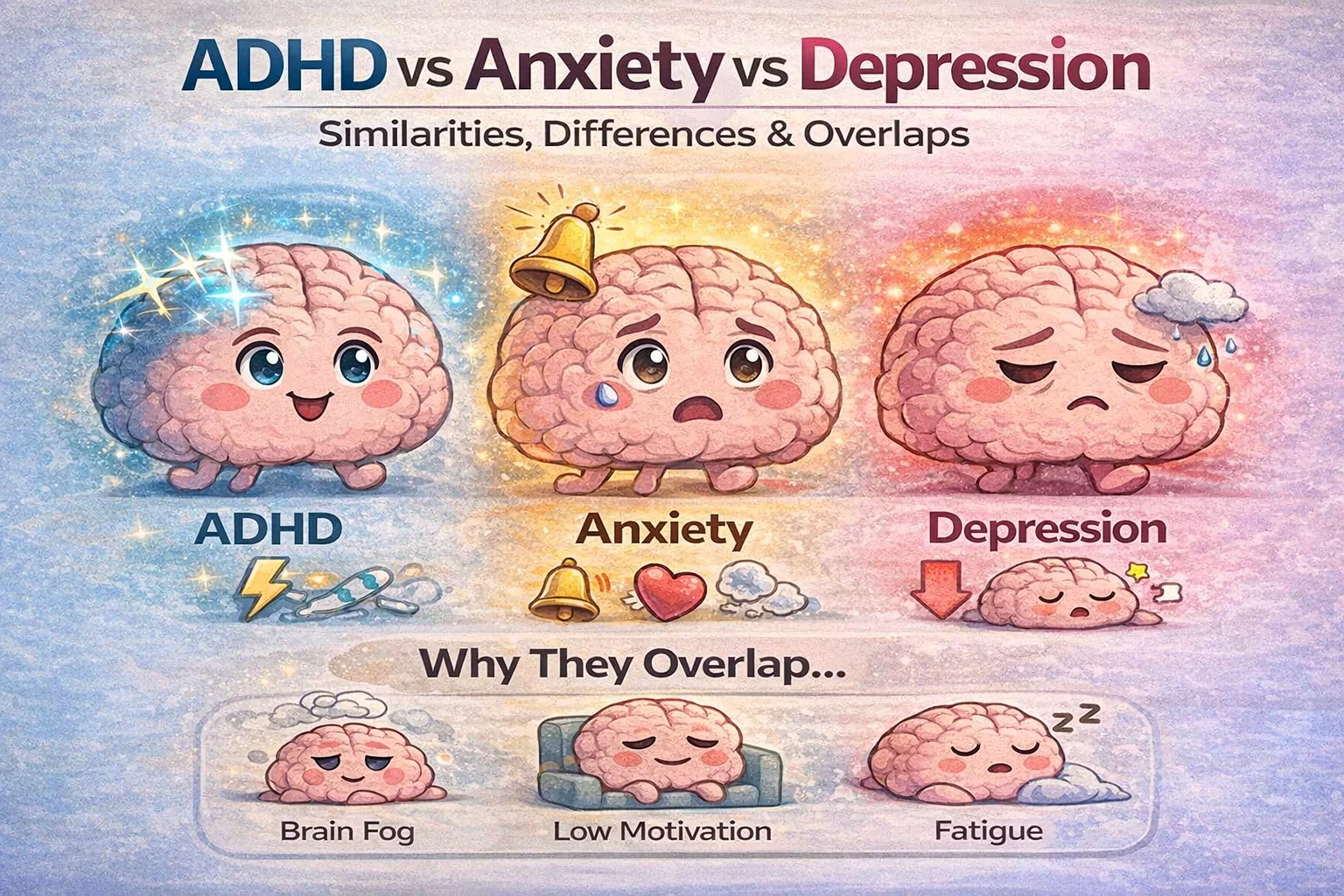
The reason these three conditions are so frequently misdiagnosed or confused is that they share a common “middle ground” of symptoms. Brain fog, low motivation, and fatigue are the three pillars of this overlap. Whether your brain is seeking stimulation, scanning for threats, or powering down due to low reward signaling, the end result often looks the same from the outside. You feel stuck, tired, and unable to think clearly.
- Brain Fog: This is a common denominator where the mind feels clouded. It could be caused by the scattered thoughts of ADHD, the racing worries of anxiety, or the heavy lethargy of depression.
- Low Motivation: While the cause varies—lack of interest, fear of failure, or lack of reward—the result is a struggle to get things done.
- Fatigue: Mental health struggles are physically taxing. The effort required to manage your own brain chemistry can lead to chronic exhaustion that sleep alone cannot fix.
Strategies for Managing the Overlap
Once you identify which neurological path you are on, you can start using tools that are actually effective. If you are struggling with ADHD, you need to find ways to “gamify” tasks or break them into tiny, dopamine-inducing chunks. If anxiety is the culprit, grounding exercises and nervous system regulation are key. For depression, the focus should be on “opposite action” and tiny wins that slowly re-engage the reward system.
Building a Supportive Routine
Regardless of the diagnosis, structure is your best friend. A gentle routine can provide the “external prefrontal cortex” that an ADHD brain needs, the predictability that an anxious brain craves, and the momentum that a depressed brain requires. Start with the basics: hydration, sunlight, and movement. These are not cures, but they are the foundation upon which mental health is built.
The Importance of Professional Guidance
Because these conditions overlap so heavily, working with a professional is vital. A therapist or psychiatrist can help untangle the threads of your experience to determine if you are dealing with one, two, or all three of these challenges. Medication, cognitive behavioral therapy, and lifestyle adjustments can all play a role in helping you regain control over your life and your happiness.
Conclusion: Moving Toward Self-Compassion
The most important takeaway from understanding the biological roots of ADHD, anxiety, and depression is the shift from shame to self-compassion. When you realize that your brain is trying to protect you, seeking stimulation, or struggling to process rewards, you can stop asking “what is wrong with me?” and start asking “what does my brain need right now?” You are not lazy, you are not failing, and you are certainly not alone. By identifying the specific ways your brain is wired, you can begin the journey toward a more balanced, fulfilling, and manageable life. Remember that your mental health is a journey, not a destination, and every bit of understanding you gain is a step in the right direction.