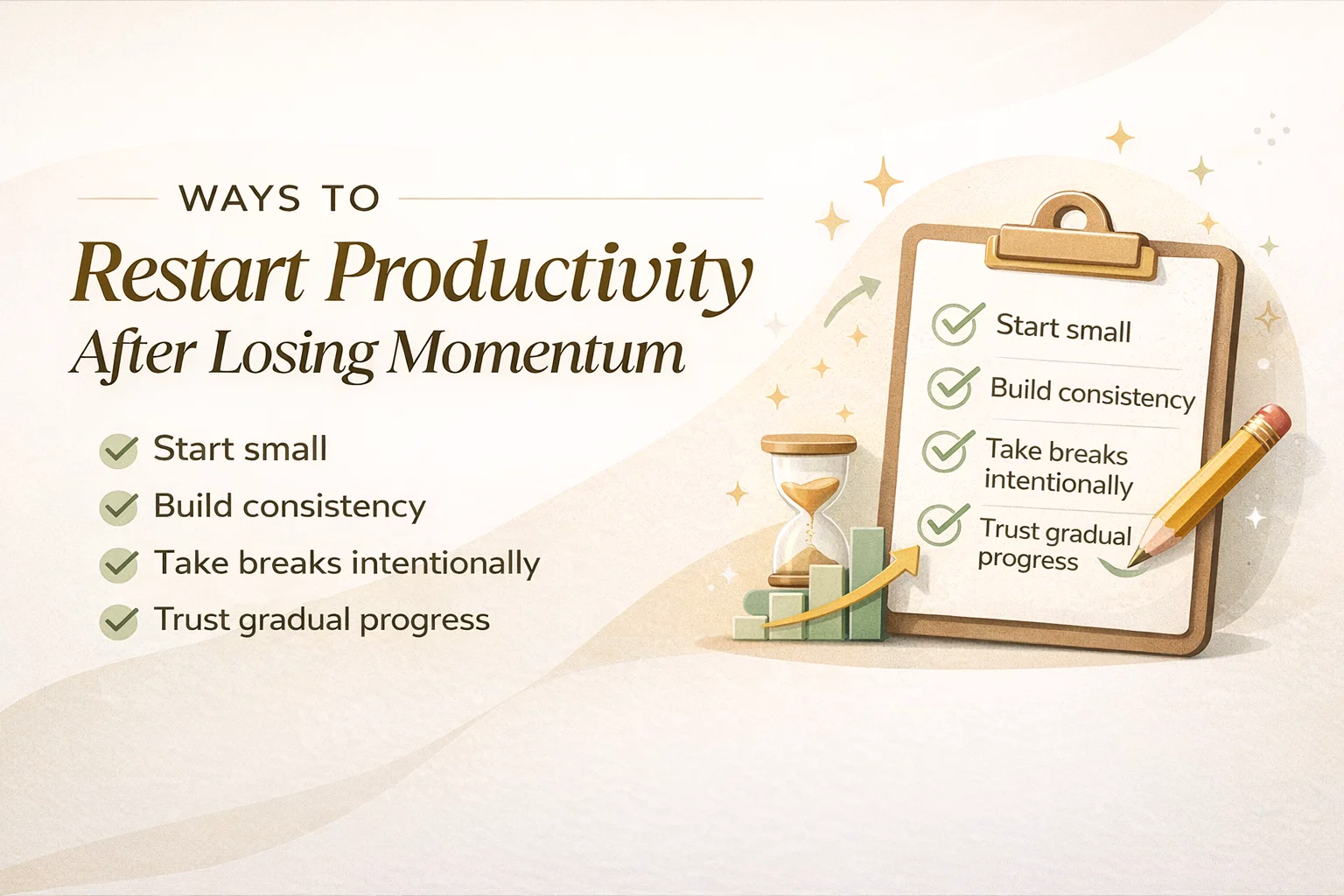
How to Reset Productivity Rebuild Momentum 20 Small Habits to Get Back on Track
Falling off the wagon is a universal human experience. Whether you were sidelined by a sudden illness, a much needed vacation, or simply a period of burnout, that heavy feeling of lost momentum can be incredibly daunting. You look at your to-do list and instead of feeling motivated, you feel a sense of guilt for the time that has passed. However, the secret to high achievers is not that they never lose their way, it is that they have mastered the art of the restart. Regaining your flow is not about a sudden burst of Herculean effort; it is about a series of intentional, gentle, and strategic shifts that lead you back to a state of productivity.
The Psychology of the Productivity Slump
To move forward, we must first understand why it feels so hard to get started again. When we stop a routine, our brains lose the neural pathways associated with that automatic behavior. Starting from scratch requires high cognitive energy, which often triggers a resistance response. This is frequently accompanied by a phenomenon known as the what the hell effect, where we feel that because we have already missed a few days, the entire endeavor is ruined. Breaking this mental cycle is the first and most important step in your recovery journey.
Forgiving Your Past Self
The most significant barrier to restarting is often the weight of past delays. Every minute you spend or waste on feeling guilty about yesterday is a minute you are stealing from today. Forgiveness is a practical productivity tool. By acknowledging that you are human and that fluctuations in energy are natural, you release the emotional tension that keeps you paralyzed. Tell yourself that the past is a sunk cost and your only responsibility is the present moment.
The Power of Micro Actions
When you have lost momentum, the biggest mistake you can make is trying to dive back into the deep end. Your productivity muscles are currently cold, and you need to warm them up. This is where the concept of the extremely small action comes into play. If you need to write a report, your goal should not be the whole report; it should be opening the document and typing one single sentence. If you need to clean the house, start by clearing off one small shelf.
Lowering the Barrier to Entry
The goal of a micro action is to make it so easy that it is harder to skip it than it is to do it. By completing one tiny task, you prove to your brain that you are capable of doing work. This small win triggers a dopamine release, which naturally fuels the desire to do the next small thing. This is how momentum is built: brick by brick, not all at once.
Radical Task List Reduction
When we return after an absence, we often try to compensate by packing our schedule with every pending task. This is a recipe for immediate burnout. Instead of an exhaustive list, create a recovery list. This list should contain only the absolute essentials. By reducing your task list significantly, you give yourself the mental space to actually finish what you start, which is vital for rebuilding your confidence.
Focusing on Consistency Over Intensity
In the early stages of a restart, the quality or volume of your output matters less than the act of showing up. If you can only work for twenty minutes today, that is a success as long as you show up again tomorrow. Consistency is the foundation upon which high performance is built. Once the habit of showing up is re-established, the intensity will naturally follow.
Managing Your Energy Reserves
Productivity is not just about time management; it is about energy management. When you are rebuilding momentum, your internal battery is likely lower than usual. You must be protective of your emotional and physical well-being. This means working in short, manageable sessions. Techniques like the Pomodoro method are excellent during this phase because they provide a built in finish line for every work sprint.
Ending Sessions Before Exhaustion
A common pitfall is working until you are completely drained. When you end a work session in a state of total exhaustion, your brain associates that work with pain, making it much harder to start again the next day. Try to stop while you still have a tiny bit of energy left. This leaves you feeling capable and curious about the next session, making the transition back to work much smoother the following morning.
Redefining Success During Recovery
During a momentum building phase, you need to change your metrics for success. Instead of tracking large results or final outcomes, start tracking effort and participation. Did you sit at your desk for the planned hour? That is a win. Did you send the three emails you promised yourself? That is a win. Celebrating these small victories reinforces the positive behavior and helps you view yourself as a productive person once again.
Avoiding the Aggressive Catch Up
There is a strong temptation to work double time to make up for lost hours. Resist this urge. Aggressive catch up cycles usually lead to a secondary crash, creating a roller coaster of productivity that is unsustainable. Accept that some things might remain delayed for a little longer while you stabilize your routine. A slow, steady climb is always better than a frantic jump that leads to a fall.
Creating a Predictable Environment
Your environment plays a huge role in your ability to focus. When you are struggling to find your flow, simplify your surroundings. A cluttered desk often reflects a cluttered mind. Keep your routines simple and predictable. When your brain knows exactly what to expect when you sit down at 9:00 AM, it spends less energy on decision making and more energy on the tasks at hand.
The Importance of Intentional Breaks
Not all breaks are created equal. Scrolling through social media is a passive break that often leaves you feeling more tired. An intentional break, such as a five minute walk, a quick stretch, or a glass of water away from your screen, actually refreshes your cognitive functions. Use your breaks to truly disconnect so that when you return, you are actually ready to work.
Nurturing Your Mental Resilience
The journey back to full productivity is rarely a straight line. You might have a great day followed by a sluggish one. This is where resilience comes in. If you face an interruption, resume gently. Do not let one bad afternoon turn into another week of inactivity. Negative self criticism is the enemy of progress. Be your own coach, not your own critic. Speak to yourself with the same encouragement you would offer a friend in the same position.
Trusting the Process of Gradual Improvement
Real change takes time. You did not lose your momentum in a vacuum, and you will not regain it in a heartbeat. Trust that by continuing your small daily actions, you are moving in the right direction. Sustainability is the ultimate goal. You are not looking for a one day spark; you are looking to build a fire that will burn consistently for months and years to come.
Conclusion
Restarting your productivity after a setback is a brave act of self discipline. It requires a delicate balance of self compassion and steady action. By forgiving your past, starting small, and protecting your energy, you transform the daunting mountain of work into a series of walkable steps. Remember that momentum is a living thing; it needs to be nurtured and respected. Stay patient with your progress, celebrate your willingness to try again, and trust that your best work is still ahead of you. You have the tools, the strategy, and the capability to get back on track starting right now.