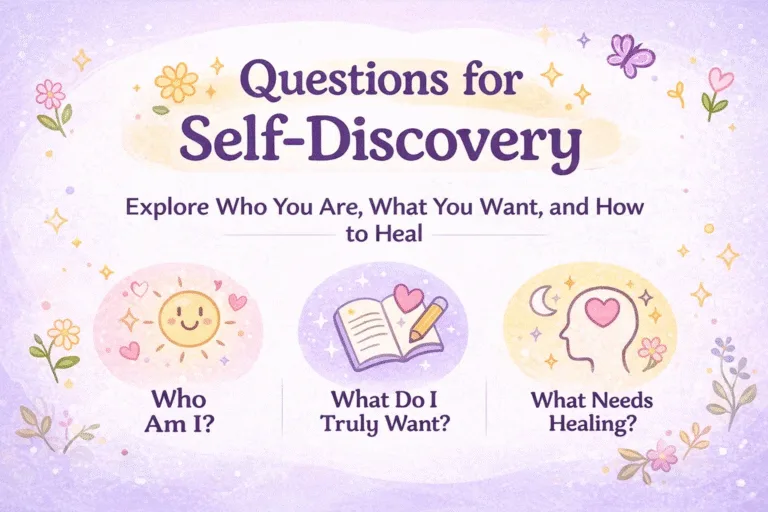
50 Deep Journaling Prompts for Self-Discovery Personal Growth Know Yourself Questions
Embarking on a journey of self-discovery is perhaps the most rewarding adventure you will ever undertake. It is a process of peeling back the layers of expectations, social conditioning, and daily habits to uncover the vibrant, authentic core of who you truly are. While the world often demands that we look outward for validation and success, the real answers to life’s biggest hurdles are almost always found within. By setting aside time to engage with deep, probing questions, you open a doorway to a more intentional and fulfilling life. This exploration is not just about finding answers but about learning how to ask the right questions to navigate your path with clarity and confidence.
The Power of Introspective Inquiry
In our fast paced digital age, we rarely find a moment of true silence. We are constantly bombarded with information, yet we often lack the specific insights needed to manage our own internal landscapes. Introspection is the practice of looking inward to examine our thoughts, feelings, and motives. It is the bridge between acting on impulse and acting with purpose. When you engage with deep questions, you are essentially auditing your life. You are checking in to see if your current trajectory aligns with your deepest desires. This practice builds self awareness, which is the foundational skill for emotional intelligence and effective decision making. Without it, we are simply drifting; with it, we are the captains of our own souls.
Breaking Through the Surface Level
Most of our daily interactions are surface level. We talk about the weather, our jobs, or the latest news. Unfortunately, many of us treat our internal dialogue the same way. We focus on the “what” and the “how” without ever touching the “why.” Deep questions serve as a disruptor to this superficial cycle. They force us to stop and consider things we usually take for granted. For instance, instead of asking “What am I doing today?”, asking “What truly makes me happy?” shifts the focus from a task-oriented mindset to a value-oriented one. This shift is where true transformation begins. It moves us away from being reactive to our environment and allows us to become proactive in creating our own joy.
Identifying Your Core Values and Definition of Success
One of the most significant sections of any self-discovery journey involves defining your personal compass. Your core values are the non-negotiable principles that guide your behavior and choices. If you do not know what they are, you will likely find yourself feeling frustrated or unfulfilled even when you achieve what society calls success. Understanding whether you value freedom, security, creativity, or connection above all else changes how you view every opportunity that comes your way. It allows you to say “no” to things that don’t fit and “yes” to the things that make your heart beat faster.
Redefining Success on Your Own Terms
We live in a world that often defines success through a very narrow lens: wealth, status, and material possessions. However, if your personal definition of success is “having the time to garden every morning” or “being a present and loving parent,” then chasing a corporate promotion might actually move you further away from your goal. By asking yourself “How do I define success?”, you reclaim the power to set your own benchmarks. This prevents the “arrival fallacy,” where you reach a goal only to realize it didn’t bring the satisfaction you expected. Success is deeply personal, and the only way to achieve it is to know exactly what it looks like for you.
Confronting Fears and Overcoming Obstacles
Growth and comfort rarely coexist. To move forward, you must be willing to look at the things that scare you. Fear is often a misunderstood emotion; we tend to see it as a signal to stop, but in the context of personal growth, it is often a signal of where we need to go next. Identifying your biggest fear is not about dwelling on the negative; it is about shining a light on the shadows so they lose their power over you. When you name a fear, you can analyze it objectively. Is it a rational fear protecting you from danger, or is it an irrational fear protecting you from the discomfort of change?
What is Holding You Back?
Sometimes the obstacle isn’t an external force but an internal one. It could be a limiting belief, a past trauma, or a habit that no longer serves you. Asking “What’s holding me back in life?” requires a high level of honesty. It might be a fear of failure, or ironically, a fear of success and the responsibility that comes with it. By identifying these internal anchors, you can begin the work of unhooking them. This might involve practicing forgiveness for yourself, seeking mentorship, or simply changing your daily routine to better support your goals. Understanding your relationship with fear and failure transforms these experiences from roadblocks into stepping stones.
The Role of Memory and Legacy
Our past shapes us, but it does not have to define us. Reflecting on memories that shaped you allows you to see the patterns in your life. You can identify the moments of resilience, the instances of joy, and the lessons learned from hardship. This narrative arc helps you understand why you react to certain situations the way you do. Similarly, looking toward the future by considering your legacy provides a sense of long term direction. What do you want to be remembered for? This question isn’t about ego; it’s about impact. It asks you to consider how your presence in the world makes it a better place for others.
Cultivating Your Proudest Achievements
We are often our own harshest critics, focusing on our mistakes while glossing over our victories. Recalling your proudest achievements is a vital exercise in building self-esteem. These don’t have to be grand, public accolades. A proudest achievement could be the time you stood up for yourself, the moment you mastered a difficult skill, or the consistency you showed in a personal project. Recognizing these wins reminds you of your capability. It provides the evidence you need to trust yourself when the next challenge arises. Your happiest memories and proudest moments are the fuel that keeps your internal fire burning during tougher times.
Daily Rituals and the Art of Recharging
Self-discovery is not just a high-level philosophical exercise; it is rooted in the practicalities of how you spend your time. Your ideal daily routine is a reflection of your priorities. If you say you value health but your routine involves no movement or nourishment, there is a disconnect. Designing a life that feels good on the inside requires being intentional about your habits. This includes how you start your day, how you handle stress, and most importantly, how you recharge after a tough day. Everyone has a different method for finding balance, whether it is through solitude, social interaction, creative expression, or physical activity.
Expressing Love and Building Trust
Humans are social creatures, and our relationships are a major component of our identity. Understanding how you express love and who you trust the most can reveal a lot about your emotional blueprint. Do you express love through acts of service, words of affirmation, or quality time? Knowing this helps you communicate your needs more effectively to others. Furthermore, examining your relationship with money and freedom provides insight into your sense of security and autonomy. These practical aspects of life are deeply intertwined with our psychological well being, and bringing them into your awareness is a key step in “knowing yourself.”
Learning to Forgive and Embrace Change
One of the most difficult yet necessary questions to ask is, “What do I need to forgive myself for?” We all carry weights from the past—words we shouldn’t have said, opportunities we missed, or versions of ourselves we are no longer proud of. Holding onto these regrets acts like a poison to your personal growth. Forgiveness is the act of releasing yourself from the burden of the past so you can live fully in the present. It is about acknowledging that you did the best you could with the tools you had at the time. This opens up space for you to embrace change and adopt new habits that align with your current path.
Handling Criticism and Seeking Inspiration
How you handle criticism says a lot about your level of self-assurance. Do you see it as a personal attack, or do you view it as data that can help you improve? Similarly, identifying who inspires you can point you toward the qualities you wish to cultivate in yourself. The people we admire often reflect our own latent potential. By studying their paths and their habits, we can find a roadmap for our own development. This doesn’t mean copying them, but rather using their light to help find our own way. It is about finding the balance between being influenced by the best and remaining true to your unique perspective.
Creating a Roadmap for Your Dream Life
The ultimate goal of self-reflection is to build your “dream life.” This isn’t a destination you reach and then stop; it is a way of living that feels aligned and vibrant. Your dream life is composed of the passions that make you feel most alive, the skills you wish to master, and the risks you are glad you took. It is built one decision at a time. By answering these 50 deep questions, you are essentially gathering the raw materials needed to construct this life. You are deciding what stays, what goes, and what needs to be built from scratch. It is an ongoing project of refinement and joy.
- Commit to Consistency: Reflection works best when it is a regular practice, not a one-time event.
- Be Brutally Honest: There is no point in lying to your journal. The truth is the only thing that sets you free.
- Embrace Discomfort: If a question makes you uncomfortable, that is usually the one you need to answer the most.
- Celebrate Growth: Look back at your old answers every few months to see how much you have evolved.
Final Thoughts on the Journey Within
The quest to know yourself is the foundation of all wisdom. While these 50 questions are a powerful tool, they are just the beginning. The real work happens in the quiet moments between the questions, in the choices you make every day, and in the grace you extend to yourself as you navigate the complexities of being human. As you uncover your core values, confront your fears, and define your own success, you will find that the world starts to respond to you differently. You become more grounded, more resilient, and infinitely more capable of creating a life that you truly love. Remember that you are a work in progress, and the discovery of your true self is a lifelong masterpiece in the making. Keep asking, keep listening, and keep growing.
Would you like me to help you create a specific 30-day journaling challenge based on these questions to get your readers started?